Haas Unleashes the ‘Godzilla’ Livery: A Collector’s Deep Dive Into the Japanese GP Special
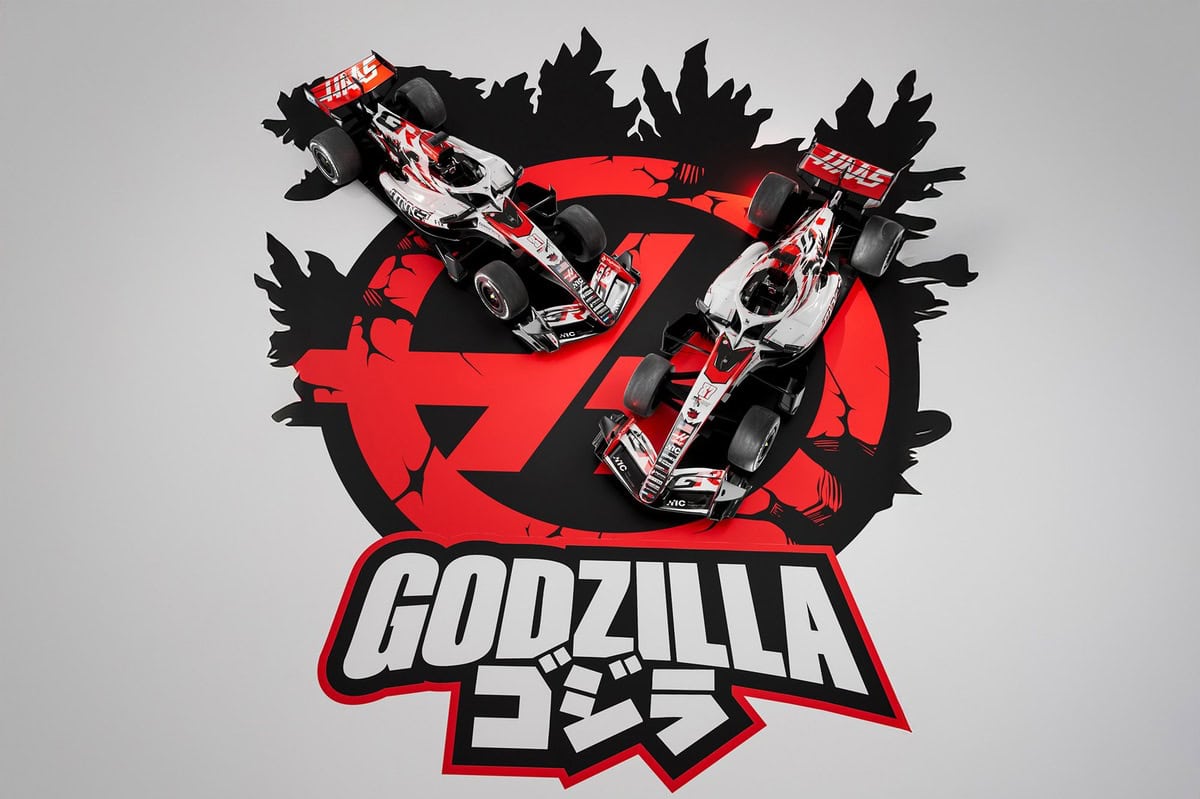
For the 2026 Japanese Grand Prix at Suzuka, Haas F1 Team unveiled one of the most visually arresting one-off liveries of the modern era — a bold, creature-inspired graphic scheme that the paddock immediately dubbed ‘Godzilla.’ Rooted in Japanese pop-culture iconography and executed across the full VF-26 canvas, the livery transcends a simple sponsorship repaint and enters the territory of genuine motorsport art. For collectors who track the intersection of F1 heritage and limited-run visual identity, this is precisely the kind of moment that defines a season.
Key Takeaways
Haas introduced a purpose-designed ‘Godzilla’ graphic livery exclusively for the 2026 Japanese Grand Prix at Suzuka Circuit, marking one of the most distinctive one-off schemes of the season.
The livery draws directly on Japanese cultural iconography, blending the team’s established white-red-black palette with monster-inspired graphic elements that command immediate visual impact.
One-off GP-specific liveries represent a rapidly growing segment of the F1 collector market, with display replicas tied to single-race schemes commanding premium attention among serious collectors.
No confirmed Haas driver-specific display replica tied to this livery exists in the 123Helmets catalogue yet — collectors are advised to monitor the general F1 helmet collection for any future additions.
The ‘Godzilla’ Livery: What Haas Revealed at Suzuka
When Haas F1 Team pulled back the curtain on their Japanese Grand Prix presentation, the paddock’s reaction was immediate and unambiguous. The scheme — rapidly christened ‘Godzilla’ by media and fans alike — is a dramatic departure from the team’s standard 2026 livery, incorporating large-scale creature-inspired graphic work that references one of Japan’s most globally recognised cultural exports.
The execution runs across the full bodywork of the VF-26, with the monster motif integrated into the existing white, red, and black colour architecture that defines Haas’s visual identity. Rather than a superficial badge placement, the Godzilla artwork is woven into the aerodynamic surfaces themselves — sidepods, engine cover, and nose assembly all bearing elements of the design. The result is a livery that reads cohesively at racing speed and rewards close inspection in the paddock or pit lane.
From a pure visual-design standpoint, the scheme demonstrates a level of graphic ambition that one-off GP liveries don’t always achieve. The balance between the existing team identity and the new thematic layer is carefully managed — this is not a case of slapping a promotional graphic over a base coat, but a considered re-imagining of the car’s visual surface for a single, culturally specific event.
Cultural Context: Why Japan Inspires F1’s Most Ambitious One-Off Schemes
The Japanese Grand Prix has a long and distinguished history of inspiring elevated visual presentations from F1 teams. Suzuka’s status as one of the most beloved circuits on the calendar — revered by drivers, engineers, and fans in equal measure — lends the event a prestige that teams respond to with creative ambition. The circuit’s Japanese audience is among the most knowledgeable and passionate in the sport, and the broader cultural landscape of Japan, with its extraordinary depth of design tradition, pop-culture iconography, and meticulous craftsmanship, provides fertile ground for livery inspiration.
Godzilla, as a cultural reference point, carries extraordinary global weight. Born from Japanese cinema in 1954 and evolved across seven decades of film, animation, and merchandise into a worldwide phenomenon, the creature represents a uniquely Japanese contribution to global popular culture. For Haas — an American-registered team that has consistently sought to position itself through bold visual identity — invoking Godzilla at Suzuka is both a respectful cultural gesture and a savvy piece of brand theatre.
Historically, the most collectible one-off liveries in F1 history share a common characteristic: they emerge from a clear, meaningful narrative rather than from generic commercial decoration. The ‘Godzilla’ scheme has that narrative in abundance. It is specific to a place, to a cultural moment, and to a single Grand Prix — precisely the conditions that elevate a livery from promotional exercise to collector-grade historical artefact.
Livery Continuity and the Helmet Connection: How Driver Lids Reflect Car Graphics
For serious F1 collectors, the relationship between a car livery and the driver helmet worn — or, more precisely, displayed — alongside it is a foundational element of curation. When a team introduces a one-off livery for a specific Grand Prix, the question immediately arises: do the drivers’ helmets echo the scheme, and does that create a unified display-worthy narrative?
In the case of the Haas Godzilla livery, collectors will be watching closely to see whether Oliver Bearman and Esteban Ocon adapted their lids to incorporate elements of the Japanese GP scheme. The practice of matching or complementing helmet design to one-off car liveries has a distinguished precedent in F1 — from Ayrton Senna’s yellow-adjusted lids for specific markets to the elaborate Japanese GP specials produced by drivers in recent seasons. A matching or complementary helmet transforms a single-race livery into a full visual suite, and for display purposes, that coherence is enormously valuable.
Even absent a direct match, the Godzilla livery itself has implications for any Haas-related display piece from the 2026 season. A full-size 1:1 replica helmet displayed alongside reference imagery of the Suzuka livery creates an exhibition-quality pairing that contextualises the artefact within one of the season’s most visually distinctive moments. The collector’s eye is always looking for that connective tissue between car, circuit, and moment — and the Japanese GP provides all three in concentrated form.
The Collector Market for One-Off GP Liveries: A Growing Premium Segment
The secondary and primary markets for F1 collector memorabilia have undergone a significant structural shift over the past decade. Where once the collectible hierarchy was dominated almost exclusively by championship-winning machinery and season-long liveries, the appetite for one-off, event-specific visual artefacts has grown substantially — and with it, the premium attached to display pieces that can be tied to a specific race and a specific graphic scheme.
The mechanics of this shift are well understood by seasoned collectors. One-off liveries are, by definition, scarcer in reference form than season-long schemes. The number of races at which a given design appears is finite — sometimes just one. That scarcity translates directly into collector value, both for physical memorabilia from the event itself and for high-quality display replicas that capture the design language of the scheme in exhibition-quality form.
Haas, as a team, has an interesting position in this market. As a relatively young constructor — entering F1 in 2016 — the team lacks the deep archival heritage of Ferrari, McLaren, or Williams, but it compensates with a consistent appetite for bold visual identity choices. The ‘Godzilla’ livery is the latest in a series of Haas graphic decisions that have generated genuine collector and enthusiast interest, from their early association with Rich Energy’s divisive branding to their current MoneyGram livery architecture. Each distinctive visual moment adds a chapter to the team’s still-forming design history — and collectors who recognise the value of documenting that history while it is being written are well positioned.
For display replica collectors specifically, the question is not merely whether a piece exists but whether it captures a moment of genuine visual significance. The Suzuka 2026 Godzilla livery emphatically qualifies on that criterion. It is bold, specific, culturally resonant, and limited to a single race weekend — exactly the combination that defines a collector-grade visual event.
Display Curation: Contextualising the Japanese GP in a Collector Environment
For collectors who approach their displays with the rigour of curators rather than simple accumulation, the Japanese GP offers rich contextual material. Suzuka Circuit itself carries an almost mythological status in F1 — the scene of championship-deciding moments across multiple eras, from Senna and Prost’s infamous 1989 collision through Michael Schumacher’s title clinches to the modern Verstappen era. Any artefact associated with the Japanese GP enters a stream of historical significance that extends well beyond the current season.
Curating a Haas-focused display around the 2026 Japanese GP might incorporate several layers: reference photography of the Godzilla livery on the VF-26, documentation of the circuit and race result, and a full-size 1:1 replica helmet from one of the Haas drivers as the centrepiece display object. The helmet, in this context, functions not merely as a visual artefact in isolation but as an anchor for a broader narrative — team, driver, circuit, cultural moment, and season all converging in a single display-quality object.
The most sophisticated collector displays treat each piece as part of a coherent story. The ‘Godzilla’ livery gives that story an unusually vivid and specific visual chapter. For collectors building Haas-focused archives, or those focused on the 2026 season as a whole, the Japanese GP represents a moment of genuine curatorial significance — one that should not be overlooked in the organisation and presentation of a collection.
What Collectors Should Watch For: Next Steps After the Godzilla Reveal
In the immediate aftermath of a high-profile one-off livery reveal, the collector market moves quickly. Several developments are worth monitoring closely in the weeks following the Japanese Grand Prix.
First, confirmation of whether either Haas driver — Bearman or Ocon — ran a bespoke helmet design to complement or echo the Godzilla livery. If either driver produced a Japanese GP-specific lid, that design immediately becomes a priority reference point for collectors and a potential future subject for display replica production.
Second, the broader reception of the livery within the F1 community and specialist collector press. One-off liveries that generate sustained discussion beyond the race weekend itself tend to have stronger long-term collector relevance than those that fade from conversation quickly. Early indications for the Godzilla scheme are strongly positive — the paddock response was enthusiastic, and the cultural specificity of the design gives it staying power as a reference point in the team’s visual history.
Third, and most practically for collectors using 123Helmets as a resource: the ongoing development of the F1 display replica catalogue. While no specific Haas driver product tied to the Japanese GP livery is currently confirmed in the 123Helmets range, the team’s growing profile and the visual significance of events like the Godzilla reveal make future additions to the catalogue a genuine prospect. Collectors are encouraged to explore the current F1 helmet collection and to monitor for new arrivals as the 2026 season progresses.
The Godzilla livery is a reminder of why one-off GP schemes matter to serious collectors. They are the moments when F1 escapes its own routine and produces something genuinely singular — a visual event that exists for a single weekend, at a single circuit, in a single cultural context. Those are the moments that define collections.
“The Godzilla livery is exactly the kind of one-off visual statement that collectors look back on as defining a season — culturally specific, graphically ambitious, and entirely singular to a single race weekend at one of the greatest circuits in the world.”
— 123Helmets Editorial Team
FAQ
Q: What is the Haas ‘Godzilla’ livery and when did it debut? The Haas ‘Godzilla’ livery is a one-off graphic scheme designed specifically for the 2026 Japanese Grand Prix at Suzuka Circuit. It incorporates Godzilla-inspired artwork — drawn from Japanese pop-culture heritage — into the team’s established white, red, and black visual identity across the full bodywork of the VF-26.
Q: Why do one-off GP liveries matter to F1 collectors? One-off liveries are inherently scarce as visual events — appearing at a single race, in a specific cultural context, and never repeated. That scarcity, combined with the cultural and historical specificity of the design, gives event-specific liveries significant collector relevance. Display replicas and artefacts associated with one-off schemes are among the most sought-after items in the premium F1 collector market.
Q: Does 123Helmets offer a specific Haas Japanese GP or Godzilla livery helmet replica? At the time of publication, no specific Haas driver display replica tied to the 2026 Japanese GP Godzilla livery is confirmed in the 123Helmets catalogue. Collectors are encouraged to browse the general F1 helmet collection and check back regularly as new exhibition-quality display pieces are added throughout the season.
Q: Which Haas drivers competed at the 2026 Japanese Grand Prix? Haas fielded Oliver Bearman and Esteban Ocon at the 2026 Japanese Grand Prix. Both drivers operated under the Godzilla livery scheme for the Suzuka race weekend.
Q: How should collectors display a Haas helmet alongside the Godzilla livery theme? For the most coherent exhibition-quality presentation, collectors typically pair a full-size 1:1 replica helmet with high-resolution reference imagery of the associated car livery and circuit documentation. For a Haas Japanese GP display, reference photography of the Godzilla-liveried VF-26 at Suzuka provides ideal visual context for a centrepiece helmet display, creating a unified narrative around team, driver, circuit, and cultural moment.
To provide the best experiences, we use technologies like cookies to store and/or access device information. Consenting to these technologies will allow us to process data such as browsing behavior or unique IDs on this site. Not consenting or withdrawing consent, may adversely affect certain features and functions.
Functional
Always active
The technical storage or access is strictly necessary for the legitimate purpose of enabling the use of a specific service explicitly requested by the subscriber or user, or for the sole purpose of carrying out the transmission of a communication over an electronic communications network.
Preferences
The technical storage or access is necessary for the legitimate purpose of storing preferences that are not requested by the subscriber or user.
Statistics
The technical storage or access that is used exclusively for statistical purposes.The technical storage or access that is used exclusively for anonymous statistical purposes. Without a subpoena, voluntary compliance on the part of your Internet Service Provider, or additional records from a third party, information stored or retrieved for this purpose alone cannot usually be used to identify you.
Marketing
The technical storage or access is required to create user profiles to send advertising, or to track the user on a website or across several websites for similar marketing purposes.



 123Helmets Editorial Team