F1 2026 Regulation Crisis: Emergency Meeting Between Domenicali, FIA and Drivers — What It Means for Collectors
Formula 1’s 2026 regulation storm just got real. An emergency meeting between Stefano Domenicali, the FIA, and the Grand Prix Drivers’ Association (GPDA) has sent shockwaves through the paddock — and the collector market. As teams scramble to understand the new 50-50 hybrid power unit rules and chassis architecture, one thing is certain: we are entering the most uncertain livery and helmet design era in modern F1 history. For serious collectors, that uncertainty is both a risk and a rare opportunity.
The F1 2026 regulation crisis: an era-defining moment for collectors
Key Takeaways
FOM, the FIA, and the GPDA held an emergency meeting in April 2026 to address growing concerns over the new 50-50 hybrid power unit regulations, signalling that the 2026 technical framework is still not fully settled.
The cancellation of spring break for F1 teams underlines the severity of the development crisis — teams are working around the clock, which historically delays the finalisation of livery identities and helmet designs.
Periods of major regulatory transition in F1 have consistently produced the most collectible helmet and livery designs in history, as drivers and teams reset their visual identities from scratch.
Collectors tracking this era should pay close attention to 2025 season-closing designs and early 2026 debut liveries, as these transition-point pieces typically carry the highest long-term display and exhibition value.
The Emergency Meeting That Shook the Paddock
On 2 April 2026, Formula One Management (FOM), the Fédération Internationale de l’Automobile (FIA), and the Grand Prix Drivers’ Association (GPDA) convened an emergency meeting to confront what has become one of the most contentious regulatory transitions in the sport’s recent history. At the centre of the storm: the 2026 power unit regulations, which mandate a radical 50-50 power split between a V6 Turbo Internal Combustion Engine (ICE) and an electric motor.
The meeting, involving FOM CEO Stefano Domenicali and key representatives from the GPDA, was described by those familiar with the situation as a necessary intervention. The new power unit architecture has raised serious concerns among drivers and engineers alike, with questions about driveability, deployment strategies, and the sheer complexity of managing two equally weighted power sources at the limit of Grand Prix racing.
For the casual fan, this may read as a technical footnote. For the collector community, it represents something far more significant: the unmistakable signal that Formula 1 is entering a period of profound visual and structural reinvention — and that the helmets and liveries produced during this transition era will carry a unique historical weight for decades to come.
Spring Break Cancelled: What It Tells Us About the Depth of the Crisis
Perhaps the most telling indicator of how seriously the sport is taking this regulatory challenge is the reported cancellation of the traditional spring break for F1 teams. In a sport where physical and mental recovery is treated as a competitive asset, surrendering the one scheduled rest window in the early-season calendar is an extraordinary decision.
The cancellation signals that development timelines are under severe pressure. Teams that had expected to enter 2026 with a degree of confidence in their car concepts are instead being forced into continuous iteration cycles, working through what should have been downtime to address fundamental performance and reliability concerns.
From a collector perspective, this has a direct and meaningful consequence. When teams are in development crisis mode, the finalisation of visual identities — including livery colourways, sponsor placement, and the personal helmet designs that drivers commission to complement their cars — gets pushed back or revised multiple times. What emerges from the chaos is rarely a planned aesthetic evolution. It is something rawer, more reactive, and ultimately more historically interesting.
The 2026 season opener in Melbourne already hinted at this dynamic, with several teams running liveries that felt provisional rather than fully resolved. That visual uncertainty, frozen in time on a full-size 1:1 replica display helmet, becomes a document of the era itself.
The 50-50 Hybrid Architecture: A Technical Revolution With Visual Consequences
To understand why this regulatory cycle matters so much to collectors, it helps to understand the scale of what is changing technically. The 2026 power unit is not an evolution of what came before. It is, by design, a complete reset. The 50-50 split between the V6 Turbo ICE and the electric motor means that for the first time in F1 history, neither power source is dominant. Both must be optimised in concert, and both must deliver at the absolute frontier of engineering capability.
This level of technical complexity has a cascading effect across the entire team structure. Resources that might otherwise flow into aerodynamic refinement, livery development partnerships, or helmet programme collaborations are redirected toward solving fundamental engineering challenges. The result, historically, is that the first one to two seasons under a major new technical framework produce the most visually experimental and transitional designs in a driver’s career.
Think of the 2014 season, the last time F1 introduced a hybrid power unit revolution. The helmet designs and liveries from that year have a specific character — urgent, exploratory, sometimes contradictory — that collectors now recognise as defining markers of a pivotal moment. The 2026 season is shaping up to carry precisely that same energy, but amplified by the additional complexity of the active aerodynamics chassis rules running in parallel with the power unit overhaul.
Active aero, it should be noted, introduces its own visual dimension. Cars that physically change shape at speed present new challenges for livery designers, who must account for how sponsor logos and colour transitions behave across different aero configurations. This is genuinely new creative territory, and the helmet designs produced alongside these cars will reflect that exploratory spirit.
Regulatory Transitions and the Collector Market: A Historical Pattern
The relationship between major F1 regulatory change and collector market behaviour follows a well-established pattern, and the 2026 crisis is conforming to it with remarkable precision.
In every significant regulatory transition era — the turbo introductions of the early 1980s, the return to normally aspirated engines in 1989, the V10-to-V8 shift in 2006, and the hybrid revolution of 2014 — the helmets and liveries produced in the immediate transition window have consistently attracted the strongest long-term collector interest. The reasons are structural rather than sentimental.
First, transition seasons produce visual instability. Teams and drivers experiment more freely because established design hierarchies have been disrupted. This generates a wider variety of designs across a single season, increasing the diversity of collectible pieces available from that period.
Second, crisis seasons produce provenance. A full-size 1:1 replica display helmet from the 2026 season will always carry the context of the meeting in which Domenicali, the FIA, and the GPDA sat down to debate whether the fundamental architecture of their sport was fit for purpose. That is not background noise. That is the story itself, permanently attached to the object.
Third, and perhaps most importantly, the drivers who navigate regulatory crises with strong performances tend to see a significant uplift in the long-term collector value associated with their personal helmet designs. A championship won or a career-defining victory achieved during a period of maximum technical uncertainty represents a more compelling display piece than the same achievement in a stable, well-understood technical environment.
For collectors assembling display collections that tell the story of Formula 1’s evolution, the 2026 season is not a period to wait out. It is a period to document, carefully and deliberately, through the acquisition of the full-size 1:1 exhibition quality replica helmets that capture this extraordinary moment in the sport’s history.
Which Drivers and Moments to Watch in 2026
For collectors seeking to make informed decisions about which designs to prioritise from the 2026 era, several threads are worth following closely as the season develops.
The drivers who have been most vocal through the GPDA about the 2026 regulations are, by definition, the ones most invested in shaping the direction of the sport at this critical juncture. Their helmet designs for 2026 carry an additional layer of narrative weight as a result. A driver who sits in that emergency meeting and subsequently delivers a defining performance in the first year of the new formula creates a collector story that is genuinely irreplaceable.
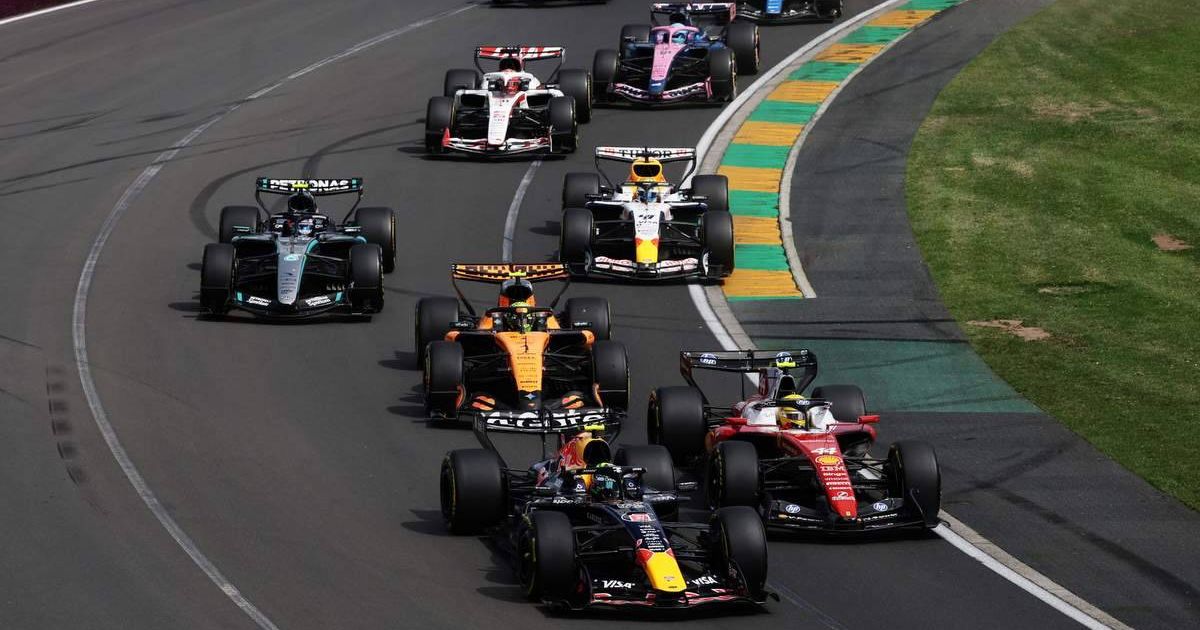
The Melbourne season opener deserves particular attention in retrospect. Race-start imagery from the Australian Grand Prix already circulating among the collector community shows the 2026 cars in their debut livery configurations — raw, unpolished, and historically significant precisely because of that rawness. The helmets worn at Melbourne 2026 represent the first chapter of a story whose full arc we cannot yet see.
Beyond individual races, the mid-season point will be critical. If the emergency meeting and the cancelled spring break result in significant regulatory clarifications or technical directives from the FIA, some teams may introduce revised liveries or updated design programmes in response. These mid-season pivots, when they occur, produce some of the most interesting display pieces in any given collection — visible markers of the moment a team changed direction.
Collectors should also monitor team announcements around power unit partnerships and any structural changes to the competitive order that the 2026 regulations produce. A team that unexpectedly rises to competitiveness under the new rules, or a constructor that struggles where it once dominated, generates a new collector narrative around every helmet associated with that shift.
Building a 2026-Era Display Collection: A Strategic Framework
Assembling a display collection that captures the 2026 regulatory era requires a more deliberate strategic framework than collecting in a stable technical period. The following principles offer a starting point for collectors approaching this window seriously.
Prioritise the season opener and the first post-directive race. The Melbourne 2026 designs represent the pre-crisis visual identity. Whatever emerges after the FIA’s response to the emergency meeting represents the post-crisis adaptation. Both ends of that arc have display significance as a matched pair.
Track helmet design evolution across the season. In crisis years, drivers are more likely to introduce revised or special edition helmet designs at key races — either as personal responses to the pressure of the season or as deliberate resets of their visual identity. Full-size 1:1 replica display helmets capturing these variants are the pieces that define a collection’s depth and intelligence.
Consider the full-size 1:1 exhibition quality standard as non-negotiable. In a season where the story is complex and multi-layered, the physical scale of a display piece matters enormously. A full-size 1:1 collector replica commands presence in a display environment in a way that smaller formats cannot replicate. When the subject matter is a regulatory revolution, the display piece should be proportionate to the history it represents.
Document the provenance of your acquisitions. The 2026 crisis is a documented, timestamped event in Formula 1 history. Collector pieces acquired from this era carry inherent provenance — the meeting on 2 April 2026, the cancelled spring break, the debut of the 50-50 hybrid architecture. Maintaining clear records of when and how pieces were acquired adds a further layer of narrative integrity to any serious display collection.
This is, without question, one of the most consequential collector windows that Formula 1 has produced in the modern era. The emergency meeting between Domenicali, the FIA, and the GPDA is not the end of the story. It is the opening chapter — and the most important collector pieces from 2026 will be the ones that understood that from the beginning.
“Major regulatory transitions in Formula 1 don’t just change the cars — they reset the entire visual language of the sport. The helmets produced during these windows are the ones collectors return to again and again, because they carry the weight of genuine historical uncertainty.”
— 123Helmets.com Editorial
“When the fundamentals of the car are in question, every design decision made by a driver or a team carries extra meaning. The 2026 season opener liveries and helmets are documents of a sport in the middle of reinventing itself.”
— 123Helmets.com Editorial
FAQ
Q: What is the F1 2026 regulation crisis about? The 2026 Formula 1 regulation crisis centres primarily on the new power unit architecture, which mandates a 50-50 power split between a V6 Turbo Internal Combustion Engine and an electric motor. This unprecedented configuration has raised serious concerns among drivers, engineers, and team management about driveability and performance. In April 2026, FOM CEO Stefano Domenicali, the FIA, and the Grand Prix Drivers’ Association held an emergency meeting to address these concerns, and teams had their spring break cancelled to accelerate development work.
Q: Why does the 2026 F1 regulation crisis matter to helmet collectors? Major regulatory transitions in Formula 1 historically produce the most collectible and visually significant helmet and livery designs, because teams and drivers reset their visual identities during periods of technical uncertainty. The 2026 crisis is creating a uniquely unstable and experimental visual environment, meaning that full-size 1:1 replica display helmets from this era will carry exceptional historical provenance as documents of one of the sport’s most consequential transition moments.
Q: What makes a full-size 1:1 replica helmet the right format for a 2026 collection? Full-size 1:1 replica helmets are exhibition quality display pieces that capture the exact proportions and visual detail of the designs worn by drivers in competition. In a season as historically significant as 2026, the physical scale of a full-size display piece is essential for conveying the weight of the era. These are collector and display items only, not certified for any protective use, and their value lies entirely in their role as permanent, exhibition-quality records of Formula 1 history.
Q: Which 2026 races are most significant from a collector’s perspective? The Melbourne season opener is the most immediately significant, as it captures the debut of the 2026 cars and helmets in their first competitive configuration. Any races following major FIA technical directives or regulatory clarifications issued in response to the crisis meeting will also be important, as they may coincide with revised liveries or updated helmet designs. Mid-season events where the competitive order begins to crystallise under the new regulations are also worth prioritising.
Q: How do I start building a display collection focused on the 2026 F1 era? Begin by identifying the key narrative moments of the 2026 season — the Melbourne opener, the post-crisis-meeting races, and any championship-defining events. Prioritise full-size 1:1 exhibition quality replica display helmets that correspond to these moments, focusing on drivers who are central to the 2026 story. Document the provenance of each piece carefully, and consider pairing season-opening and mid-season designs to capture the visual evolution that crisis years typically produce. Browse our F1 helmet collection at 123Helmets.com for display pieces from this and other landmark eras.
To provide the best experiences, we use technologies like cookies to store and/or access device information. Consenting to these technologies will allow us to process data such as browsing behavior or unique IDs on this site. Not consenting or withdrawing consent, may adversely affect certain features and functions.
Functional
Always active
The technical storage or access is strictly necessary for the legitimate purpose of enabling the use of a specific service explicitly requested by the subscriber or user, or for the sole purpose of carrying out the transmission of a communication over an electronic communications network.
Preferences
The technical storage or access is necessary for the legitimate purpose of storing preferences that are not requested by the subscriber or user.
Statistics
The technical storage or access that is used exclusively for statistical purposes.The technical storage or access that is used exclusively for anonymous statistical purposes. Without a subpoena, voluntary compliance on the part of your Internet Service Provider, or additional records from a third party, information stored or retrieved for this purpose alone cannot usually be used to identify you.
Marketing
The technical storage or access is required to create user profiles to send advertising, or to track the user on a website or across several websites for similar marketing purposes.


 123Helmets Editorial Team