Jaw-Dropped: Racing Bulls’ Japanese GP Special Livery Ignites the Collector World
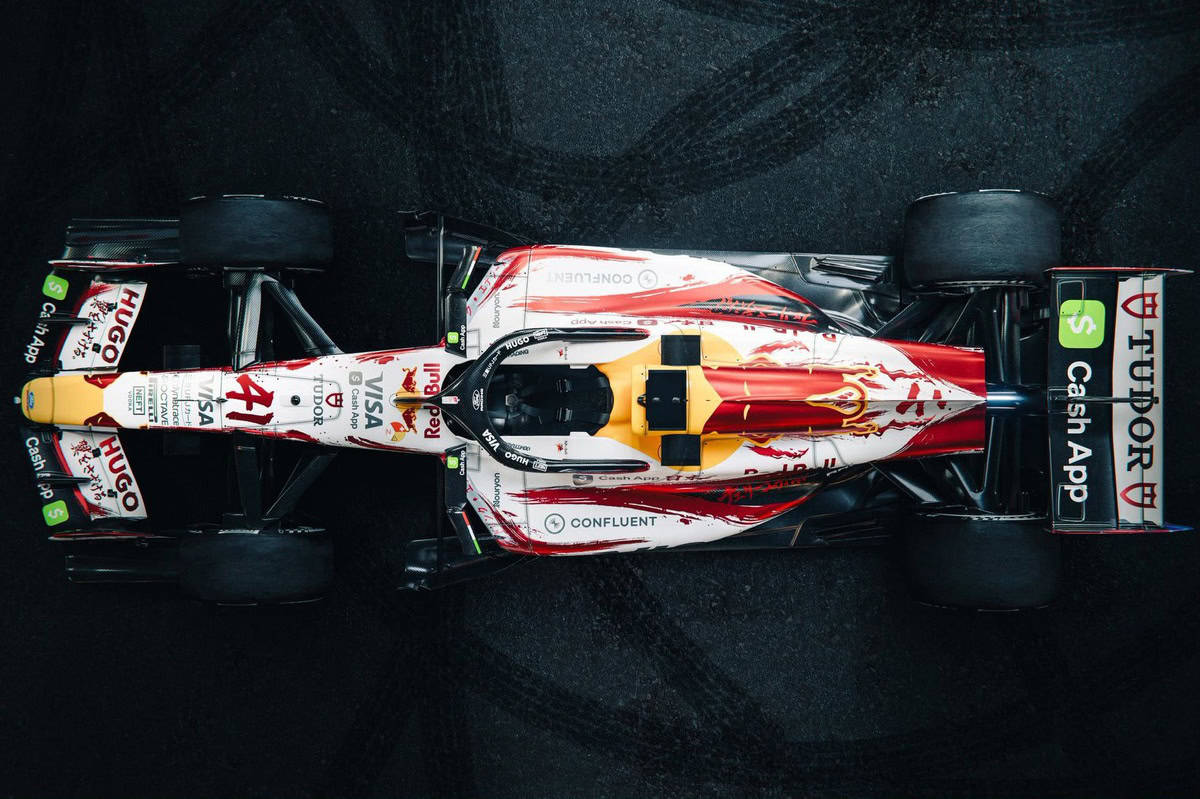
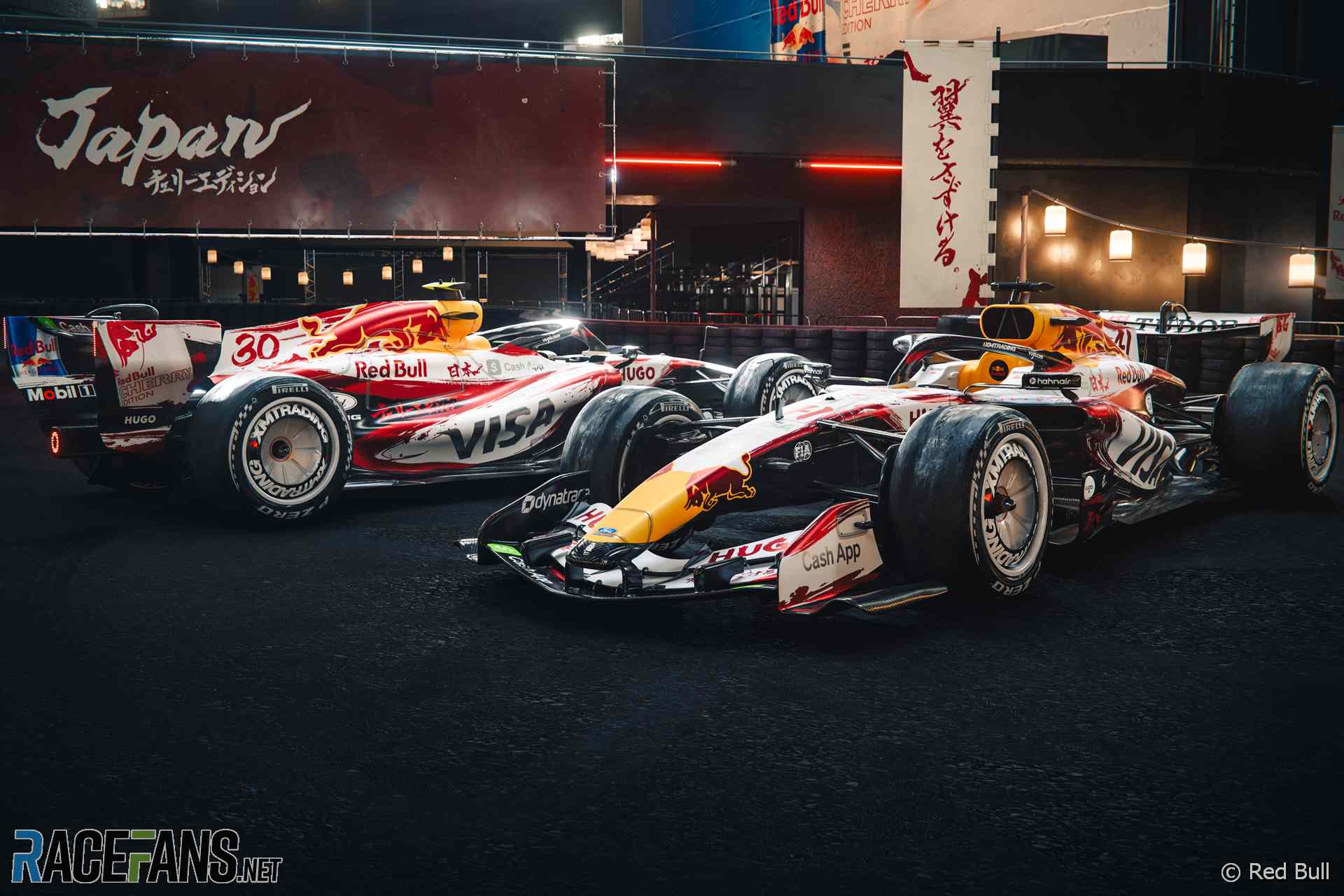
Racing Bulls arrived at Suzuka with a special-edition livery that stopped the paddock — and the internet — dead in its tracks. The reaction from fans and collectors alike has been nothing short of seismic, with the team’s striking Japanese Grand Prix visual identity rapidly establishing itself as one of the most talked-about livery moments of the 2025 season. For collectors who understand the intersection of motorsport heritage and visual artistry, this is precisely the kind of moment that defines a calendar year.
Key Takeaways
Racing Bulls unveiled a bespoke special-edition livery for the Japanese Grand Prix at Suzuka, generating one of the most significant fan reactions of the 2025 F1 season.
The livery draws on culturally resonant Japanese visual language, elevating the team’s identity beyond standard branding into genuine collector-grade artwork.
Fan response across social platforms was described as ‘jaw-dropping,’ with the design rapidly trending and attracting widespread acclaim from livery enthusiasts and F1 insiders.
Special-edition race liveries represent a growing and historically validated segment of the F1 collector market, with Suzuka editions carrying particular prestige due to the circuit’s legendary status.
A Livery That Stopped the Paddock
There are livery updates, and then there are moments. Racing Bulls’ decision to arrive at Suzuka Circuit for the 2025 Japanese Grand Prix wearing a bespoke special-edition livery falls firmly into the latter category. From the instant the first images surfaced, the reaction was instantaneous and overwhelming — fans described themselves as ‘jaw-dropped,’ paddock observers took pause, and the design rapidly dominated F1 discourse across every major platform.
In the context of modern Formula 1, where team liveries are carefully managed commercial assets, a genuinely bold visual departure represents a meaningful creative statement. Racing Bulls — the rebranded junior arm of the Red Bull programme, formerly known as AlphaTauri and Toro Rosso before that — have consistently demonstrated a willingness to push visual boundaries. The Japanese GP edition, however, appears to have exceeded even the most ambitious expectations set by their previous aesthetic experiments.
For collectors and livery enthusiasts, this kind of spontaneous, widespread reaction is itself a significant data point. It signals that this is not merely a marketing exercise, but a design achievement that resonates on a deeper cultural and emotional level — the hallmark of a truly collectible visual identity.
The Racing Bulls special livery for the 2026 Japanese Grand Prix — the design that stopped the paddock
The Design Language: Japan Through an F1 Lens
What makes a special-edition livery truly special? The answer, in the most enduring examples from the sport’s history, is cultural authenticity. The greatest race-specific designs do not simply paste a flag or a local motif onto an existing colour scheme — they undertake a genuine visual dialogue between the team’s established identity and the heritage of the host nation. By all reported accounts, Racing Bulls’ Suzuka edition achieves precisely this.
Japan has one of the richest visual traditions in the world — from the geometric precision of traditional craft to the bold, high-contrast aesthetic of contemporary graphic design — and Suzuka itself occupies a near-mythological position within Formula 1’s geographical canon. The circuit’s figure-of-eight layout, its position among the sport’s most technically demanding venues, and its status as one of the few remaining circuits where championship mathematics have historically converged, all contribute to an almost unique emotional weight. A livery that honours this context with genuine sophistication is one that collectors will be referencing for years to come.
While the precise graphic elements of the Racing Bulls Suzuka livery continue to be documented and discussed across collector communities, the consensus is clear: the team has delivered a colour and form language that feels both distinctly Japanese and unmistakably Racing Bulls. That balance — between the specific and the coherent — is extraordinarily difficult to achieve, and when it works, it produces the kind of collector-grade visual document that defines a season.
Fan Reaction: When the Internet Agrees
In the fractured, opinion-saturated landscape of modern F1 fandom, genuine consensus is rare. Debates over driver hierarchies, technical regulations, and team strategies are the sport’s lifeblood — but livery reactions, when they break through into mainstream discourse, can occasionally produce something approaching unanimity. The Racing Bulls Japanese GP design appears to have done exactly that.
Reports indicate that fan reactions across social media platforms were overwhelmingly and unusually positive, with descriptors ranging from ‘jaw-dropping’ to ‘the best livery of the season’ appearing repeatedly in trending discussions. For a team that operates — commercially and competitively — in the shadow of its parent organisation, Red Bull Racing, this kind of independent visual recognition represents a significant cultural achievement.
From a collector’s perspective, this social resonance matters for reasons beyond mere sentiment. The secondary market for F1 memorabilia — replica helmets, display models, signed artefacts — is driven in significant part by emotional connection. When a design captures a broad cross-section of the fanbase in real time, it signals durability: this is a livery that people will want to own, display, and discuss not just in 2025 but in 2035 and beyond. The Japanese GP edition of the Racing Bulls livery has, by all indications, achieved that rare status.
The Collector Market for Special-Edition Liveries
Understanding why a livery like Racing Bulls’ Suzuka edition matters to serious collectors requires a brief survey of how the market for special-edition race identities has evolved. The practice of teams producing bespoke one-race or one-event liveries has roots stretching back decades — from the iconic John Player Special black-and-gold Lotus designs through to the iridescent tobacco-era rebrands that briefly illuminated the early 2000s — but the phenomenon has accelerated sharply in the hybrid era of Formula 1.
Today, special-edition liveries serve multiple functions simultaneously. They are brand exercises, cultural statements, commercial opportunities, and — crucially — collector catalysts. When a team produces a genuinely distinguished one-off visual identity, it creates an immediate scarcity dynamic in the collector market: this design exists in time, at a specific race, for a specific set of reasons, and it will never appear in exactly this context again. That singularity is the foundation of collector value.
Japanese Grand Prix editions carry particular weight in this regard. Suzuka’s status as one of the sport’s most beloved venues means that any artefact associated with the Japanese GP carries a built-in prestige premium. Full-size 1:1 replica helmets bearing Suzuka-edition liveries have consistently commanded strong interest in the collector community, a trend that shows no sign of abating as the sport’s global collector base continues to expand. The Racing Bulls 2025 Suzuka edition represents exactly the kind of exhibition-quality visual moment that the most discerning collectors seek to preserve in their displays.
Racing Bulls’ Visual Identity: A Collector’s History
To fully appreciate the significance of the 2025 Japanese GP livery, it is worth situating it within the broader visual history of the organisation. The team that is today known as Racing Bulls has operated under several identities since its establishment as Toro Rosso — a name itself laden with a certain irreverent charm — through the transitional AlphaTauri era and into its current configuration as a more explicitly defined junior programme for the Red Bull ecosystem.
Throughout these iterations, the team has demonstrated a recurring willingness to treat livery design as genuine creative expression rather than mere commercial necessity. The AlphaTauri era, in particular, produced several visually ambitious designs that reflected the fashion-forward sensibility of its parent brand. Racing Bulls, under its current identity, has continued this tradition — and the Suzuka 2025 edition appears to represent its most accomplished expression yet.
For collectors building comprehensive displays of F1’s visual history, teams like Racing Bulls occupy an interesting position: they are organisations whose livery evolution tells a rich story of branding, corporate identity, and creative aspiration, all compressed into the distinctive silhouette of a modern Formula 1 car — and, by extension, the helmets worn by their drivers during each chapter of that story. A full-size 1:1 replica display piece capturing the Racing Bulls aesthetic at its Suzuka peak represents a genuinely distinctive collector acquisition.
Why Suzuka Always Delivers Collector Moments
There is a reason that serious F1 collectors place particular value on artefacts associated with the Japanese Grand Prix. Suzuka Circuit is not simply a race venue — it is, for a generation of fans and followers, the emotional heart of Formula 1. Its history encompasses some of the sport’s most dramatic championship conclusions, its layout is universally regarded as among the most technically pure in the world, and its atmosphere — particularly in the grandstands, where the passion of Japanese F1 fandom is expressed with extraordinary intensity — is unlike any other on the calendar.
This context elevates everything associated with Suzuka. A livery designed specifically for the Japanese GP is not simply a visual update — it is a statement of respect for one of the sport’s great traditions, and a piece of visual history in its own right. When that livery also happens to generate the kind of fan reaction that Racing Bulls’ 2025 Suzuka edition has provoked, the collector case becomes irresistible.
The most forward-thinking collectors in the F1 space understand that the time to acquire display-quality pieces associated with landmark livery moments is as close to the event as possible. The emotional resonance that drives long-term collector value is established in real time — in the paddock reactions, the social media discourse, the commentary from within the sport — and Racing Bulls’ Japanese GP livery has generated all of it in abundance. This is, by any measure, a collector moment of the first order, and one that the 123Helmets community should be tracking closely.
“The reaction to the Suzuka livery has been overwhelming — fans and collectors alike have responded to it in a way that very few special-edition designs manage to achieve.”
— 123Helmets Editorial Team
FAQ
Q: What makes the Racing Bulls Japanese GP livery collectible? Special-edition race liveries created for iconic venues like Suzuka are inherently scarce visual documents — they exist in a specific time and context that can never be replicated. When a design also generates the kind of widespread fan acclaim that the Racing Bulls 2025 Suzuka edition has provoked, it establishes the cultural resonance that underpins long-term collector value. Full-size 1:1 replica display pieces associated with landmark livery moments like this one represent some of the most sought-after acquisitions in the F1 collector market.
Q: Why do Japanese Grand Prix liveries carry particular prestige for collectors? Suzuka Circuit occupies a near-mythological position in Formula 1’s history and geography. Its status as one of the sport’s most beloved and technically demanding venues, combined with its rich championship history, means that artefacts associated with the Japanese GP carry a built-in prestige premium in the collector community. A livery designed specifically to honour this context — especially one as visually accomplished as Racing Bulls’ 2025 Suzuka edition — represents an exhibition-quality collector acquisition.
Q: How does social media reaction influence collector value for F1 liveries? Social resonance is one of the key early indicators of a livery’s long-term collector significance. When a design achieves genuine, broad-based acclaim in real time — as opposed to niche appreciation — it signals cultural durability. The emotional connection that drives the secondary market for F1 display pieces is established in moments like these, and Racing Bulls’ Suzuka livery has generated exactly the kind of response that collectors recognise as significant.
Q: Are full-size 1:1 replica helmets available for the Racing Bulls Suzuka livery? At present, 123Helmets does not list a specific Racing Bulls Japanese GP edition display piece in its collection. However, the broader F1 replica helmet range at 123Helmets covers a wide spectrum of teams, drivers, and livery eras. We recommend browsing the full collection and checking back regularly, as new collector-grade additions are made on an ongoing basis.
Q: What should collectors look for when evaluating a special-edition livery’s long-term significance? The most enduring special-edition liveries share several qualities: genuine cultural or contextual authenticity, visual distinction from the team’s standard design, a meaningful connection to a historically significant venue or moment, and — crucially — a demonstrable fan and paddock reaction that signals broad emotional resonance. The Racing Bulls 2025 Suzuka edition satisfies all of these criteria, making it a livery that serious collectors should be paying close attention to.
To provide the best experiences, we use technologies like cookies to store and/or access device information. Consenting to these technologies will allow us to process data such as browsing behavior or unique IDs on this site. Not consenting or withdrawing consent, may adversely affect certain features and functions.
Functional
Always active
The technical storage or access is strictly necessary for the legitimate purpose of enabling the use of a specific service explicitly requested by the subscriber or user, or for the sole purpose of carrying out the transmission of a communication over an electronic communications network.
Preferences
The technical storage or access is necessary for the legitimate purpose of storing preferences that are not requested by the subscriber or user.
Statistics
The technical storage or access that is used exclusively for statistical purposes.The technical storage or access that is used exclusively for anonymous statistical purposes. Without a subpoena, voluntary compliance on the part of your Internet Service Provider, or additional records from a third party, information stored or retrieved for this purpose alone cannot usually be used to identify you.
Marketing
The technical storage or access is required to create user profiles to send advertising, or to track the user on a website or across several websites for similar marketing purposes.



 123Helmets Editorial Team