Blog
Bearman’s Painful P17 in Budapest: A Qualifying Reality Check
 123Helmets Editorial Team
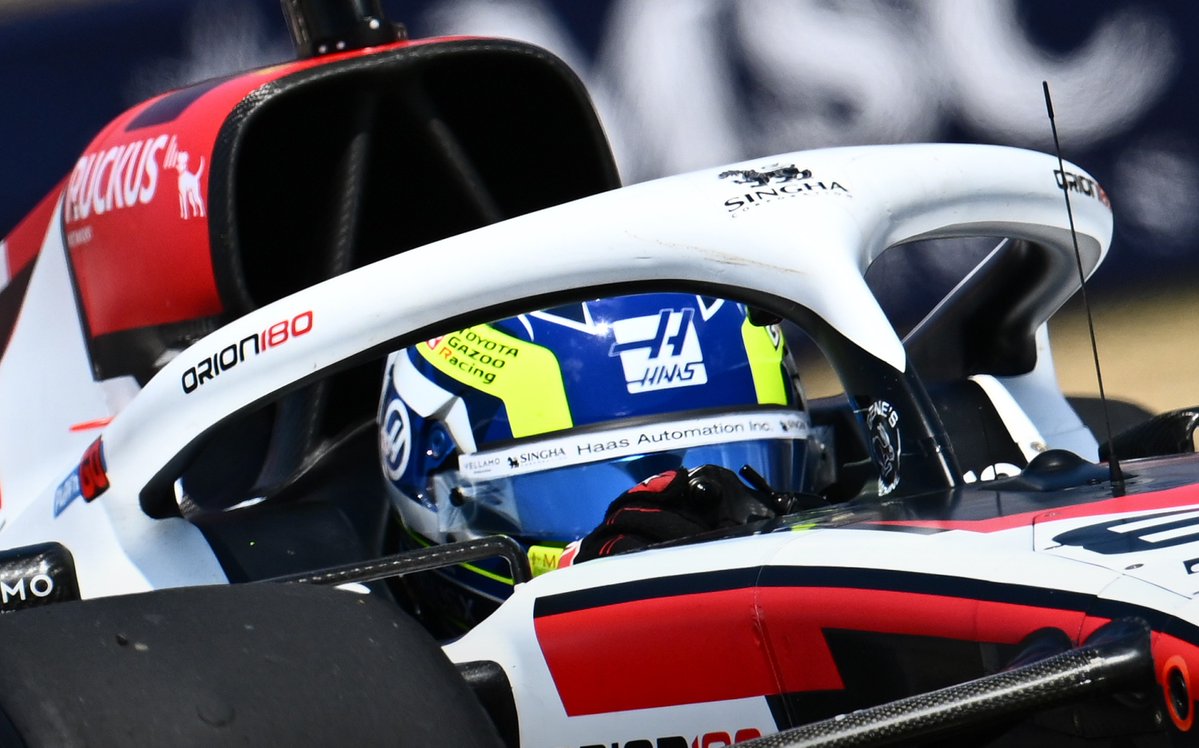
Oliver Bearman qualified P17 for the 2026 Hungarian Grand Prix, beaten by Fernando Alonso’s Aston Martin on a Hungaroring layout that exposed Haas’s current weaknesses, and the young Briton called the result ‘really painful’ as he searches for the form he showed at Spa.
Key Takeaways
Oliver Bearman qualified P17 for the 2026 Hungarian Grand Prix, finishing behind Fernando Alonso’s Aston Martin
Bearman described the session as ‘really painful,’ pointing to the Hungaroring’s short straights as a factor that suited Aston Martin’s package
The result follows a stronger showing at Spa-Francorchamps, leaving Bearman keen to understand the drop-off in form
Collectors continue to track driver form closely, since qualifying and race weekends often shape demand for full-size 1:1 replica helmets tied to specific Grand Prix moments
What Happened in Budapest Qualifying
Oliver Bearman qualified P17 for the 2026 Hungarian Grand Prix, a result that placed him behind Fernando Alonso’s Aston Martin on a circuit long regarded as one of the most technical stops on the calendar. Bearman was direct about the outcome, telling reporters, “It’s really painful. It shows that we’re really fighting and struggling at the moment.” The Hungaroring is known for its tight, twisting layout and comparatively short straights, and Bearman pointed to that characteristic as a possible explanation for Aston Martin’s pace advantage on this particular weekend.
He was careful, however, not to treat the result as a permanent shift in the competitive order. “But at the same time it’s probably the track that suits them the most, with the shortest straights,” he said, adding, “I don’t think it will remain like that forever. But still, it’s a reminder for us that we need to up our game.” That framing matters for anyone following Haas’s season arc in 2026 — a single low-speed, short-straight circuit is not necessarily representative of the car’s underlying pace across the rest of the calendar.
Why the Hungaroring Punishes a Struggling Car
The Hungaroring rewards mechanical grip and low-speed traction more than raw straight-line power, which is precisely why a car built around straight-line efficiency can lose ground there. With few long straights to mask a deficit in cornering balance, teams that are strong through medium and slow corners tend to find extra tenths that don’t show up as clearly at power-heavy venues like Spa-Francorchamps or Monza.
Bearman’s own comparison to Spa is instructive. He said, “I was looking forward to continuing where we left off in Spa,” suggesting the Haas package had shown promise on a very different type of layout just one round earlier. The contrast between a strong Spa weekend and a P17 qualifying result in Budapest highlights how track-specific characteristics can swing midfield form from one Grand Prix to the next, particularly for a team still working through its 2026 development direction.
Alonso and Aston Martin’s Advantage This Weekend
Fernando Alonso and Aston Martin outqualified Bearman in Budapest, reinforcing Bearman’s own read that the Hungaroring’s short straights suited their current setup. Alonso remains one of the most experienced operators on the grid, and Aston Martin has repeatedly shown that low-speed circuits can flatter a car that struggles elsewhere on the calendar.
For fans tracking the team battle this season, the result is a reminder that midfield order in 2026 is fluid from race to race rather than fixed. A driver or team beaten in Budapest can just as easily reverse that gap at the next circuit with a different corner mix, and Bearman’s own comments — “it’s probably the track that suits them the most” — acknowledge exactly that volatility.
Bearman’s Season Context Heading Into Sunday
Bearman enters the Hungarian Grand Prix race day looking to recover ground after a qualifying session he openly called disappointing. His remark that “it’s a reminder for us that we need to up our game” points to a team-wide review rather than a single-driver problem, and it echoes the tone many midfield squads adopt after a track-specific setback.
Race day itself often unfolds differently from qualifying pace, especially at a circuit where overtaking is difficult and tire strategy can reshuffle the order. Nothing about Sunday’s Hungarian Grand Prix has been run yet as of this qualifying-day report, so any prediction of the finishing order would be premature — the only confirmed fact from Budapest so far is the P17 grid slot and Bearman’s own assessment of the session.
Why Grand Prix Moments Like This Drive Collector Interest
Qualifying storylines like Bearman’s P17 in Budapest often shape which liveries and driver moments collectors want to commemorate on their shelves. A tough weekend for a young driver, followed by a recovery drive or a strong result the following round, becomes part of that driver’s narrative arc for the season — and full-size 1:1 replica helmets tied to specific races or team eras are a way fans mark those turning points.
Display-quality replicas typically mirror the dimensions and finish of the originals worn on track, with full-size shells commonly measured around 27 × 35 cm and finished weights in the region of 1.45 kg depending on shell material and paint layering, while visor components on many replica designs run in the 2 to 3 mm range for the polycarbonate insert. These are collector and display pieces only, built for exhibition rather than any protective or on-track use, but the attention to scale and finish is what makes them a lasting way to reference a specific driver, team, or season.
“It’s really painful. It shows that we’re really fighting and struggling at the moment. But at the same time it’s probably the track that suits them the most, with the shortest straights. I don’t think it will remain like that forever. But still, it’s a reminder for us that we need to up our game.”
— Oliver Bearman, via Adam Cooper (@adamcooperF1)
FAQ
Q: What position did Oliver Bearman qualify in for the Hungarian Grand Prix?
Oliver Bearman qualified P17 for the 2026 Hungarian Grand Prix, a result he described as painful given the current form of his team.
Q: Who beat Bearman in Hungaroring qualifying?
Fernando Alonso, driving for Aston Martin, outqualified Bearman in Budapest, with Bearman pointing to the circuit’s short straights as a factor in Aston Martin’s pace.
Q: Why did Bearman say the Hungaroring suited Aston Martin?
Bearman said the Hungaroring’s shortest straights on the calendar likely favored Aston Martin’s current package, since the circuit rewards low-speed cornering over straight-line speed.
Q: Did Bearman perform well at the previous race in Spa?
Bearman referenced Spa-Francorchamps as a stronger recent weekend, saying he was hoping to continue that form into the Hungarian Grand Prix before the Budapest qualifying result.
Q: Are 123Helmets replicas certified for track or protective use?
No, 123Helmets products are full-size 1:1 display and collector replicas intended for exhibition only, not certified for protective or on-track use.
Browse F1 Helmet Collection
Display and collector replicas only. Not certified for protective use. Full-size 1:1 scale.