Blog
Belgian GP 2026: Rain Radar Puts Spa Grid on Alert
 123Helmets Editorial Team
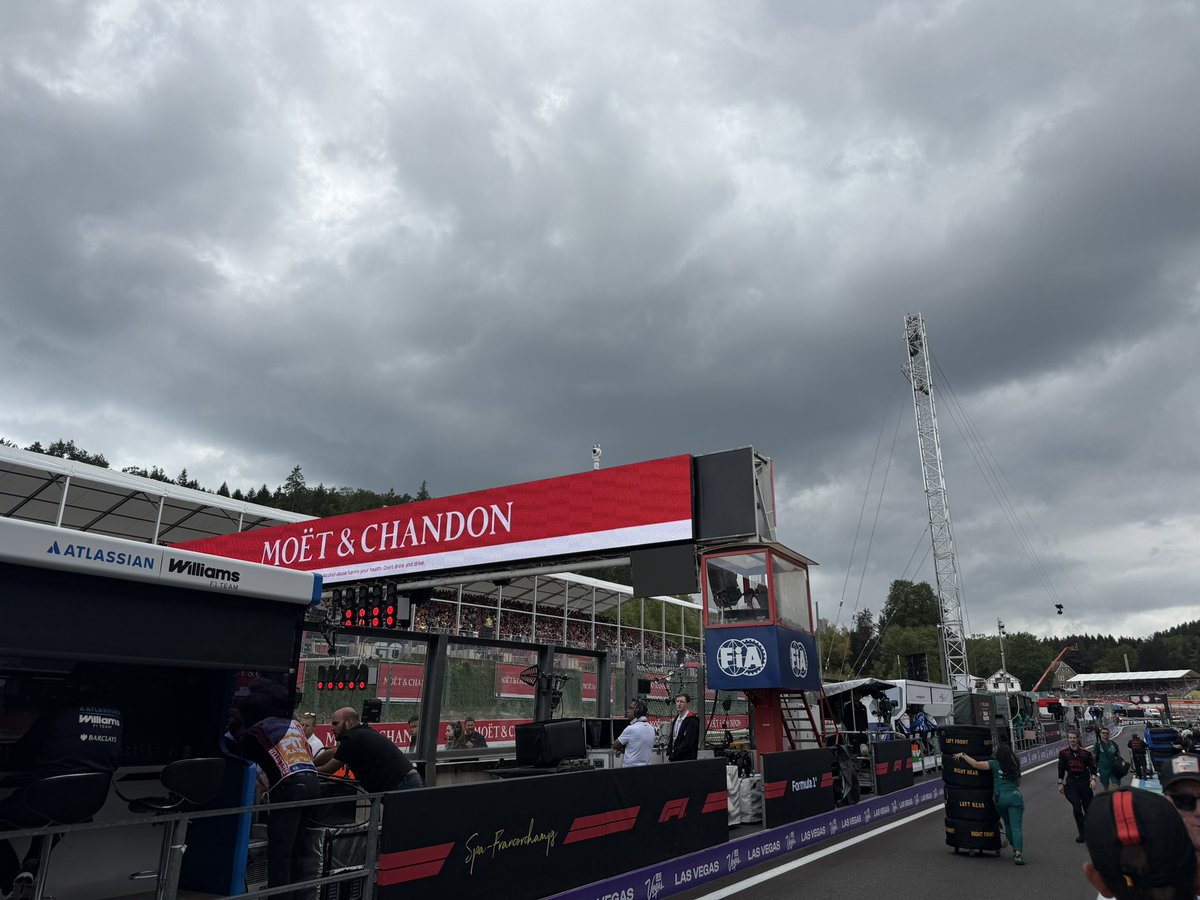
With the grid forming at Spa-Francorchamps, reporter Chris Medland flagged a radar showing rain closing in on the circuit, prompting Williams to keep close watch on the sky while Racing Bulls wheeled a fresh set of tyres onto the grid late as a precaution — a reminder of how fast conditions can flip at this 7.004 km track.
Key Takeaways
A radar shared trackside ahead of the 2026 Belgian Grand Prix showed rain approaching Spa-Francorchamps as teams finalized grid preparations.
Williams was reported watching the weather closely, while Racing Bulls (VCARB) brought an extra set of tyres to the grid late as a contingency.
Spa-Francorchamps spans 7.004 km with roughly 19 corners and a 44-lap race distance, and its elevation change of close to 100 meters is a known driver of localized rain.
Wet-weather Grand Prix weekends at Spa have historically produced some of the most collectible helmet liveries, thanks to visor tear-offs, spray patterns, and late-race strategy calls.
Rain Radar Puts the Spa Grid on Alert
A weather radar circulated shortly before the 2026 Belgian Grand Prix grid formed showed a band of rain closing in on Spa-Francorchamps, according to reporting from Chris Medland trackside. The image, shared just before lights out, sent a ripple through the pit lane as teams reassessed tyre choices in real time. Spa is notorious for its microclimates — rain falling on one part of the 7.004 km lap while another sector stays dry — and a late radar shift this close to the start is exactly the kind of scenario that turns a straightforward grid procedure into a strategy scramble.
For teams and fans alike, this is the tension that defines Spa weekends: a circuit long enough that weather at Eau Rouge can differ completely from conditions at La Source. When radar imagery starts moving through team garages minutes before the formation lap, it signals genuine uncertainty about which tyre compound will be right for the opening laps.
Williams Tracks the Sky at Spa-Francorchamps
Williams was reported to be actively monitoring the incoming rain radar as the Belgian Grand Prix grid took shape. That kind of late scrutiny usually means a team is weighing whether to stick with a dry-weather setup or prepare drivers mentally for an early call to intermediates. At a circuit stretching 7.004 km with around 19 corners, a shift in grip levels on even a portion of the lap can be decisive for a midfield team fighting for points.
Fans following Williams this weekend can find the team’s current lineup and race gear in the Williams collection, where display-quality helmet replicas capture the liveries drivers will carry into whatever conditions Spa delivers.
VCARB’s Late Tyre Delivery Signals Wet-Weather Doubt
Racing Bulls (VCARB) rolled a fresh set of tyres onto the grid late in the pre-race sequence, a precaution typically taken when a team wants an intermediate or wet-compound option available right up until the last possible moment. Bringing tyres to the grid outside the normal window is not routine — it usually reflects a genuine split in the team’s read of the radar versus what spotters are seeing trackside.
This kind of late adjustment underlines how tight the margins are once the sky starts to change. A few minutes’ difference in when rain actually arrives at Spa can separate a team that nails the tyre call from one caught out on the wrong compound for the opening stint. Fans tracking the Racing Bulls drivers this weekend can browse the Racing Bulls collection for display helmets tied to the team’s 2026 campaign.
Spa’s Microclimate: A Circuit Built for Chaos
Spa-Francorchamps is one of the few circuits on the calendar where rain can fall on part of the lap and leave the rest completely dry. The track measures 7.004 km, hosts a race distance of 44 laps, and climbs and drops across an elevation change of close to 100 meters between its lowest and highest points — conditions that regularly generate localized weather systems within the circuit boundary itself.
That combination of length, elevation, and forest terrain around the Ardennes region is exactly why radar watches like the one reported ahead of this grid become such a recurring storyline at the Belgian Grand Prix. Teams have been caught out here before by rain arriving at Radillon while the start-finish straight stays bone dry, and it is this unpredictability that makes race engineers lean so heavily on live radar data in the closing minutes before lights out.
Collecting the Chaos: Wet-Weather Helmets as Display Pieces
Wet-weather Grand Prix weekends at Spa consistently produce some of the most visually striking helmet designs and race-worn details, from tear-off residue to spray-streaked visors, making them popular subjects for full-size display replicas. Collectors often gravitate toward helmets tied to races where strategy and conditions shifted mid-event, since those weekends tend to generate the strongest storylines around a driver’s on-track decisions.
A 1:1 scale replica helmet built to exhibition quality lets fans hold onto that moment long after the chequered flag — whether it is a driver’s dry-setup lid from qualifying or the design they carried into a changeable, rain-threatened race like this one. These pieces are built for shelf and cabinet display rather than any on-track use, but the detail level mirrors what teams run on Sunday, right down to sponsor placement and paint finish.
“Williams watching a radar that shows some rain closing in, and VCARB ran a set of tyres onto the grid late just in case.”
— Chris Medland, F1 journalist
FAQ
Q: Is rain expected at the 2026 Belgian Grand Prix?
A radar shared shortly before the grid formed showed rain approaching Spa-Francorchamps, according to reporting from Chris Medland, though conditions at the exact start time were still uncertain as teams finalized tyre choices.
Q: Why did Racing Bulls bring extra tyres to the grid late?
Bringing an additional tyre set to the grid late is typically a precaution against a last-minute weather shift, giving the team the option to switch compounds close to the formation lap if rain arrives sooner than expected.
Q: How long is the Spa-Francorchamps circuit?
Spa-Francorchamps measures 7.004 km per lap, with the Belgian Grand Prix run over a 44-lap race distance and roughly 19 corners across the layout.
Q: Why is Spa known for unpredictable weather?
Spa-Francorchamps has an elevation change of close to 100 meters across its forested Ardennes layout, which regularly produces localized rain that can hit one part of the lap while another sector stays dry.
Q: Are 123Helmets replicas wearable or race-certified?
No, these are full-size 1:1 scale display and collector replicas intended for exhibition purposes only, not certified for protective or on-track use.
Browse F1 Helmet Collection
Display and collector replicas only. Not certified for protective use. Full-size 1:1 scale.