Blog
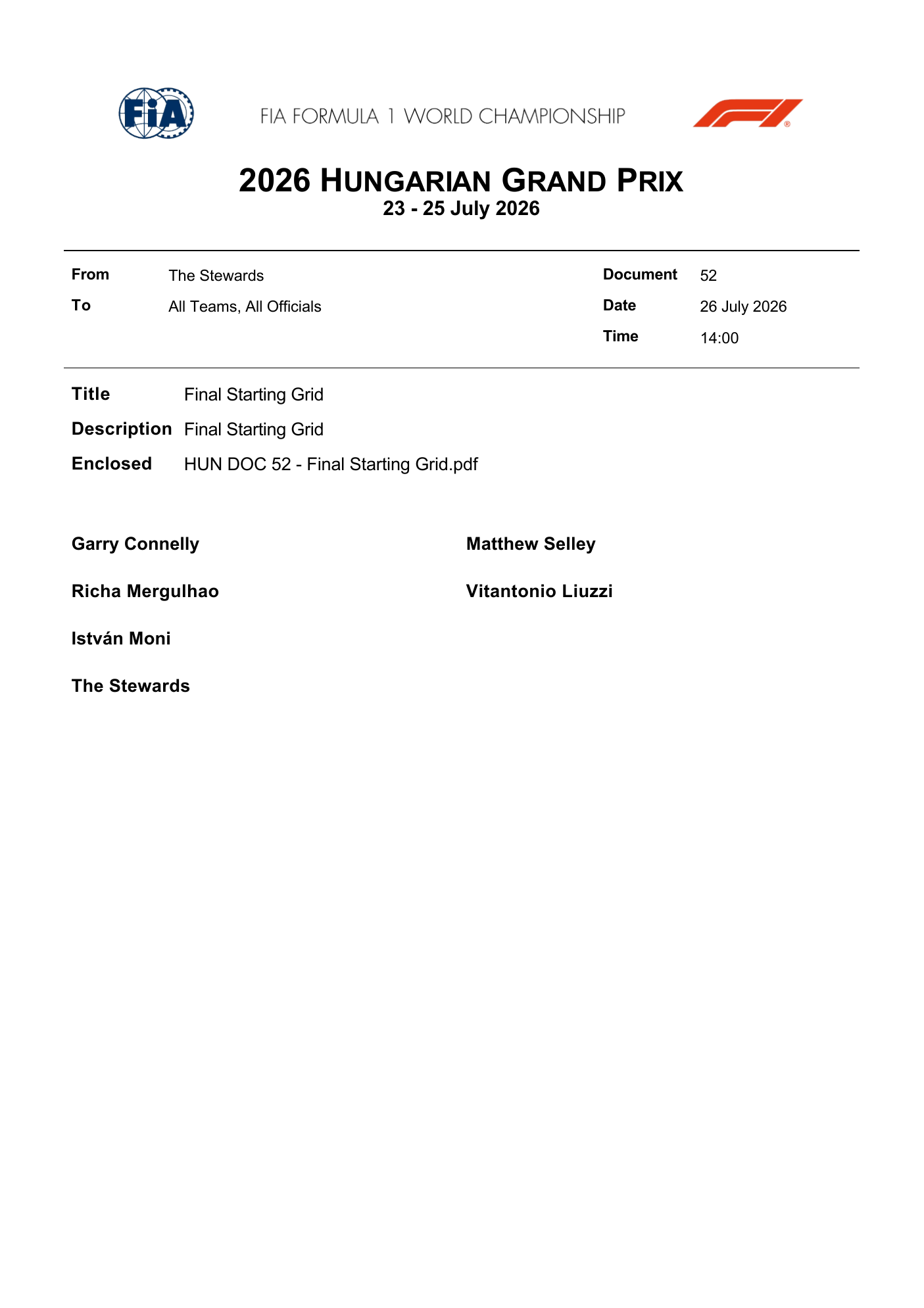
FIA Doc 56: Charles Leclerc Yellow Flag Case — Hungarian GP 2026
 123Helmets Editorial Team
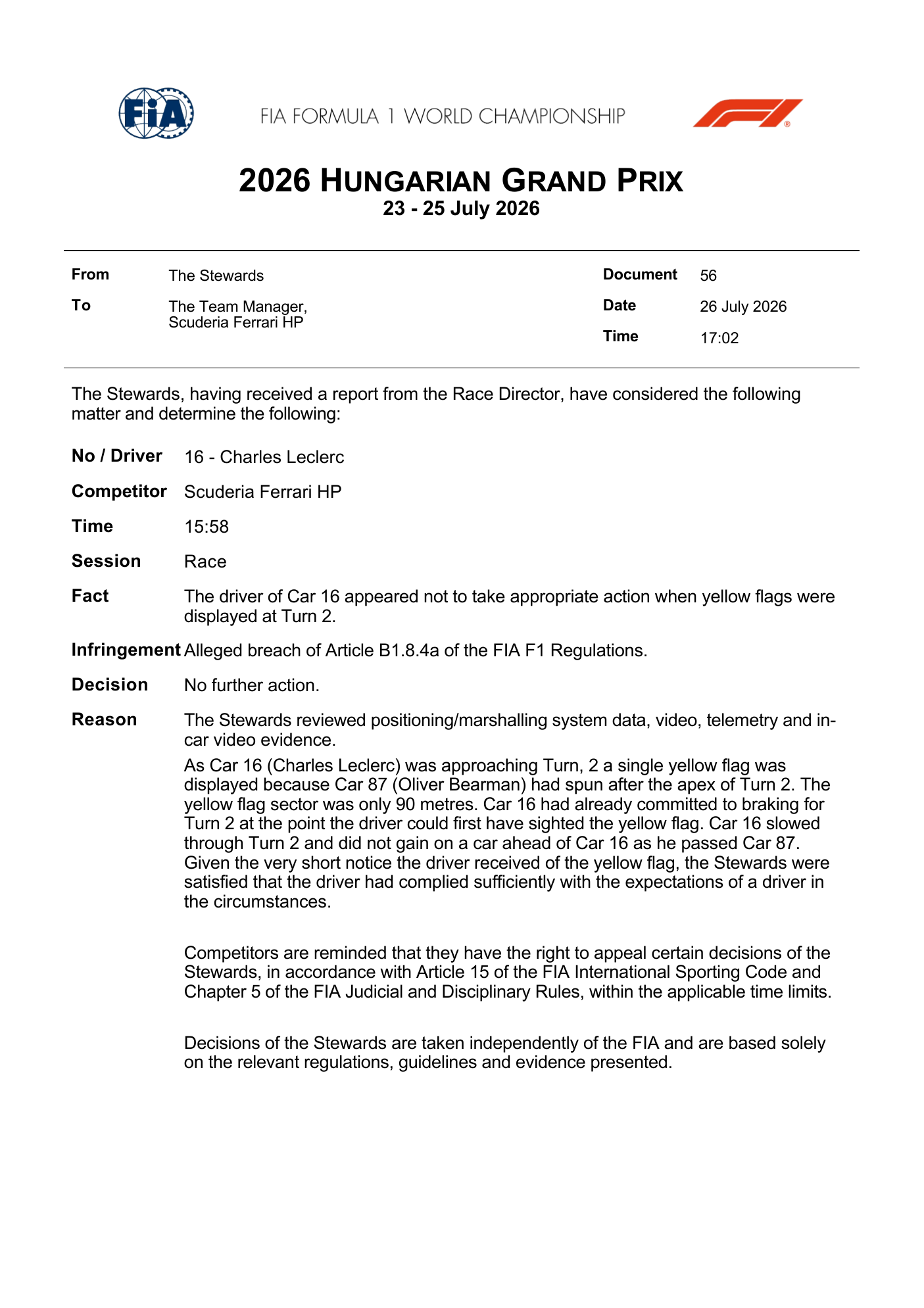
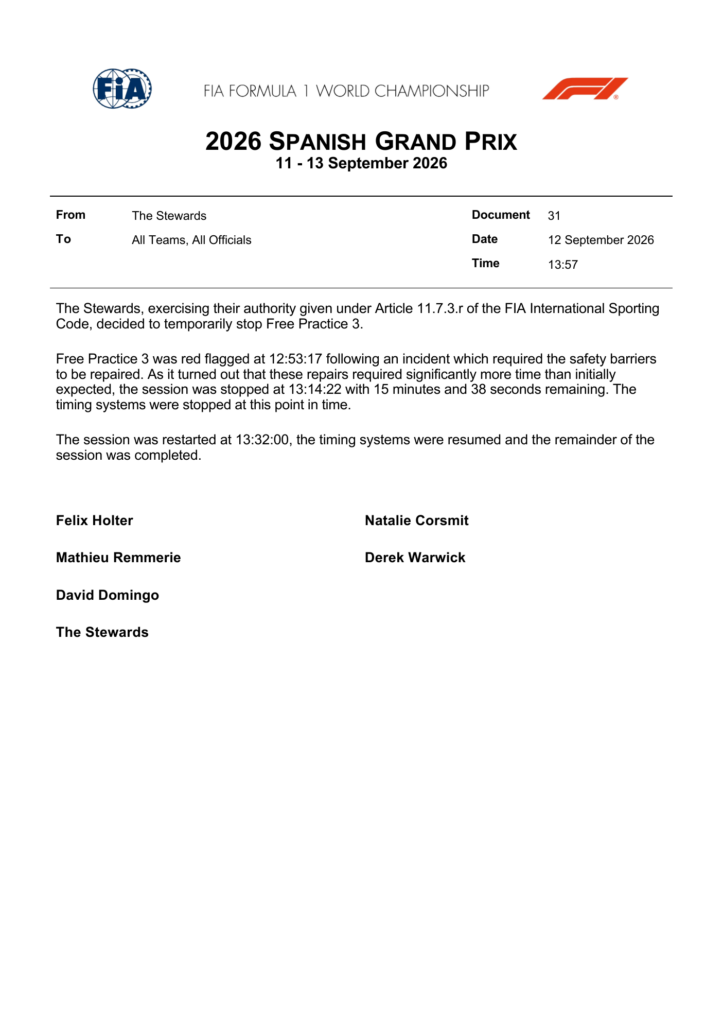
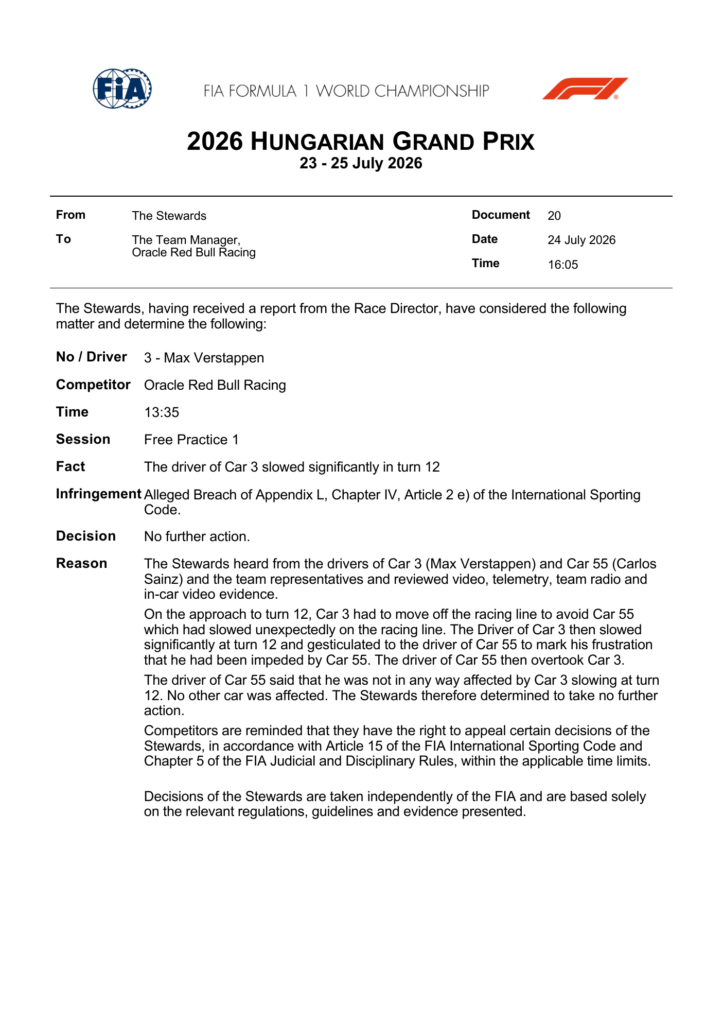
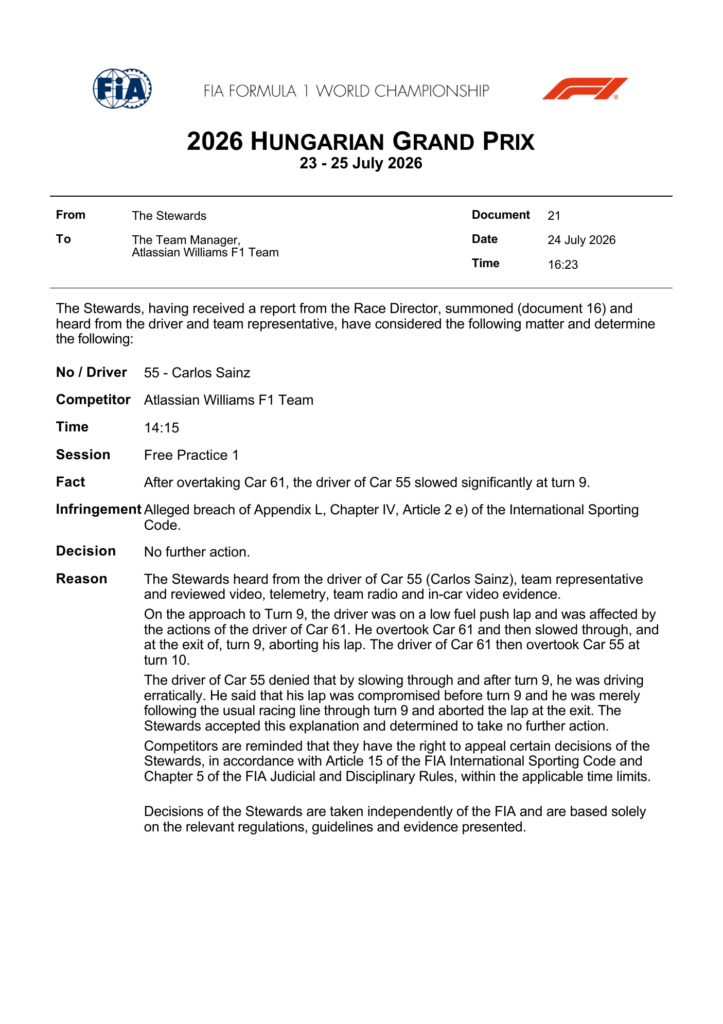
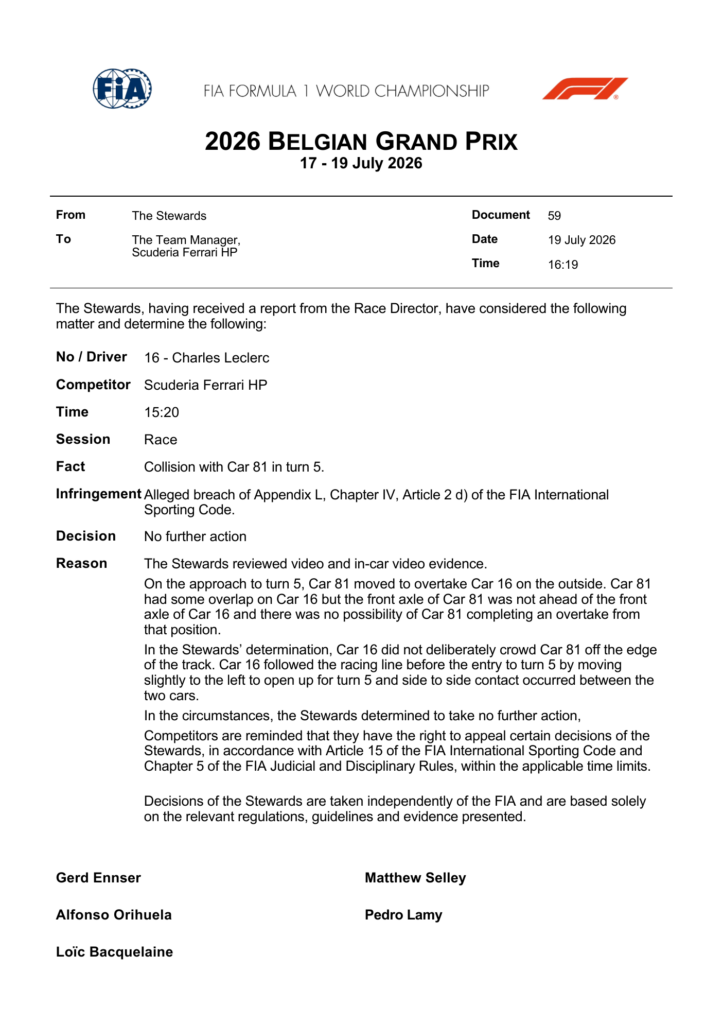
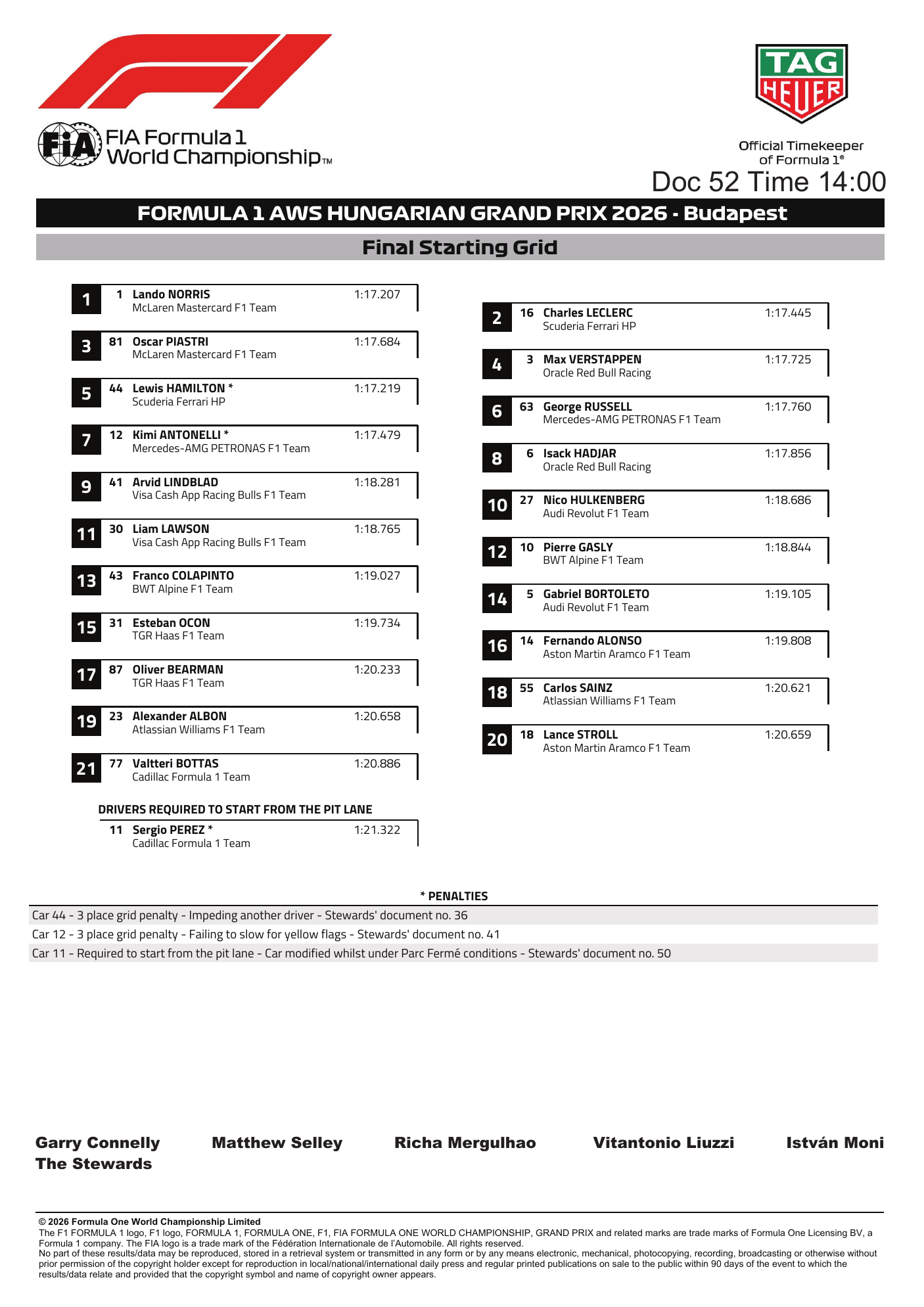
FIA stewards issued Document 56 during the 2026 Hungarian Grand Prix weekend, opening a review into Charles Leclerc for an alleged failure to slow sufficiently for waved yellow flags at the Hungaroring — a track where its 4.381 km layout and 14 corners leave almost no margin for late braking near an incident.

Key Takeaways
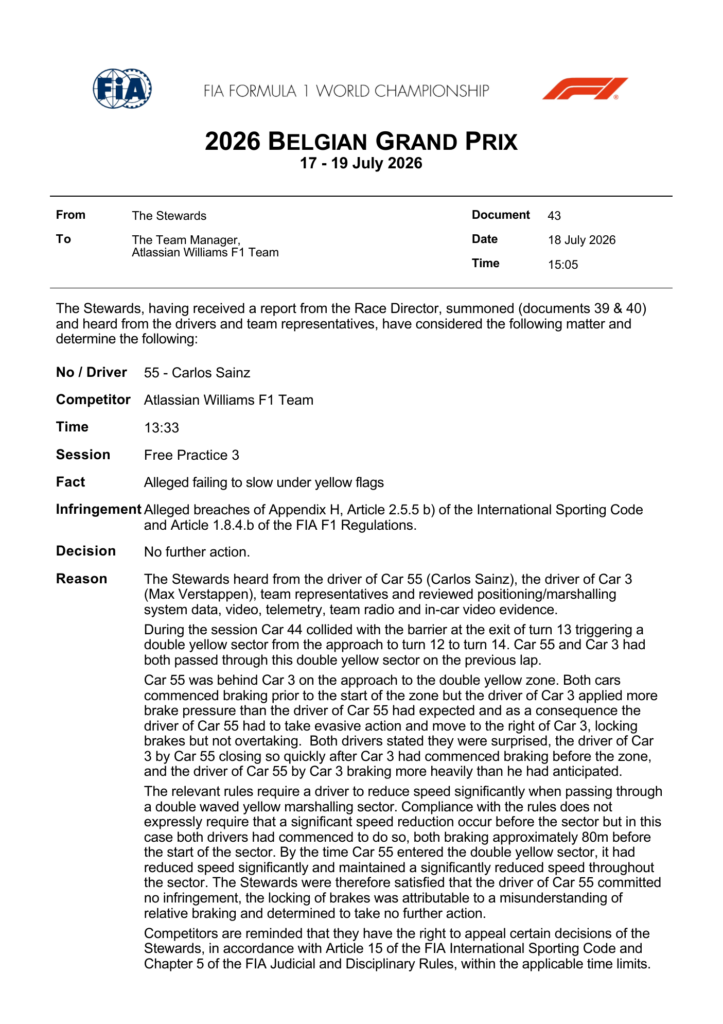
FIA Document 56 records a stewards’ investigation into Charles Leclerc for an alleged failure to slow adequately for yellow flags during the 2026 Hungarian Grand Prix weekend at the Hungaroring.
Charles Leclerc races for Ferrari in the 2026 season; yellow-flag cases are assessed using GPS car-position data cross-referenced against marshalling sector timing loops.
The Hungaroring is a 4.381 km, 14-corner circuit with a 70-lap Grand Prix distance, one of the tightest layouts on the calendar and historically prone to yellow-flag scenarios.
Yellow-flag findings do not need to change race classification to matter to fans — they shape driver reputation and season narrative, both of which feed directly into collector interest in that driver’s helmet designs.
What FIA Document 56 Actually Says
FIA Document 56 is the official stewards’ paperwork opened at the 2026 Hungarian Grand Prix to examine an alleged failure by Charles Leclerc to slow sufficiently for yellow flags shown during a session at the Hungaroring. Stewards’ documents are numbered sequentially through a Grand Prix weekend, so a number as high as 56 signals this was one of many separate matters — noted incidents, judged notes, and investigation summaries — the panel worked through across practice, qualifying and the race itself.
This is Charles Leclerc’s entry for the 2026 season, driving for Ferrari. Any document naming a specific car number rather than a driver by name is standard FIA practice; the numbering is fixed to the entry, not the individual, though in this case it is Leclerc’s car under review. The document format typically records the alleged breach, the regulation referenced, the evidence considered, and the panel’s decision or a summons for a hearing.
Because these documents are published in near real time by the FIA media delegate, they become part of the public record of a Grand Prix weekend almost as quickly as lap times themselves — which is why they matter to anyone following a driver’s championship campaign closely.
The Yellow Flag Rule Stewards Are Checking
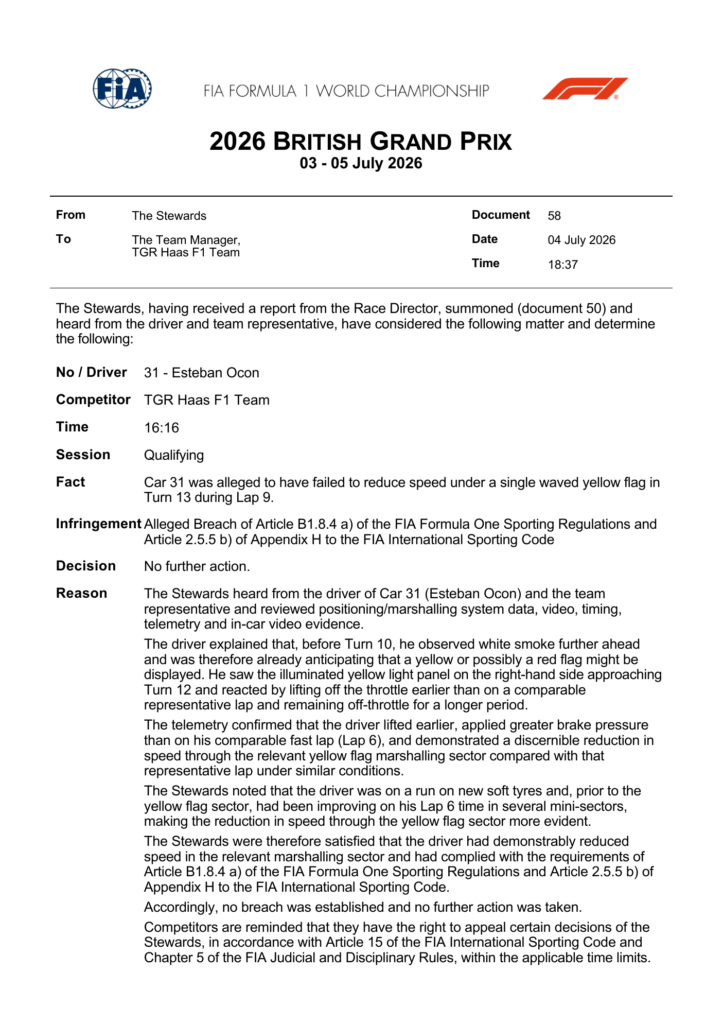
Yellow flags require drivers to slow down and be prepared to change direction or stop, with double waved yellows demanding a more significant reduction in speed than a single yellow. The distinction matters because Formula 1 Sporting Regulations treat different yellow-flag conditions with different expected driver responses, and stewards judge compliance against what a driver reasonably should have done given the flag status shown at that marshalling post.
In practice, this is not a subjective call made from a trackside glance. The FIA remote garage and race control systems track every car’s GPS position and speed in real time, and each marshalling sector carries its own timing loop. When a yellow-flag investigation is opened, the stewards pull the car’s speed trace through the relevant sector and compare it against the driver’s typical speed at that same point on a green-flag lap.
- Marshalling sectors are geo-fenced on the circuit map so any yellow flag display is tied to an exact GPS zone.
- Speed deltas are measured lap to lap through the same sector, not just at a single point.
- Driver radio and steering wheel flag-panel displays are cross-checked against the physical flag timing.
This is the same evidence base used across every yellow-flag case on the calendar, and it is why Document 56 references specific data rather than a marshal’s testimony alone.
Why the Hungaroring Makes This a Tight Call
The Hungaroring is a 4.381 km circuit with 14 corners, hosting a Grand Prix run over 70 laps, and its tight, technical layout leaves little room for a car to lose significant time without falling out of position. First used for a Formula 1 World Championship round in 1986, the track has a long history of yellow-flag scenarios because its narrow racing line and limited overtaking zones mean incidents at one corner can affect visibility and braking references at the next.
On a circuit this compact, the gap between a driver who genuinely lifted and coasted through a yellow-flag zone and one who simply drove a consistent lap can be a fraction of a second across a marshalling sector. That is exactly the kind of margin stewards’ data review is built to resolve, which is why cases like Document 56 hinge on precise sector timing rather than a single dramatic visual moment.
Circuits with fast, open sections tend to produce more clear-cut yellow-flag breaches, since the speed differential is obvious. Technical tracks like the Hungaroring produce the harder judgment calls — and harder judgment calls are where stewards’ documents draw the most attention from teams and media alike.
Charles Leclerc’s 2026 Season Context
Charles Leclerc has carried this entry number since he joined the grid, and any stewards’ scrutiny on his car is scrutiny on his campaign for Ferrari in the 2026 season. A yellow-flag investigation, regardless of its outcome, becomes part of the season’s running commentary on how a driver is managing risk across a demanding calendar.
For a title contender or a front-running team, every stewards’ document is read by rivals and media as a data point on discipline under pressure. Whether Document 56 results in no further action, a reprimand, or a time penalty, the fact that it exists is itself a small chapter in how the 2026 Hungarian Grand Prix weekend is remembered for that car and driver.
This is also why collectors and fans track these documents closely alongside on-track results — a season’s controversies, near-misses and stewards’ rulings become part of the story attached to a driver’s helmet design for that year, adding context to why a particular livery or race-specific finish holds meaning beyond its paint scheme.
Why Race-Weekend Drama Fuels Collector Interest
Stewards’ documents like Doc 56 add a layer of narrative to a Grand Prix weekend that pure results do not capture, and that narrative is exactly what drives long-term interest in a driver’s helmet from that season. A full-size 1:1 display replica of the helmet worn during a season shaped by close stewarding calls, title fights or controversial rulings becomes a marker of that specific chapter, not just a generic piece of merchandise.
Collectors who follow every published FIA document across a season are often the same people building out a shelf of race-specific or season-specific helmet replicas, because the paperwork and the paint scheme tell the same story from two different angles. A document number, a car number, and a circuit name are small details — but they are the kind of details that turn a display piece into a dated, contextual collector item rather than an anonymous design.
Exhibition-quality full-size replicas let fans hold onto that context physically: the shell shape, the visor design, the sponsor placement from a specific year, displayed the way a driver’s own helmet would sit in a team garage or trophy room.
FAQ
Q: What is FIA Document 56 at the Hungarian Grand Prix?
It is the official stewards’ paperwork opened during the 2026 Hungarian Grand Prix weekend to review an alleged failure by Charles Leclerc to slow sufficiently for yellow flags shown on track at the Hungaroring.
Q: What team does Charles Leclerc drive for in the 2026 F1 season?
Charles Leclerc drives for Ferrari in the 2026 Formula 1 season.
Q: How do stewards decide if a driver failed to slow for yellow flags?
Stewards compare GPS-tracked speed data through the geo-fenced marshalling sector against that driver’s speed through the same sector under green-flag conditions, using timing loops tied to each marshalling post.
Q: Why is the Hungaroring a difficult track for yellow-flag judgment calls?
The Hungaroring is a tight, technical 4.381 km circuit with 14 corners and limited overtaking zones, so speed differences during yellow-flag periods can be small and harder to separate from normal lap variation.
Q: Where can I find a display replica of a driver’s 2026 helmet?
123Helmets.com carries full-size 1:1 collector and display replica F1 helmets across current and past liveries, available to browse in the shop collection.
Browse F1 Helmet Collection
Display and collector replicas only. Not certified for protective use. Full-size 1:1 scale.