Blog
Russell’s Drinks Failure at 2026 Austrian GP
 123Helmets Editorial Team
George Russell crossed the line at the 2026 Austrian Grand Prix without a single sip of water during the race after his in-cockpit drinks system failed. What followed in Parc Fermé — water, then champagne — told the full story of a podium earned under physical duress.
Key Takeaways
Russell’s in-cockpit drinks system failed at the start of the 2026 Austrian GP, leaving him without hydration for the entire race distance.
On arrival in Parc Fermé, Russell drank and poured water over himself immediately — a rare public signal of how demanding the race was on his body.
He still reached the podium, after which a champagne soaking replaced the water cool-down in one of the race’s most talked-about post-finish moments.
The incident is a sharp reminder of how much unseen hardware sits inside a modern F1 cockpit — and why replica helmets capture a moment that goes far beyond lap times.
A Race Run Completely Dry
George Russell completed the entire 2026 Austrian Grand Prix without a functioning drinks system after the in-cockpit bottle suffered a mechanical failure before he could take a single sip. Modern Formula 1 cars route a thin drinking tube directly into the helmet, and when that system fails, there is no alternative — the driver has no access to fluids from the moment the lights go out to the moment the chequered flag falls. At the Red Bull Ring in Spielberg, Austria, where ambient temperatures and high physical demand combine to push core body temperatures well above comfortable limits, racing dry for a full Grand Prix distance is a genuine physiological test.
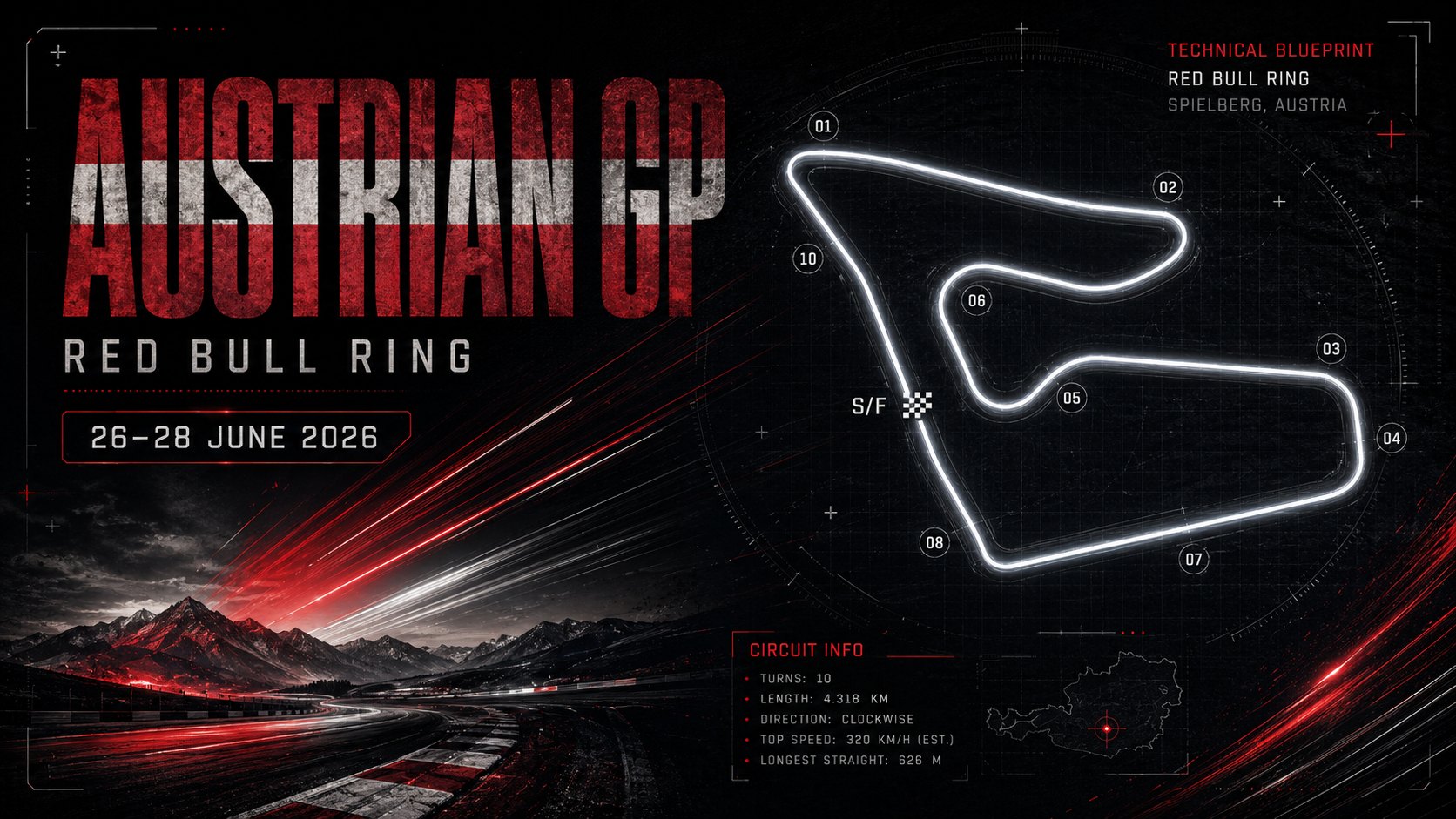
The Red Bull Ring circuit sits at approximately 678 metres above sea level, and summer race-day temperatures in the Styrian mountains regularly push above 30 °C at track level. Cockpit temperatures inside a sealed F1 car routinely exceed 50 °C during a race, meaning drivers lose meaningful fluid volume through sweat alone — figures across the paddock frequently reference losses of 2 to 3 litres per race in hot conditions. Russell had none of that replaced during the race. He drove every lap on willpower and whatever hydration he had taken on before the formation lap.
The failure itself was not a driver error or a strategic call. It was a hardware problem — the kind that can strike any team on any weekend regardless of preparation. For George Russell and Mercedes, the task was simply to manage it, stay focused, and bring the car home in a competitive position.
Parc Fermé: Water First, Questions Later
The moment Russell pulled into Parc Fermé, he reached for water immediately — before speaking to engineers, before removing his gloves, before doing anything else. Images shared from the paddock captured the sequence: Russell drank deeply, then tipped the remainder of the bottle over his head to bring his core temperature down. It was one of those unscripted paddock moments that communicates more than any team radio message could.
Parc Fermé protocol normally means drivers are surrounded by stewards and officials checking cars before the podium ceremony begins. The window between parking the car and walking to the podium can be as short as 10 to 15 minutes, which leaves almost no time for recovery. That Russell prioritised rehydration above all else in that narrow window underlines exactly how much the drinks failure had cost him physically across the race distance.
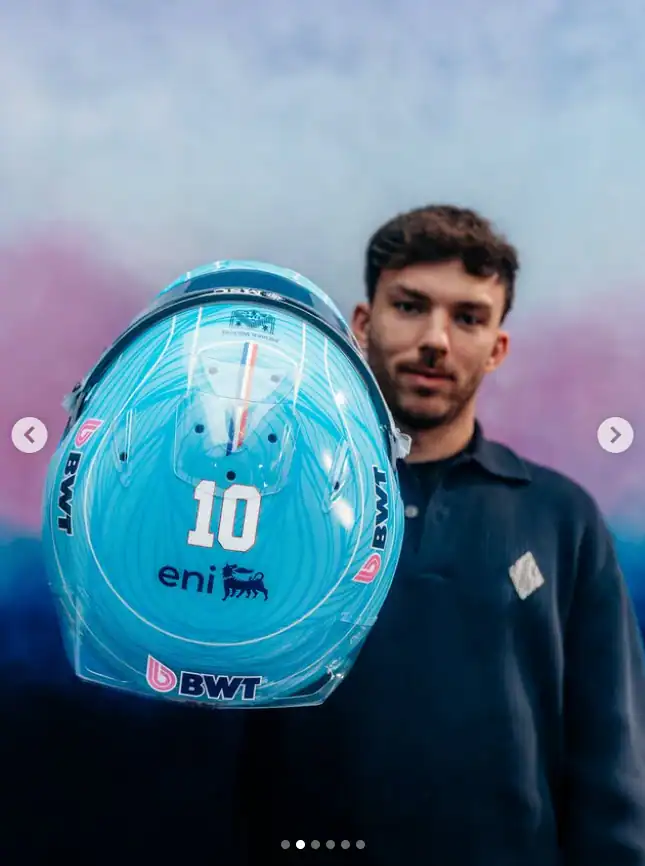
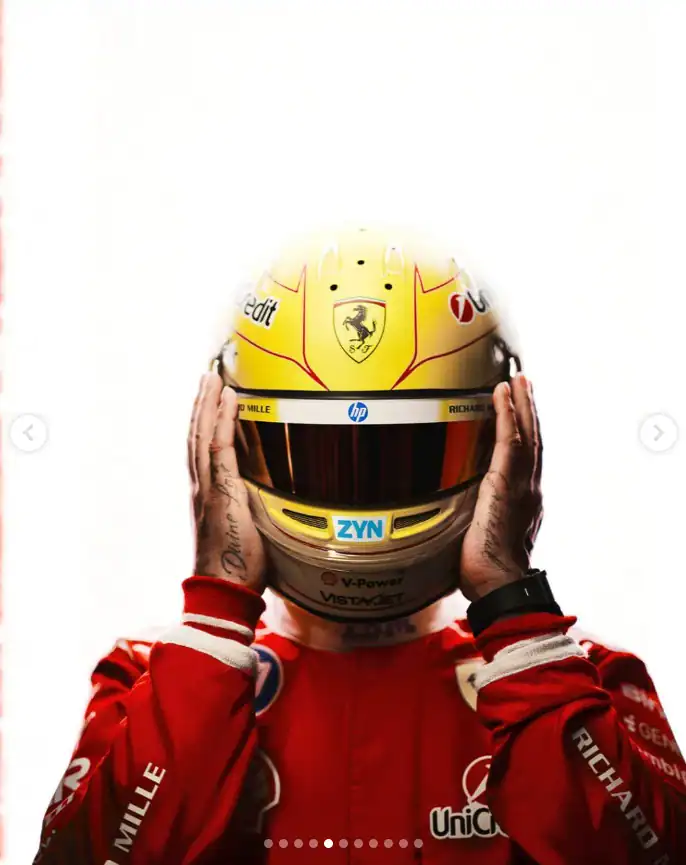
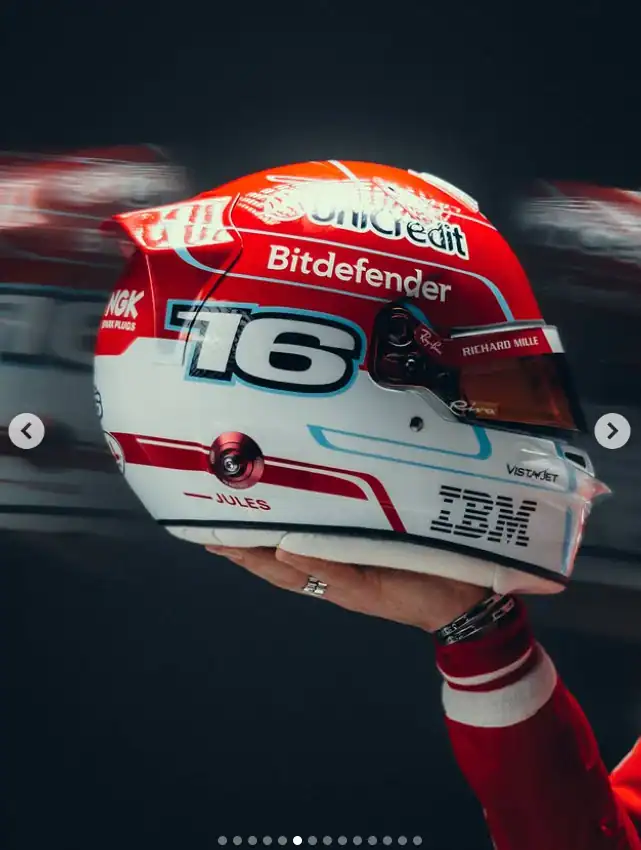
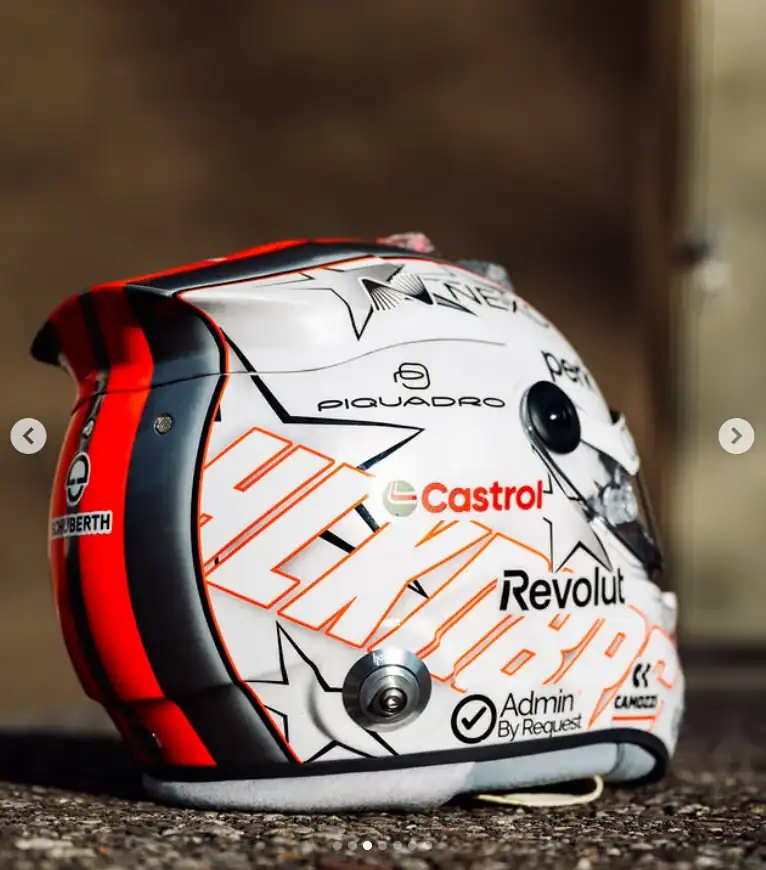
For collectors and fans who follow the human side of the sport, this kind of moment is precisely what display helmets are designed to preserve. A full-size 1:1 replica of the helmet Russell wore in Austria in 2026 carries the context of a race like this one — not just the livery, but the story of what the driver inside it endured. The 29 × 25 × 35 cm footprint of a standard display stand places that story directly at eye level in any room.
Champagne Over Everything: The Podium Finish
Russell made the podium at the 2026 Austrian Grand Prix — a result that reframes the drinks failure entirely, shifting it from a story about adversity into a story about performance under adversity. By the time he returned to the Mercedes garage after the podium ceremony on 2026-06-28, he had been soaked a second time, on this occasion in champagne rather than water.
The contrast between the two drenchings in the space of roughly 30 minutes captures what Formula 1 regularly produces: physical hardship and sporting triumph occupying the same afternoon. First, the self-poured water of a driver cooling down a body that had been working without fluid for the entire race. Then, the champagne spray of a celebration shared with the other top-three finishers on the Spielberg podium, one of the most photographed locations on the F1 calendar.
For Mercedes, the result carried additional weight given the competitive pressures of the 2026 season, where the new technical regulations have reshuffled the grid order more dramatically than any regulation change in recent memory. A podium extracted from a race in which the car’s drink system failed from the first lap is the kind of result that teams and fans remember long after the season standings are settled.
The Physical Reality Inside an F1 Cockpit
An F1 cockpit in race trim weighs heavily on the human body across every one of its dimensions. The drinks system — a small reservoir typically holding around 1.5 litres, connected to a push-button release on the steering wheel — is one of the few concessions to driver comfort in an environment otherwise engineered entirely around performance. The visor on a modern F1 helmet is approximately 3 mm thick at its centre and treated with tear-off strips that the driver pulls away lap by lap to maintain clear sightlines. The helmet itself, in race-spec form, weighs roughly 1.25 to 1.45 kg depending on the manufacturer and specification.
All of that hardware is designed to keep a driver functional and focused for a race distance that can span 70 laps or more. Remove one component — the drinks feed — and the driver must compensate mentally and physically for the entire duration. Neck muscles working against 5G cornering forces, core temperature climbing inside a sealed carbon shell, concentration maintained at the level required to manage tyre degradation and traffic: all of it continues without the one mitigation a drinks system provides.
Russell’s management of that situation to a podium finish is a measurable result. It sits in the record books for the 2026 Austrian Grand Prix regardless of the circumstances that surrounded it. Display replicas of the helmets worn in seasons like 2026 — when regulation changes, mechanical failures, and on-track battles all converge — carry the weight of that record. A 1:1 full-size collector replica is the physical object that anchors a season’s worth of moments to a specific space.
Why This Moment Belongs in a Collection
A race-weekend story that includes a hardware failure, a Parc Fermé rehydration, and a champagne podium is exactly the kind of multi-layered narrative that makes a specific helmet from a specific season worth owning as a display piece. Collector items derive their significance from context, and the 2026 Austrian Grand Prix has produced context in abundance around George Russell and the Mercedes operation.
Full-size 1:1 display replicas are exhibition-quality pieces, not rated or certified for any protective use — they exist to represent the visual record of a helmet as it appeared on a given weekend. The livery, the visor specification, the team branding: all of it is locked in at the moment of production, making each replica a document of a specific point in a driver’s career rather than a generic representation of the sport.
The Austrian Grand Prix weekend at Spielberg is one of the calendar fixtures with the most intense visual identity — the Red Bull Ring’s short lap of 4.318 km produces close racing and frequent radio drama that translates directly into collector interest. A helmet from this race, this year, with this particular backstory attached, is the kind of display piece that does not require much explanation to anyone who follows the sport. The moment speaks for itself, and the helmet on the shelf speaks for the moment.
Russell in the 2026 Season: The Bigger Picture
The 2026 season has been defined by the arrival of new power unit regulations and a revised aerodynamic framework, both of which have changed the competitive order at nearly every race. George Russell has been one of the drivers most closely watched through that transition, and a podium at the Austrian Grand Prix on 2026-06-28 is a data point that strengthens his position in the Drivers’ Championship conversation. The drinks failure adds a layer of narrative that pure lap-time data cannot carry — it is the kind of race that fans recall by the image of a driver pouring water over himself in Parc Fermé rather than by the precise sector times that produced the final classification.
FAQ
Q: What happened to George Russell’s drinks system at the 2026 Austrian GP?
Russell’s in-cockpit drinks bottle suffered a mechanical failure, leaving him without any fluid intake for the full race distance at Spielberg on 2026-06-28. The system, which routes a drinking tube directly to the driver inside the helmet, failed before he could take a single sip.
Q: Did George Russell still finish on the podium despite the drinks failure?
Yes. Russell reached the podium at the 2026 Austrian Grand Prix even without any in-cockpit hydration during the race. He was drenched in champagne during the podium celebration shortly after cooling himself down with water in Parc Fermé.
Q: How physically demanding is an F1 race without a drinks system?
Extremely demanding. Cockpit temperatures in a sealed F1 car regularly exceed 50 °C, and drivers can lose 2 to 3 litres of fluid through sweat over a race distance. The drinks system — typically a reservoir of around 1.5 litres — is the only fluid source available once the race starts, so its failure has direct physical consequences.
Q: Are the George Russell replica helmets from 123Helmets certified for use in motorsport?
No. Every item in the 123Helmets collection is a full-size 1:1 display and collector replica, produced to exhibition quality for shelf or case display. They carry no safety certification of any kind — FIA, Snell, ECE, or DOT — and are not intended for road, track, or protective use.
Q: Why is the 2026 Austrian GP helmet a notable collector piece?
The 2026 Austrian Grand Prix produced an unusually well-documented human story around Russell — a full-race drinks failure, a water cool-down in Parc Fermé, and a champagne podium — all captured in a single afternoon at the Red Bull Ring’s 4.318 km circuit. That density of narrative makes the helmet from this event particularly meaningful as a display piece.
Browse F1 Helmet Collection
Display and collector replicas only. Not certified for protective use. Full-size 1:1 scale.
This article was written with the help of AI tools. Editorial policy