Blog
End the Wait: Leclerc’s Barcelona Practice Form Puts Ferrari’s 2013 Drought in the Crosshairs
 123Helmets Editorial Team

Charles Leclerc clocked third and fourth fastest across Friday’s two practice sessions at the Circuit de Barcelona-Catalunya, placing himself squarely in qualifying contention. Behind that stopwatch sits a statistic Ferrari fans know all too well: no Ferrari driver has won the Spanish Grand Prix since Fernando Alonso’s victory in 2013 — a drought now stretching past a decade.
Key Takeaways
Charles Leclerc posted third and fourth fastest times across Friday’s two practice sessions at the Circuit de Barcelona-Catalunya.
Ferrari have not won the Spanish Grand Prix since Fernando Alonso’s 2013 victory — a streak spanning more than 12 years.
Friday practice pace does not guarantee Sunday results, but Leclerc’s consistent top-four presence across both sessions signals genuine race-weekend form rather than a single-lap outlier.
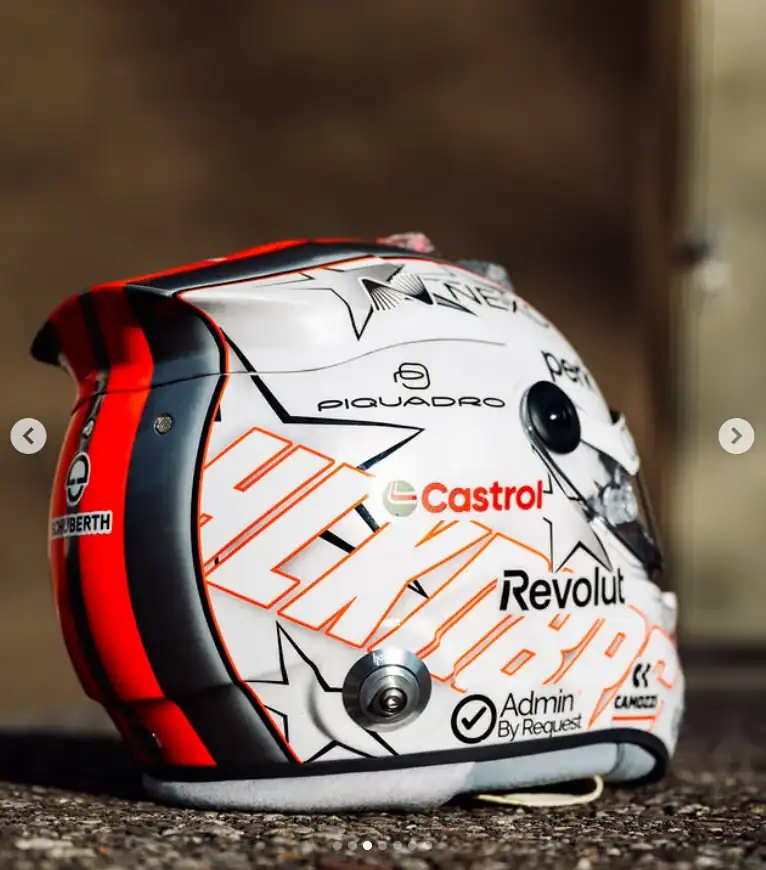
For collectors, a Barcelona breakthrough weekend for Leclerc or Ferrari would carry immediate historical weight — and that kind of race narrative is exactly what drives demand for full-size 1:1 replica helmets tied to milestone moments.
What the Friday Times Actually Mean
Practice sessions at the Circuit de Barcelona-Catalunya have a reputation for being deceptive. Teams run different fuel loads, tyre compounds, and aero configurations during the Friday programme, which means a raw time comparison across the field carries less weight than it might appear at face value. That said, appearing in the top four across both sessions — not just one — tells a more complete story.
Leclerc ended Practice 1 third fastest and Practice 2 fourth fastest. Holding that level of competitiveness across two separate runs, with different track evolution, different programme objectives, and likely different setup adjustments between sessions, points to a car and driver combination that is genuinely working in Barcelona’s conditions. It is not a fluke of a single flying lap.
Barcelona itself is a thorough exam. The Circuit de Barcelona-Catalunya demands balance across slow-speed hairpins, medium-speed sweepers, and the long, high-load corners through Sectors 2 and 3. A car that is competitive here tends to have a reasonably well-sorted aerodynamic and mechanical package rather than one tuned specifically to a single circuit characteristic. For Ferrari, that is an encouraging baseline heading into Saturday.
Twelve Years and Counting: The Weight of 2013
The number that frames this entire weekend is 2013. Fernando Alonso drove to victory in the Spanish Grand Prix that May, delivering Ferrari their last win at the Circuit de Barcelona-Catalunya. More than twelve years have passed since that result, making it one of the more prominent circuit-specific droughts on the current calendar for a team of Ferrari’s stature.
Alonso’s 2013 Barcelona win came during a period when Ferrari were genuinely competitive across a multi-race stretch, and the Circuit de Barcelona-Catalunya had been something of a stronghold for the team over prior seasons. Since then, the regulation changes of 2014, 2017, 2019, and 2022 have each reshuffled the competitive order, and Ferrari have been unable to reclaim the top step on Catalan tarmac despite multiple seasons of near-misses and front-row starts.
The twelve-year gap is not a reflection of any single failure — it is a product of shifting car concepts, tyre regulations, and the emergence of dominant constructors at different points across that span. But for the sport’s record books, and for those who follow Ferrari’s historical milestones closely, the number sits prominently. A win this weekend would immediately enter the conversation about significant Ferrari results of the current era.
What Has Changed for 2025
Ferrari entered 2025 with revised technical leadership and a car built around a different aerodynamic philosophy compared to the 2024 package that left them second in the Constructors’ Championship. Leclerc, alongside Lewis Hamilton who joined the team this season, has been part of a longer-term rebuild of how the Scuderia approaches race weekends operationally. The Barcelona practice times suggest that rebuild has produced something competitive on a track where the car’s characteristics are exposed across all three sectors rather than flattered by a single layout quirk.
Leclerc’s Qualifying Position and What Saturday Brings
Finishing third and fourth in practice does not hand Leclerc a grid slot — Saturday’s qualifying session will determine that. But the psychological and strategic value of arriving at Q1 knowing the car is genuinely quick in race trim matters. It affects tyre allocation decisions, it shapes the approach to Q2 and Q3 lap construction, and it reduces the pressure on Ferrari’s engineers to make dramatic overnight changes that might introduce unknown variables.
The Circuit de Barcelona-Catalunya’s qualifying lap is particularly demanding in Sector 2, where the sequence of medium-to-high-speed corners through Turns 7, 8, 9, and 10 requires the car to generate strong downforce without excessive drag along the main straight leading into Turn 1. Getting that balance right for a single flying lap in Q3 is a different challenge from managing it over a practice run, but Leclerc’s record in qualifying — he has taken more than 20 career pole positions — means he is capable of extracting more from the car on a single lap than his practice times might suggest.
The question for Sunday, should Leclerc start near the front, is race pace over the Grand Prix distance and Ferrari’s ability to manage tyre degradation on a track that is historically hard on rear tyres. Barcelona’s abrasive surface and the sustained loading through the faster corners combine to create a genuine degradation challenge. How Ferrari handle that will determine whether Friday’s practice times translate into a result that matters.
The Collector Angle: Why Race Week Narratives Drive Helmet Demand
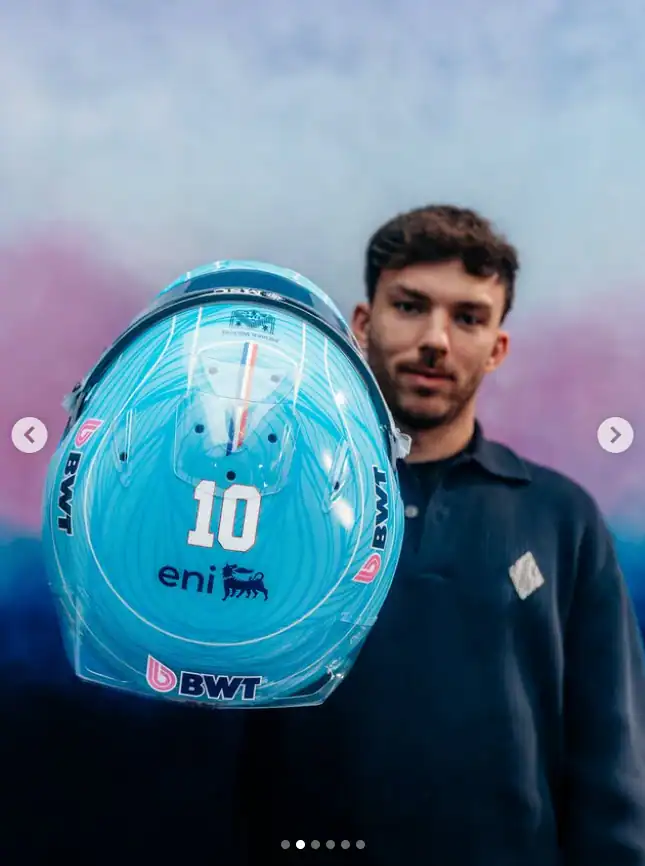
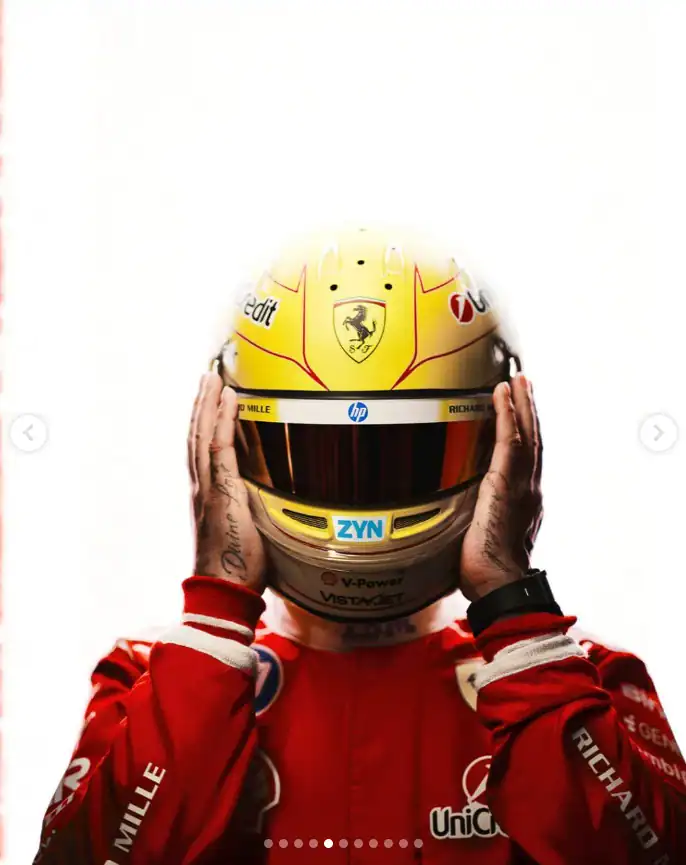
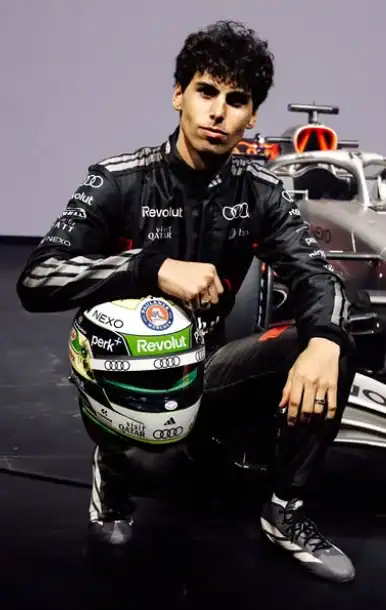
For those who follow F1 from the standpoint of the collector market, a potential milestone result carries weight well beyond the race broadcast. Full-size 1:1 replica helmets tied to specific drivers and specific moments in a driver’s career are among the most discussed display pieces in the hobby, and the reasoning is straightforward: context is what separates a replica that fills a display case from one that anchors it.
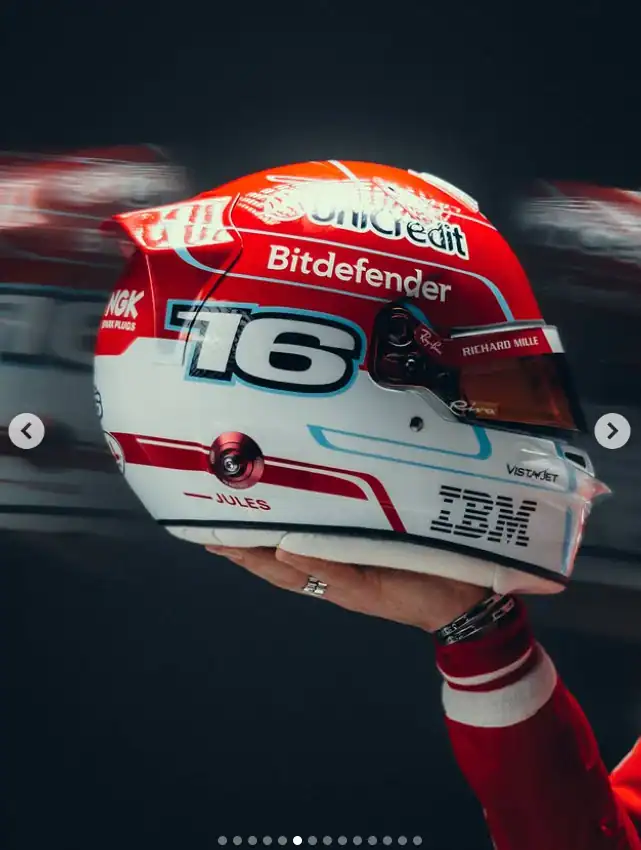
A Leclerc replica helmet representing his 2025 season already carries the narrative of a driver who moved to a team in transition, partnered with a seven-time World Champion, and continued to push for race wins. Add a Spanish Grand Prix victory — Ferrari’s first since 2013 — to that story, and the display piece gains a layer of historical reference that collectors specifically look for. The helmet does not change physically, but what it represents shifts considerably.
Full-size 1:1 replica helmets of the kind produced for display and collection are built to exhibition quality standards. These are not scaled-down shelf ornaments — they match the exact dimensions and visual specification of the race helmet design. A standard F1 replica helmet sits at approximately 29 × 25 × 35 cm in its outer profile and weighs around 1.2–1.5 kg depending on the construction method, giving it the physical presence that a smaller replica simply cannot replicate. That scale accuracy is what makes the display piece work in a room setting, whether mounted on a stand, placed in a case, or presented on a dedicated shelf.
It is worth being direct about what these pieces are: display and collector replicas, not certified protective equipment. They are produced for exhibition and collection purposes, full-size and 1:1 in scale, and not intended for road, race, or track use in any capacity. That distinction matters both legally and practically, and reputable producers are clear about it. The appeal is entirely in the display value and the narrative the piece carries.
The Alonso Connection
There is a secondary layer of collector interest worth noting. Fernando Alonso, whose 2013 win is the reference point for Ferrari’s current Barcelona drought, remains one of the most collected drivers in the replica helmet space. His early 2000s Ferrari seasons, his double World Championship years at Renault in 2005 and 2006, and his later career with Aston Martin have all generated sustained collector interest across different helmet designs. A weekend where Leclerc attempts to overwrite Alonso’s 2013 benchmark naturally brings attention to both drivers’ places in the sport’s timeline.
Reading the Room: What the Rest of the Field Faces
Ferrari do not operate in isolation at Barcelona. The teams that finished above and below Leclerc across Friday’s sessions will each have their own overnight analysis to run, their own setup directions to pursue, and their own qualifying strategies to plan. The gap between third and first in practice can shrink or widen considerably between Friday afternoon and Saturday qualifying, and the Spanish Grand Prix field heading into this weekend includes multiple teams capable of genuine front-row pace.
What works in Ferrari’s favour heading into qualifying is the consistency argument. Landing in the top four in both sessions — not just one — suggests the car’s setup window is reasonably stable across changing track conditions and temperatures. A car that drops significantly between Practice 1 and Practice 2, or that requires radical overnight changes to stay competitive, tends to be a more fragile proposition come Saturday. Leclerc’s double-session consistency, third then fourth, is not a dramatic headline on its own, but it is a sign of a balanced package.
The Circuit de Barcelona-Catalunya’s track surface, resurfaced in sections ahead of recent seasons, has modified the degradation pattern compared to older years. Teams with updated tyre models from recent European rounds will carry an advantage in predicting Sunday’s race strategy. Ferrari’s data from both Friday sessions feeds directly into those degradation models, and the more representative laps they can complete at race pace, the more accurate their Sunday tyre strategy projection will be.
Will They End It? The Honest Assessment
Third and fourth in practice does not win a Grand Prix. It is the starting point of a conversation that Saturday qualifying and Sunday’s 66-lap race will finish. Ferrari have been in positions of Friday promise at various points over the past decade without converting them into wins, and the Circuit de Barcelona-Catalunya’s competitive field means nothing is settled until the chequered flag falls on Sunday afternoon.
What is different about this particular weekend, beyond the practice times, is the accumulated context. Leclerc is in his fourth season as Ferrari’s lead driver, Ferrari have restructured their technical operation, and the 2025 car has shown genuine pace at multiple circuits rather than being a single-track specialist. The conditions for a meaningful result are more aligned than they have been at several points in the drought’s twelve-year span.
Whether that alignment produces the specific outcome of a Ferrari victory at the Circuit de Barcelona-Catalunya — ending a run that has extended since Fernando Alonso’s last win there in 2013 — depends on Saturday’s grid position, the opening lap, the safety car lottery, and a hundred small decisions made under pressure by drivers and engineers who know exactly what is at stake. The practice times say Ferrari belongs in the conversation. The rest of the weekend will say whether that conversation ends with a trophy.
For collectors watching this weekend with a replica display piece already on their shelf — or considering adding one — the race narrative is already writing itself. A Barcelona result, in either direction, adds another chapter to the story of a season that was never going to be straightforward.
FAQ
Q: When did a Ferrari driver last win the Spanish Grand Prix?
The last Ferrari victory at the Spanish Grand Prix came in 2013, when Fernando Alonso won at the Circuit de Barcelona-Catalunya. No Ferrari driver has won there in the more than twelve years since.
Q: How did Charles Leclerc perform in Friday practice at Barcelona?
Leclerc finished third fastest in Practice 1 and fourth fastest in Practice 2 during Friday’s running at the Circuit de Barcelona-Catalunya, placing him consistently in the top four across both sessions.
Q: What are full-size 1:1 replica F1 helmets and who are they for?
Full-size 1:1 replica F1 helmets are display and collector pieces produced to match the exact visual specification and dimensions of the race helmet design they represent. They are exhibition quality items intended for display, not certified for protective use in any context. A typical replica measures approximately 29 × 25 × 35 cm and weighs around 1.2–1.5 kg.
Q: Why does a race result affect collector interest in a driver’s replica helmet?
Collectors place value on the context a display piece carries. A helmet representing a driver during a historically significant result — such as ending a twelve-year team drought at a particular circuit — gives the piece a specific narrative reference point that distinguishes it from a general season replica.
Q: Does Friday practice pace predict Sunday race results at Barcelona?
Not directly. Teams run different fuel loads and tyre specifications during practice, so raw lap times across the field are not a direct comparison. However, consistent top-four pace across both Friday sessions — as Leclerc showed — points to genuine car performance rather than a setup fluke, which is a more reliable indicator heading into qualifying and the race.
Browse F1 Helmet Collection — full-size 1:1 display replicas celebrating the drivers and moments that define the sport. Find yours at 123Helmets.com.
Display and collector replicas only. Not certified for protective use. Full-size 1:1 scale.
This article was written with the help of AI tools. Editorial policy