Blog
Leclerc P5 at Spa 2026 as Ferrari Traces PU Issue
 123Helmets Editorial Team
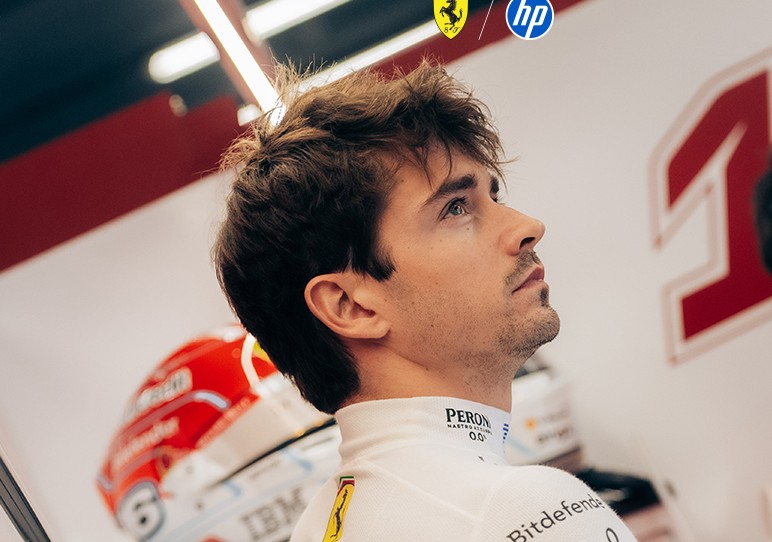
Charles Leclerc qualified fifth for the 2026 Belgian Grand Prix at Spa-Francorchamps after Scuderia Ferrari tracked down a power unit issue that had been costing him 0.4 to 0.5 seconds on the straights throughout the weekend, a fix the team applied just in time for Saturday’s session.
Key Takeaways
Charles Leclerc qualified P5 for the 2026 Belgian Grand Prix at Spa-Francorchamps.
Ferrari identified a power unit issue costing Leclerc roughly 0.4 to 0.5 seconds per lap on the straights.
The team made a change ahead of qualifying that brought performance back in line with expectations.
Spa-Francorchamps remains one of the most demanding circuits on the 2026 calendar, rewarding both driver feel and power unit reliability.
Spa Qualifying Result: Leclerc Books P5
Charles Leclerc qualified fifth for the 2026 Belgian Grand Prix at Spa-Francorchamps, a result overshadowed all weekend by a power unit gremlin that Scuderia Ferrari only diagnosed and corrected shortly before the session. According to Adam Cooper’s report from the paddock, Leclerc had been struggling with a straight-line deficit since Friday practice, a problem that made the true pace of the SF-26 difficult to read until the fix was applied.
Spa-Francorchamps is a 7.004 km circuit with 19 corners, one of the longest layouts on the 2026 calendar, and its combination of the Kemmel straight and the Eau Rouge-Raidillon sequence punishes any power unit shortfall immediately. Losing half a second per lap on the straights at a track like this is not a marginal issue — it is the difference between fighting for pole and settling for the middle of the top five.
For a driver and team with Ferrari’s history at this circuit, a P5 grid slot achieved despite a hidden mechanical issue is a result that carries more weight than the timing sheet alone suggests, and it is exactly the kind of underdog qualifying story that collectors and fans want commemorated on a full-size display helmet.
The Power Unit Mystery: 0.4 to 0.5 Seconds Lost on the Straights
Leclerc described losing 0.4 to 0.5 seconds per lap on the straights for most of the Spa weekend, an issue Ferrari only pinned down and corrected in time for qualifying. In his own words, relayed by Adam Cooper: “The weekend has been very tough for other reasons than previously. We’ve had unfortunately something that we can explain now, but that was difficult to understand, where I was losing 0.4/0.5s in the straights all the time.”
That kind of deficit, repeated lap after lap through Free Practice 1, Free Practice 2 and Free Practice 3, would have masked the genuine pace of the car and made setup decisions unreliable. Leclerc noted that the underlying feeling from the car was not bad from FP1 onward, which suggests the chassis and aerodynamic package were competitive even while the power unit issue clouded the picture on paper.
Diagnosing an intermittent straight-line power loss during a live race weekend, with limited data windows between sessions, is one of the more technically demanding jobs any Formula 1 engineering group faces. Ferrari’s ability to isolate the cause and apply a fix before Saturday’s qualifying, rather than after the fact, turned what could have been a lost weekend into a respectable grid position.
Ferrari’s Fix and Leclerc’s Reaction
Ferrari changed a component tied to the power unit issue ahead of qualifying, and the car immediately behaved much closer to what the team expected. Leclerc confirmed as much: “For qualifying we kind of saw something, changed it, and it was much more in line with what we expected.”
That single sentence captures the tightrope every Formula 1 team walks during a race weekend — diagnosing an unexplained loss mid-session, deciding whether a change is safe to make so close to qualifying, and trusting the fix without a clean back-to-back test. Getting it right delivered Leclerc a P5 starting slot that reflected the car’s real potential rather than a compromised straight-line speed.
The story also underlines why fans and collectors follow race weekends session by session rather than just the final result. A qualifying performance shaped by a diagnosed and corrected technical issue is a data point in itself, one that adds context to any helmet, livery or race-week item tied to that specific Grand Prix.
Looking Ahead to Race Day at Spa-Francorchamps
Sunday’s Belgian Grand Prix at Spa-Francorchamps will show whether Ferrari’s power unit fix holds up over full race distance rather than a single qualifying lap. Starting from P5, Leclerc will be looking to capitalize on a car that, by his own account, felt competitive from the opening practice session once the straight-line deficit is removed from the equation.
Spa’s long straights and its position as one of the highest-speed circuits on the 2026 calendar mean that any residual power unit sensitivity could resurface under race conditions, with different fuel loads, tyre management and slipstream battles compared to a low-fuel qualifying lap. Ferrari’s engineers will be monitoring the same systems that flagged the 0.4 to 0.5 second loss throughout the weekend to confirm the issue is fully resolved rather than merely masked for one lap.
As with every Grand Prix weekend, the final classification is not yet known, and no result should be assumed ahead of lights out. What is confirmed is the grid position Leclerc secured in qualifying and the technical story behind it, which is already shaping how this Belgian Grand Prix weekend will be remembered regardless of Sunday’s outcome.
Collecting the Moment: Spa 2026 on Display
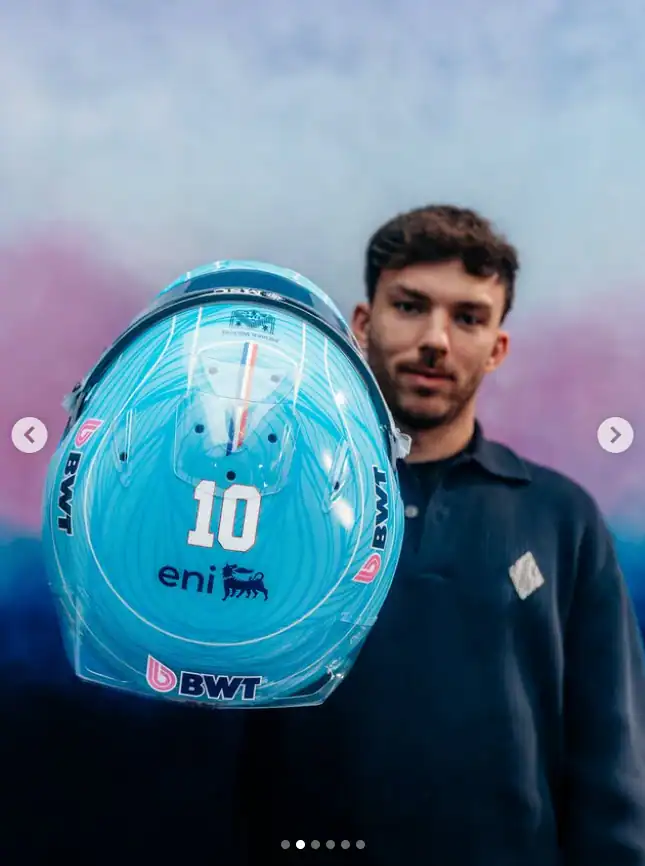
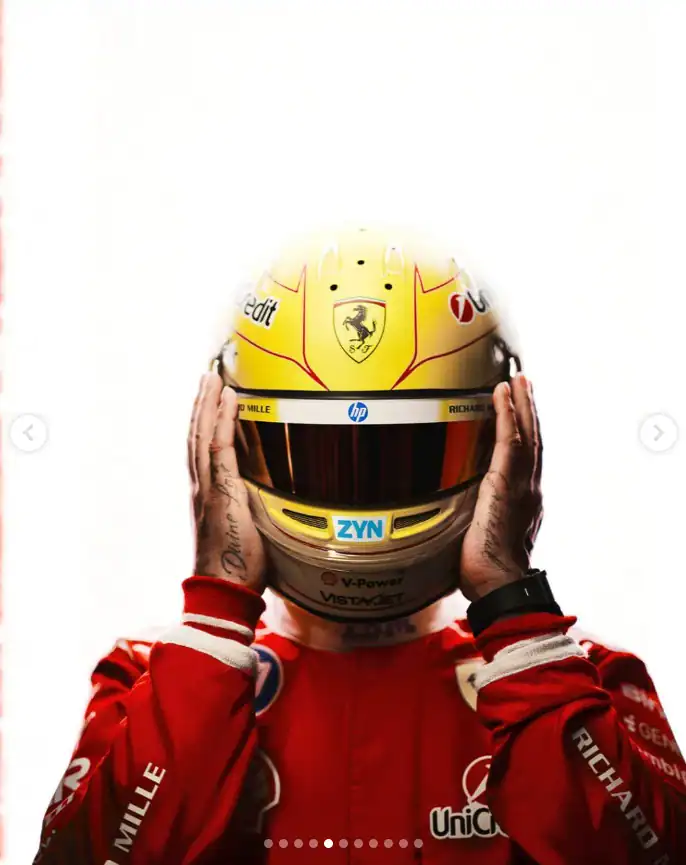
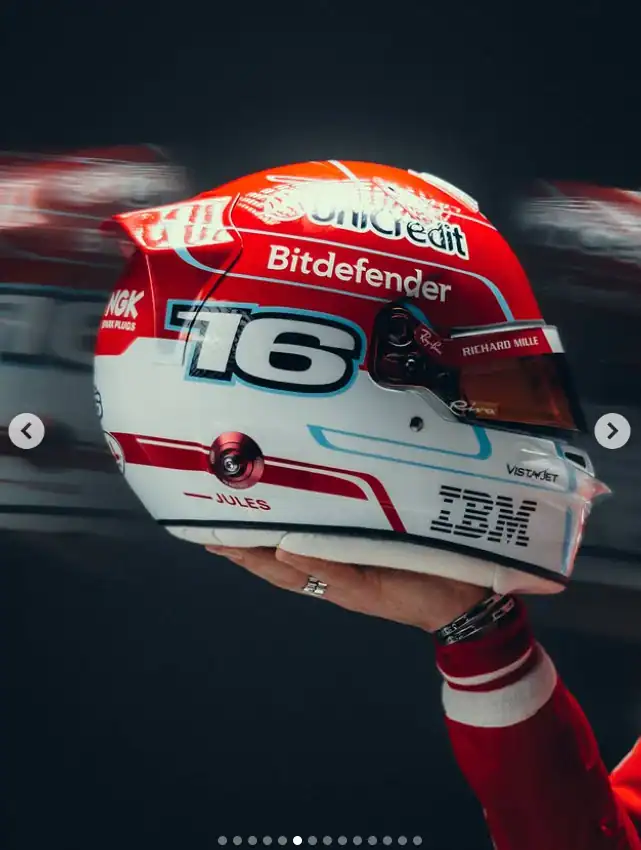
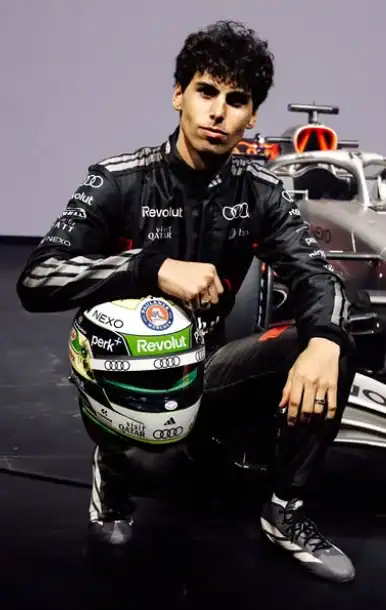
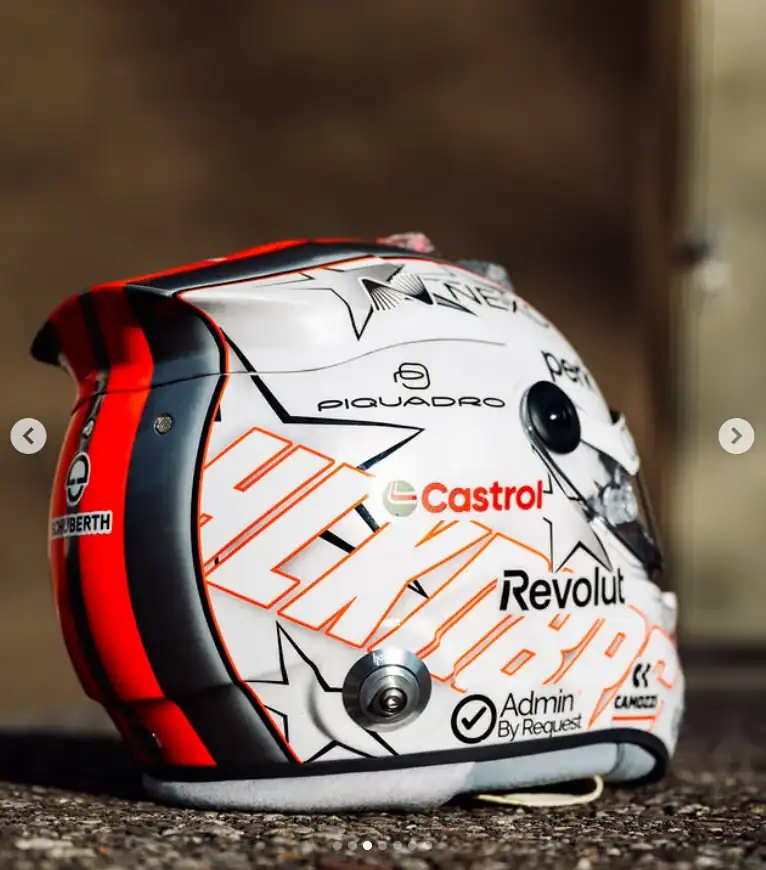
A full-size 1:1 display helmet tied to a specific Grand Prix weekend preserves details that a highlight clip cannot — the exact livery worn that weekend, the visor tear-off pattern, and the paint scheme run for that round of the season. For collectors following the 2026 Belgian Grand Prix, Leclerc’s P5 qualifying performance, achieved despite a mid-weekend power unit issue, is precisely the kind of storyline that makes a display piece meaningful rather than generic.
Exhibition-quality replicas built to scale let fans keep a physical connection to moments like this one: a driver working around a technical problem, an engineering team solving it under time pressure, and a grid position earned in spite of the obstacle. Whether mounted on a wall bracket or displayed on a stand, a collector helmet from a season like 2026 becomes a marker for weekends where the story behind the result matters as much as the position on the sheet.
These pieces are built purely for display and collection purposes, not for wearing or protective use, and they are sized as full 1:1 scale replicas to match the exact proportions of the helmets seen in the garage and on the grid.
“The weekend has been very tough for other reasons than previously. We’ve had unfortunately something that we can explain now, but that was difficult to understand, where I was losing 0.4/0.5s in the straights all the time.”
— Charles Leclerc, via Adam Cooper
“For qualifying we kind of saw something, changed it, and it was much more in line with what we expected.”
— Charles Leclerc, via Adam Cooper
FAQ
Q: What position did Charles Leclerc qualify in at Spa for the 2026 Belgian Grand Prix?
Charles Leclerc qualified fifth (P5) for the 2026 Belgian Grand Prix at Spa-Francorchamps, despite a power unit issue that had affected him through practice.
Q: What power unit issue did Ferrari find during the Spa 2026 weekend?
Ferrari traced an issue that was costing Charles Leclerc roughly 0.4 to 0.5 seconds per lap on the straights, a deficit he described as present all weekend until a change was made before qualifying.
Q: Did Ferrari fix the power unit issue before qualifying?
Yes, Ferrari applied a change ahead of qualifying that brought the car’s performance much more in line with the team’s expectations, according to Leclerc’s own account of the session.
Q: How long is the Spa-Francorchamps circuit?
Spa-Francorchamps is a 7.004 km circuit with 19 corners, making it one of the longest tracks on the 2026 Formula 1 calendar and a demanding test of power unit performance on its long straights.
Q: Are the 123Helmets replicas usable for racing or protection?
No, these are full-size 1:1 display and collector replicas intended for exhibition purposes only, not certified for protective use or wearing on track.
Browse F1 Helmet Collection
Display and collector replicas only. Not certified for protective use. Full-size 1:1 scale.