
Blog
Lindblad P10, Lawson P8 as Racing Bulls Split Hungary Tactics
 123Helmets Editorial Team
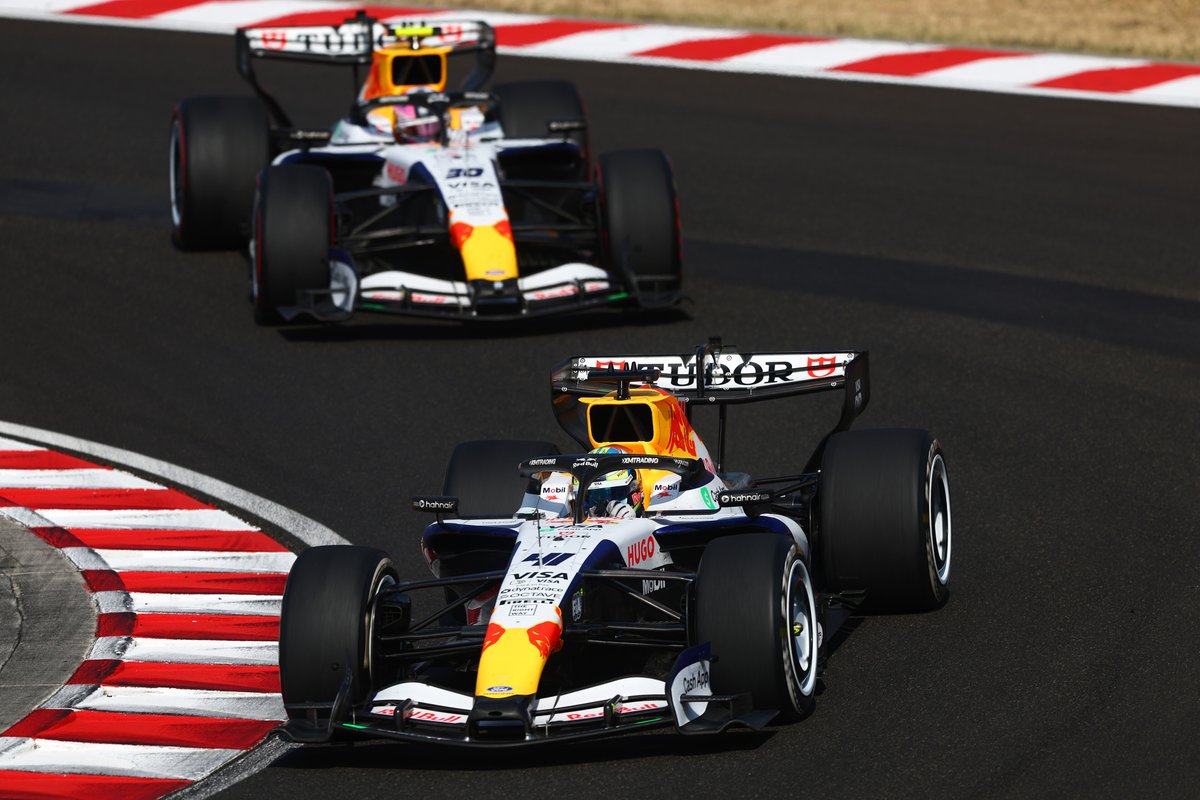
Liam Lawson converted a two-stop strategy into P8 at the 2026 Hungarian Grand Prix, beating teammate Arvid Lindblad’s one-stop P10 after Racing Bulls split their approach mid-race.
Key Takeaways
Arvid Lindblad finished P10 in Hungary on a one-stop strategy that did not fully pay off.
Liam Lawson finished P8 after switching to a two-stop plan once a rival triggered the undercut.
Racing Bulls deliberately split strategies between its two cars rather than running them in tandem.
Lawson admitted the one-stop could have made him ‘look like a hero’ had the hard tyre held up longer for Lindblad.
How the Hungary strategy split unfolded
Racing Bulls ran Arvid Lindblad and Liam Lawson on opposite tyre strategies at the 2026 Hungarian Grand Prix, with Lindblad completing the race on a single pit stop and Lawson switching to two. Lindblad crossed the line in P10, while Lawson finished two places ahead in P8. The team’s call came after a rival driver — identified in team radio as Nico — triggered an early second stop, prompting Racing Bulls to hedge its bets by sending its two cars down different paths rather than risk both finishing outside the points on the same gamble.
The decision reflects a common Hungaroring problem: with overtaking difficult around the tight, twisty circuit, tyre degradation and stop timing often decide the finishing order more than outright pace. By splitting the drivers, Racing Bulls guaranteed at least one representative would benefit if the alternate strategy proved faster, and in this case it was the two-stop plan that came out ahead.
Lindblad’s one-stop gamble in Hungary
Arvid Lindblad’s one-stop strategy in Hungary was the higher-risk of the two calls and ultimately cost him track position, leaving him P10 at the finish. The rookie held his tyres longer than most of the field, banking on the hard compound surviving to the end of the race without a serious loss of pace. When Lawson and other cars pitted twice to attack on fresher rubber, Lindblad’s older set began losing time in the closing stint, and he was unable to hold off the two-stop runners chasing him down.
Speaking about the call afterward, Lawson himself acknowledged how close it came to working. It was a strategy built on a genuine question mark for the team heading into the race, and while it did not deliver the result Racing Bulls hoped for with Lindblad, it kept alive the possibility of a stronger finish had tyre wear cooperated over the final laps.
Lawson’s two-stop drive to P8
Liam Lawson’s two-stop strategy delivered P8 at the Hungarian Grand Prix, moving him ahead of teammate Lindblad by two positions at the checkered flag. The switch came once Racing Bulls saw a rival car — Nico — pit for a second time, a signal that prompted the team to commit Lawson to the same approach rather than leave both cars exposed on a single strategy that was already looking uncertain.
The extra stop cost Lawson track position temporarily but gave him tyres with more grip for the closing stint, which he used to pick off cars still running on older rubber, including his own teammate. The result lifted him into the point-scoring positions and validated the team’s mid-race pivot.
What Lawson said about the split call
Liam Lawson explained that Racing Bulls’ decision to split the two cars’ strategies made sense given the uncertainty the one-stop carried into the race. “It was a bit of a shame that the one-stop didn’t work, but I fully understand from the team’s point of view,” Lawson said. “It was a big question mark going to the race. Then we saw Nico trigger the two, and we decided to split the strategy with the cars.”
Lawson also pointed out how differently the story could have read if the hard tyre had held up for longer on Lindblad’s car. “Which made sense, because if the hard hung on better, I would have looked like a hero, being P8!” he said, underlining how thin the margin was between the two approaches and how much credit was due to Lindblad for pushing the one-stop as far as it went before it faded.
Championship and constructor context
P8 and P10 gave Racing Bulls a double points finish at the Hungarian Grand Prix, with Lawson’s result carrying more weight in the constructors’ standings than Lindblad’s. Splitting strategies is a tactic teams use specifically to maximize combined points when track position and tyre life are hard to predict, and Hungary’s low-overtaking layout made that calculation especially relevant this weekend.
For Lindblad, a rookie still building race craft at this level, the one-stop attempt is a data point the team can use for future events where tyre management becomes the deciding factor rather than raw pace. For Lawson, the two-stop payoff adds a solid points haul to his season total as the midfield battle continues to tighten heading into the remaining rounds of 2026.
Collecting the moment
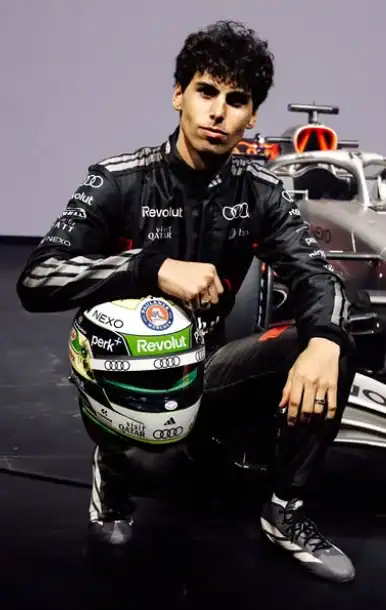
Race weekends built on split-strategy calls like this one are exactly the kind of storyline that collectors look back on when choosing which drivers and moments to commemorate. Fans following Liam Lawson’s and Arvid Lindblad’s 2026 campaigns with Racing Bulls can browse full-size 1:1 display helmets inspired by current-season liveries to mark races like this Hungarian Grand Prix strategy battle.
“It was a bit of a shame that the one-stop didn’t work, but I fully understand from the team’s point of view. It was a big question mark going to the race. Then we saw Nico trigger the two, and we decided to split the strategy with the cars. Which made sense, because if the hard hung on better, I would have looked like a hero, being P8!”
— Liam Lawson, via @adamcooperF1
FAQ
Q: What position did Arvid Lindblad finish in the 2026 Hungarian Grand Prix?
Arvid Lindblad finished P10 in Hungary on a one-stop strategy that lost time in the closing stint against cars running fresher tyres.
Q: What position did Liam Lawson finish in Hungary?
Liam Lawson finished P8 after Racing Bulls switched him to a two-stop strategy once a rival triggered an early second pit stop.
Q: Why did Racing Bulls split strategies between Lawson and Lindblad?
Racing Bulls split the strategies because the one-stop plan carried a genuine question mark heading into the race, so running one car on each approach protected the team’s points haul regardless of which strategy proved faster.
Q: Could Lindblad’s one-stop strategy have worked?
Yes, according to Lawson, if the hard tyre had held up better on Lindblad’s car the one-stop could have produced a stronger result than the two-stop, potentially reversing the final order between the two drivers.
Q: Does 123Helmets sell race-specific Racing Bulls helmets?
123Helmets offers full-size 1:1 display helmets inspired by current F1 liveries, including Racing Bulls designs, available to browse in the shop.
Browse F1 Helmet Collection
Display and collector replicas only. Not certified for protective use. Full-size 1:1 scale.