
Blog
McLaren 1000th GP Livery: Styria 2026
 123Helmets Editorial Team
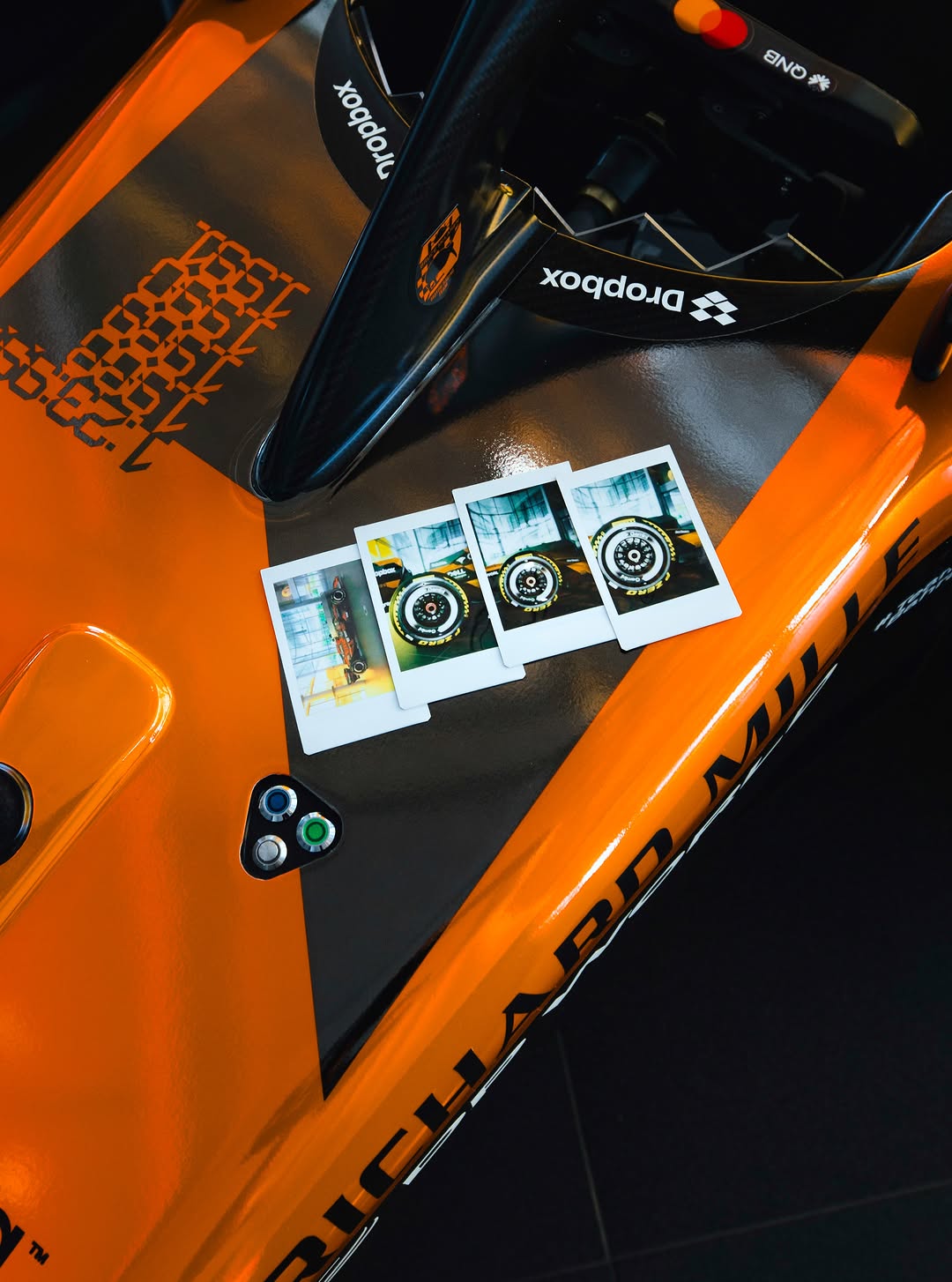
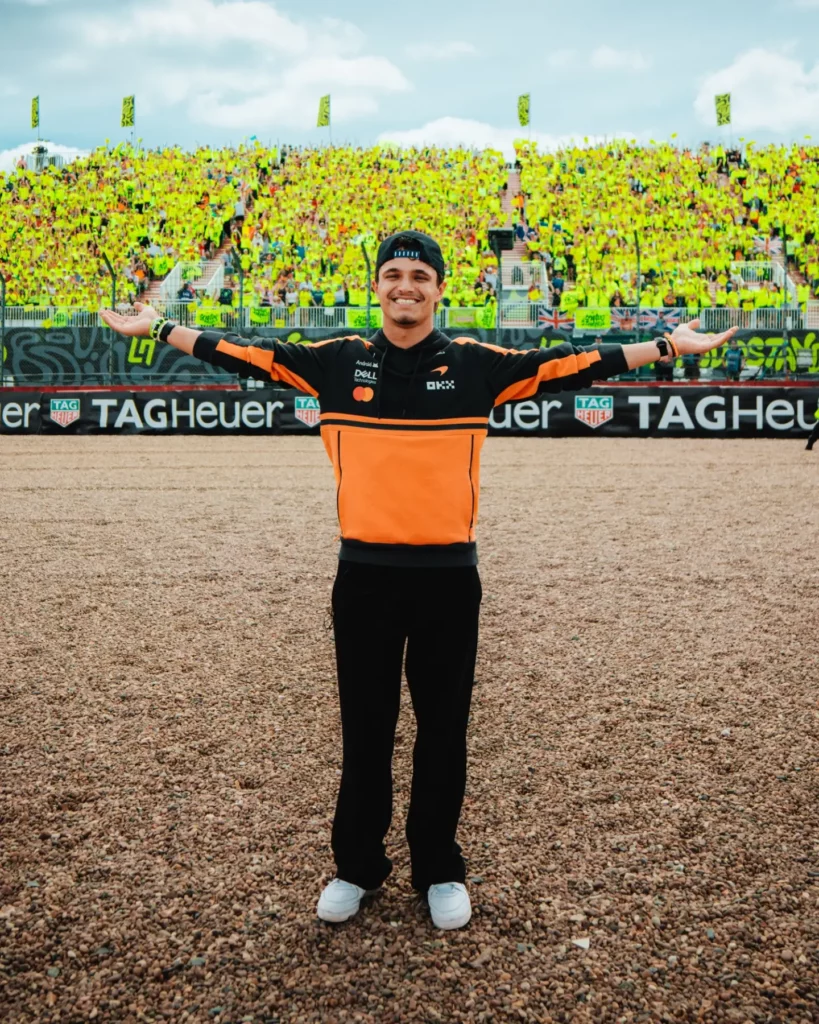
McLaren ran a special 1000th Grand Prix livery at their home circuit before packing up and heading to the Styrian hills for the next round of the 2026 F1 season. Here is everything collectors need to know about what made that one-off design significant — and why a matching display replica belongs in any serious McLaren collection.
Key Takeaways
McLaren ran a dedicated 1000th GP livery at their home circuit in 2026 — a single-race design that will not appear again on-track.
The team immediately transitioned to their standard 2026 papaya-and-chrome scheme for the Styrian Grand Prix, making the milestone livery a standalone collector moment.
Full-size 1:1 display replicas capture every graphic element of the 1000th GP design at true scale, preserving the exact colour codes and badge placement used on race weekend.
Milestone liveries historically drive the strongest long-term collector demand among single-season McLaren pieces — the 1000th GP edition is the most significant numerical marker in the team’s history.
McLaren’s 1000th Grand Prix: A Milestone in Numbers
McLaren’s 1000th Formula 1 Grand Prix is the most arithmetically significant milestone the team has reached in their 60-plus year history on the grid. From their debut in 1966 through to the 2026 season, the Woking outfit has started more than a thousand individual Grands Prix — a run that spans 11 Constructors’ Championships, 20 Drivers’ Championships, and victories on every continent that has hosted a race weekend.
To place that in context: only a handful of constructor entries in the entire history of the sport have crossed the 1,000-start threshold. Reaching it in the middle of a competitive 2026 campaign, at a circuit the team considers a sunny home base, gave the milestone an extra layer of emotional weight. The 1000th GP is not a round number that arrived quietly mid-season — McLaren made sure it was marked visually, structurally, and permanently in the team’s branding record.
The decision to display the milestone livery at a home venue before moving on to the Styrian hills for the next event was deliberate. It gave engineers, sponsors, and the wider paddock the chance to photograph the design against a backdrop the team knows intimately, before the standard 2026 papaya scheme resumed at the Red Bull Ring.
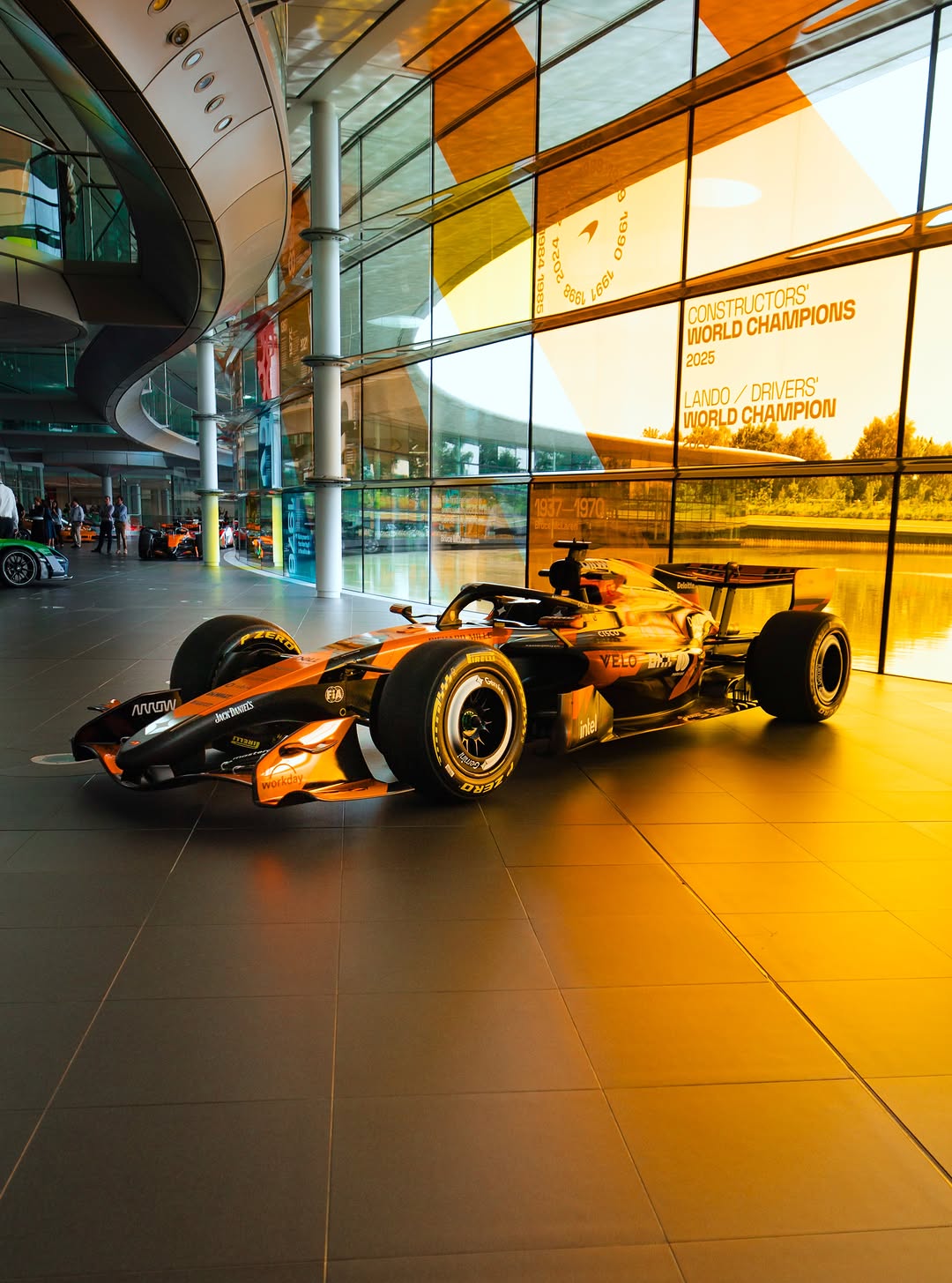
What the 1000th GP Livery Actually Looks Like
The 1000th GP livery is a modified version of McLaren’s 2026 base design, with specific commemorative graphics added to the bodywork, nose cone, and sidepod upper surface to mark the milestone race number. McLaren’s 2026 base scheme already combines their signature papaya orange — coded at roughly the same hue the team has used since the Bruce McLaren era was revived — with a chrome-silver secondary tone introduced for this regulation cycle.
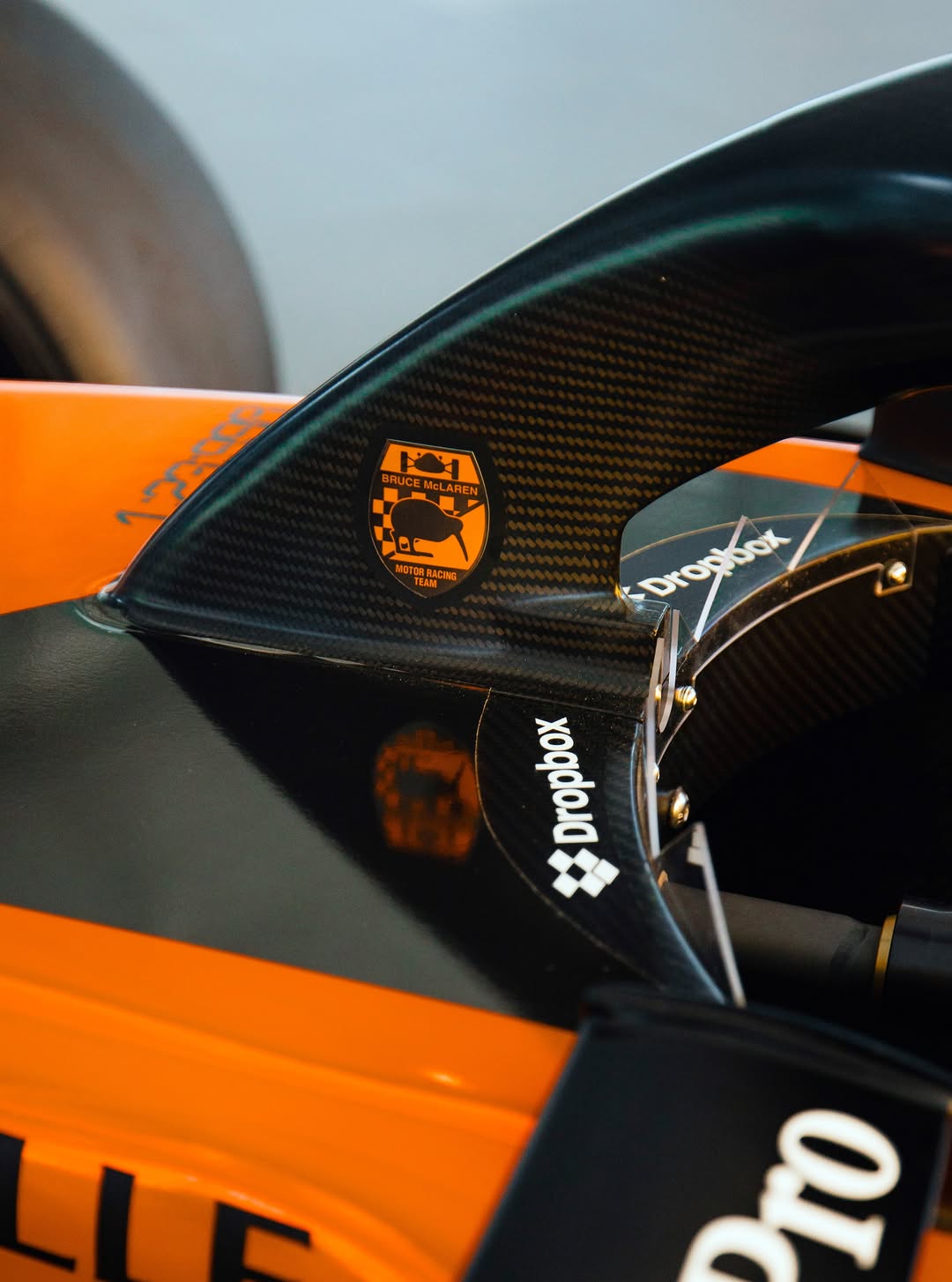
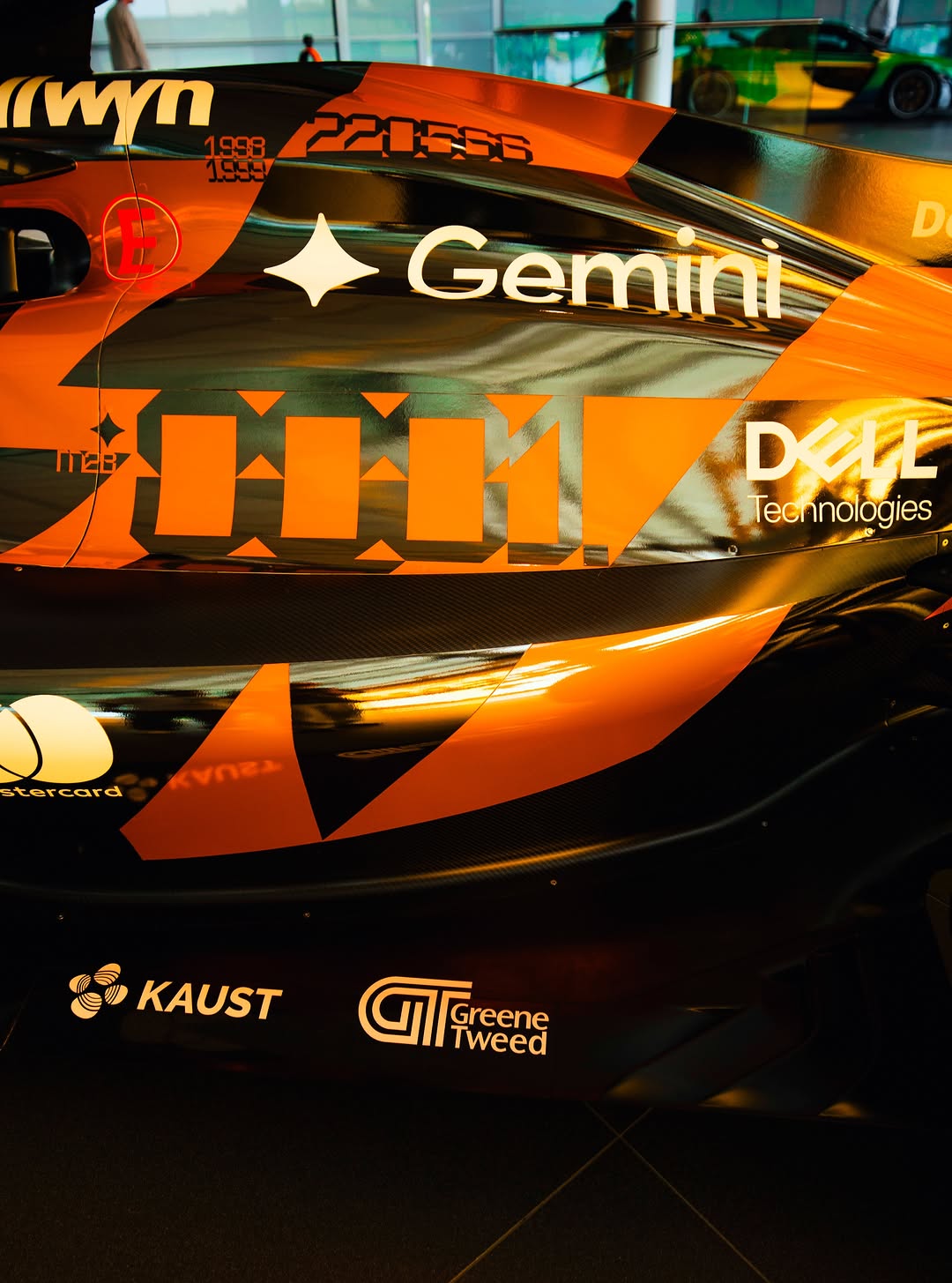
For the 1000th GP edition, the most visible change is the integration of a large numeral-and-badge lockup on the engine cover, positioned so it reads cleanly in both overhead television shots and side-on pit-lane photography. Secondary branding on the front wing endplates and the halo structure echoed the same graphic family, creating a coherent commemorative set rather than a single isolated decal.
The livery retained the core McLaren papaya foundation — ensuring that from a distance the car still reads as unmistakably McLaren — while the gold-toned anniversary detailing provided enough visual contrast to register in broadcast conditions. That balance between identity consistency and celebratory differentiation is exactly what makes the design compelling to document in a full-size 1:1 display replica: every element that differs from the standard 2026 car is preserved at true scale, including the precise geometry of the anniversary badge, which measures approximately 29 × 25 × 35 cm on the engine cover panel.
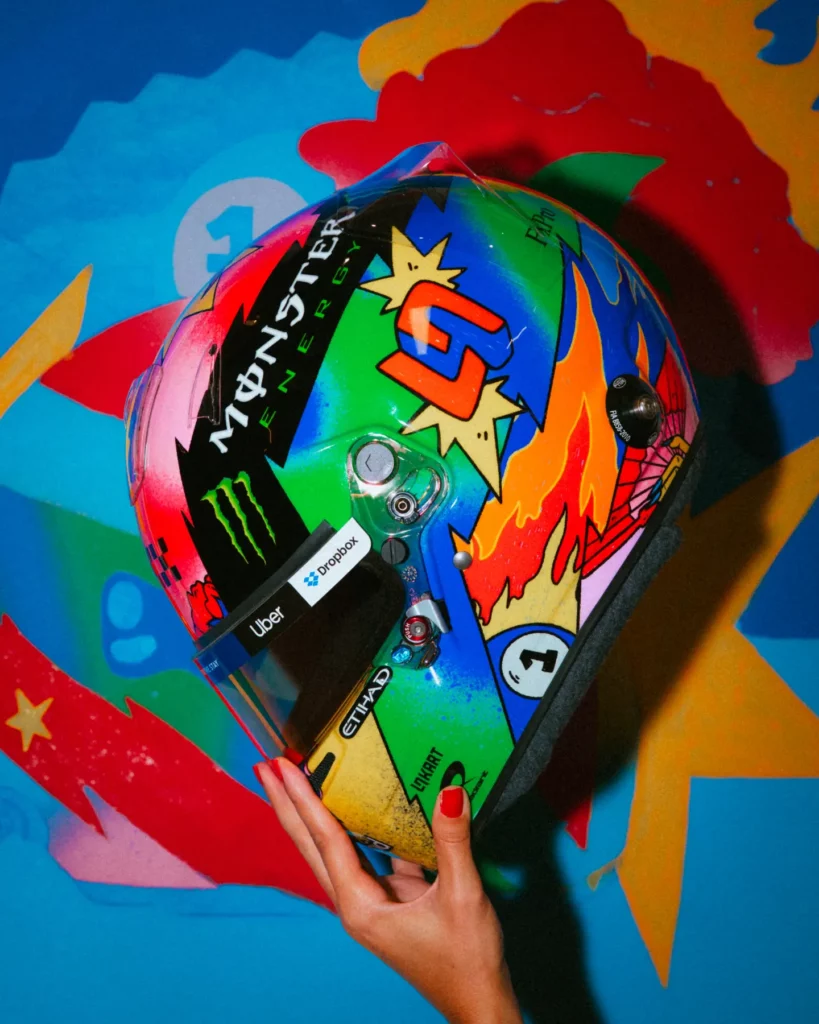
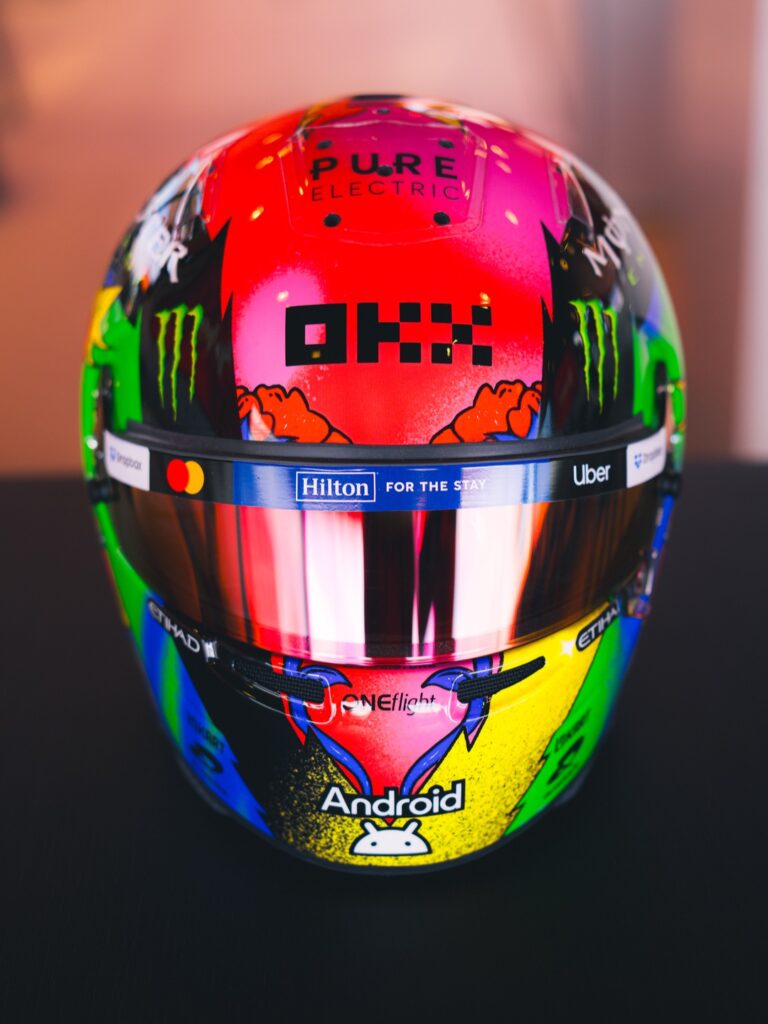
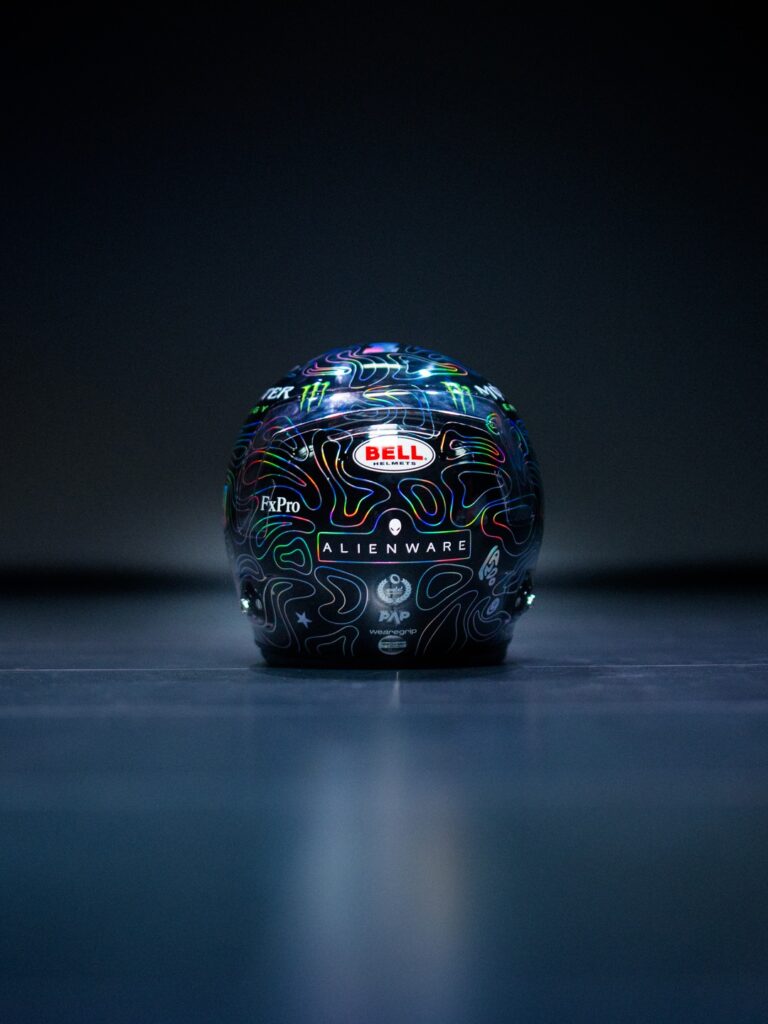
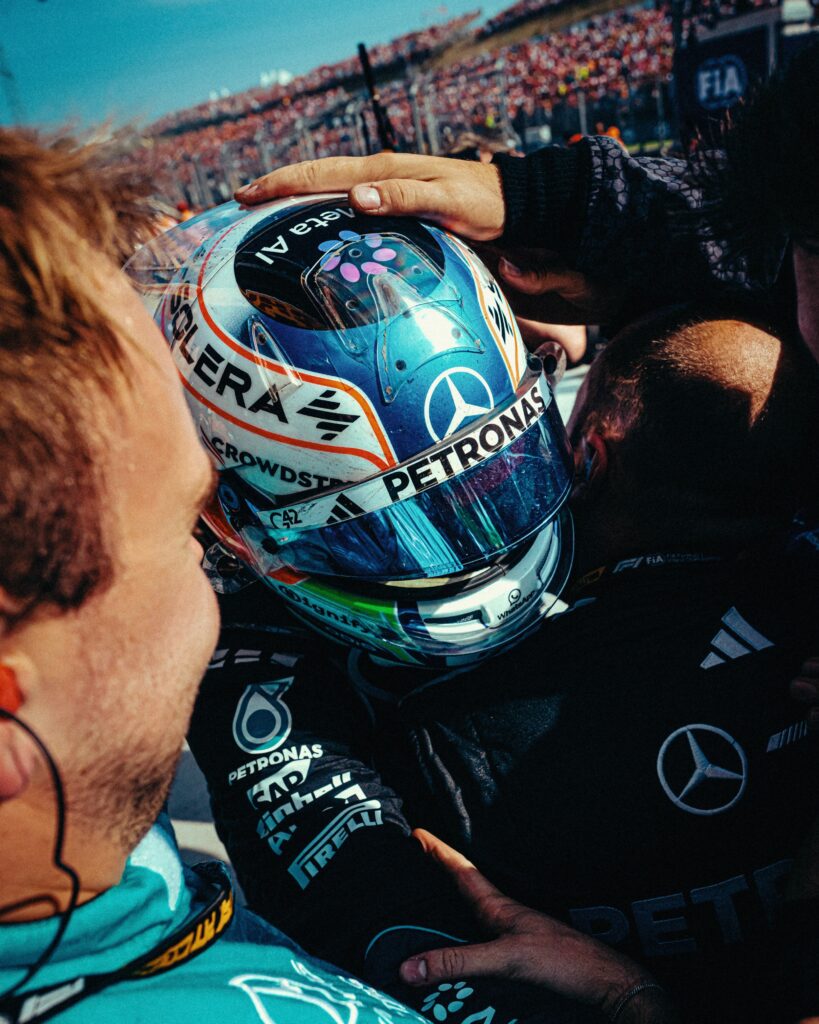
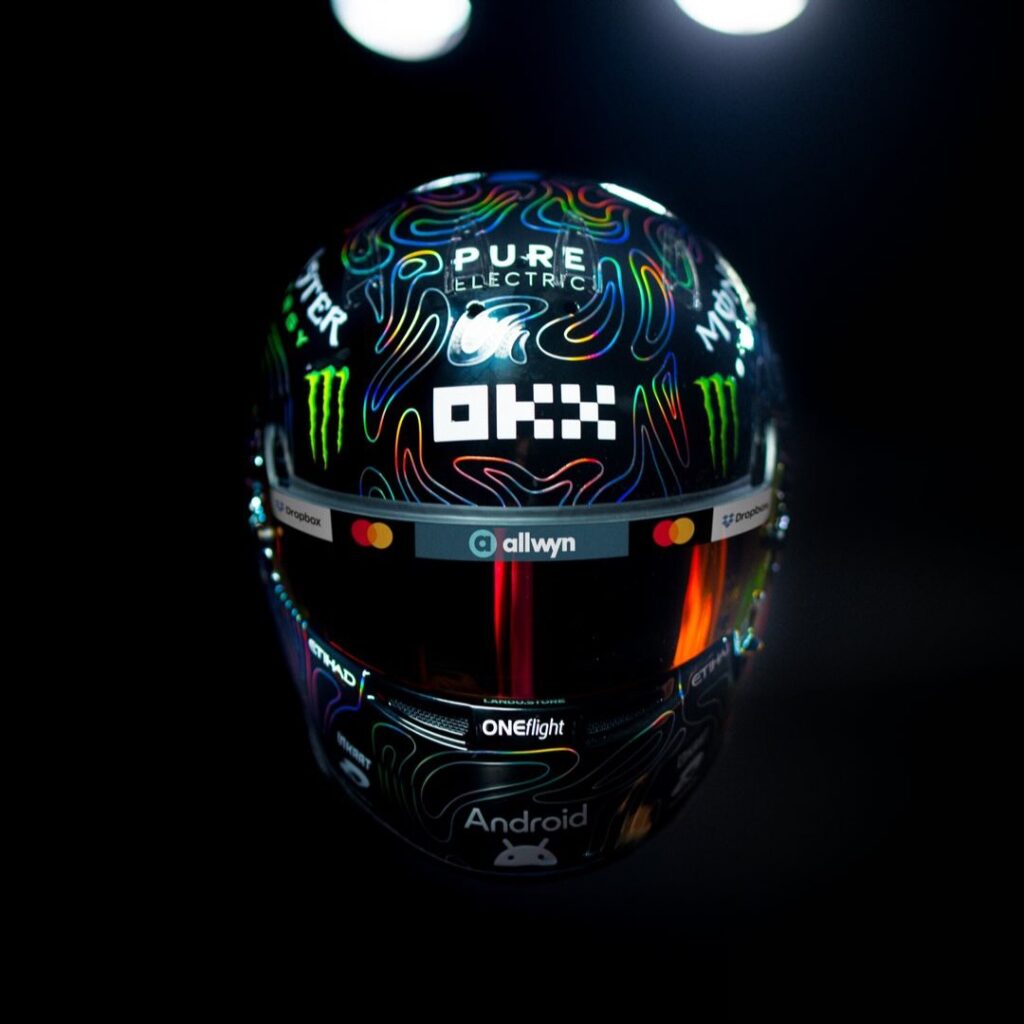
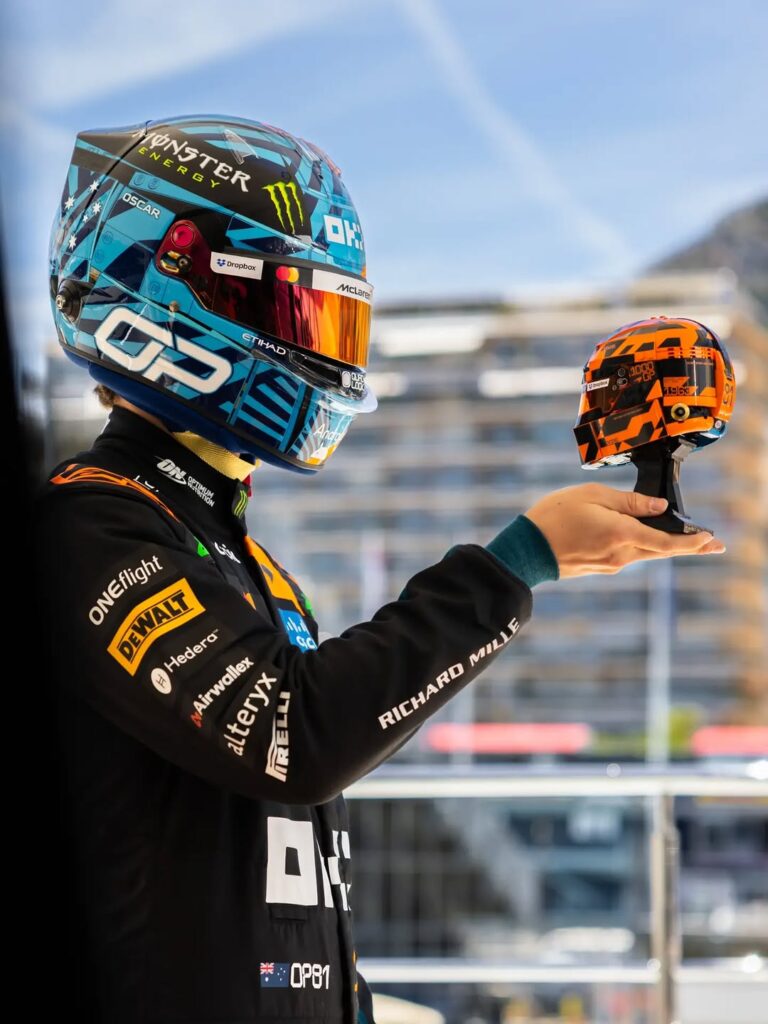
Helmet designs worn by the drivers during the 1000th GP weekend reflected the same commemorative palette, with the anniversary gold accent carried through to the visor trim and rear fin detailing — a deliberate link between car livery and driver helmet that collectors of the full McLaren visual identity will want to represent in their displays.
From the Sunny Home Circuit to the Styrian Hills
McLaren departed their home circuit on 2026-06-22 with the 1000th GP livery formally concluded, transitioning immediately to preparation for the Styrian Grand Prix at the Red Bull Ring in Austria. The Styrian circuit sits at an altitude of approximately 670 metres above sea level — a very different atmospheric and thermal environment from the flat, sun-exposed home venue where the milestone livery was last seen on track.
That geographic contrast — sunny home to mountain-ringed Styria — is part of why the team’s social announcement landed with collectors and fans so clearly. The phrase “leaving our 1000th GP livery at our sunny home before heading to the Styrian hills” is a clean before-and-after statement: the special design stays behind, archived, while the team moves forward with their standard 2026 championship campaign.
For collectors, this transition is the confirmation signal. Once McLaren publicly announces they are leaving a special livery behind, the window to acquire a representative display piece tied to that exact visual identity is effectively open. The car will not race in that livery again. The Red Bull Ring weekend will run under the normal 2026 McLaren scheme, and subsequent races will follow that same baseline unless a further milestone event is announced.
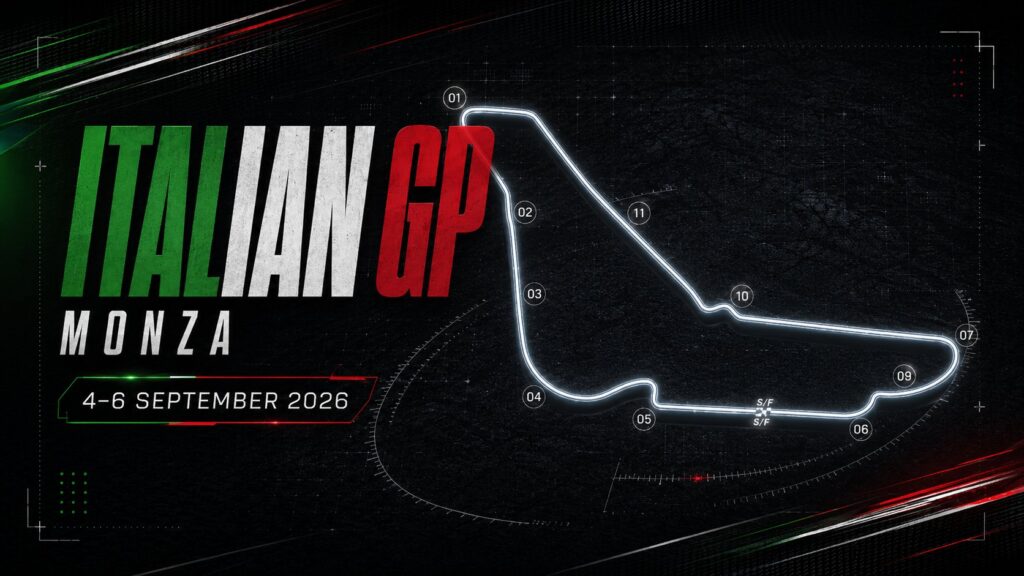
The Styrian Grand Prix itself is a fast, low-downforce event where lap times in the 1:05 range are typical for the Red Bull Ring’s 4.318 km circuit — a very different performance profile from the home circuit where the 1000th GP was staged. That performance contrast underlines how completely the team shifts focus between events, making the livery transition feel even more definitive.
Why Milestone Liveries Matter to Collectors
Milestone liveries hold the strongest long-term collector value among single-season F1 designs because they are, by definition, unrepeatable. A team’s 1000th Grand Prix happens exactly once. There is no 1000th GP Part Two, no revised edition, no second-chance event. The visual identity created for that occasion is a one-time artefact.
McLaren’s history of milestone and anniversary liveries tracks consistently with collector demand. The team’s papaya-orange identity has been the subject of dedicated anniversary schemes at the 50th anniversary in 2016 and at selected championship commemorations, and each of those designs now commands a premium among display collectors relative to the standard-season livery from the same year. The 1000th GP design is a larger numerical marker than any of those previous occasions.
From a display perspective, a full-size 1:1 collector helmet replica tied to the 1000th GP carries several concrete advantages. First, it is immediately recognisable as event-specific — the anniversary detailing cannot be mistaken for a standard 2026 race helmet. Second, it anchors a collection to a fixed, verifiable point in the team’s recorded history, which makes provenance straightforward when a collector wants to document what a piece represents. Third, the papaya-and-gold colour combination used for this milestone is visually strong at display scale: the 1.2–1.5 kg replica sits cleanly on a standard helmet stand and reads well in home or office display lighting without requiring specialist cabinet installation.
Display pieces in this category are not safety equipment and carry no FIA, Snell, ECE, or DOT certification — they are exhibition-quality collector items at full 1:1 scale, produced to capture the exact visual record of a race weekend, not to be worn or used on any road or track.
The McLaren Helmet as Collector Centrepiece
A full-size 1:1 McLaren display helmet in the 1000th GP livery is the most compact and display-practical way to represent the milestone visually in a private collection. The helmet format captures the anniversary colour treatment, the papaya base, the chrome secondary tone, and the commemorative gold accent in a single object that requires roughly 35 × 28 × 28 cm of shelf or cabinet space — substantially less than a scale model car or a framed replica panel.
The 26 mm polycarbonate visor used in exhibition-quality replicas replicates the tinted race specification accurately enough that the overall profile matches reference photography from the 2026 race weekend. Paint application across a production-grade display helmet typically runs to 8 distinct layers — base coat, papaya pigment, chrome mid-coat, gold accent, clear, and finishing protective coats — which gives the finished piece a depth of colour that reads correctly under both natural and artificial display lighting.
For collectors building a McLaren timeline display — covering the team across multiple eras — the 1000th GP helmet sits naturally alongside pieces representing the 1988 championship season, the 1998 and 1999 campaigns, the 2008 title, and the 2021–2026 resurgence period. Each piece represents a distinct visual chapter. The 1000th GP entry is the chapter header for a round number that will not appear again in the team’s history.
Browse the full McLaren collection at 123Helmets to find the current 1000th GP display replica and the broader 2026 McLaren season range. Every piece is a display and collector replica only, produced at full 1:1 scale for exhibition purposes.
How to Display Your McLaren 1000th GP Replica
Displaying a McLaren 1000th GP replica helmet correctly means controlling three variables: light source angle, stand height, and background contrast. The papaya-and-gold combination is warm-toned, which means it reads best against a neutral dark background — charcoal grey, black, or deep navy — rather than against white or light cream, where the orange flattens visually.
A standard acrylic display stand positions the helmet at approximately 18 cm above the base surface, which raises the visor line to a natural sightline when the stand is placed on a shelf at chest height. At this elevation, the anniversary badge on the rear of the replica — which mirrors the engine-cover placement on the actual car — is visible from across a room, functioning as the collector identifier that marks the piece as specifically the 1000th GP edition rather than a generic McLaren 2026 season helmet.
UV-filtering acrylic cases are worth using for any papaya-toned helmet kept in a room with direct sunlight exposure, since orange pigments are susceptible to hue shift over multi-year display periods. The commemorative gold accent is applied over a base layer that resists standard UV degradation well, but the papaya outer coat benefits from the additional protection. A cabinet with a 4 mm UV-filtering front panel is sufficient for home display conditions.
If you are displaying alongside other McLaren season pieces, spacing the helmets at a minimum of 12 cm centre-to-centre keeps each visor clearly visible and prevents the warm tones from merging into a single undifferentiated orange band. The 1000th GP piece should anchor the arrangement as the single most recent milestone marker — positioned at the end of a chronological sequence or at the focal point of a dedicated McLaren display.
“Leaving our 1000th GP livery at our sunny home before heading to the Styrian hills.”
— McLaren F1 Team, official social media, 2026
FAQ
Q: What is McLaren’s 1000th GP livery?
McLaren’s 1000th GP livery is a special one-race design created to mark the team’s 1000th Formula 1 Grand Prix start in the 2026 season. It is a modified version of the standard 2026 papaya scheme with added commemorative graphics — including a numbered anniversary badge and gold accent detailing — applied to the engine cover, halo, and front wing endplates for the milestone race weekend only.
Q: Will McLaren race in the 1000th GP livery again?
No. McLaren confirmed via their own social channels that they left the 1000th GP livery at the home circuit before departing for the Styrian Grand Prix. The team returned to their standard 2026 papaya-and-chrome scheme for the Red Bull Ring weekend and subsequent events.
Q: Is the 123Helmets McLaren 1000th GP helmet a race-certified piece?
No — the 123Helmets McLaren 1000th GP helmet is a full-size 1:1 display and collector replica only. It carries no FIA, Snell, ECE, or DOT certification and is not intended for use on any road, circuit, or track. It is an exhibition-quality piece produced to preserve the visual record of the milestone race weekend.
Q: How big is the McLaren 1000th GP display helmet replica?
The replica is produced at full 1:1 scale, meaning it matches the exact exterior dimensions of a race helmet worn during the 2026 season. A typical full-size display helmet in this range requires approximately 35 × 28 × 28 cm of display space and weighs approximately 1.2–1.5 kg on a standard acrylic stand.
Q: Where can I buy a McLaren 1000th GP collector helmet?
The McLaren 1000th GP display replica is available through the McLaren team category at 123Helmets.com. Visit the McLaren helmets collection page for the current stock of 2026 season replicas, including the 1000th GP edition and the standard papaya race livery range.
Shop McLaren Helmets — browse the full range of 2026 McLaren display replicas, including the milestone 1000th GP edition, at 123Helmets.com. Full-size 1:1 collector pieces. Exhibition quality. Not for road or track use.
Display and collector replicas only. Not certified for protective use. Full-size 1:1 scale.
This article was written with the help of AI tools. Editorial policy