Blog
How a 2024 Upgrade Flop Fueled Racing Bulls’ 2026 Rise
 123Helmets Editorial Team
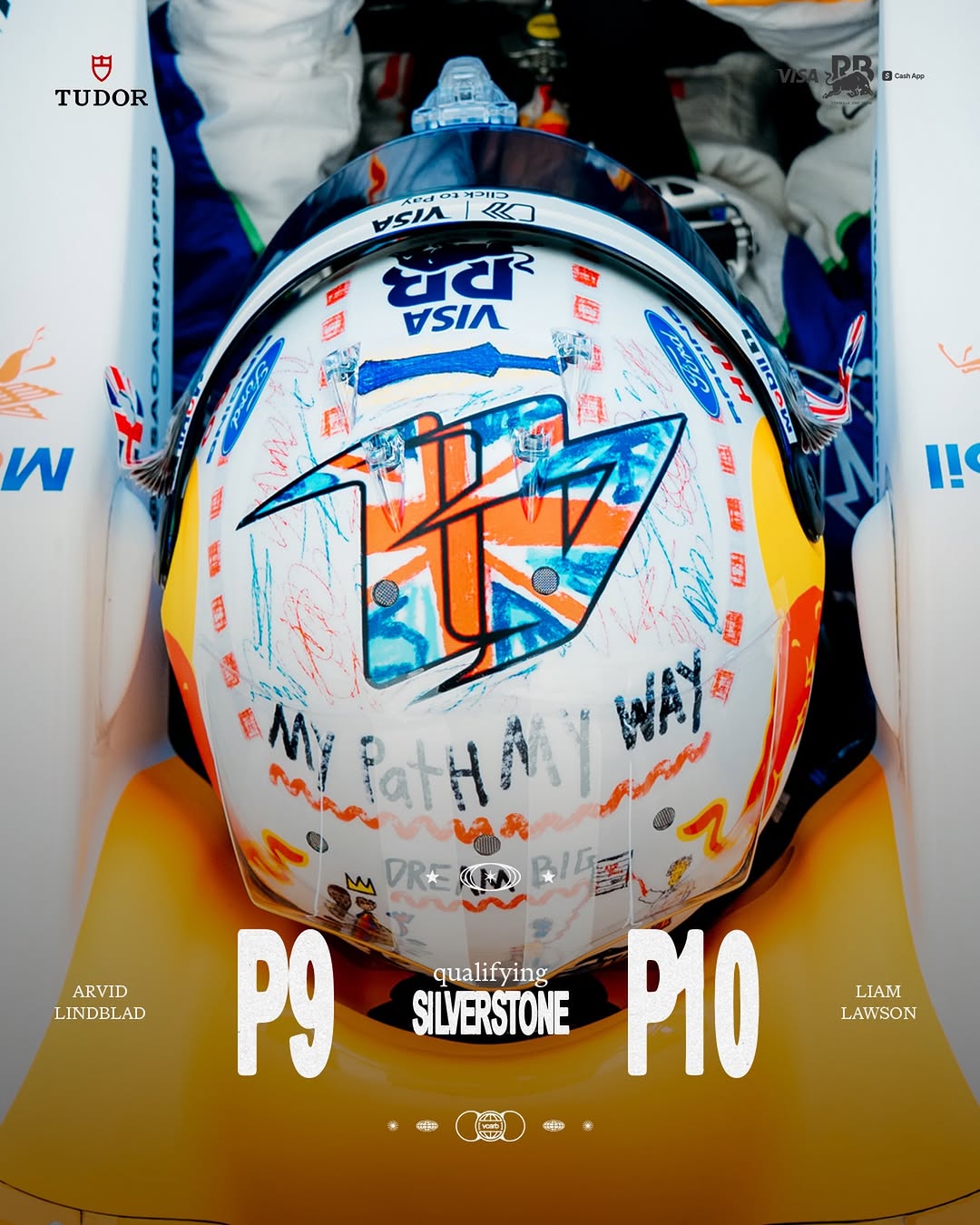
Racing Bulls sits ahead of the midfield chasing pack in the first half of the 2026 season, and the team traces part of that turnaround to a rear wing, sidepod and floor package that failed badly at the 2024 Spanish Grand Prix.
Key Takeaways
RB’s June 2024 upgrade at the Spanish Grand Prix included a new rear wing, sidepods, engine covers and a reprofiled floor, but delivered no gain on track.
Yuki Tsunoda and Daniel Ricciardo both exited in Q1 at Barcelona, with Ricciardo finishing 15th, roughly 30 seconds off the points, and Tsunoda 19th.
RB spent months unpicking the failed package, lost its sixth-place standing to Alpine and Haas, and finished the 2024 constructors’ championship in eighth.
That setback reshaped how the team now validates upgrades, a process behind Racing Bulls’ consistent 2026 development gains and its position ahead of the midfield in the current season.
The Upgrade That Was Supposed to Confirm a Breakthrough
RB arrived at the 2024 Spanish Grand Prix in June with what the team believed was its most significant upgrade of the season. The package covered a new rear wing, updated sidepods, revised engine covers and a reprofiled floor, all of it backed by windtunnel data pointing to a clear step forward.
The team had reason for confidence. Through the opening rounds of 2024 it had been a consistent points scorer and had built a comfortable hold on sixth in the constructors’ championship, ahead of both Alpine and Haas. A strong Barcelona weekend was meant to confirm that trajectory and put daylight between RB and the teams chasing it.
Instead, the upgrade did the opposite of what the simulations predicted. Rather than adding lap time, the car lost performance relative to its rivals at exactly the moment the team expected to gain it.
Q1 Eliminations and a Barcelona Weekend to Forget
Both RB cars were eliminated in Q1 at the 2024 Spanish Grand Prix, a result that had looked unlikely based on the team’s form earlier in the season. Yuki Tsunoda and Daniel Ricciardo failed to progress out of the first qualifying segment, and neither driver was able to recover meaningful ground once the race started.
Ricciardo finished the Barcelona race in 15th place, roughly 30 seconds outside the points. Tsunoda ended the afternoon 19th. For a team that had spent the first part of 2024 fighting near the top of the midfield, the gap to the points-scoring positions was a stark signal that something in the new package had gone wrong on track, not just in isolated data.
The scale of the drop was as damaging as the result itself. A team accustomed to Q2 appearances and regular points suddenly found itself outqualified and out-raced by cars it had been beating only weeks earlier.
The Cost of Getting an Upgrade Wrong
Team principal Alan Permane describes an under-delivering upgrade as one of the most damaging outcomes a team can face, because it wipes out development time that cannot be recovered later in the season. “It’s a double penalty, isn’t it?” he told The Race in an exclusive conversation, pointing to the combined cost of losing performance on track and losing the weeks needed to work out why.
That double penalty played out in full through the rest of 2024. RB needed time to diagnose what had gone wrong with the rear wing, sidepod and floor changes introduced at Barcelona, and it did not fully restore confidence in its development direction until close to the end of the season. By then Alpine and Haas had both moved ahead of it in the constructors’ standings.
RB finished the 2024 season eighth in the constructors’ championship, having led the group directly behind the sport’s biggest teams for much of the year’s first half. The Spanish Grand Prix weekend marked the turning point between those two outcomes.
Rebuilding the Process, Not Just the Car
The team’s response to the 2024 failure was to change how it validates upgrades before committing to them at a race weekend, not simply to design a better rear wing or floor. Understanding why the windtunnel data had failed to predict the real-world outcome became the priority once the Barcelona weekend was over.
That work took months rather than weeks, which is why RB’s development stalled for the remainder of the 2024 season even after the immediate cause of the Q1 eliminations was identified. Rebuilding trust between the simulation tools and what the car actually does on track is not something that happens over a single race weekend.
The payoff from that process is now visible under the Racing Bulls name. Every upgrade brought to the track through the first half of the 2026 season has delivered close to what the team’s data said it would, a contrast the team points to directly when explaining why it now trusts its own development pipeline again.
Racing Bulls’ Position at the Top of the Chasing Pack in 2026
Racing Bulls has established itself at the top of the group of teams chasing the sport’s biggest four constructors through the first half of the 2026 season. That standing is a direct improvement on the eighth-place finish the team, then racing as RB, recorded at the end of 2024 after the Barcelona upgrade setback.
The team credits a sustained and consistent upgrade programme for that improvement, rather than one single large package. Hitting development targets race after race, instead of gambling on one high-risk step, has been the difference between 2024’s stall and 2026’s climb. That approach is the practical result of the lesson the team says it learned from the Spanish Grand Prix two years earlier.
Where the 2024 package covered a near rear wing, sidepods, engine covers and a reprofiled floor delivered in one go and then failed collectively, the current programme has favored smaller, verified steps. The team’s own account of this period treats the Barcelona failure not as a footnote, but as the origin point for the process now underpinning its 2026 form.
“It’s a double penalty, isn’t it?”
— Alan Permane, Racing Bulls Team Principal, speaking to The Race
FAQ
Q: What went wrong with RB’s 2024 upgrade at the Spanish Grand Prix?
The package, which included a new rear wing, updated sidepods, revised engine covers and a reprofiled floor, failed to deliver the performance gain that windtunnel data had predicted, and the car lost ground relative to its rivals at Barcelona in June 2024.
Q: How did the failed upgrade affect the 2024 Spanish Grand Prix result?
Both Yuki Tsunoda and Daniel Ricciardo were eliminated in Q1, and in the race Ricciardo finished 15th, roughly 30 seconds off the points, while Tsunoda finished 19th.
Q: Where did RB finish in the 2024 constructors’ championship?
RB finished eighth in the 2024 constructors’ championship, having led the midfield group for much of the first half of the season before Alpine and Haas overtook it following the Barcelona setback.
Q: How has Racing Bulls performed in the 2026 season so far?
Racing Bulls is at the top of the group of teams chasing the sport’s biggest four constructors through the first half of the 2026 season, a result the team links to a more consistent and verified upgrade process.
Q: Why does Racing Bulls credit a 2024 failure for its 2026 progress?
Team principal Alan Permane says under-delivering upgrades cost teams twice, in lost performance and lost development time, and the process built to avoid repeating that mistake now underpins Racing Bulls’ 2026 upgrade success.
Relive F1 team stories with a full-size 1:1 replica for display. Browse F1 Helmet Collection.
Display and collector replicas only. Not certified for protective use. Full-size 1:1 scale.
This article was written with the help of AI tools. Editorial policy