Blog
Sainz Details ‘All the Targets’ for Williams to Improve in 2026
 123Helmets Editorial Team
Sainz Details ‘All the Targets’ for Williams to Improve in 2026
Carlos Sainz has laid out a clear roadmap for what Williams must achieve to climb the grid in 2026 — and despite a rocky start to the season, the Spaniard’s determination is already the stuff of collector legend.
Key Takeaways
Williams have scored just once so far in 2026, courtesy of Sainz’s P9 finish in the Chinese Grand Prix — a result the Spaniard called a ‘mini victory’ in the context of their challenging start.
The team’s pre-season was hampered by delays and technical issues with their new car, built to F1’s sweeping 2026 technical regulations.
Sainz has publicly identified specific areas where Williams must improve, signalling a methodical, data-driven approach to turning the season around.
For collectors and fans, Sainz’s 2026 Williams chapter is already shaping up as one of the most compelling — and historically significant — comeback narratives of the new regulation era.
A Difficult Dawn: Williams and the 2026 Regulation Reset
Sainz Details ‘All the Targets’ for Williams in 2026
A season of reckoning, resilience, and a new chapter for one of F1’s most storied teams.
Every major regulation change in Formula 1 reshapes the competitive order — and 2026 has proven to be no exception. The sweeping technical overhaul, which touched virtually every area of car design from the power unit architecture to the aerodynamic philosophy, was always going to sort the grid into winners and those facing a steeper learning curve. For Williams, one of the sport’s most historically decorated constructors, the early weeks of the 2026 season have firmly placed them in the latter category.
The Grove-based squad arrived at pre-season testing carrying the weight of expectation that had built through their gradual resurgence in recent years. Yet the testing programme was blighted by delays and persistent issues with the new machinery, denying the engineering team the mileage and data they needed to arrive at the opening round in competitive shape. The result has been a painful, if instructive, start to the campaign.
Through it all, Carlos Sainz — making his first full season as a Williams driver — has emerged as the voice of measured optimism. Publicly methodical and relentlessly professional, the Spaniard has refused to allow frustration to cloud his technical analysis. Instead, he has done what great racing drivers do: identified the problems, named the targets, and committed to the process of fixing them.
The Mini Victory in Shanghai: Why P9 Matters More Than It Looks
When Carlos Sainz crossed the line in ninth place at the Chinese Grand Prix, it would have been easy for casual observers to dismiss the result as unremarkable. A single point. No podium. No headline. But within the context of where Williams were coming from — a pre-season disrupted by technical problems, a car still finding its feet in an entirely new regulatory framework — Sainz’s description of the result as a ‘mini victory’ carried genuine weight.
Points on the board, however few, are proof of concept. They demonstrate that the package is capable of reaching the finish line in a competitive position under race conditions, even if that position is far from where the team wants to be. For a team recalibrating in the way Williams are, those early data points — strategic, mechanical, aerodynamic — are invaluable reference material for the updates that follow.
Sainz, a driver with multiple Grand Prix victories to his name and a reputation for extracting maximum performance from imperfect machinery, understood this intuitively. His ability to read a race situation and convert a compromised starting position into championship points has been one of the defining qualities of his career. In Shanghai, he demonstrated that even with a car not yet at its full potential, he remains one of the grid’s most reliable points scorers.
For those who follow F1 not just as a sport but as a living history — collectors who seek to preserve the helmets, memorabilia, and imagery of the sport’s greatest moments — this kind of grinding, gritty performance often holds as much significance as a flamboyant pole position. The Shanghai points finish is already a footnote in the Williams 2026 story. Whether it becomes a turning point depends on what comes next.
Sainz Names the Targets: Where Williams Must Improve
Carlos Sainz’s value to Williams extends well beyond his ability to drive quickly. His technical feedback — honed across seasons with Toro Rosso, Renault, McLaren, and Ferrari — is considered among the most precise and actionable in the paddock. When Sainz speaks about what a car needs, engineers listen. And in 2026, he has been unambiguous about laying out what he believes Williams must address.
Mechanical Balance and Low-Speed Grip
The new 2026 regulations, with their revised aerodynamic philosophy and updated power unit specifications, have placed a premium on mechanical setup in a way that not all teams predicted. For Williams, finding the right balance at lower speeds — in slow corners and in the first phase of braking zones — has been identified as a priority area. Sainz’s feedback has pointed to moments where the car lacks the confidence-inspiring stability that drivers need to commit fully to cornering speed.
Power Unit Integration and Energy Deployment
The 2026 power unit regulations represent perhaps the most dramatic shift in F1’s technical landscape in over a decade, with a significantly revised split between internal combustion and electrical energy recovery. Getting the deployment strategy right — knowing when to lean on the electrical component and when to conserve it — has been a challenge across the grid, but particularly for teams whose chassis and power unit integration is still being optimised. Sainz has highlighted this area as one where consistent improvement race-by-race is expected.
Aerodynamic Consistency Across Track Types
One of the signatures of a truly competitive F1 car is the ability to perform across the diverse spectrum of circuit types that make up the modern calendar — from the flowing, high-speed complexes of circuits like Suzuka and Spa to the technical, stop-start nature of Monaco and Singapore. Sainz has underlined the importance of building a car that does not swing wildly in relative performance as the calendar moves between track configurations. Early in 2026, Williams’ package has shown promising flashes in certain conditions but inconsistency across different track types. Addressing this is among Sainz’s stated targets for the season.
Development Velocity
Perhaps the most important target of all, and the one that will ultimately define whether Williams’ 2026 becomes a story of recovery or continued struggle, is the pace of development. In the modern era, the teams that succeed are not necessarily those that arrive at race one with the fastest car — they are the teams that develop most effectively throughout the season. Sainz has spoken about the importance of the factory in Grove delivering a steady stream of performance updates, and of the entire operation aligning behind a clear technical direction.
The Broader 2026 Narrative: A Grid Reshuffled
Williams’ challenges at the start of 2026 are best understood not in isolation but as part of the broader story of what happens to the Formula 1 grid when the regulations change at this magnitude. History offers instructive precedents. When the hybrid power unit era began in 2014, Mercedes emerged as dominant force while previously competitive teams scrambled. When the ground-effect cars returned in 2022, Ferrari and Red Bull surged while others — including Williams — found themselves on the back foot initially.
The 2026 regulation set, with its new active aerodynamic elements, revised diffuser rules, and the landmark shift in power unit architecture, is arguably the most significant technical reset since 2014. Under such circumstances, early-season struggles for teams in the midfield and lower orders are not just expected — they are almost inevitable. What matters is the trajectory.
For Williams, the trajectory is upward, even if the gradient is not yet as steep as Sainz and the team would like. The car exists. It has scored points. It is being developed. And it has one of the most experienced and technically articulate drivers in the sport at its wheel, providing the feedback needed to accelerate that development.
The parallels to previous Williams recoveries — and there have been several in the team’s long history — are not lost on those who study the sport’s past. From the struggles of the early 2010s to the gradual resurgence of recent seasons, Williams have demonstrated an institutional resilience that sets them apart from many teams in the paddock. The question is not whether they will improve in 2026. It is how quickly, and how far.
The Collector’s Perspective: Why 2026 Williams Is Already a Story Worth Preserving
For the F1 collector community, regulation change seasons hold a special place in the archive. The helmets, liveries, and visual identity of teams navigating a fundamental reset carry a documentary weight that goes beyond aesthetics. They are artefacts of a specific moment in the sport’s evolution — evidence of what teams looked like, and who was driving, during one of the most consequential pivots in modern F1 history.
Carlos Sainz’s 2026 season with Williams already ticks many of the boxes that make a driver’s chapter collectible. A high-profile driver making a significant career move. A team with deep historical roots attempting to reinvent itself under new regulations. A regulatory era that will define the shape of F1 for the next cycle. Each of these elements adds layers of meaning to the visual and material culture of the season.
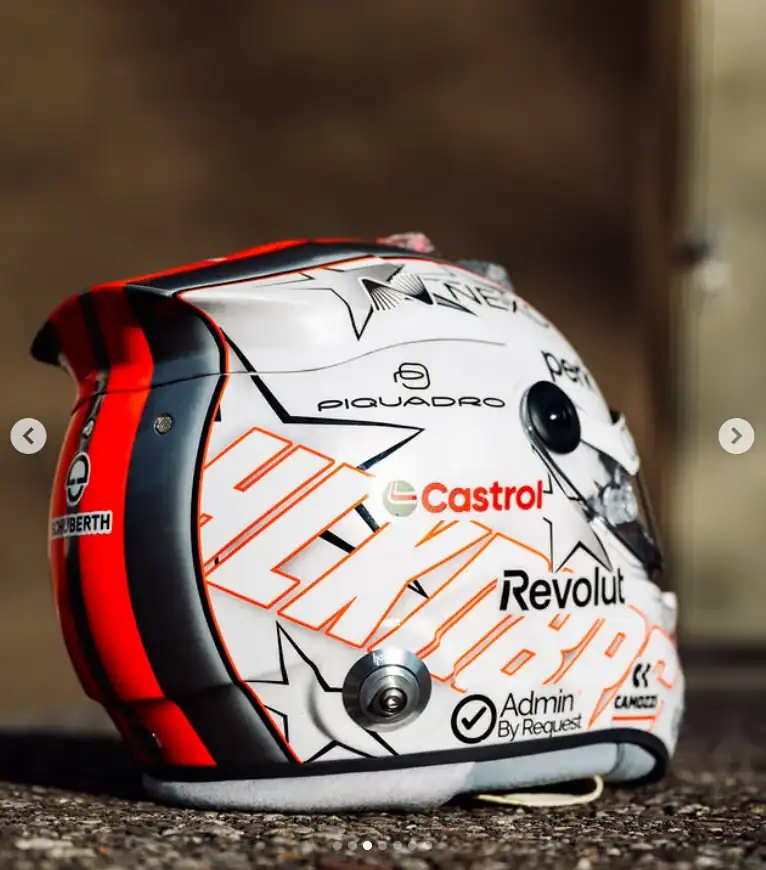
Full-size 1:1 replica display helmets — the kind of exhibition-quality collector items that 123Helmets.com specialises in — offer enthusiasts a way to own a piece of this narrative. A museum-quality replica of a driver’s lid from a landmark season is not merely a decorative object. It is a precisely scaled record of what a driver wore during a period that future historians of the sport will study closely. As display pieces and collector items, these full-size 1:1 replicas capture the livery, the sponsor placements, the visor shape, and the colour palette of the era with a fidelity that photographs alone cannot convey.
The 2026 season is still young. The targets Sainz has named for Williams are not yet met. But the story is already being written — and for collectors, getting in early on a narrative that is clearly building toward something significant is precisely the kind of curatorial instinct that separates a great collection from a merely good one.
Looking Ahead: Can Williams Deliver on Sainz’s Blueprint?
The remainder of the 2026 season will be telling. The calendar presents a variety of circuit types across multiple continents, each offering Williams a fresh opportunity — and a fresh test — of whether the development programme is delivering the improvements Sainz has called for. Key circuits will serve as barometers: the medium-speed flowing layouts where aerodynamic consistency matters most, the power-sensitive straights where energy deployment efficiency will be exposed, and the tight technical sections where mechanical balance determines the outcome.
Sainz himself is not a driver prone to public declarations he cannot back up. His career track record — victories with Ferrari, multiple seasons in the top four of the Drivers’ Championship, consistent performances at circuits across the world — speaks to a driver who delivers when the environment supports it. His decision to join Williams in 2026, at a moment when the team is navigating significant change, is a statement of belief in the project’s long-term direction.
The technical staff in Grove are working against the backdrop of a grid that has also faced its own 2026 growing pains. No team has found the new formula entirely straightforward. But the gap between those who adapt quickly and those who do not will define the midfield battle for seasons to come, and Williams’ ability to execute on the targets Sainz has laid out will be crucial to which side of that line they find themselves on.
For fans, for collectors, and for those who simply love the sport’s capacity for underdog resurgence, the Williams 2026 story is one to watch. The targets have been named. The driver is ready. Now the work begins.
Collector’s Note: All helmet replicas featured at 123Helmets.com are full-size 1:1 display and collector replicas. They are exhibition-quality pieces intended for display purposes only, and are not certified for any protective, safety, or on-track use.
“It’s a mini victory for us given everything we’ve been through in pre-season.”
— Carlos Sainz, on his P9 finish at the 2026 Chinese Grand Prix
“Every point matters at this stage. We know the targets, and we’re working on all of them.”
— Carlos Sainz, Williams driver, 2026
FAQ
Q: What are Carlos Sainz’s stated targets for Williams in 2026?
Sainz has identified several key areas for improvement at Williams in 2026, including mechanical balance and low-speed grip, power unit and energy deployment consistency, aerodynamic performance across different circuit types, and the overall velocity of car development throughout the season.
Q: How has Williams performed at the start of the 2026 Formula 1 season?
Williams have had a difficult start to the 2026 season, with their pre-season testing hampered by delays and technical issues with the new car. Their only points so far came from Carlos Sainz’s ninth-place finish at the Chinese Grand Prix, which Sainz described as a ‘mini victory’ given the challenging circumstances.
Q: Why is the 2026 F1 season significant for collectors and memorabilia enthusiasts?
The 2026 season marks one of the most sweeping regulatory resets in Formula 1’s modern history, covering power unit architecture and aerodynamic philosophy. Seasons of this magnitude — where the grid is reshuffled and new competitive narratives emerge — are considered especially significant from a collector and archival perspective, as they document a pivotal moment in the sport’s evolution.
Q: What type of F1 helmet replicas does 123Helmets.com offer?
123Helmets.com specialises in full-size 1:1 scale display and collector replica helmets. These are exhibition-quality pieces designed for display and collection purposes only. They are not certified for any protective use, safety standards, or on-track wear.
Q: Why did Carlos Sainz join Williams for the 2026 season?
Carlos Sainz joined Williams ahead of the 2026 season, a move widely interpreted as a long-term strategic decision aligned with a major regulation reset that was expected to reshape the competitive order. Sainz has spoken positively about the project and the team’s ambitions, despite the challenging start to the campaign.
Browse F1 Helmet Collection
Display and collector replicas only. Not certified for protective use. Full-size 1:1 scale.
This article was written with the help of AI tools. Editorial policy