
Blog
Verstappen Explains First-Lap Crash: ‘I Got Caught Out’
 123Helmets Editorial Team
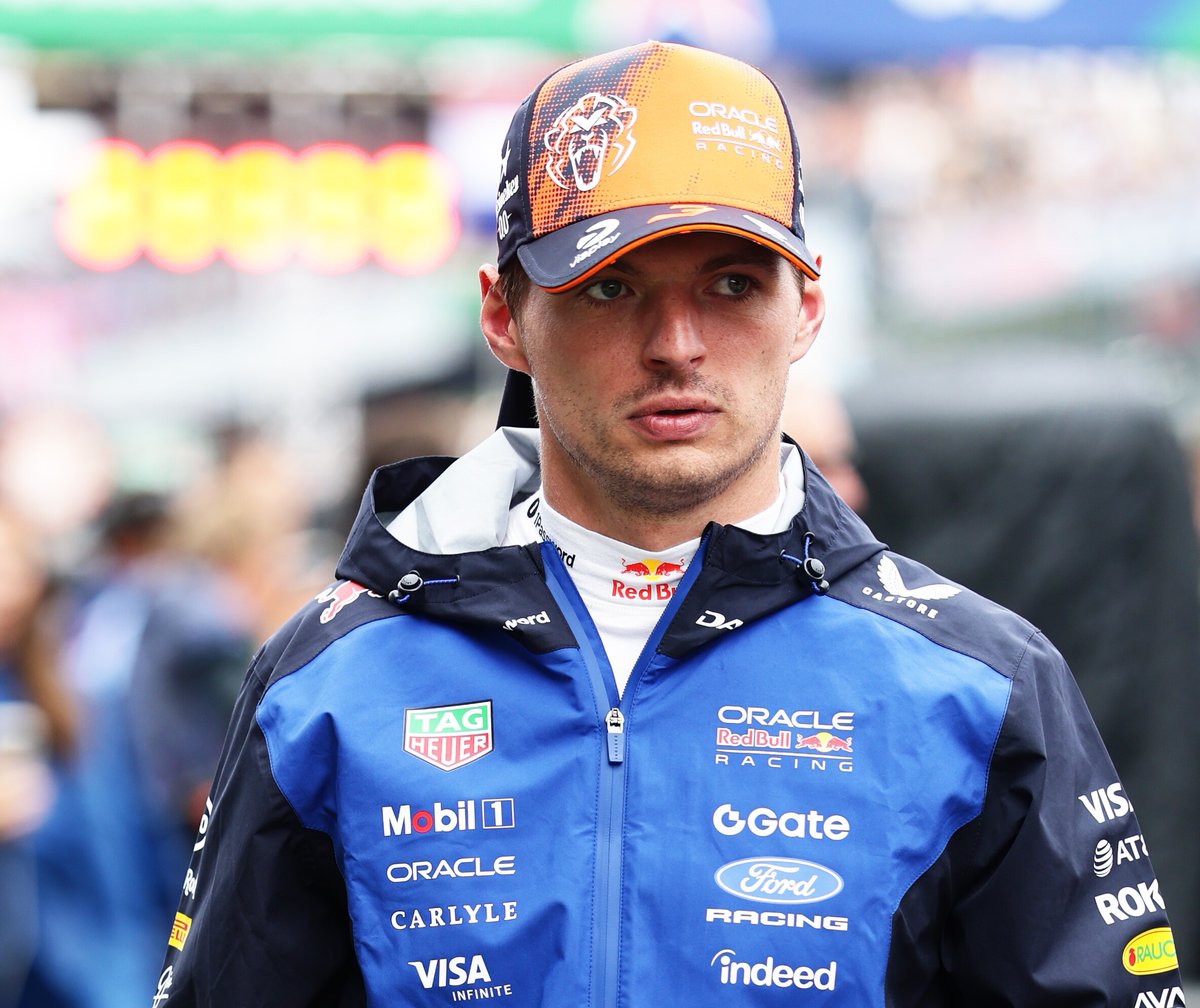
Max Verstappen has given his own account of the first-lap incident that ended his afternoon early, telling reporters he was caught out by a mix of wet tarmac and a drying racing line at Turn entry.
Key Takeaways
Verstappen said he was “caught out” by lingering wet track surface in the corner where he crashed on the opening lap
He described spotting a dry patch and committing to the throttle earlier than the grip allowed
Verstappen called it “a decent hit” but noted he has experienced harder impacts before
The comments, relayed by journalist Adam Cooper, offer a rare first-person account of a title contender’s mistake in mixed conditions
What Happened on the Opening Lap
Max Verstappen crashed out on the opening lap after misjudging grip levels on a track surface that was still partially wet. Speaking after the incident, Verstappen said: “I got caught out. It was still quite wet in that corner.” The comment, first shared by veteran F1 journalist Adam Cooper on social media, points to a track that had not fully dried despite conditions improving through the early laps of the race. First-lap incidents in mixed conditions are common in Formula 1 because tyre temperatures, track rubber and moisture levels vary sharply from corner to corner, and drivers are forced to make split-second calls about where grip actually exists rather than where it should exist based on the previous lap.
Verstappen, who races for Red Bull, has been a full-time Formula 1 race winner since his rise through the grid began in 2016, and incidents of this kind remain rare for a driver of his experience. That rarity is part of why his own explanation carries weight: this was not a case of a driver overdriving a fully dry track, but a genuine misread of a surface that was changing lap by lap.
Verstappen’s Own Explanation
Verstappen attributed the crash to accelerating just before the track had fully dried in that section of the corner. In his words: “And then as soon as I saw the dry patch coming, I said now you can accelerate – but clearly that didn’t work. So probably was still a bit too early.” This is a driver openly walking through his own decision-making process in real time, describing the visual cue of a dry patch, the decision to commit throttle, and the moment it became clear the grip was not yet there.
The sequence he describes is a common trap in transitional conditions: a driver spots what looks like a drying line, trusts it, and applies power before the tyres have actually built temperature or before the residual moisture has cleared. Verstappen’s phrase “a bit too early” suggests the margin was small, not a wild misjudgment but a fine calculation that went against him by a fraction of a second.
‘A Decent Hit, But I’ve Had Worse’
Verstappen downplayed the physical impact of the crash despite calling it significant. His full comment continued: “It was a decent hit, but I’ve had worse…” This kind of understatement is typical of drivers assessing impacts immediately afterward, when adrenaline and the immediate need to explain the incident to the team take priority over describing the physical sensation in detail.
The comment also frames the incident within Verstappen’s broader career, where high-speed accidents have occurred before without lasting consequence to his season. Coming on the opening lap, the crash ended his involvement in that race early, a costly outcome for any driver but particularly for one competing at the front of the field, where lost track time and missing points can shift the balance of a tightly fought championship battle.
Why First-Lap Incidents Matter So Much
First-lap crashes carry disproportionate weight in Formula 1 because they remove a driver from the entire race distance rather than costing time within it. A driver who loses time in a mid-race error can often recover through strategy or overtakes; a driver eliminated on lap one scores nothing and hands rivals a straightforward points gain. That is why Verstappen’s public breakdown of exactly what went wrong, wet corner, drying patch, early throttle, matters beyond simple curiosity. It is the kind of detail team engineers use afterward to adjust how drivers are briefed about track conditions in future sessions where rain has recently fallen.
Mixed-condition starts also test a driver’s read of the track surface against real-time information from the pit wall, and Verstappen’s account suggests the call to push was made on visual judgment in the cockpit rather than on a radio instruction, underlining how much of this decision sits with the driver alone in the moment.
The Bigger Picture for Verstappen’s Season
An opening-lap retirement is a rare zero-points result for a driver who has spent his career fighting for wins and podiums. Verstappen’s calm, technical explanation, rather than frustration directed at the car or conditions, is consistent with how he has handled setbacks throughout his time at the front of the grid. His comments to Adam Cooper give fans and rivals alike a clear, driver-verified account of the incident rather than speculation about mechanical failure or contact with another car.
For collectors and fans following Verstappen’s 2026 season, incidents like this become part of the story behind a given race weekend, moments that often live on through team and driver merchandise long after the results are settled.
“I got caught out. It was still quite wet in that corner. And then as soon as I saw the dry patch coming, I said now you can accelerate – but clearly that didn’t work. So probably was still a bit too early. It was a decent hit, but I’ve had worse.”
— Max Verstappen, via Adam Cooper (@adamcooperF1)
FAQ
Q: What caused Max Verstappen’s first-lap crash?
Verstappen said the corner was still wet despite a visible dry patch, and he accelerated slightly too early before the track had fully dried, leading to a loss of grip.
Q: Did Verstappen blame the car for the crash?
No, Verstappen’s explanation focused entirely on track conditions and his own timing, describing the moment he chose to accelerate rather than pointing to any mechanical issue.
Q: How hard was the impact in Verstappen’s crash?
Verstappen called it “a decent hit” but added he has experienced harder impacts in his career, suggesting the crash was significant but not among the worst he has been involved in.
Q: Who first reported Verstappen’s comments on the crash?
Journalist Adam Cooper (@adamcooperF1) shared Verstappen’s quotes on social media shortly after the incident.
Q: Did the crash happen early in the race?
Yes, Verstappen confirmed it was a first-lap incident, meaning he was eliminated from the race before completing a single full lap of racing.
Browse F1 Helmet Collection
Display and collector replicas only. Not certified for protective use. Full-size 1:1 scale.