
Blog
Verstappen’s Montreal Frustration: “Not Fun to Drive” Sparks Setup Scramble Before Qualifying
 123Helmets Editorial Team
Verstappen’s Montreal Frustration: “Not Fun to Drive” Sparks Setup Scramble Before Qualifying
Max Verstappen walked out of the Montreal Sprint with a furrowed brow and a blunt verdict for the assembled media: his Red Bull was “not really a lot of fun to drive.” With qualifying scheduled for 4 pm local time, the four-time world champion and his engineers faced a frantic window to transform an unloved machine into a pole-position weapon around the unforgiving walls of the Circuit Gilles Villeneuve.
Key Takeaways
Verstappen publicly criticised the balance of his Red Bull following the Montreal Sprint session.
The Dutchman confirmed his team would attempt setup changes before the 4 pm qualifying hour.
The Circuit Gilles Villeneuve historically punishes any car that lacks low-speed traction and kerb compliance.
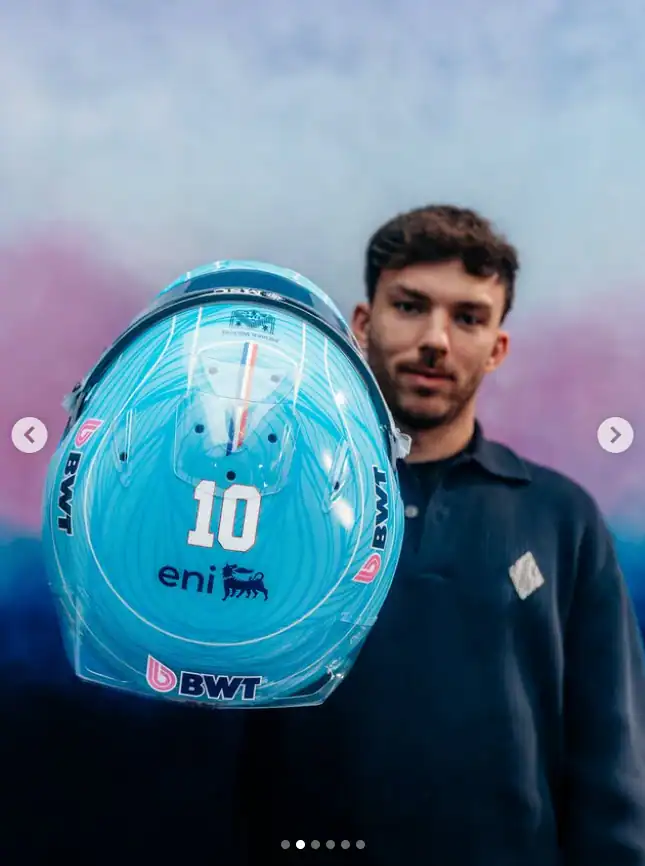
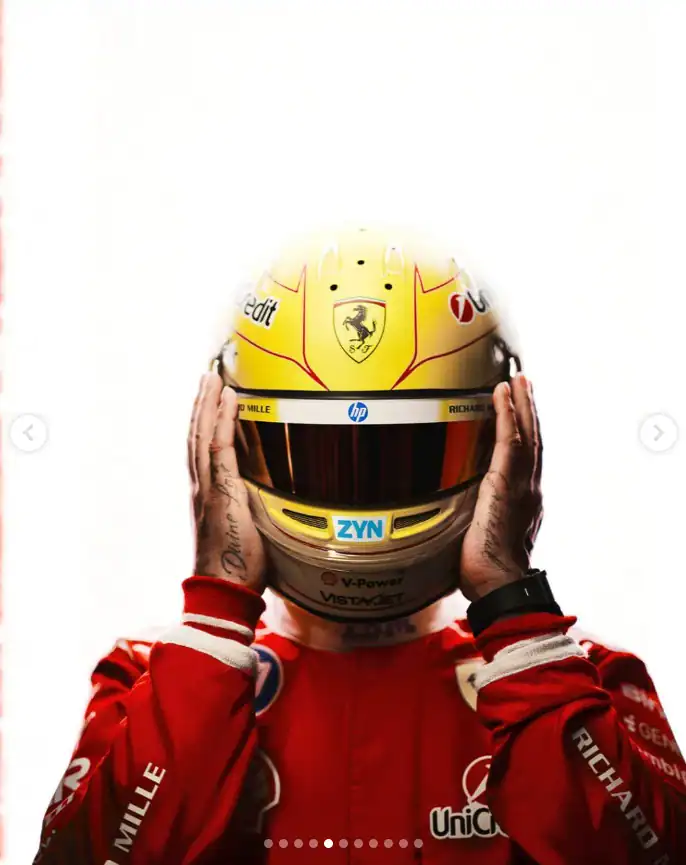
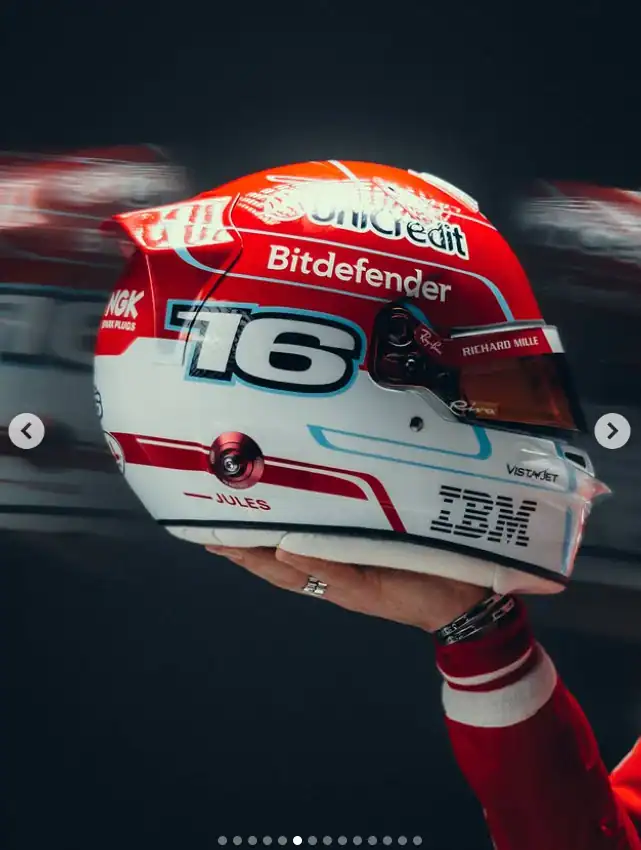
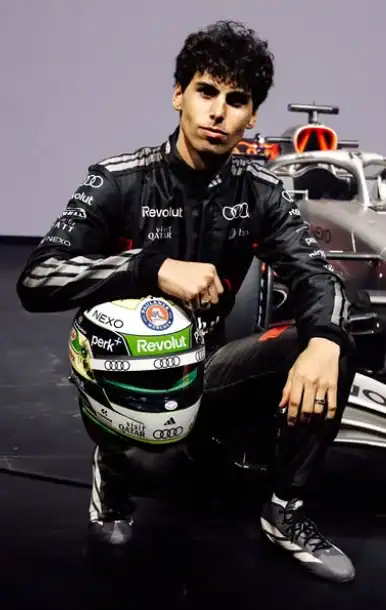
For collectors, Montreal weekends often produce iconic helmet moments worthy of full-size 1:1 display replicas.
A Champion’s Candid Verdict in Montreal
When a four-time world champion describes his car as “not really a lot of fun to drive,” the paddock listens. Max Verstappen’s post-Sprint debrief in Montreal carried the unmistakable tone of a driver wrestling with a machine that simply refuses to cooperate. The Canadian Grand Prix has always been a circuit that demands precision — a narrow ribbon of asphalt lined with concrete walls that have humbled even the greatest names in Formula 1 history.
Verstappen’s frustration was not the theatrical sort. It was measured, almost clinical — the kind of feedback that suggests the issue is mechanical, aerodynamic, or both. With qualifying looming at 4 pm local time, the Red Bull garage transformed into a hive of calculated activity, engineers poring over telemetry traces in search of the elusive sweet spot.
Why Montreal Magnifies Every Flaw
The Circuit Gilles Villeneuve is a deceptive beast. On paper, it appears straightforward: long straights, heavy braking zones, a handful of chicanes. In reality, it is one of the most demanding low-speed circuits on the calendar. Traction out of slow corners, compliance over the aggressive kerbs, and absolute confidence under braking are non-negotiable. Any car that lacks one of these traits will be exposed brutally — often by the infamous Wall of Champions at the final chicane.
The Setup Puzzle Before Qualifying
Verstappen’s comments suggested the team would “try to make the car better” before qualifying. In the modern parc fermé era, that window is narrow and the changes permitted are limited, but the impact of small adjustments — front wing flap angles, tyre pressures, brake bias mapping — can be the difference between front row and Q2 elimination.
The Aero-Mechanical Balancing Act
Red Bull’s recent campaigns have been characterised by a knife-edge aerodynamic philosophy. When the platform works, it is untouchable. When the ride height, rake, or floor loading drifts outside its operating window, the car can become nervous and reluctant to rotate. Montreal’s bumpy surface and aggressive kerb usage are precisely the conditions that can push such a platform beyond its happy zone.
Tyre Behaviour on a Cool Canadian Afternoon
Canadian weather adds another variable. Track temperatures in Montreal can swing dramatically between Sprint and qualifying, altering tyre warm-up patterns and front-end grip. A driver complaining about a car being “not fun” often points to a fundamental front-to-rear balance issue — understeer that erodes confidence in fast direction changes, or a snappy rear that punishes any aggressive throttle application out of the hairpin.
What This Means for the Championship Picture
Every qualifying session in a tightly contested season carries championship weight. A compromised Saturday afternoon in Montreal can cascade into a damage-limitation Sunday, particularly at a circuit where overtaking — while possible thanks to long DRS zones — remains far from guaranteed against well-matched machinery.
Verstappen’s openness about the car’s behaviour is, in some ways, a strategic disclosure as much as an emotional one. It signals to his engineers, to the wider team, and indeed to his rivals that the Red Bull is not in its optimal window. Whether the Dutchman can extract a result that defies the car’s mood remains one of his signature talents — the ability to wrestle a difficult car into improbable positions has defined many of his finest weekends.
Rivals Sense an Opening
When the benchmark driver of the era admits to discomfort, competitors take notice. McLaren, Ferrari, and Mercedes have all enjoyed moments of pace in 2024-2025 where they have closed the gap to Red Bull. A wounded Verstappen weekend is precisely the scenario in which a rival can convert latent pace into a tangible result on the timing screens.
Montreal Through a Collector’s Lens
For collectors of full-size 1:1 replica helmets, the Canadian Grand Prix is a weekend that consistently delivers display-worthy moments. The circuit’s photogenic backdrops — the Saint Lawrence River, the iconic podium, the tree-lined run from the hairpin — frame helmet liveries in a way few venues can match. When a driver of Verstappen’s stature endures a difficult weekend and then claws back into contention, those helmets become artefacts of a story, not just objects.
Why Replica Helmets Capture These Stories
A collector display helmet is more than painted carbon-effect shell and tinted visor. It is a frozen moment of a season, a tactile reminder of a specific weekend, livery iteration, or championship chapter. Owning a full-size 1:1 replica of a current-era helmet allows enthusiasts to bring the drama of weekends like Montreal into a home cabinet, a man cave, or a dedicated motorsport room. Each replica we curate at 123Helmets is exhibition quality — designed exclusively as a display piece and collector item, never for protective use.
The Verstappen Helmet Legacy
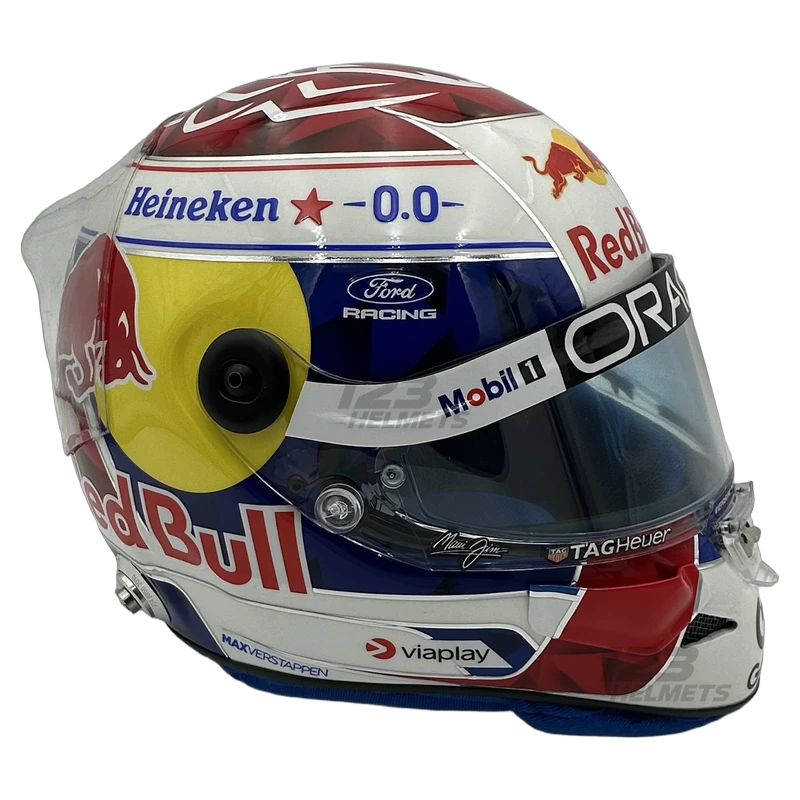
Verstappen’s helmet designs have become some of the most recognisable in modern Formula 1. The bold lion motif, the Dutch tricolour accents, and the regular special editions tied to specific Grands Prix have made his collection a focal point for replica collectors worldwide. Even a difficult weekend in Montreal adds to the narrative mix that makes these display pieces so compelling years later.
The 4 PM Verdict — What to Watch For
As the qualifying hour approached, attention focused on a handful of telltale signs. Would Verstappen’s first flying lap in Q1 show the same hesitancy under braking he had hinted at after the Sprint? Would the team risk a more aggressive setup direction, or play it safe in pursuit of a clean session? The Wall of Champions, ever-present at the exit of the final chicane, was once again the silent arbiter.
Reading the Body Language of a Lap
Experienced viewers know to watch the steering inputs through Turn 10, the long left-hander leading onto the back straight. A car that is happy will track cleanly with minimal correction. A car that is fighting its driver will demand constant micro-adjustments — and Verstappen’s hands are among the most expressive in the sport when telling that particular story.
The Long Game Beyond Saturday
Even if qualifying did not deliver the result Red Bull craved, Verstappen’s racecraft on Sunday remains a wildcard. Montreal has historically produced unpredictable Grands Prix — safety cars, rain showers, and tyre degradation surprises have all rewritten expected outcomes. A driver who starts compromised but races with conviction can still write a memorable chapter, and memorable chapters are precisely what fuel the appeal of collector helmets in the years that follow.
“Not really a lot of fun to drive.”
— Max Verstappen, post-Sprint media debrief, Montreal
FAQ
Q: What did Max Verstappen say about his car after the Montreal Sprint?
Verstappen told the media that his Red Bull was “not really a lot of fun to drive” and indicated that he and his engineers would attempt setup adjustments to improve the car ahead of qualifying at 4 pm local time.
Q: Why is the Circuit Gilles Villeneuve so demanding on car setup?
Montreal combines long straights with heavy braking zones, aggressive kerbs, and slow chicanes. Cars need strong traction, kerb compliance, and confident braking stability — any weakness in these areas is brutally exposed, often by the famous Wall of Champions at the final chicane.
Q: Can teams make significant setup changes between Sprint and qualifying?
Under parc fermé rules, the changes permitted are limited, but adjustments to front wing flap angles, tyre pressures, brake bias and engine modes can still meaningfully alter the car’s behaviour and unlock lap time within the rules.
Q: Are 123Helmets replicas suitable for use on track or as protective equipment?
No. All 123Helmets pieces are full-size 1:1 collector and display replicas, designed exclusively as exhibition-quality display items. They are not certified for protective use of any kind and should be enjoyed purely as collector items.
Q: What makes a Canadian Grand Prix weekend appealing for helmet collectors?
Montreal consistently produces dramatic narratives — championship battles, surprise winners, and visually iconic moments against the Saint Lawrence backdrop. Helmets worn during such weekends carry strong storytelling value, making their 1:1 display replicas particularly desirable for serious collections.
Explore our curated range of full-size 1:1 collector and display replica helmets inspired by the heroes of modern Formula 1. Browse F1 Helmet Collection and bring the drama of weekends like Montreal into your display cabinet.
Display and collector replicas only. Not certified for protective use. Full-size 1:1 scale.