Blog
Verstappen: The Ringmaster of the 2026 Austrian GP
 123Helmets Editorial Team
Max Verstappen crashed out of qualifying at the Red Bull Ring, then carved through the field on race day to finish second behind a hard-fought battle with Lewis Hamilton — adding to his unmatched points tally at a circuit he has owned for years.
Key Takeaways
Verstappen holds the all-time Formula 1 points record at the Red Bull Ring — no driver has scored more at this circuit.
He recovered from a qualifying crash to finish second in the 2026 Austrian Grand Prix.
His race-day battle with Lewis Hamilton was the defining on-track contest of the weekend.
The Red Bull Ring result reinforces Verstappen’s status as the circuit’s most successful driver across all modern F1 eras.
The Record That Defines a Circuit
No Formula 1 driver has scored more points at the Red Bull Ring than Max Verstappen — a fact that makes the 2026 Austrian Grand Prix another chapter in an already remarkable story at this 4.318 km circuit in Spielberg, Austria. The Dutchman has treated the Red Bull Ring as something close to a home event for most of his career, and the numbers bear that out in a way no amount of highlight reels can fully capture.
The Red Bull Ring sits in the Styrian hills at an altitude of roughly 678 metres above sea level. It is one of the shortest permanent circuits on the calendar, meaning drivers complete more laps per race than at most venues — each lap another opportunity to bank points, manage tyres, or overcut a rival. Verstappen has exploited every one of those opportunities over the years, building a points haul here that no competitor has matched.
That record matters as a backdrop to 2026 because it changes how you read a single result. A second-place finish anywhere on the calendar is a strong weekend. At the Red Bull Ring, for Verstappen, it is almost routine — and that is the point. The circuit does not intimidate him. It motivates him.
Qualifying Crash: A Rare Stumble
Verstappen crashed out of qualifying at the 2026 Austrian Grand Prix, a rare misstep at a track where he has historically been among the fastest over a single lap. The incident left him starting the race from outside his usual front-row territory, handing rivals a clear opportunity to pull clear before Sunday’s lights went out.
For a four-time World Champion, qualifying setbacks are not common at circuits where he carries this much historical confidence. The Red Bull Ring’s combination of fast, sweeping corners and minimal run-off makes mistakes expensive — there is very little margin between a perfect lap and contact with the barriers. Verstappen found that margin on Saturday.
The crash also meant his engineers had more repair work than usual between sessions, with the team under time pressure to rebuild for race day. That kind of Saturday-to-Sunday turnaround tests not just the driver but the entire garage operation. The fact that he started the race at all — let alone finished on the podium — is the first measure of how the weekend recovered.
Race Day: The Comeback Drive
Verstappen delivered a second-place finish at the 2026 Austrian Grand Prix despite starting from a compromised grid position after his qualifying crash — a result that demonstrates exactly the kind of racecraft that has made him a four-time champion. He did not wait for the race to come to him; he worked through the field methodically, using the Red Bull Ring’s long main straight and DRS detection zones to create overtaking opportunities that a less experienced driver might have left on the table.
The race produced a hard-fought battle between Verstappen and Lewis Hamilton, one of the most familiar rivalries in the modern era. The two drivers traded pressure across multiple phases of the race, testing each other’s tyre management and defensive lines through the circuit’s sequence of medium and high-speed corners. It was the kind of wheel-to-wheel contest that the Red Bull Ring, with its multiple overtaking zones, is built to produce.
Ultimately, Verstappen secured second place — not the victory he and Red Bull would have targeted at their home circuit, but a significant points haul from what could easily have been a zero-points weekend after Saturday’s crash. Recovery drives of this quality are what separate championship-level competitors from the rest of the field.
Hamilton and the Rivalry That Won’t Quit
Lewis Hamilton pressed Verstappen through the closing stages of the 2026 Austrian Grand Prix, continuing a rivalry that has defined the sport across two distinct eras. The battle between them at the Red Bull Ring in 2026 was a reminder that while team-mates, regulations, and machinery change, the competition between these two drivers retains a specific intensity that other pairings rarely match.
Hamilton’s ability to stay close enough to apply pressure — even at a circuit where Verstappen’s historical record is so dominant — speaks to the quality Ferrari has built around the seven-time champion in 2026. The Scuderia’s package on race pace has been one of the stories of this season, and Spielberg gave them another opportunity to test it against the benchmark that Verstappen sets at this particular venue.
For collectors and observers of the sport, battles like the one these two produced on Sunday are the moments that give a season its identity. The helmets worn in those closing laps, the liveries on those two cars, the specific configuration of that race — these are the details that define memorabilia from a particular event. The 2026 Austrian GP will be remembered partly for Hamilton pushing Verstappen right to the end, even if the Dutchman held on.
What the Red Bull Ring Means to Verstappen’s Legacy
The Red Bull Ring is the circuit most closely associated with Max Verstappen’s dominance in Formula 1 — more so even than circuits where he has won more individual races, because the points record here reflects sustained excellence across multiple seasons rather than a single spectacular weekend. Each visit to Spielberg adds to a tally that no rival has come close to matching.
The circuit itself is named after the team Verstappen drives for, which adds a layer of expectation that would weigh on most drivers. For Verstappen, it appears to do the opposite — the Red Bull Ring seems to bring out the version of him that is most settled, most aggressive, and least troubled by pressure. Even in 2026, when qualifying ended with a crash and the race began from a difficult position, he produced the kind of drive that adds to the legend rather than complicating it.
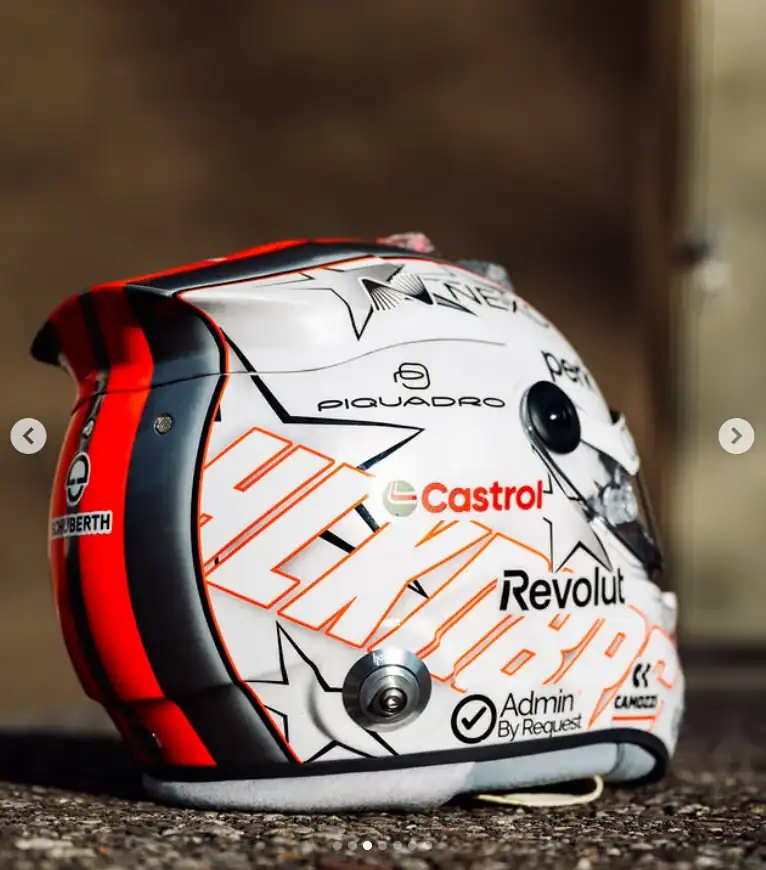
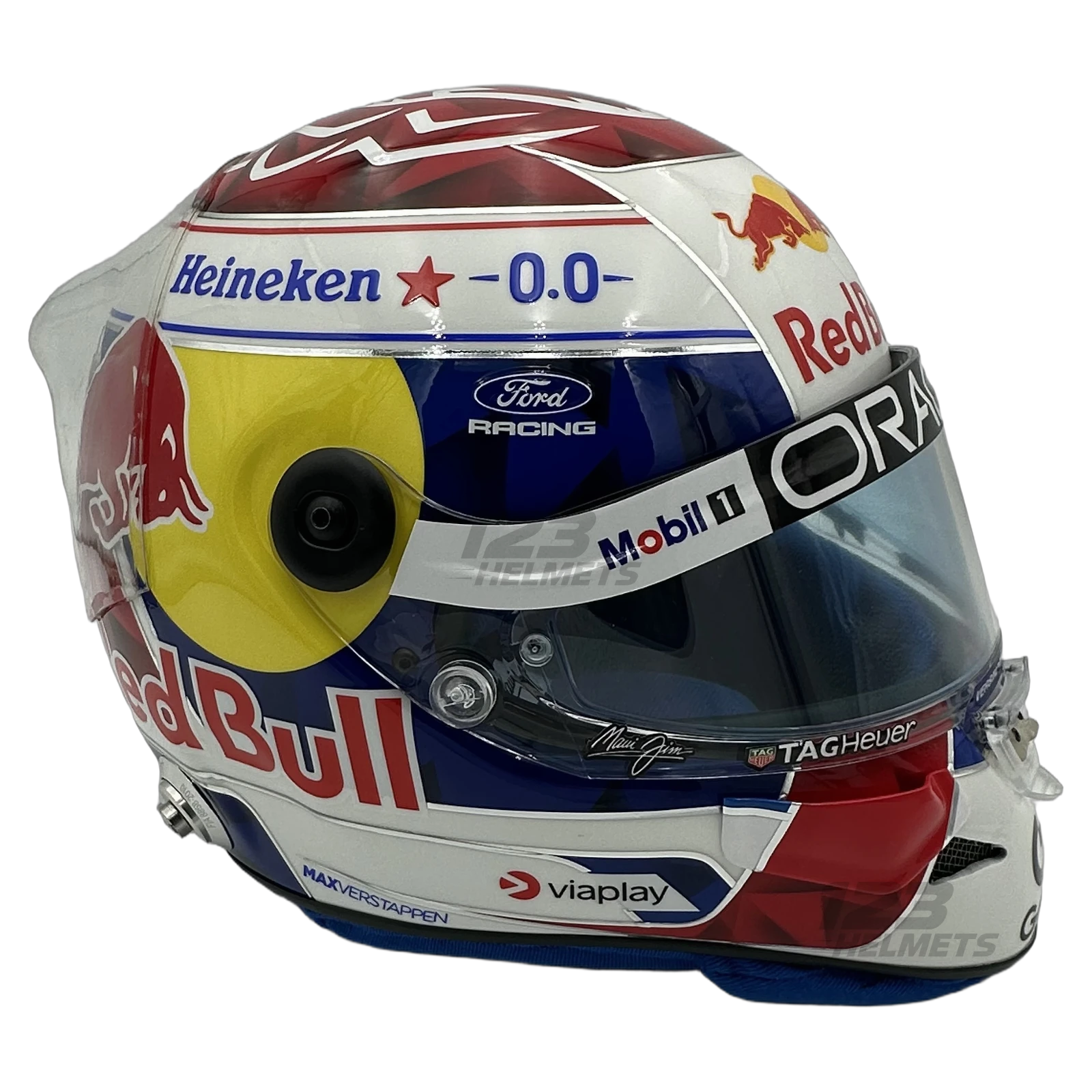
From a collector’s perspective, the 2026 Austrian GP helmet is a piece tied to one of the most statistically significant driver-circuit relationships in the modern era. Verstappen’s helmet designs have evolved across his championship years, and each iteration worn at this track carries the weight of that points record. The full-size 1:1 display replica of Verstappen’s 2026 Austrian GP lid captures the specific livery and colourway he raced in on the day he extended his own record — a record that, as of 28 June 2026, no other driver on the current grid is within reach of breaking.
The Red Bull Ring will host Formula 1 again. When it does, Verstappen’s record will still be the first number any analyst reaches for. That is what it means to be the Ringmaster.
Collecting the 2026 Austrian GP Moment
The 2026 Austrian Grand Prix is the kind of event that generates collector interest on multiple levels — a landmark circuit, a record-extending performance, a front-running rivalry, and a comeback narrative from qualifying adversity to podium finish. Each of those elements adds context to any display piece associated with this race weekend.
Full-size 1:1 display replica helmets from 123Helmets.com are produced at exact 1:1 scale, matching the dimensions of the race-used item without modification. These are display pieces and collector items, produced to exhibition quality — not certified for protective use, not wearable for road or track purposes. They exist to mark a moment: a specific driver, a specific circuit, a specific season.
The 2026 Austrian GP falls on 28 June 2026. For a driver who has scored more Formula 1 points at this circuit than anyone else in history, the race-day recovery to second place — past Hamilton, from a compromised grid slot — is exactly the kind of moment a collector wants represented on a shelf or in a display case. The helmet is the most personal item a driver carries through a race weekend. Owning a full-size replica of it connects the display directly to the event in a way that a diecast car or a poster cannot.
Whether your interest starts with Verstappen’s all-time points record at the Red Bull Ring, with the Hamilton battle that ran deep into Sunday afternoon, or simply with the comeback story that ran from Saturday’s barriers to Sunday’s podium — the 2026 Austrian GP has the material for a genuine collector piece.
FAQ
Q: Does Max Verstappen hold the all-time points record at the Red Bull Ring?
Yes — no Formula 1 driver has scored more points at the Red Bull Ring than Max Verstappen. He has built that record across multiple seasons of dominance at the Spielberg circuit, which sits at approximately 678 metres altitude and measures 4.318 km per lap.
Q: What happened to Verstappen in qualifying at the 2026 Austrian Grand Prix?
Verstappen crashed out of qualifying at the 2026 Austrian Grand Prix, leaving him to start Sunday’s race from outside his usual competitive grid position. The incident was an unusual setback at a circuit where he has historically been one of the quickest over a single lap.
Q: Where did Verstappen finish in the 2026 Austrian Grand Prix race?
Verstappen finished second in the 2026 Austrian Grand Prix. He recovered from his qualifying crash to battle Lewis Hamilton through the race, ultimately taking second place and extending his all-time points tally at the Red Bull Ring.
Q: Are the F1 helmets on 123Helmets.com safe to wear for racing or road use?
No — the helmets available at 123Helmets.com are full-size 1:1 display replicas and collector items only. They are produced to exhibition quality and are not certified for protective use, not FIA or Snell rated, and not intended for road, race, or track use of any kind.
Q: Why is a 2026 Austrian GP helmet replica a significant collector piece?
The 2026 Austrian GP is significant because Verstappen extended his all-time F1 points record at the Red Bull Ring on 28 June 2026, recovering from a qualifying crash to finish second in a race defined by his battle with Lewis Hamilton. A full-size 1:1 replica helmet from this event marks that specific moment — the driver, the circuit, and the season — in exhibition-quality form.
Browse F1 Helmet Collection
Display and collector replicas only. Not certified for protective use. Full-size 1:1 scale.
This article was written with the help of AI tools. Editorial policy