
Blog
Zandvoort Sprint: Russell Wins as Leclerc Gambles on Softs
 123Helmets Editorial Team
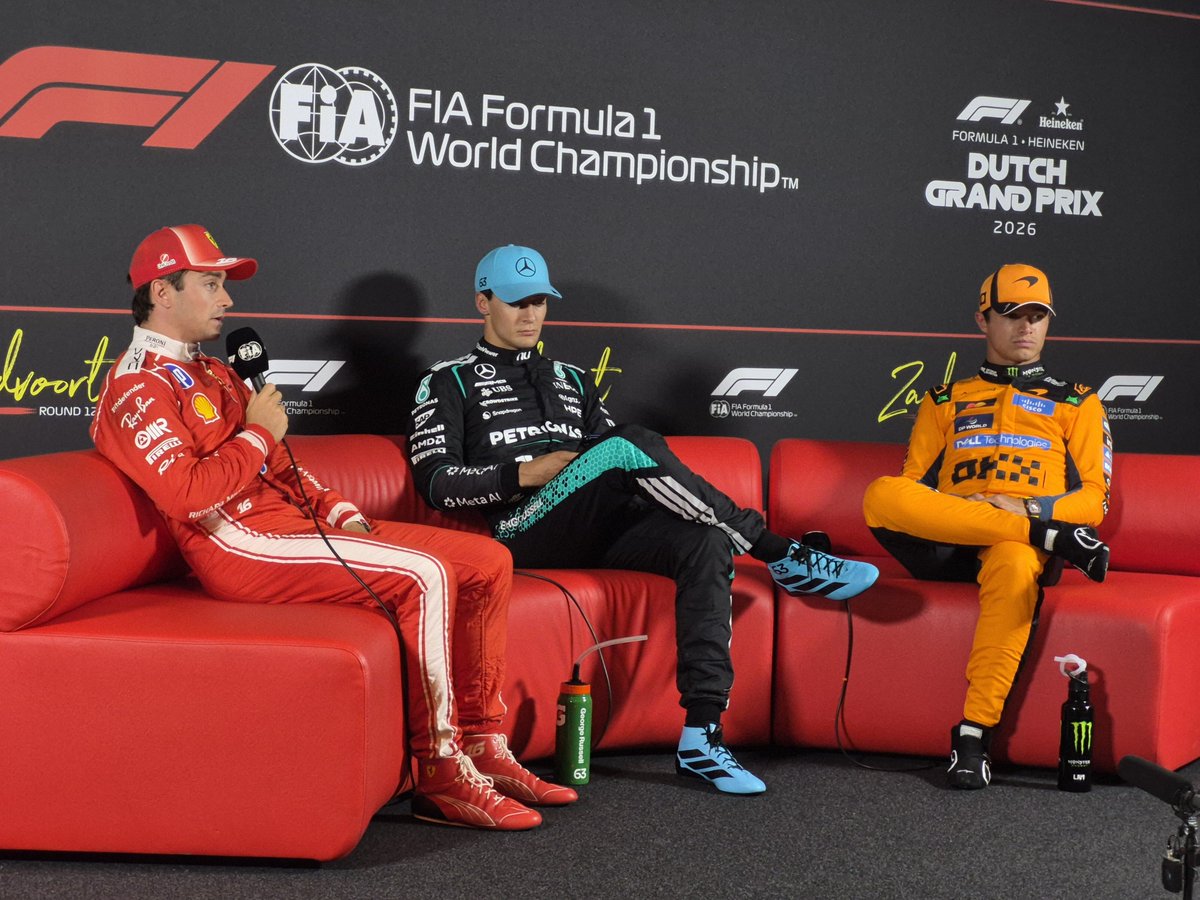
George Russell took the Zandvoort sprint win on 2026-08-22 without realizing Charles Leclerc, running an unconventional soft-tyre strategy, was closing behind him, while Ferrari split its own strategy by putting Lewis Hamilton on the medium compound.
Key Takeaways
George Russell won the Zandvoort sprint on 2026-08-22 and said afterward he did not know Charles Leclerc was running soft tyres behind him.
Charles Leclerc finished second after admitting the soft-tyre choice was not a clear-cut call before the sprint.
Ferrari split its strategy, with Lewis Hamilton starting the sprint on the medium compound instead of the soft.
The top three at Zandvoort highlighted how tyre-compound gambles shaped the short-format race outcome.
How the Zandvoort Sprint Unfolded
George Russell crossed the line first in the Zandvoort sprint held on 2026-08-22, leading a top three completed by Charles Leclerc in second and Lewis Hamilton close behind. The result set the tone heading into Sunday’s Grand Prix on 2026-08-23 at the same circuit. What made the sprint notable was not just the finishing order but the tyre strategy split within the Ferrari garage, with Leclerc and Hamilton starting on different compounds despite sharing the same car concept.
Sprint races at Zandvoort run on a compressed format with no mandatory pit stop, meaning the tyre compound chosen at the start effectively locks a driver into that strategy for the whole distance. That single variable turned out to define the battle for the podium positions.
Leclerc’s Soft-Tyre Gamble
Charles Leclerc said the soft tyre was not an obvious pick before the sprint, describing the decision as one that could easily have gone the other way. Ferrari clearly weighed both compounds seriously enough that the team ended up running one car on each: Leclerc on the soft, Hamilton on the medium.
The soft compound typically offers more initial grip but degrades faster over a sprint distance, so choosing it without a pit stop available is a bet on holding pace over the closing laps rather than protecting the tyre from the start. Leclerc’s second-place finish suggests the gamble worked well enough to keep him in touch with the race leader, even if it did not convert into the win.
Hamilton and Ferrari’s Split Strategy
Lewis Hamilton started the sprint on the medium tyre while his teammate Charles Leclerc ran the soft, giving Ferrari two different reads on the same race. Splitting compounds across a two-car team is a common way to hedge against uncertainty when neither tyre choice is a clear favorite, and Leclerc’s own comments confirm that uncertainty was real heading into the session.
With no scheduled tyre change during the sprint, the medium-tyre approach for Hamilton represented a bet on consistency and tyre life over one-lap pace, a strategy that can pay off in the closing stages of a short race if the soft-tyre runners begin losing grip.
Russell’s Winning Run and the Blind Spot Behind Him
George Russell said after the sprint that he did not know Charles Leclerc was on the soft tyre while chasing him, meaning he raced the closing laps without full knowledge of the pressure building behind. That admission is notable because tyre-compound awareness usually shapes how a leading driver manages pace in the final stages of a sprint.
Not knowing Leclerc’s tyre choice meant Russell could not specifically defend against a soft-tyre-fueled late charge, yet he still held on to take the win. The result puts Russell in a strong position heading into the Sunday Grand Prix at Zandvoort on 2026-08-23, with momentum from a sprint victory over both Ferrari drivers.
What the Sprint Result Means for Sunday
The Zandvoort sprint result gives Russell a psychological edge into the Grand Prix, having beaten both Ferrari cars despite their split tyre strategies. Leclerc’s second place on soft tyres shows Ferrari’s pace was competitive even on the compound the team was less certain about, while Hamilton’s medium-tyre run offers Ferrari data on tyre degradation that could inform Sunday’s strategy calls.
With the top three from the sprint carrying that form into race day, the tyre-strategy questions raised at Zandvoort on 2026-08-22 are likely to resurface in a longer format where pit stops, rather than a single compound choice, will decide the outcome.
“The soft tyre was not a clear choice for us.”
— Charles Leclerc, Ferrari
“I didn’t know he was on the soft tyre.”
— George Russell, on Charles Leclerc
FAQ
Q: Who won the Zandvoort sprint in 2026?
George Russell won the Zandvoort sprint held on 2026-08-22, finishing ahead of Charles Leclerc and Lewis Hamilton.
Q: What tyre was Charles Leclerc on during the sprint?
Charles Leclerc started the sprint on the soft compound, a choice he later said was not a clear-cut decision for the team.
Q: Why was Lewis Hamilton on a different tyre than Leclerc?
Ferrari split its strategy across its two cars, putting Lewis Hamilton on the medium tyre while Charles Leclerc ran the soft, hedging against the uncertainty over which compound would work best.
Q: Did George Russell know Leclerc was chasing him on soft tyres?
No, Russell said after the sprint that he was unaware Charles Leclerc was running the soft compound behind him during the closing laps.
Q: When is the Dutch Grand Prix following this sprint?
The Grand Prix at Zandvoort follows the sprint on 2026-08-23, the day after the sprint session took place.
Relive standout F1 tyre-strategy weekends with a full-size 1:1 helmet from the 123Helmets collection. Browse F1 Helmet Collection at /shop/.
Display and collector replicas only. Not certified for protective use. Full-size 1:1 scale.