Blog
Blue-Flag Glitch Sparks Chaos at 2026 Hungarian GP
 123Helmets Editorial Team
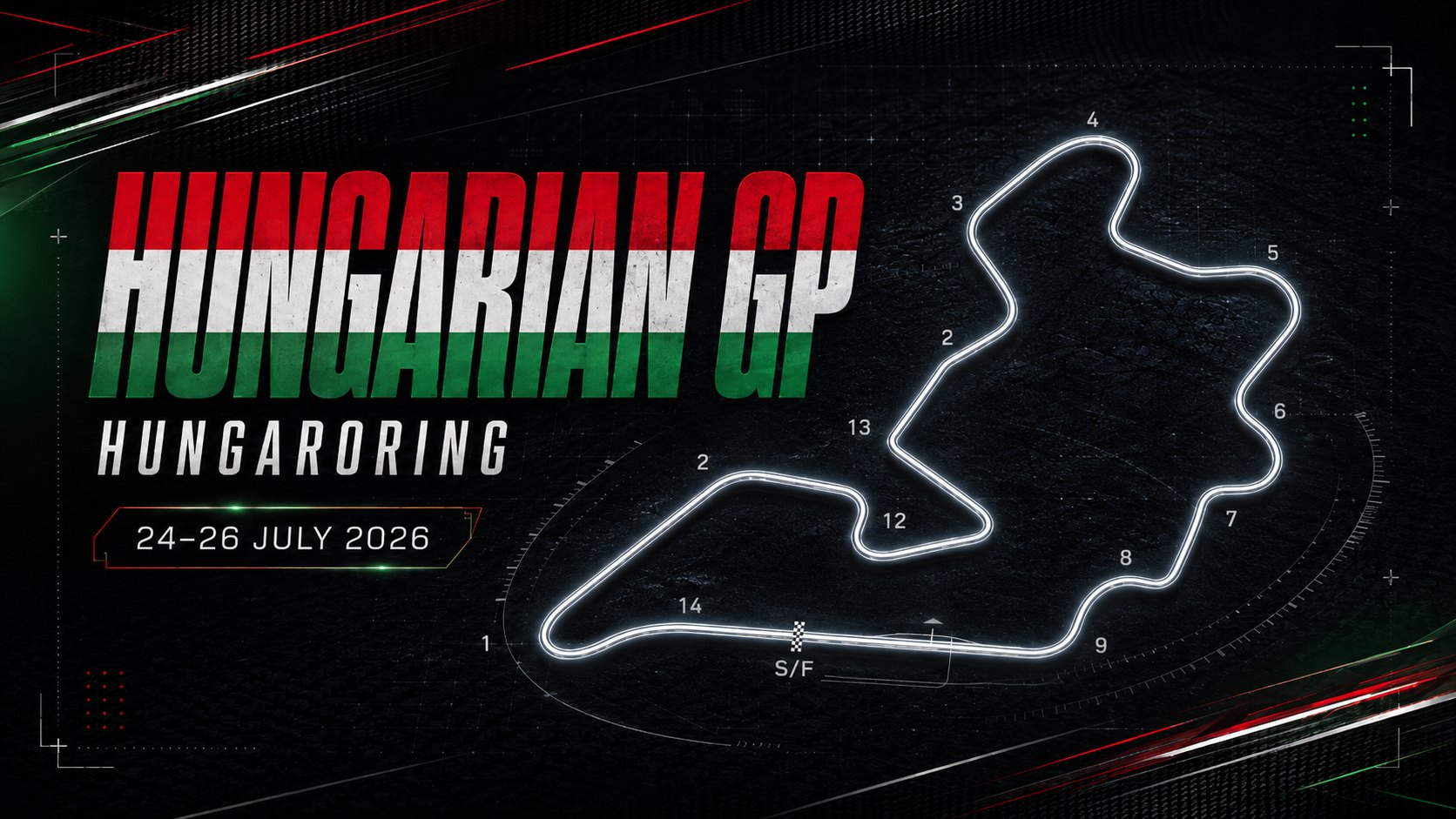
A steering-wheel signalling failure at the Hungaroring left several drivers racing without accurate blue-flag data on Sunday, triggering a string of near-misses and a Turn 2 collision that reshaped the podium fight in the 2026 Hungarian Grand Prix.
Key Takeaways
A dash-display fault meant blue flags appeared without driver numbers, leaving backmarkers unsure who they were being asked to let past.
Esteban Ocon said he unintentionally held up Isack Hadjar for three corners because the flag kept flashing without identifying the car.
Carlos Sainz collided with Oscar Piastri at Turn 2 while fighting Fernando Alonso, an incident that cost Piastri the race lead and earned Sainz a five-second penalty.
The FIA reportedly knew about the fault mid-race and fell back on physical flags and light panels, but confusion persisted on circuit.
What Went Wrong With the Blue Flags
A malfunction in the blue-flag display system meant drivers at the Hungaroring stopped receiving accurate lapping information on their steering wheels during Sunday’s Grand Prix. F1 has moved flag signalling from purely physical waving to trackside light panels and, more recently, direct alerts on the driver’s dash showing the number of the car that needs to yield. On this occasion the panels reportedly showed blue flags randomly and without any driver number attached, stripping the system of the specificity that makes it useful in the first place.
Esteban Ocon, driving for Alpine, described the problem directly. “We didn’t have any feedback on the dash, on the cars,” he said. “So, we only had the blue flag panels, but not with our numbers.” Without a number on screen, a driver being lapped had no way of knowing whether the flashing signal was intended for them or for someone else entirely on the far side of the circuit.
Ocon and Hadjar’s Near-Miss
Esteban Ocon says he unknowingly blocked Isack Hadjar for three corners after exiting the pits because he had no way of confirming he was a lap down. “I was racing Isack exit of pitlane, but I was a lap down, I didn’t know,” Ocon explained. “So, I might have blocked him for three corners. But by the time the engineers told me, ‘Well, you’re not racing him’, you don’t know because the blue flag is always flashing the whole lap. So, yeah, it’s not really clear.”
The episode captures the core failure of the day: with the flag flashing continuously rather than tied to a specific car number, drivers had no reliable trigger to react to. Race control’s intent — get a lapped car out of the way cleanly — was undermined by a display that gave no useful information at the exact moment it mattered.
The Turn 2 Collision That Changed the Race
Carlos Sainz collided with Oscar Piastri exiting Turn 2 while trying to lap the Williams driver, an incident that handed the race lead to Lando Norris. Sainz, running for Williams, was simultaneously locked in a fight with Fernando Alonso and attempting an undercut into the corner when Piastri’s McLaren arrived to pass. “At this stage, I had no idea I was about to get lapped, and on top of that I was in a big fight with Fernando, trying to undercut him into the corner,” Sainz said. “I wouldn’t have expected Oscar to be there. Even if he was there, or I would have expected, he was on my dead spot on the angle, so it was impossible, honestly, from my side to avoid it.”
Sainz was handed a five-second time penalty for the contact. He acknowledged the wider signalling problem while still framing it as a racing incident: “Probably a bit better communication would have helped, but at the same time, it’s a racing thing that sometimes happens.” The clash cost Oscar Piastri, driving for McLaren, the lead of the Grand Prix, which passed to team-mate Lando Norris, who went on to take the win.
FIA’s Fallback and the Wider Confusion
The FIA was aware of the dash malfunction during the race and reverted to physical flags and trackside light panels as a backup, according to Autosport. That fallback did not fully prevent confusion out on circuit, with the Sainz-Piastri clash at Turn 2 the highest-profile consequence but far from the only close call reported by drivers through the afternoon at the Hungaroring.
The gap between the intended system — a driver number flashing on the dash the instant a blue flag applies — and what drivers actually saw exposed how dependent modern race control has become on that layer of digital signalling. When it fails, drivers are left relying on peripheral vision and radio calls from engineers who are themselves working from delayed information, as Ocon’s account of the Hadjar incident shows.
Podium Visuals: Norris and Piastri’s Liveries in the Spotlight
Lando Norris’s win came wrapped in the same papaya McLaren livery that has defined the team’s 2026 look, a design that photographs distinctly under the Hungaroring’s afternoon light against the green run-off. Oscar Piastri’s car carried the matching McLaren scheme, the two liveries side by side on track for most of the race until the Turn 2 incident separated them on strategy and track position.
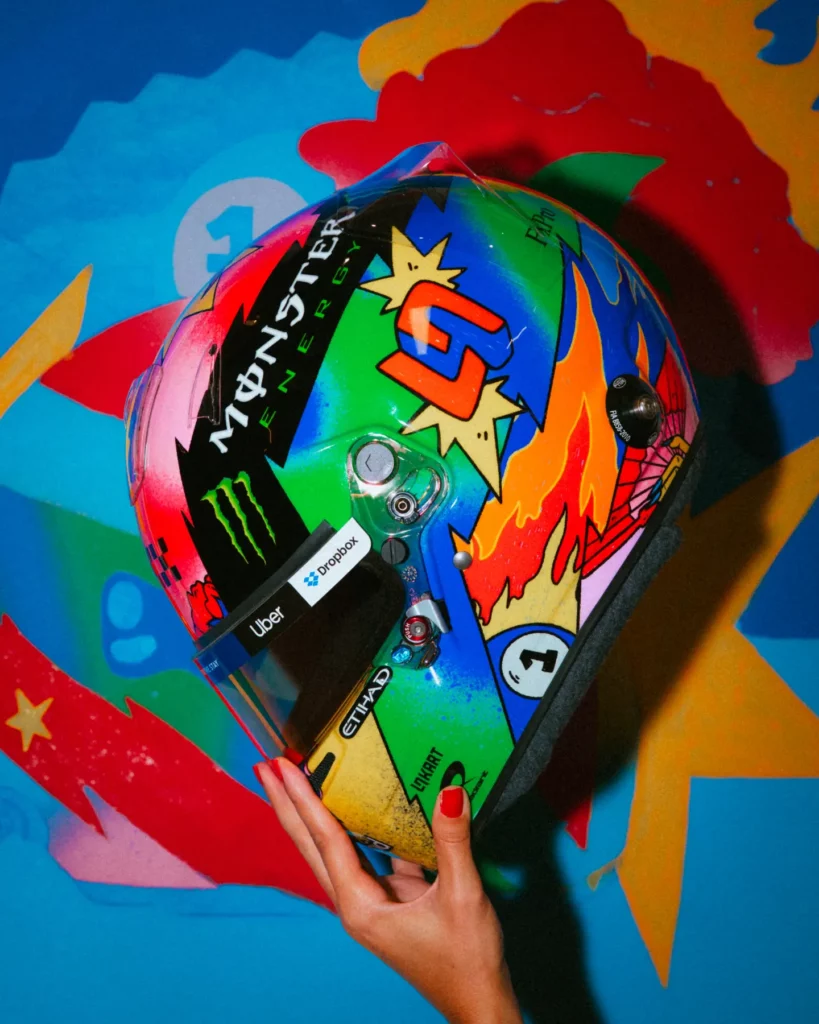
Moments like a lead swap under contact are exactly the kind race fans replay, and they are also the moments that make a driver’s helmet design part of the story rather than just equipment. For collectors, race weekends with this much drama around the front-runners tend to be the ones people go back to when picking a full-size display piece for a wall or cabinet.
“We didn’t have any feedback on the dash, on the cars. So, we only had the blue flag panels, but not with our numbers.”
— Esteban Ocon, Alpine driver
“I wouldn’t have expected Oscar to be there. Even if he was there, or I would have expected, he was on my dead spot on the angle, so it was impossible, honestly, from my side to avoid it.”
— Carlos Sainz, Williams driver
FAQ
Q: What caused the blue-flag chaos at the 2026 Hungarian GP?
A system failure meant blue flags appeared on the dash displays without driver numbers attached, so drivers being lapped could not tell if a signal was meant for them, causing confusion throughout the Hungaroring race.
Q: Who was involved in the Turn 2 collision at the Hungarian Grand Prix?
Carlos Sainz collided with Oscar Piastri exiting Turn 2 while attempting to lap the Williams car, an incident that cost Piastri the race lead and earned Sainz a five-second time penalty.
Q: Did the blue-flag issue affect other drivers besides Sainz and Piastri?
Yes, Esteban Ocon said he unknowingly blocked Isack Hadjar for three corners exiting the pitlane because he had no dash confirmation he was a lap down, illustrating the wider effect of the malfunction.
Q: How did the FIA respond to the blue-flag malfunction during the race?
The FIA reportedly knew about the fault mid-race and fell back on physical trackside flags and light panels, though this did not fully prevent confusion or contact between cars.
Q: Who won the 2026 Hungarian Grand Prix?
Lando Norris won the race for McLaren after team-mate Oscar Piastri lost the lead following the Turn 2 collision involving Carlos Sainz.
Browse F1 Helmet Collection
Display and collector replicas only. Not certified for protective use. Full-size 1:1 scale.
This article was written with the help of AI tools. Editorial policy