
Blog
Lindblad’s Zandvoort Penalty Called “Harsh” by Brundle
 123Helmets Editorial Team

Arvid Lindblad’s drive-through penalty at the Dutch Grand Prix has drawn criticism from F1 TV analyst Alex Brundle, who says the Racing Bulls rookie should not have been punished for a secondary overtake made while avoiding Max Verstappen’s opening-lap crash at Zandvoort.
Key Takeaways
Arvid Lindblad received a drive-through penalty after passing Pierre Gasly under yellow flags while avoiding Max Verstappen’s Turn 14 crash
Alex Brundle called the penalty harsh, saying drivers should not be judged on secondary overtakes made during evasive action
Lindblad, 19, said the penalty effectively ended his race at Zandvoort
Verstappen’s crash on the opening lap disrupted the field and triggered the yellow-flag sequence that led to the stewards’ decision
What happened at Turn 14
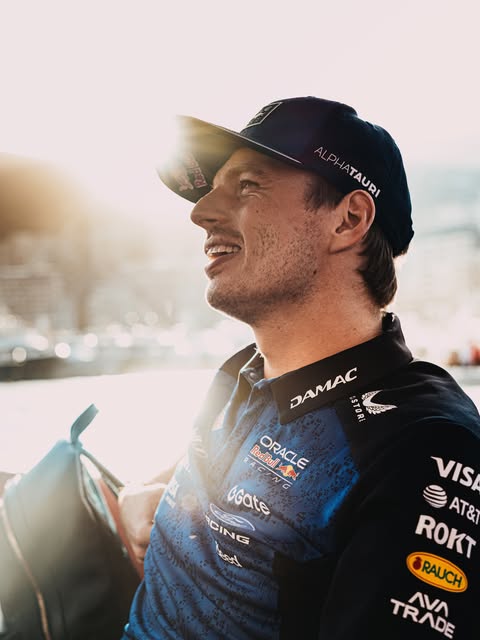
Max Verstappen crashed out of his home Grand Prix at Turn 14 on the opening lap at Zandvoort, scattering debris across the circuit and triggering yellow flags that reshaped the race behind him. Arvid Lindblad was running close behind the Red Bull driver when the incident unfolded.
“Max lost it, then he came across the track, and there was debris everywhere. I couldn’t really see anything,” Lindblad told F1 TV. “I tried to avoid making contact. I think I almost hit one of his tyres.”
In taking evasive action to stay clear of the wreckage, Lindblad held his line through the corner and, in doing so, passed Pierre Gasly’s Alpine heading into Turn 1. That secondary overtake, made under yellow-flag conditions, became the basis for the stewards’ decision.
The stewards’ call and the penalty
The stewards issued Arvid Lindblad a drive-through penalty for overtaking Pierre Gasly under yellow flags during the opening-lap chaos caused by Max Verstappen’s crash. Lindblad, driving for Racing Bulls, said he was not aware of any flag panels at the moment he passed Gasly.
“I passed Pierre into Turn 1. But I didn’t see any flags or anything. So it was a bit of a shame,” Lindblad said after the race. “I also think the penalty is a bit harsh. I think we can all be honest. It took me out of the race, basically. It was quite extreme for such an incident.”
A drive-through penalty at Zandvoort typically costs a driver well over 15 seconds once pit lane speed limits and the added distance are factored in, a margin that can turn a points finish into a race outside the top ten in a single stop.
Alex Brundle’s verdict
Alex Brundle said the penalty against Arvid Lindblad was harsh because drivers taking evasive action should not also be expected to track secondary overtakes happening around them. Speaking on F1 TV’s post-race broadcast, Brundle laid out the reasoning drivers are typically taught to follow in these situations.
“I think it is harsh. The accepted way to go about it as a driver is if you’re effectively avoiding the crash, you avoid the crash and you do everything that you can to make sure that you don’t become part of the accident,” Brundle explained.
“It’s difficult to then add in extra things that the drivers have to be aware of during an incident to make sure that they don’t then pass a car secondarily to that. It depends how far you are away from the incident. But if you haven’t actually passed a yellow flag and if you’re actually trying to get around the incident, I think it’s harsh then to penalise you for passing another driver while you’re actually taking evasive action.”
Podium visuals and the helmets that told the story
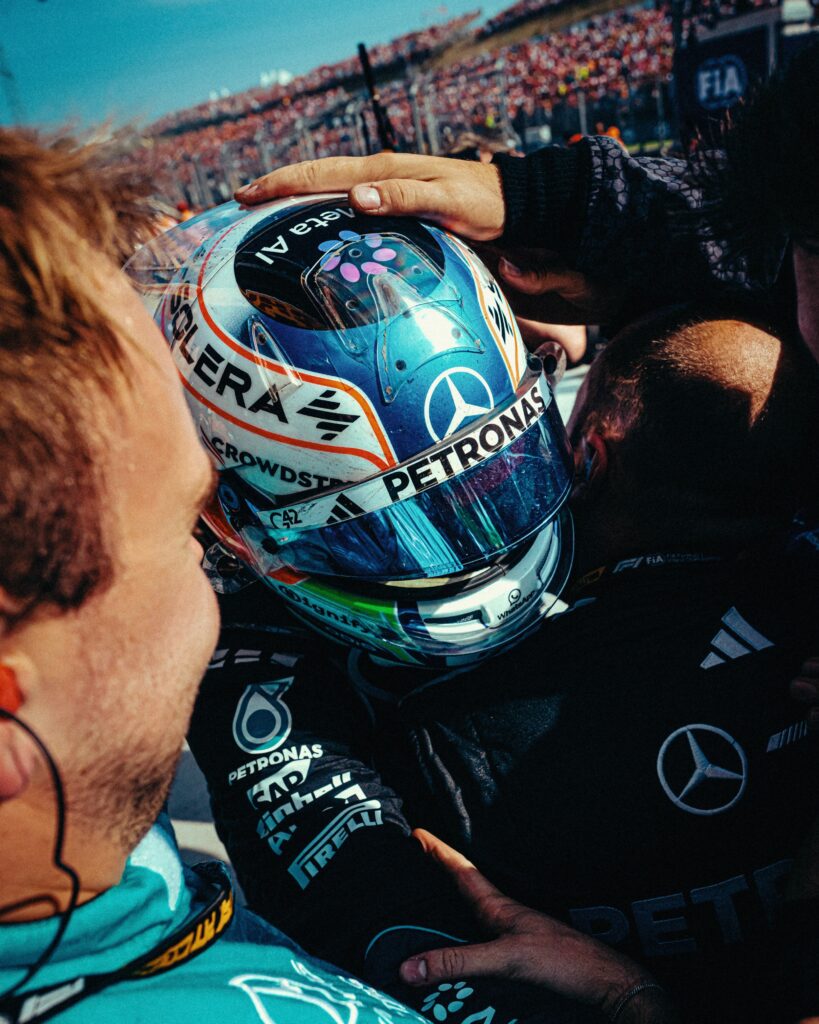
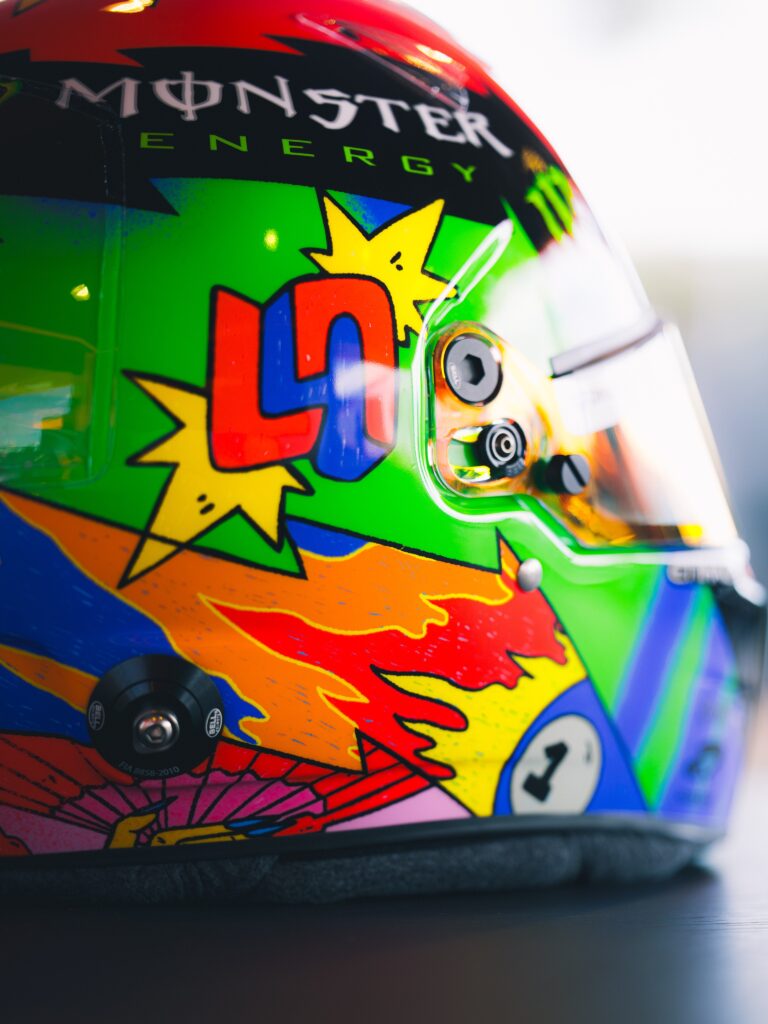
Zandvoort’s opening-lap chaos left its mark on the grid’s livery lineup, with several helmets and cars carrying visible scars from the debris field kicked up by Max Verstappen’s crash at Turn 14. For collectors, race weekends shaped by incidents like this often become the ones worth tracking closest, since the helmet designs worn that day carry the story of the race itself rather than just a paint scheme.
Arvid Lindblad’s rookie campaign with Racing Bulls has already produced some of the more talked-about liveries on the 2026 grid, and a Dutch Grand Prix marked by a contentious drive-through only adds to the weekend’s place in this season’s story. Pierre Gasly’s Alpine, the car on the other side of the overtake in question, was similarly caught up in the sequence that followed Verstappen’s exit.
Full-size 1:1 display helmets tied to standout race weekends like this one remain popular with collectors precisely because they mark a specific, documented moment rather than a generic design.
What it means going forward
The Dutch Grand Prix penalty adds to the wider debate over how stewards handle secondary incidents during yellow-flag periods triggered by a leading car’s crash. Arvid Lindblad, 19, is in his rookie season with Racing Bulls, and a race-ending penalty at a high-profile home event for Max Verstappen will be remembered as one of the tougher calls he has faced this year.
Alex Brundle’s comments reflect a broader appeal from drivers and pundits for clearer guidance on how evasive-action overtakes are judged relative to standard yellow-flag violations. Whether the FIA revisits its guidance before the next event remains to be seen, but the Lindblad case is likely to be referenced in future stewarding discussions.
“I think it is harsh. If you haven’t actually passed a yellow flag and if you’re actually trying to get around the incident, I think it’s harsh then to penalise you for passing another driver while you’re actually taking evasive action.”
— Alex Brundle, F1 TV analyst
“I also think the penalty is a bit harsh. I think we can all be honest. It took me out of the race, basically.”
— Arvid Lindblad, Racing Bulls
FAQ
Q: Why was Arvid Lindblad given a drive-through penalty at the Dutch GP?
Lindblad was penalised for overtaking Pierre Gasly under yellow flags while taking evasive action to avoid Max Verstappen’s Turn 14 crash on the opening lap at Zandvoort.
Q: What did Alex Brundle say about the penalty?
Brundle called the penalty harsh, arguing that drivers focused on avoiding a crash should not also be judged on secondary overtakes that happen during that evasive action.
Q: How did Arvid Lindblad respond to the penalty?
Lindblad said he did not see any flags when he passed Gasly and described the drive-through as extreme, adding that it effectively ended his race.
Q: What caused the opening-lap disruption at Zandvoort?
Max Verstappen crashed at Turn 14 on the opening lap, scattering debris across the track and triggering the yellow-flag period at the center of the incident.
Q: Which team does Arvid Lindblad drive for in 2026?
Lindblad is a rookie driver for Racing Bulls in the 2026 Formula 1 season.
Browse F1 Helmet Collection
Display and collector replicas only. Not certified for protective use. Full-size 1:1 scale.