
Blog
Montoya Picks McLaren as Mercedes’ Biggest Threat in Barcelona — And the Visuals Prove It
 123Helmets Editorial Team
Juan Pablo Montoya has singled out McLaren as the team most likely to put genuine pressure on championship leader Kimi Antonelli at the 2026 Barcelona-Catalunya Grand Prix. After five straight wins, Antonelli’s silver W15 has dominated every frame of the season so far — but Montoya’s prediction sets the stage for a papaya-versus-silver showdown that collectors and fans alike should watch very closely.
Key Takeaways
Kimi Antonelli leads the 2026 drivers’ championship with 156 points — 66 points clear of second-placed Lewis Hamilton on 90.
Juan Pablo Montoya specifically cited McLaren’s aerodynamic package as the reason the Woking squad will rebound from their Monaco difficulties at Circuit de Barcelona-Catalunya.
McLaren’s Monaco weekend was their weakest of the season: Norris retired, Piastri finished fifth, and both drivers share the same 58-point tally in fifth and sixth in the standings.
Barcelona is Round 7 of the 2026 season and closes the Monaco-Spain double-header — a track switch from street circuit to high-downforce permanent venue that historically reshuffles the competitive order.
Five Wins, One Target: The Antonelli Dominance That Built This Moment
Going into the seventh round of the 2026 Formula 1 World Championship, Kimi Antonelli carries a weight of expectation that would buckle most drivers in their debut full season. Five consecutive grand prix victories have pushed the Italian prodigy to 156 points at the top of the standings — a gap of 66 points over second-placed Lewis Hamilton, who sits on 90. George Russell follows on 88, with Charles Leclerc fourth on 75.
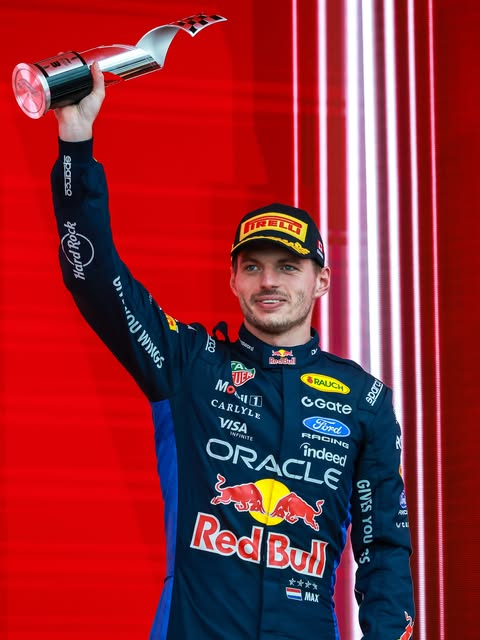
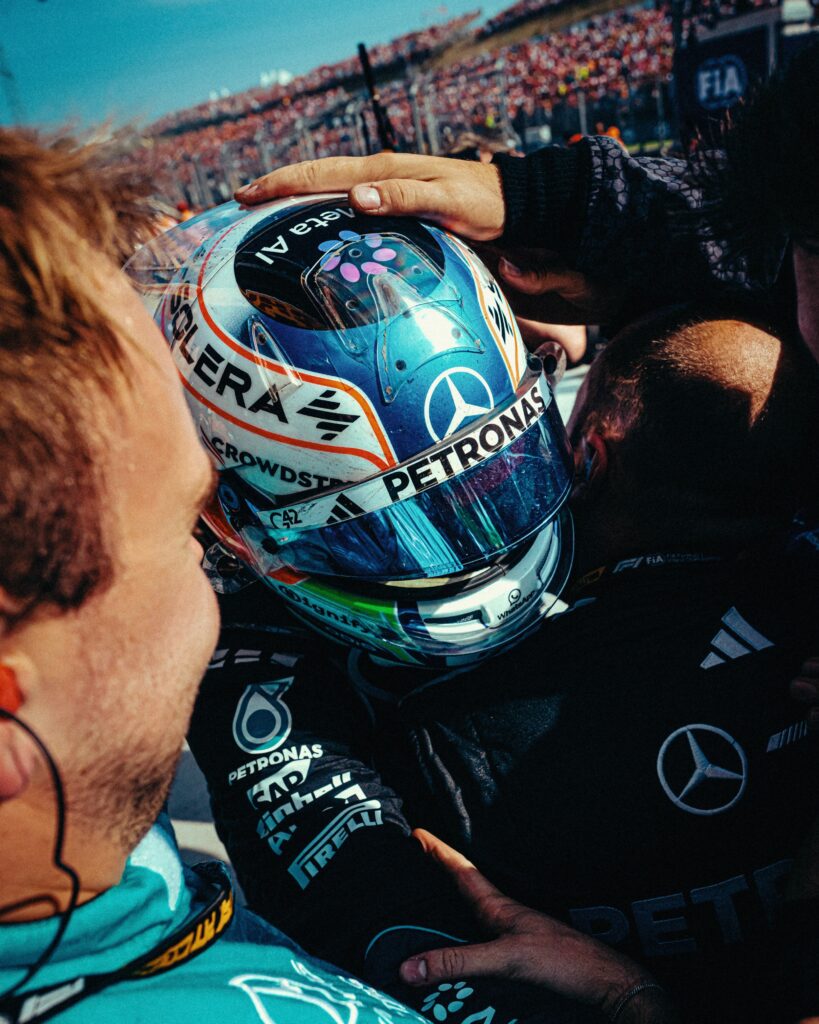
For collectors and display enthusiasts, that run of five wins means five podium ceremonies, five trophy lifts, and five moments where the Mercedes livery stood alone at the top of the results sheet. Each race has produced helmet and livery imagery that belongs on a shelf rather than simply in a broadcast replay. The silver-and-teal of the 2026 Mercedes machines, worn at circuits as different in character as street layouts and fast permanent tracks, has become the defining aesthetic of this early championship period.
But Montoya’s reading of the competitive picture in Spain suggests that papaya orange is about to force its way back into the conversation. The Circuit de Barcelona-Catalunya, with its long, sweeping corners and relentless aerodynamic demands, is precisely the kind of venue where McLaren’s strengths traditionally surface — and where the visual battle between two of motorsport’s most iconic colour palettes is set to play out under Mediterranean skies.
Montoya’s Verdict: Why McLaren’s Aero Package Makes Them the Name to Watch
Speaking on the F1 TV Weekend Warm-Up show alongside former Red Bull mechanic Calum Nicholas and former IndyCar driver James Hinchcliffe, Juan Pablo Montoya did not hedge his assessment. The Colombian, whose own career produced iconic moments at Barcelona, drew a direct line between the track characteristics and McLaren’s engineering strengths.
“You look at the McLarens, for example, they really struggled in Monaco, but I think they’re going to be the closest competitors to Mercedes here. I think their aero package is really, really strong.”
Montoya framed Monaco as an outlier rather than a trend. Street circuits — with their low-speed, mechanical-grip-heavy demands and minimal use of sustained aerodynamic load through long, fast arcs — do not reward the same car characteristics as a track like Barcelona. His point was straightforward: McLaren’s MCL39 appears to generate exceptional downforce when a circuit allows its aerodynamic programme to function as designed.
He also flagged the upgrade question that will define how seriously anyone can take McLaren’s Barcelona challenge before a wheel turns in anger. “We need to see if they have the new front wing here, if they have all the parts. So, we’ll see,” he said. The mention of a potential new front wing is significant. Barcelona, alongside Austria and Silverstone, represents the kind of circuit where teams calculate that high-downforce packages deliver a competitive return — and Montoya noted that after the run of street circuits, the development push toward those venues begins here.
For anyone tracking the livery story of 2026, a McLaren upgrade introduction at Barcelona means new aerodynamic surfaces, potentially altered bodywork geometry, and — from a display perspective — updated visual configurations on one of motorsport’s most recognisable colour schemes. The papaya-and-black MCL39 with a revised front wing produces a different silhouette, one that carries the mark of a team responding to a specific set of competitive circumstances.
Monaco’s Difficult Weekend and What It Tells Us About the Championship Picture
Monaco was not the weekend McLaren’s season narrative needed. Lando Norris retired from the race — a result that cost him not just points but the momentum that had been building in his campaign. Oscar Piastri salvaged fifth place, but on a circuit where the top teams routinely convert qualifying pace into podium finishes, fifth was a long way short of what the MCL39 was expected to deliver before the event.
Both Norris and Piastri sit on 58 points each in fifth and sixth in the championship — a symmetry that reflects a season where McLaren’s package has shown genuine speed in certain conditions but has not yet produced the consistency needed to turn individual race wins into a title challenge. Montoya acknowledged that Monaco was a “big wake-up call” for the team, describing their performance as something that demanded internal analysis: “We need to figure out why were we so bad in Monaco and figure it out.”
From a visual and collector standpoint, Monaco traditionally produces some of the most sought-after race imagery of the entire calendar. The Principality’s narrow streets, the barriers close on either side, the yachts and grandstands packed together — it is a circuit that frames race cars in a way no permanent venue can replicate. A McLaren retirement and a quiet fifth place there means that the papaya livery’s Monaco chapter in 2026 belongs to others. The most display-worthy MCL39 imagery of this part of the season, then, will most likely be written at Barcelona.
The Circuit de Barcelona-Catalunya has a very different visual language: broad tarmac run-off zones, banked corners that allow cars to be photographed at extreme lean angles, and the long straight on the pit-lane side of the circuit where cars reach their highest speeds and display their full aerodynamic silhouettes cleanly against the sky. It is the kind of venue where a helmet on a display stand or a full-size replica captures a car at its most technically complete.
Barcelona as a Stage: The Helmet and Livery Moment This Race Could Deliver
Circuit de Barcelona-Catalunya has hosted the Spanish Grand Prix since 1991 — more than three decades of championship battles that have produced some of the most recognisable moments in modern F1 history. The track’s mix of high-speed sweepers, a technical middle sector, and a long back straight creates a canvas where cars are photographed in full aerodynamic expression, their liveries stretched across smooth, banked asphalt rather than compressed into the stop-start geometry of a street layout.
For a driver like Antonelli, a potential sixth consecutive win at Barcelona would mark an historic achievement in what is still his first full season at the top level. The imagery from such a moment — helmet lifted, podium spray, the championship leader’s colours confirmed against a Mediterranean backdrop — would carry genuine collector significance. Full-size 1:1 display replicas of the helmets worn during championship-defining races hold a different place in any collection than generic team-issue designs, because the specific race context gives the piece a story.
If Montoya’s prediction holds and McLaren forces its way onto the podium, the visual contrast between the papaya-and-black of the MCL39 and the silver-and-teal of the Mercedes W15 on the same podium platform would be one of the strongest livery moments of the 2026 season to date. The Barcelona podium structure, with its backdrop of the circuit’s grandstands and the rolling hills beyond the circuit perimeter, frames a two-car or three-car podium photograph in a way that translates directly into the kind of image that drives collector interest in replica helmets and scale display pieces.
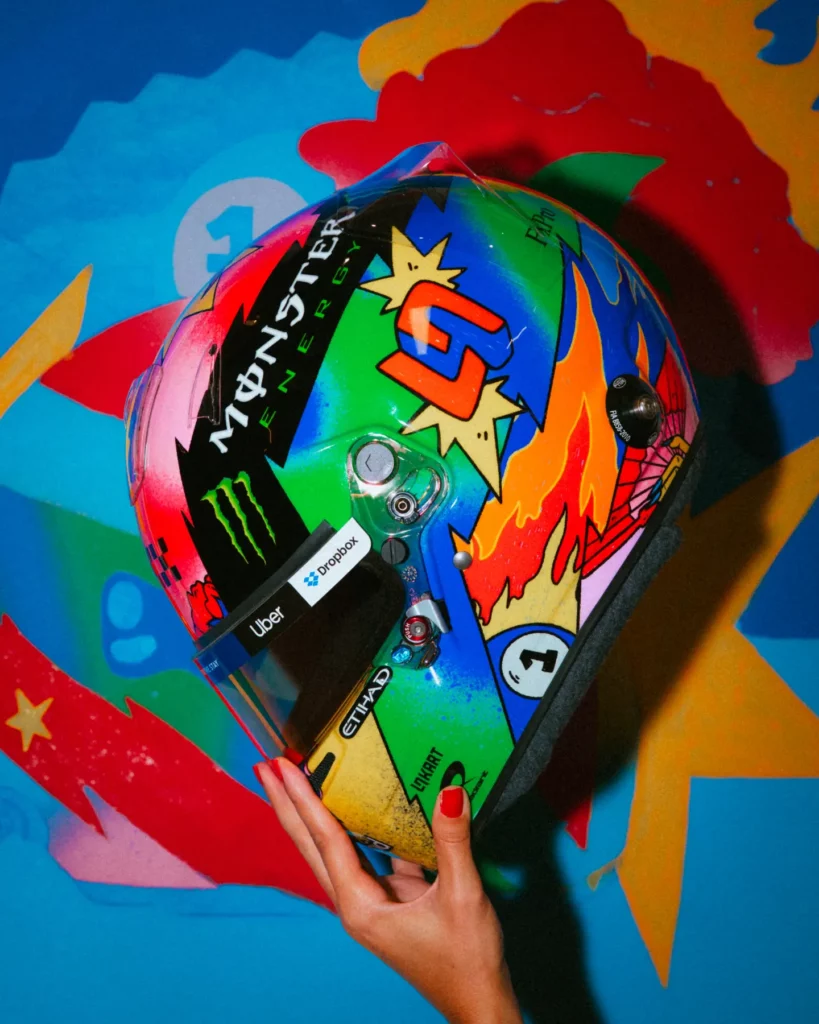
Norris and Piastri both compete in helmets with strong individual design identities. A Barcelona podium for either driver, wearing their current 2026 lid designs, would produce the papaya-accompanied imagery that Monaco failed to deliver — and that Montoya’s assessment suggests Spain is positioned to provide.
The Championship Stakes Behind Every Frame
The standings entering Barcelona tell a clear story about how the 2026 season has developed so far. Antonelli’s 156 points at the head of the table represent the product of a run that no other driver on the grid has been able to match across the opening six rounds. Hamilton’s 90 and Russell’s 88 suggest that Mercedes as a whole are performing at a level well above the rest of the field — a team-wide strength that is unusual even by the standards of dominant championship campaigns.
Leclerc’s 75 points in fourth place confirm Ferrari’s presence in the upper reaches of the standings, while the 58-point total shared by Piastri and Norris in fifth and sixth speaks to a McLaren campaign that has delivered pace without yet converting it into the consistent scoring needed to mount a championship challenge. At Barcelona, that picture has the potential to shift materially. Montoya’s framing of the Spanish Grand Prix as the moment McLaren’s aerodynamic programme reasserts itself gives the race a context that extends beyond a single weekend result.
Seven rounds into a season, the competitive hierarchy is still forming. Teams that struggle at street circuits and then regroup at permanent venues have historically been among the most dangerous in mid-season. If McLaren does bring the front wing upgrade Montoya referenced, and if Norris and Piastri can translate Barcelona’s aerodynamic demands into lap time in the way the team’s technical leadership clearly believes they can, the points table at the end of Sunday afternoon will look different from the one that opened the Spanish weekend.
For display collectors, a McLaren podium at Barcelona — particularly on a circuit with this much visual heritage — would represent one of the standout livery moments of the 2026 calendar so far. The papaya colour, under Spanish sunshine, on a circuit that has hosted championship-deciding moments since 1991, is the kind of combination that gives a full-size replica helmet its specific weight and meaning.
Display Replicas and the Race Moments That Define Them
Full-size 1:1 collector replica helmets carry their value through the races they represent. A display piece tied to a specific championship moment — a debut win, a record-breaking consecutive victory sequence, a comeback podium after a difficult circuit — occupies a different place in a collection than a generic season design. The 2026 Barcelona Grand Prix, positioned as it is at the junction between Antonelli’s extraordinary winning run and McLaren’s predicted aerodynamic resurgence, is precisely the kind of race that produces those definitive moments.
Exhibition-quality full-size replicas produced to 1:1 scale reproduce the helmet geometry, visor curvature, and livery graphics of the race-specification originals with accuracy that makes them genuine display pieces rather than decorative approximations. The visor on a properly constructed display replica measures to the same profile dimensions as the original — the kind of detail that matters when a piece is intended to represent a specific driver at a specific point in their career.
The 2026 season, with Antonelli’s historic start and McLaren’s expected resurgence at permanent-circuit venues from Barcelona onward, is generating the kind of race-specific narrative that shapes collector interest for years after the championship concludes. Whether Sunday in Spain confirms another Mercedes lockout or delivers the papaya podium moment Montoya has predicted, the race will add a new chapter to a season that has already produced some of the most significant results in recent championship history.
Display replica helmets from the McLaren 2026 campaign — built to full 1:1 scale, finished to exhibition standard, and representing a team that Montoya identifies as the closest rival to the season’s dominant force — sit at the intersection of motorsport history and collector interest that gives this kind of piece its long-term significance.
“You look at the McLarens, for example, they really struggled in Monaco, but I think they’re going to be the closest competitors to Mercedes here. I think their aero package is really, really strong.”
— Juan Pablo Montoya, F1 TV Weekend Warm-Up
“We need to see if they have the new front wing here, if they have all the parts. So, we’ll see.”
— Juan Pablo Montoya, F1 TV Weekend Warm-Up
FAQ
Q: How many consecutive wins does Kimi Antonelli have going into the 2026 Spanish Grand Prix?
Antonelli arrives in Barcelona on a run of five consecutive grand prix victories, giving him 156 points at the top of the 2026 drivers’ championship — 66 points clear of second-placed Lewis Hamilton.
Q: Why does Juan Pablo Montoya expect McLaren to be strong in Barcelona after struggling in Monaco?
Montoya argues that Monaco’s street circuit demands — low-speed corners and mechanical grip — do not suit McLaren’s aerodynamic strengths. Barcelona’s high-speed, high-downforce layout is precisely the type of circuit where the MCL39’s aero package is designed to perform. He also noted that teams typically bring upgrades to Barcelona after the street circuit phase of the calendar.
Q: Where do Lando Norris and Oscar Piastri stand in the 2026 championship?
Both Norris and Piastri sit on 58 points each, placing them fifth and sixth respectively in the drivers’ standings entering the Spanish Grand Prix.
Q: What makes a full-size 1:1 replica McLaren helmet a collector display piece?
Full-size 1:1 display replica helmets reproduce the exact geometry, visor profile, and livery graphics of the race-specification originals at true scale. They are exhibition-quality collector items — not certified for protective use — designed to represent specific drivers and race moments for permanent display.
Q: Is the 2026 Barcelona-Catalunya Grand Prix a standalone event or part of a double-header?
The 2026 Spanish Grand Prix is Round 7 of the season and closes a double-header with the Monaco Grand Prix, which was held the previous weekend.
Shop McLaren Helmets — full-size 1:1 display replicas finished to exhibition quality. Add the papaya to your collection.
Display and collector replicas only. Not certified for protective use. Full-size 1:1 scale.
This article was written with the help of AI tools. Editorial policy