
Blog
Pirelli’s 2026 Tyre Plan for F1’s Sepang Return
 123Helmets Editorial Team
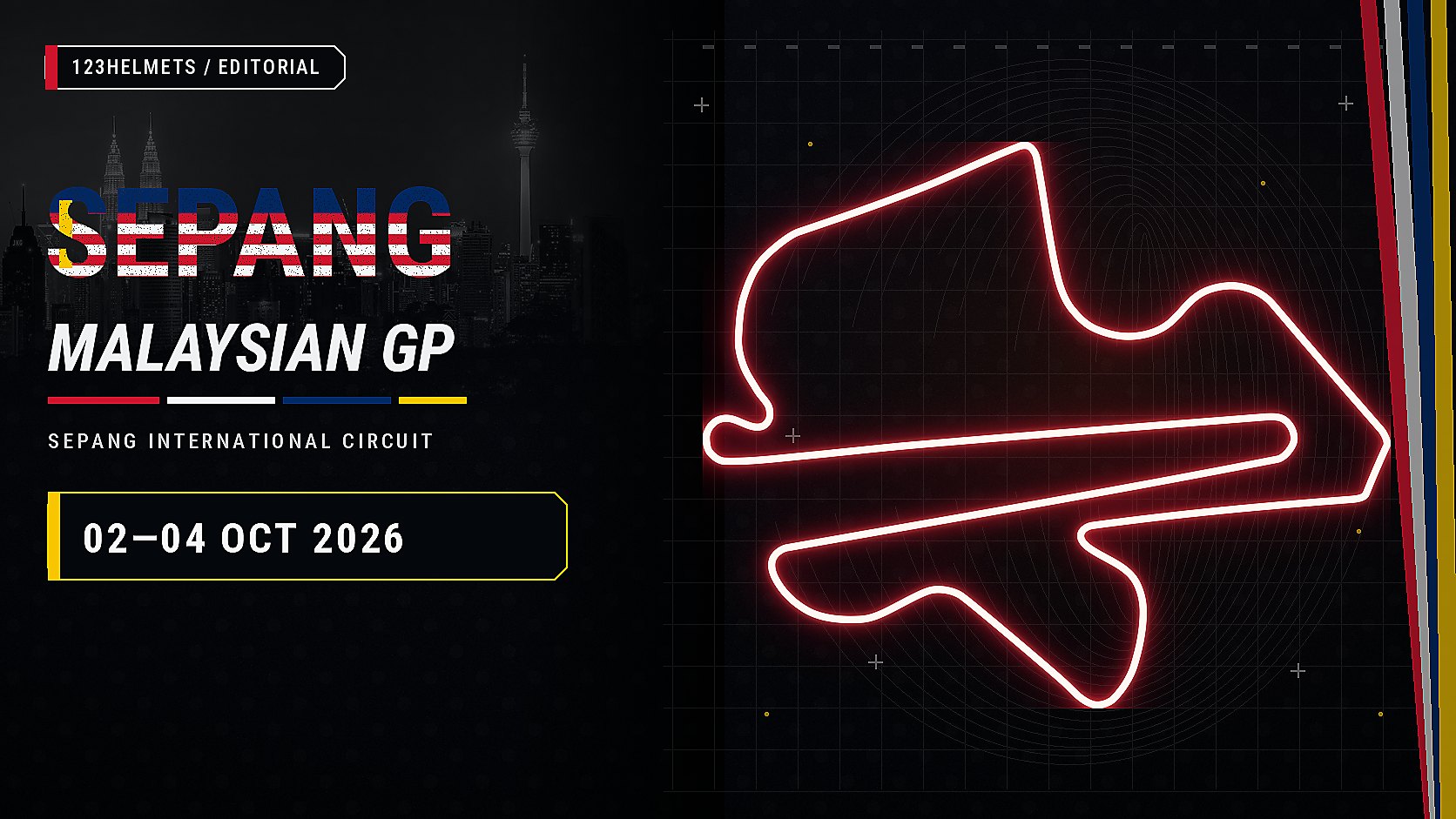
Pirelli is racing against the calendar to prepare tyres for a Bahrain Grand Prix that will now be run at Sepang, a circuit Formula 1 has not visited since 2017, after the Iran war forced organisers to abandon the original April date.
Key Takeaways
F1 has not raced at Sepang since 2017, the first season of the wider tyres that Pirelli considers the closest match to today’s package.
Pirelli has supplied every F1 season since 2011, giving it a data history at Sepang stretching back over that period.
In 2017 Pirelli selected medium, soft and supersoft — the equivalent of today’s C2, C3 and C4 compounds — and is basing its 2026 choice on that same reference year rather than 2014-16.
With no time to send personnel to Malaysia for track analysis, Pirelli’s tyres will be air-freighted to Sepang instead of shipped by sea.
Why Bahrain Is Racing at Sepang in 2026
The 2026 Bahrain Grand Prix is moving to Sepang because the original Bahrain date could not be salvaged after being disrupted by the Iran war. The race had been scheduled for an April slot that proved impossible to run, and organisers were also unable to find a later window on the home calendar. Bahrain, the FIA, Formula 1 and Malaysian authorities reached an agreement to stage the event at the Sepang International Circuit instead, a venue that hosted the Malaysian Grand Prix on the F1 calendar until 2017.
The switch is not being described inside the paddock as a genuinely last-minute call, but it still compresses the preparation window for every stakeholder involved — teams, promoters and suppliers alike. For Pirelli, the sole tyre manufacturer supplying the championship since 2011, the change means building a compound nomination for a track it has not analysed in almost a decade under current car and tyre regulations.
Pirelli’s Compound Strategy for Sepang
Pirelli is leaning on its 2017 Malaysian Grand Prix data to choose the compounds it will bring to Sepang in 2026. Pirelli Motorsport director Dario Marrafuschi confirmed that 2017 is the most relevant reference point available because it was the first season run with the wider tyres that, in terms of overall balance between tyre size and car package, sit closer to today’s specification than the 2014, 2015 or 2016 seasons at the same venue.
Back in 2017, Pirelli nominated its medium, soft and supersoft compounds for Sepang — equivalent to the C2, C3 and C4 range under the manufacturer’s current naming convention. Marrafuschi indicated the 2026 nomination is likely to follow that same pattern rather than looking further back into the tyre’s history at the circuit.
“If I remember well, the last race in Malaysia was in 2017. Since 2011, we went there all the years, so we have a good history.”
He added that the 2017 season is the best template precisely because of how close its tyre-to-car proportions were to the current regulations, unlike the narrower-tyre years that preceded it.
Logistics: No Scouting Trip, Air Freight Only
Pirelli will not send personnel to Malaysia in advance of the 2026 race, and its tyres will travel to Sepang by air rather than sea. Marrafuschi explained that the compressed timeline created by the short-notice relocation leaves no room for an on-site analysis trip; instead, Pirelli’s engineers must finalise the compound choice using historical data and get manufacturing under way immediately.
The freight change is a direct consequence of the calendar disruption. Tyres for most events are shipped by sea well ahead of a race weekend, but the compressed lead time for Sepang means Pirelli has had to switch to air freight to guarantee the rubber arrives in time for track running.
What this means in practice
- Compound decisions are being locked in earlier than usual, based on archived 2017 data.
- No fresh circuit-specific tyre testing or scouting visit is planned before the event.
- Air freight replaces the standard sea shipment for this round only.
Looking Back to 2017 for Answers
2017 remains the last time Formula 1 raced at Sepang, and it also marked the first season of the wider-tyre regulations that Pirelli still treats as the closest match to the current package. Pirelli has supplied every F1 season since 2011, meaning its Sepang archive runs from 2011 through 2017 — a run of appearances that gives the manufacturer a working history at the track even after a near-decade absence.
Marrafuschi was explicit that the earlier years in that span — 2014, 2015 and 2016 — are being treated as less relevant reference points than 2017 itself, because the tyre dimensions and the car’s downforce characteristics at that time diverge further from what teams run in 2026. That narrows the practical dataset Pirelli is working from to essentially one season of modern-spec running at the circuit.
What This Means for Teams and Strategy
Teams arriving at Sepang in 2026 will be working with a compound spread — medium, soft and supersoft-equivalent tyres — chosen without a fresh circuit visit or updated track data from Pirelli. That places extra weight on each team’s own simulation work and any archived data they retained from the circuit’s last appearance on the calendar in 2017.
Marrafuschi acknowledged the wider volatility this kind of late calendar change creates. Asked about it directly, he said Pirelli builds flexibility into its planning specifically to cope with scenarios like this one, where a venue reappears with almost no notice after a near ten-year gap.
“There is a lot of headache about that. We consider all the scenarios, but we always are flexible.”
For strategists on the pit wall, that translates into a compound choice with less circuit-specific validation than usual, and a Sepang race weekend where tyre behaviour predictions will be tested in real time rather than confirmed by fresh pre-event data.
“If I remember well, the last race in Malaysia was in 2017. Since 2011, we went there all the years, so we have a good history.”
— Dario Marrafuschi, Pirelli Motorsport director
“There is a lot of headache about that. We consider all the scenarios, but we always are flexible.”
— Dario Marrafuschi, Pirelli Motorsport director
FAQ
Q: Why is the 2026 Bahrain Grand Prix being held at Sepang?
The race moved to Sepang because the original Bahrain date could not be run after disruption from the Iran war, and no later slot on the home calendar was available. Bahrain, the FIA, Formula 1 and Malaysian authorities agreed to stage the event at Sepang instead.
Q: When did Formula 1 last race at Sepang before 2026?
F1 last raced at Sepang in 2017. That season is also the reference point Pirelli is using for its 2026 compound choice.
Q: What tyre compounds is Pirelli expected to bring to Sepang?
Pirelli is expected to nominate compounds in line with its 2017 Sepang selection — medium, soft and supersoft, equivalent to today’s C2, C3 and C4 range.
Q: Will Pirelli send engineers to Sepang before the race for analysis?
No, Pirelli will not send personnel to Malaysia ahead of the race. The compressed timeline forced by the calendar change means the compound nomination is being finalised from historical data alone.
Q: How will Pirelli’s tyres reach Sepang for the 2026 race?
They will travel by air freight rather than the usual sea shipment, a change made necessary by the short notice given for the relocated event.
Browse F1 Helmet Collection
Display and collector replicas only. Not certified for protective use. Full-size 1:1 scale.
This article was written with the help of AI tools. Editorial policy