
Blog
Sainz: Williams Must Copy Aston Martin’s 2026 Turnaround
 123Helmets Editorial Team

Carlos Sainz says Williams needs to take inspiration from Aston Martin’s sudden qualifying turnaround at the 2026 Hungarian Grand Prix, after a radical chassis upgrade lifted Fernando Alonso into Q2 for the first time all season while Williams endured a fifth straight Q1 exit.
Key Takeaways
Aston Martin brought a radically different chassis to the Hungaroring, its first major 2026 upgrade, with an engine update to follow at Zandvoort
Fernando Alonso reached Q2 for the first time in 2026 with 16th, while team-mate Lance Stroll qualified 20th
Carlos Sainz (18th) and Alex Albon (19th) marked Williams’ fifth consecutive weekend with at least one car eliminated in Q1
Williams’ next planned overhaul arrives in Baku in September, described by team boss James Vowles as ‘almost an entirely new car’
What Happened in Hungarian GP Qualifying
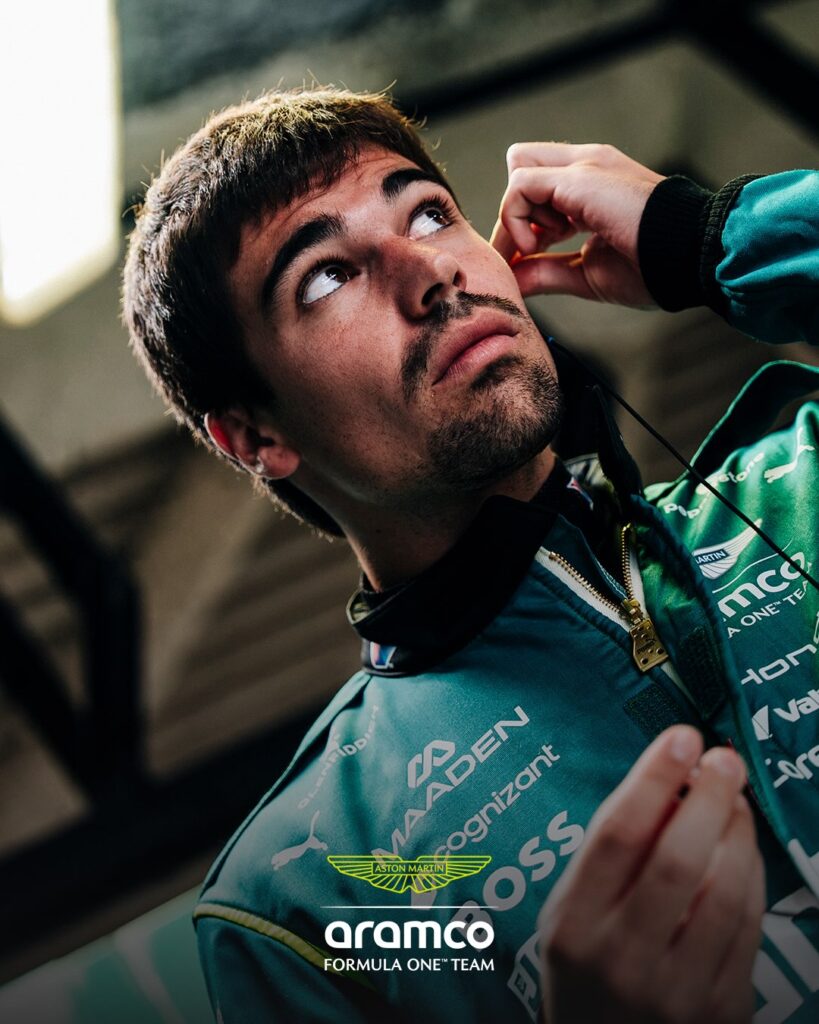
Aston Martin’s Hungaroring upgrade produced the first tangible step forward of its 2026 campaign, while Williams suffered its fifth straight qualifying session with at least one car knocked out in Q1. Carlos Sainz qualified 18th and team-mate Alex Albon 19th, both edging ahead of Lance Stroll’s Aston Martin in 20th. The more striking story sat one row further up the timesheets: Fernando Alonso reached Q2 for the first time all season, taking 16th place after the Silverstone squad introduced what has been described as a radically different chassis.
For much of 2026 Aston Martin had been comfortably the slowest team on the grid, running around two seconds off the pace at a typical circuit. The Hungaroring upgrade did not erase that gap overnight, but it was enough to move Alonso clear of Q1 for the first time this year and to remind the paddock how quickly a car’s competitive window can shift once a team identifies where its limitations actually are.
An engine update is still to come for Aston Martin at Zandvoort, meaning Hungary was only the first of two planned steps rather than the finished package. That sequencing matters for how the rest of the season plays out, and it is exactly the kind of staged recovery that Sainz now wants Williams to study.
Sainz’s Message to Williams
Carlos Sainz says Williams should treat Aston Martin’s turnaround as proof that a struggling car can be fixed rather than as a reason for concern. “As a team, we need to see it in a positive manner, and I want everyone to be positive about it rather than scared,” Sainz said after qualifying 18th at the Hungaroring, his fifth weekend without a point since Canada.
His reasoning centers on the parallel between the two operations: two teams with broadly comparable facilities, one of which has just shown that a significant in-season correction is achievable. “If anything, for me it just proves that when you understand what your limitations are and you see another Formula 1 team with similar facilities to you, having such a big turnaround.” The comment reflects a driver looking for evidence, not just words, that Williams’ own recovery plan is credible.
Sainz’s own weekend underlined why the message needed saying. Qualifying 18th, one place ahead of Albon in 19th, kept Williams locked into the lower half of the grid for a fifth consecutive round, a run that has left both cars regularly fighting to escape Q1 rather than to reach Q3.
Aston Martin’s Chassis Gamble Pays an Early Dividend
Aston Martin’s Hungary upgrade is the team’s first major package of the 2026 season, built around a substantially reworked chassis rather than a routine aerodynamic tweak. Team boss-level planning had flagged this as the moment the Silverstone squad would try to close a gap that had stretched to roughly two seconds a lap at some circuits earlier in the year.
The early return was Alonso’s 16th place, his first Q2 appearance of 2026, a modest number on paper but a meaningful marker given where the car had been running. Stroll’s 20th shows the upgrade has not yet been extracted evenly across both sides of the garage, which is typical of a first-phase chassis change before setup and driver feedback are fully absorbed.
Aston Martin’s next step, an engine update due at Zandvoort, is intended to build on this chassis gain rather than replace it. For a team that has spent much of the year at the back, stacking two distinct upgrades across consecutive rounds is a clear signal of intent, and it is precisely the kind of layered recovery that rival engineers, including Sainz, are now pointing to as a working model.
Podium Visuals and Display-Worthy Moments From the Weekend
The Hungaroring weekend’s most collectible imagery centers on Aston Martin’s renewed competitiveness rather than a change of livery, since the British racing green design remains unchanged for 2026. What makes the session notable for collectors is the context: Alonso’s Q2 appearance came in the same helmet and car colors that have carried the team through its slowest stretch of the year, giving this particular result a before-and-after significance that display pieces built around season narratives often carry.
Sainz’s own session, run in Williams’ current livery, is a reminder that qualifying positions and paint schemes tell two different stories. A car can look sharp on the grid and still be fighting for 18th, which is exactly the gap between presentation and pace that Williams is now trying to close before Baku.
For anyone building a 2026-season display around this weekend, the story is less about a single standout finish and more about the shape of a recovery arc: a team’s slowest phase, its first upgrade, and the small but real jump that followed. That kind of narrative, chassis change to Q2 appearance in one weekend, is the sort of detail that gives a full-size replica helmet or livery piece from this period added context on a shelf.
What Comes Next for Williams
Williams’ next major update is planned for the Baku round in September, described by team boss James Vowles as close to an entirely new car rather than an incremental fix. That timeline puts pressure on the next several rounds, since both Sainz and Albon are currently working with a package that has produced a fifth straight round with at least one car exiting in Q1.
Sainz remains without a point since Canada, five rounds back, and his public comments about Aston Martin are as much about managing internal expectations as external ones. Framing a rival’s turnaround as inspiration rather than a threat is a deliberate attempt to keep the team’s mood constructive during a stretch where results have not matched the effort going into the car.
Whether Williams can replicate anything close to Aston Martin’s Hungaroring jump will depend on how much of the current deficit is chassis-related versus setup or driver-adaptation related. Aston Martin’s own experience, a two-second gap narrowed in stages across Hungary and the coming Zandvoort engine update, suggests staged fixes can work even for a team that started the year at the back of the field.
“As a team, we need to see it in a positive manner, and I want everyone to be positive about it rather than scared.”
— Carlos Sainz, Williams
“If anything, for me it just proves that when you understand what your limitations are and you see another Formula 1 team with similar facilities to you, having such a big turnaround.”
— Carlos Sainz, Williams
FAQ
Q: What happened with Aston Martin’s upgrade at the Hungarian Grand Prix?
Aston Martin introduced a radically different chassis at the Hungaroring, its first major 2026 upgrade, which helped Fernando Alonso reach Q2 for the first time this season with 16th place.
Q: Where did Carlos Sainz and Alex Albon qualify at the Hungarian GP?
Carlos Sainz qualified 18th and Alex Albon 19th, marking Williams’ fifth consecutive weekend with at least one car eliminated in Q1.
Q: Why does Carlos Sainz say Williams should look at Aston Martin’s example?
Sainz argues that Aston Martin’s rapid qualifying improvement, after being roughly two seconds off the pace for much of 2026, proves a struggling team with comparable resources can turn its form around quickly.
Q: When is Williams’ next major car update expected?
Williams’ next planned overhaul is set for the Baku round in September, which team boss James Vowles has described as almost an entirely new car.
Q: Is Aston Martin’s engine update also coming soon?
Yes, an engine update is planned for the Zandvoort round, intended to build on the chassis gains introduced at the Hungaroring.
Browse F1 Helmet Collection
Display and collector replicas only. Not certified for protective use. Full-size 1:1 scale.