
Blog
Verstappen Beats 100 Karters in 14 Laps at Silverstone
 123Helmets Editorial Team
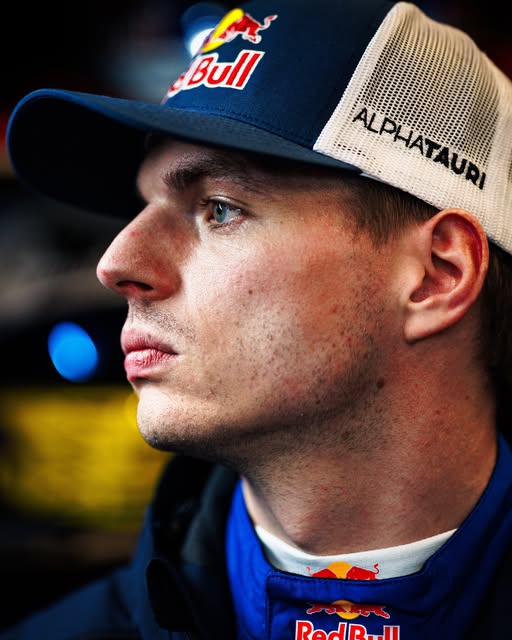
Max Verstappen overtook 100 amateur karters at Silverstone earlier this week, completing the Red Bull-organized “Max vs. 100” challenge in a wild sprint that included 63 overtakes inside half a lap and a track turned slick by rain.
Key Takeaways
Max Verstappen started 101st on the grid and cleared the field inside 14 laps of the 2.5 km Silverstone kart circuit.
The event produced 63 overtakes in a single half-lap stretch as Verstappen sliced through the amateur field on a wet track.
Verstappen had only three sighting laps to learn the circuit, compared to two days of practice, qualifying and four races for the challengers.
Dutch F1 journalist Jack Martens started the amateur field from pole position, with Arvid Lindblad acting as pace-setter during challenger training.
What Was the Red Bull Kart Challenge
“Max vs. 100” was a Red Bull-organized kart event in which Max Verstappen started last and attempted to pass 100 amateur drivers on a 2.5 km circuit at Silverstone. The four-time world champion was given a maximum of 30 laps to complete the task, though the source material for this recap frames the headline result around a 14-lap sprint to the front. The 100 challengers spent two full days preparing, running multiple practice sessions, qualifying rounds and four full races with Formula 2 driver Arvid Lindblad serving as a pace reference. Verstappen, by contrast, had just three sighting laps to learn the layout before the lights went out.
“I had no idea what my pace would be,” Verstappen said after the race. “Then I saw the qualifying times [of the challengers] and thought: if I have a good first lap and don’t lose too much time, this should go well.”
Chaos at the Start
The start produced immediate carnage among the amateur field as 100 karts converged into the first corners at once. Verstappen lined up 101st, entering the circuit at the exit of the final corner as the field of challengers took the green light ahead of him. Dutch F1 journalist Jack Martens had claimed pole position for the amateur grid. When the lights went out, Verstappen was already jumping past the first wave of karts before the pack had settled.
“That’s a trick I learned in mini-karts when I was seven,” Verstappen explained afterward. “We had standing starts back then and had to do exactly that.” The technique let him bypass a chunk of the back markers before the first braking zone, avoiding the worst of the opening-lap pileups that followed behind him.
63 Overtakes in Half a Lap
Verstappen’s single most dramatic passage of the event saw him complete 63 overtakes inside roughly half a lap of the 2.5 km circuit. That stretch turned what could have been a straightforward procession into the defining sequence of the challenge, as he threaded through bunched-up amateur karts on a track already compromised by rain. The wet surface added a layer of difficulty that the sighting laps could not fully prepare him for, since Verstappen had covered the circuit only three times before racing it for real.
The scale of that overtaking count, achieved against amateur drivers with far less car control on a slippery surface, was the number circulated most widely after the event and the one that best captures how compressed the passing had to be to clear the field inside 14 laps.
Wet Track, Bright Livery: The Visual Spectacle
The rain-soaked Silverstone kart circuit turned the event into a genuine spectacle for spectators and cameras alike, with spray trailing behind every kart and Red Bull’s branded karts cutting sharp lines through standing water. Verstappen’s kart and helmet, both carrying his familiar Red Bull colors, stood out against the grey Silverstone sky and the packed field of amateur liveries around him. For collectors who follow Verstappen’s on-track appearances, the moment offered another visual entry in his growing catalogue of display-worthy race helmets, distinct from his standard Grand Prix gear but instantly recognizable by color scheme.
The four-time world champion’s run through 100 opponents on a wet track, captured from multiple angles by Red Bull’s production crew, produced the kind of image sequence that tends to circulate long after the event itself, much like his race-day podium moments do.
Reaction and Aftermath
Verstappen described the challenge as far closer to a real race than a promotional stunt, given the density of traffic and the wet conditions. He noted that his lack of practice time, just three sighting laps against the challengers’ two days of running, added genuine uncertainty about his own pace heading into the start. The final tally, clearing a 100-strong amateur field from 101st on the grid, matched the scale Red Bull had promised when the challenge was announced.
The event drew comparisons to Verstappen’s past record-chasing exploits, reinforcing his reputation for setting benchmarks even in non-championship settings. For fans following his 2026 season, the Silverstone kart event sits alongside his Grand Prix weekends as another data point in a year already packed with headline performances.
“I had no idea what my pace would be. Then I saw the qualifying times and thought: if I have a good first lap and don’t lose too much time, this should go well.”
— Max Verstappen
“That’s a trick I learned in mini-karts when I was seven. We had standing starts back then and had to do exactly that.”
— Max Verstappen
FAQ
Q: What was the Red Bull Max vs. 100 kart challenge?
It was a Red Bull-organized event at Silverstone in which Max Verstappen started last on a grid of 100 amateur karters and attempted to overtake the entire field within a set number of laps.
Q: How many overtakes did Verstappen complete?
Verstappen completed 63 overtakes in roughly half a lap during one stretch of the event, part of clearing the full 100-kart field inside 14 laps.
Q: How much practice did Verstappen get before the challenge?
Verstappen had only three sighting laps of the 2.5 km Silverstone kart circuit, compared to two days of practice, qualifying and four races for the amateur challengers.
Q: Who took pole position among the amateur challengers?
Dutch F1 journalist Jack Martens started the 100-kart amateur field from pole position, with Arvid Lindblad serving as a pace-setter during challenger preparation.
Q: Did weather affect the race?
Yes, the Silverstone kart circuit was wet during the event, adding difficulty to both the amateur field’s start-line chaos and Verstappen’s charge through traffic.
Shop Max Verstappen Collection
Display and collector replicas only. Not certified for protective use. Full-size 1:1 scale.