- Keke Rosberg
- Nigel Mansell
- Jenson Button
- Nico Rosberg
- Gilles Villeneuve
- Mika Hakkinen
- Jackie Stewart
- Mika Salo
- Emerson Fittipaldi
- Charles Leclerc
- Lewis Hamilton
- Max Verstappen
- Lando Norris
- Ayrton Senna
- Michael Schumacher
- Fernando Alonso
- Oscar Piastri
- George Russell
- Kimi Antonelli
- Nico Hülkenberg
- Gabriel Bortoleto
- Pierre Gasly
- Franco Colapinto
- Carlos Sainz
- Oliver Bearman
- Sergio Pérez
- Valtteri Bottas
- Isack Hadjar
- Alain Prost
- James Hunt
Oscar Piastri’s New Lid: 2026 Austrian GP Reveal
Posted by
 123Helmets Editorial Team
123Helmets Editorial Team
Helmet Reveal
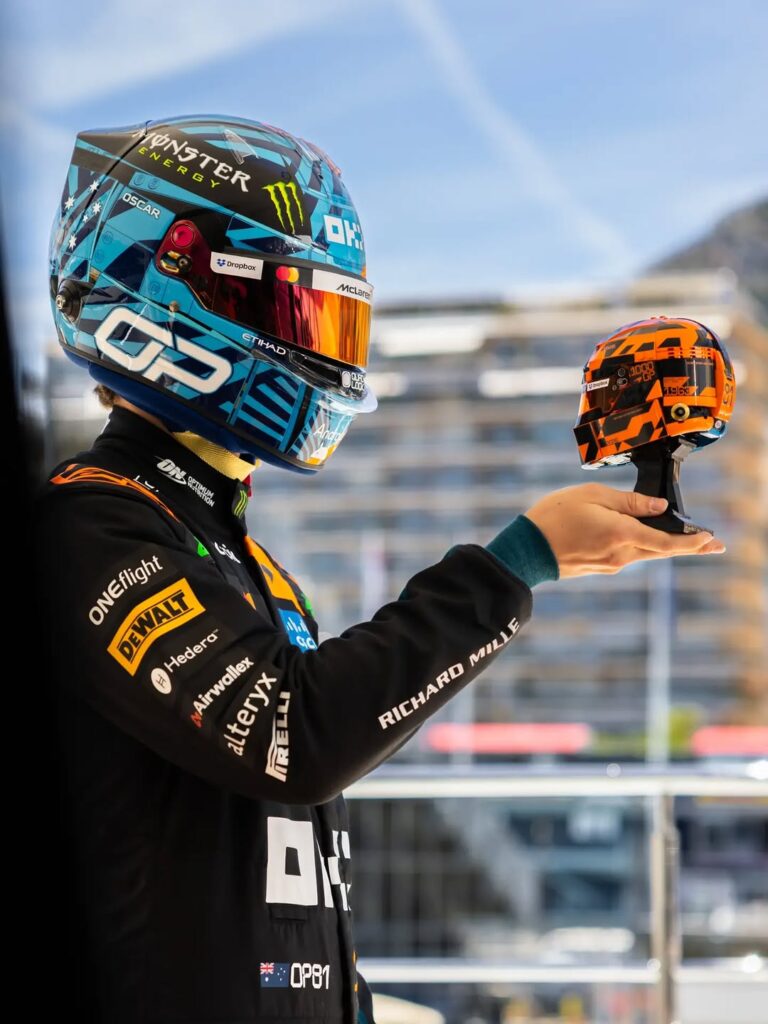
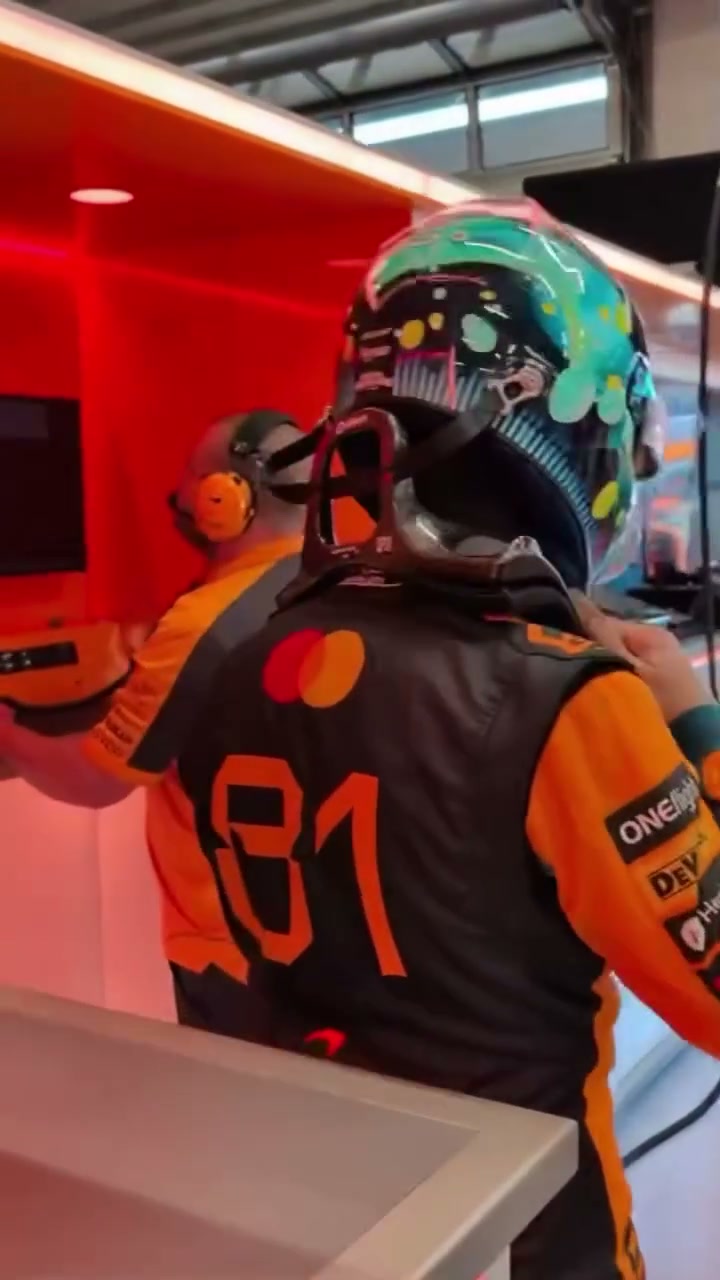
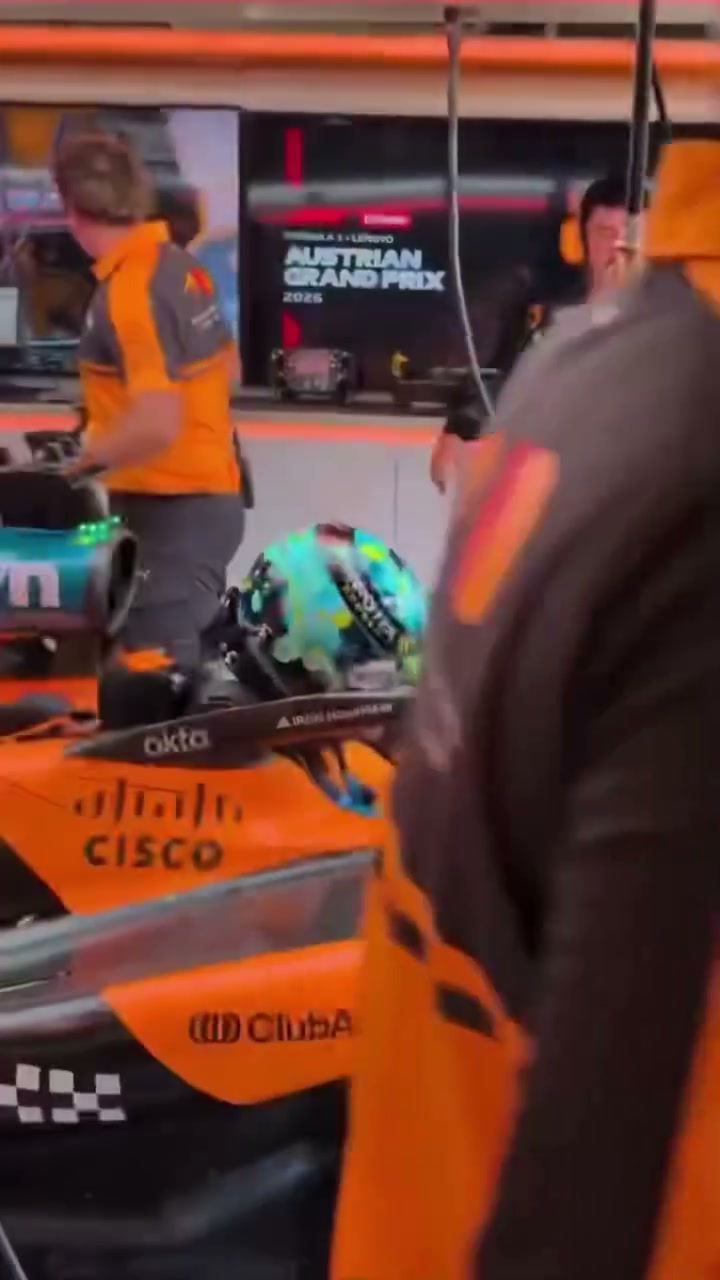
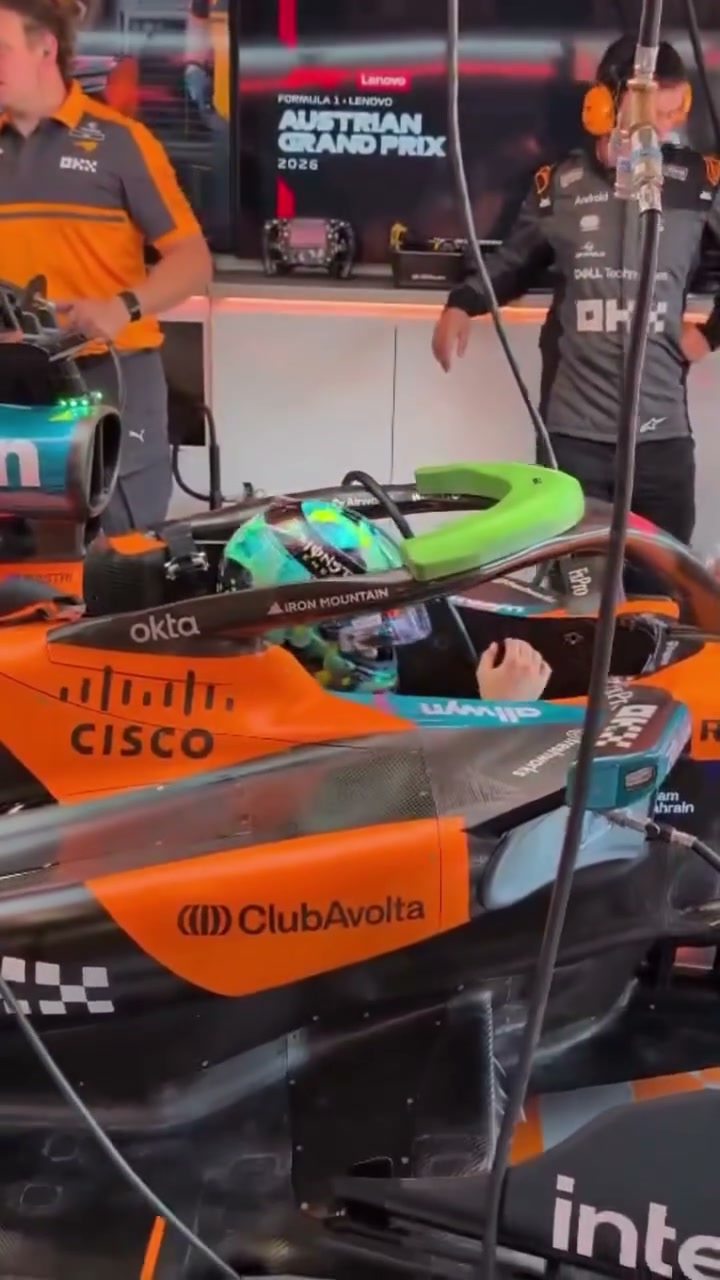
Oscar Piastri pulled the wraps off a brand-new helmet design ahead of Free Practice 1 at the 2026 Austrian Grand Prix, giving McLaren fans and collectors their first look at a fresh livery that is already turning heads in the paddock at the Red Bull Ring.
Key Takeaways
Piastri unveiled the new helmet design at the start of FP1 at the 2026 Austrian Grand Prix at the Red Bull Ring.
The livery carries McLaren’s signature papaya orange and ties directly to the team’s 2026 identity, making it a natural target for display collectors.
Full-size 1:1 replica versions of this helmet let fans own an exact-scale display piece that mirrors every panel and finish on Piastri’s actual lid.
Austrian GP helmet reveals have historically driven strong collector demand — limited-edition event designs tend to command attention the moment FP1 footage drops.
The Reveal: FP1 at the 2026 Austrian Grand Prix
Oscar Piastri debuted a completely new helmet design at the opening free practice session of the 2026 Austrian Grand Prix, held at the Red Bull Ring in Spielberg on 27 June 2026. The reveal came without prior announcement — no teaser post, no countdown — which made the paddock footage all the more striking when Piastri climbed out of the MCL38 and the cameras caught the new lid in full daylight for the first time.
FP1 at the Austrian GP is one of the shorter practice windows on the calendar, running 60 minutes, and Piastri used every lap of it wearing the new design. That meant broadcast cameras in Austria’s bright alpine light captured the helmet from multiple angles across a full session — an unusually thorough first look that collectors and design analysts alike were able to study frame by frame well before the chequered flag fell.
The timing matters. Debuting a new helmet at a home-crowd-friendly Central European race, in front of one of the most passionate grandstands on the calendar, is a deliberate choice. The Red Bull Ring’s compact 4.318 km layout means cars are in shot almost constantly, so a new lid gets more screen time per lap than at any other circuit. For a display replica collector, that density of reference imagery is exactly what you want when tracking down every panel, every seam and every finish detail.
Visual Breakdown: Panels, Colors and Graphic Lines
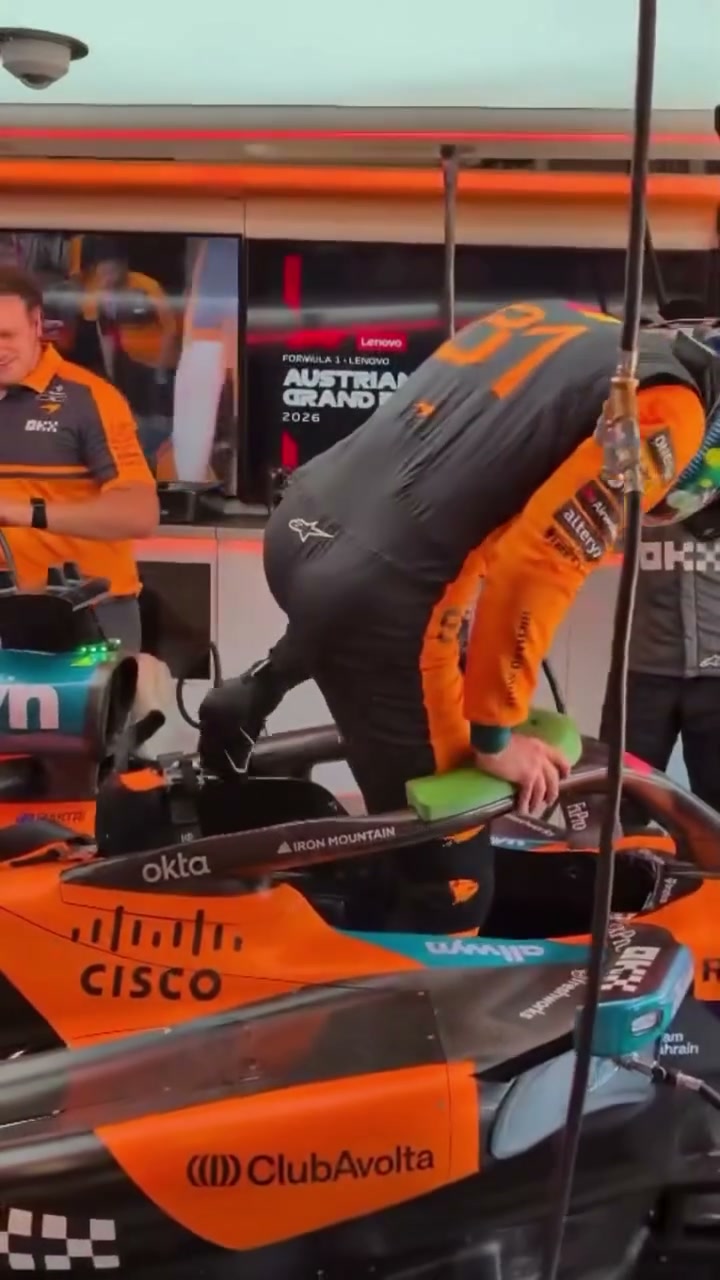
The new helmet’s dominant base is McLaren’s signature papaya orange, carried across the upper crown and the rear in a clean, unbroken field that references the team’s 2026 MCL38 livery directly. What separates this design from Piastri’s earlier 2026 lids is the graphic treatment on the lower sides and chin, where a deep charcoal panel cuts in at a sharp diagonal rather than following the helmet’s natural horizontal split line.
That diagonal is the defining design move. It runs from the lower-left temple region back toward the rear exhaust vents, creating a sense of forward motion even when the helmet is static on a shelf or display stand. The angle is aggressive — closer to 35 degrees from the horizontal than the softer rakes used in Piastri’s previous designs — and it gives the lid a visual weight that photographs well from the three-quarter front angle most collectors prefer for display.
The visor band is treated in a matte black finish, providing a visual anchor between the papaya crown and the charcoal lower section. McLaren’s triple-chevron logo sits on the top-rear panel in a slightly oversized application compared to earlier 2026 designs, making it legible even in wide-angle broadcast shots. Piastri’s race number — 81 — appears on both the left and right lower panels in a clean white sans-serif, set against the charcoal for maximum contrast.
Finish quality across the shell appears to combine gloss on the orange panels with a satin treatment on the charcoal, which is a detail that full-size 1:1 display replicas of collector-grade helmets replicate accurately. The contrast between the two surface treatments is visible even in compressed broadcast footage, which is always a good sign that the design will translate well to a physical replica piece.
Color Reference Points
The papaya shade used here is consistent with the McLaren team’s official 2026 livery specification — not the warmer, more amber tone used in some earlier Piastri liveries, but the current, slightly cooler papaya that sits between orange and salmon in the spectrum. The charcoal reads almost as a very dark graphite rather than a pure black, which gives the helmet a two-tone contrast that is softer than a straight orange-on-black scheme. Display replicas built to this spec look striking under warm gallery lighting precisely because the charcoal holds depth rather than flattening to a single dark value.
McLaren Identity and the 2026 Livery Thread
Piastri’s Austrian GP helmet is the third distinct Piastri lid design McLaren has released in the 2026 season, continuing the team’s practice of rolling out event-specific or session-specific designs at high-profile rounds. The first two appeared at the season opener and at the Monaco Grand Prix, both of which generated immediate collector interest, with the Monaco version in particular becoming a reference piece for the team’s 2026 visual language.
What makes the Austrian design coherent rather than isolated is how tightly it references the McLaren MCL38’s actual bodywork. The diagonal graphic line on the helmet echoes a similar sharp-cut panel boundary on the car’s sidepod, while the papaya-to-charcoal transition mirrors the underbody treatment visible when the MCL38 is photographed from low and to the rear. This kind of visual threading between car livery and driver helmet is deliberate at McLaren and has been consistent across the team’s output since the 2024 season.
For Oscar Piastri specifically, the Austrian GP design also marks an evolution in how he uses event helmets. His 2024 and 2025 event lids tended to introduce a personal emblem — a stylized ‘OP’ monogram or a flag-based element — as the signature graphic. The 2026 Austrian design steps back from personal monograms in favor of a purer team-color statement, which may reflect his growing status as a lead driver within the McLaren lineup rather than a driver still establishing individual identity.
That shift carries collector significance. Helmets that lean toward team identity rather than individual branding tend to age well in display collections because they anchor to a specific team era rather than to a driver’s personal story arc, which can shift season to season. An orange-and-charcoal Piastri helmet from the 2026 Austrian GP is as much a document of McLaren’s 2026 visual moment as it is a record of Piastri’s individual campaign.
Collector Significance: Why the Austrian GP Reveal Matters
The Austrian Grand Prix has a documented history of generating high-demand helmet reveals, partly because the compact calendar slot — usually mid-season — means teams and drivers are past the early-season conservatism and willing to take visual risks. Piastri’s FP1 debut of a new lid at Spielberg fits that pattern exactly and adds the 2026 Austrian design to a lineage of memorable mid-season reveals at this circuit.
For a full-size 1:1 display replica, the Austrian GP version carries three specific attributes that drive collector value. First, it is an FP1 debut — the helmet was worn in a competitive session before any press or social preview, meaning the broadcast record is the primary documentation. Second, the design is event-specific and not a carry-over from a prior round. Third, the combination of papaya and charcoal with the diagonal graphic is distinct enough from Piastri’s base 2026 design that it reads as its own piece rather than a minor update.
Display replicas of this helmet are built at full 1:1 scale, meaning every panel dimension, every graphic transition and every finish detail corresponds exactly to what Piastri wore in Austria. The shell dimensions are those of a full-size adult helmet — approximately 27 × 35 cm in the frontal profile — and the weight of a high-quality display replica in this category typically falls around 1.45 kg, which gives it the presence on a shelf or stand that smaller diecast or miniature versions cannot match.
The 4-image documentation from the FP1 session provides reference views — front, rear, left lateral and three-quarter front — that are the standard set used in high-quality replica production. Collectors who track provenance closely will note that a 4-angle image set from a live session is more complete documentation than a studio-only reveal, because it shows the helmet under real lighting conditions and at race-ready angles.
Replica Build Standards
Exhibition-quality full-size replicas of event helmets like this are display pieces only — not certified for any protective use. They are collector and exhibition items, built to 1:1 scale to sit in a display case or on a branded stand, and they are explicitly not wearable or road-use items. That clarity matters for any collector: what you are acquiring is a documentary artifact of a specific race moment, preserved at full scale.
How to Read a Helmet Reveal: A Collector’s Framework
A helmet reveal is best read as a three-layer document: the base design, the event-specific modification and the finish execution. Piastri’s Austrian GP lid demonstrates all three layers cleanly. The base is his 2026 McLaren palette. The event modification is the diagonal charcoal panel and the oversized logo application. The finish execution is the gloss-satin split between the orange and charcoal sections.
When evaluating whether an event helmet is worth adding to a display collection, those three layers are the checklist. A helmet that only changes one layer — say, swapping a logo placement but keeping the same finish and graphic structure — is a minor variant. A helmet that changes all three layers simultaneously is a true new design, and Piastri’s Austrian GP lid qualifies as the latter.
The FP1 context adds a further layer for purists. Practice sessions sometimes see helmets that never reappear — a design worn once, retired before qualifying if conditions or feedback suggest a change. Piastri’s FP1 debut creates a specific session provenance. Whether the design carries through to Sunday’s race is something collectors should monitor: a helmet worn across an entire race weekend has broader documentation, but a one-session debut has a narrower, more specific provenance that some collectors actively prefer.
For anyone building a McLaren-focused display collection in 2026, the Austrian GP lid is one of the most visually resolved designs Piastri has worn this season. The graphic logic is clear, the team connection is explicit and the finish contrast makes it a strong standalone display piece.
Adding the 2026 Austrian GP Piastri Helmet to Your Collection
Full-size 1:1 display replicas of the Piastri 2026 Austrian GP helmet belong in a McLaren collection precisely because they sit at the intersection of a strong team moment and a well-resolved individual design. The Red Bull Ring round came at a point in the 2026 season when McLaren’s championship campaign was fully established, giving the helmet a clear seasonal context rather than an ambiguous early-round identity.
Display replicas at this scale — 1:1, exhibition quality — are collector and display pieces only, produced with no protective certification and no wearable application. They exist to document a specific helmet design at full scale, with every color, graphic and finish detail preserved as it appeared on track at Spielberg on 27 June 2026.
A well-displayed Piastri Austrian GP replica works in a dedicated McLaren wall display, a glass case with downlighting, or a driver-specific multi-helmet arrangement that traces his 2026 campaign race by race. The papaya-and-charcoal palette holds well under both warm incandescent and cooler LED gallery lighting, which is a practical consideration for collectors deciding on display placement.
The 2026 Austrian Grand Prix is Round 10 of the 2026 FIA Formula 1 World Championship. Adding a helmet from this round to a collection places it exactly at the season’s midpoint — a natural anchor for any collector building a season-long documentation of Piastri’s 2026 campaign with McLaren.
“OP debuting the new lid for FP1.”
— McLaren F1 — official social media, 2026 Austrian Grand Prix
FAQ
Q: What helmet did Oscar Piastri debut at the 2026 Austrian Grand Prix?
Piastri debuted a new papaya-and-charcoal helmet design at Free Practice 1 of the 2026 Austrian Grand Prix at the Red Bull Ring on 27 June 2026. The design features a diagonal charcoal panel on the lower shell and a gloss-satin finish split between the two color zones.
Q: Is the 2026 Austrian GP Piastri helmet available as a collector replica?
Yes — full-size 1:1 display replicas of this helmet are available as collector and exhibition pieces. They are not certified for any protective use and are display items only, built to exact scale to document the design as worn in Austria.
Q: What makes the Austrian GP helmet different from Piastri’s other 2026 lids?
The Austrian GP design introduces a sharp diagonal charcoal panel not present in Piastri’s earlier 2026 helmets, along with a gloss-satin finish contrast and an oversized McLaren logo application. It is the third distinct Piastri design of the 2026 season and the most team-identity-focused of the three.
Q: What scale are the display replica helmets sold on 123Helmets.com?
All helmets on 123Helmets.com are full-size 1:1 scale display replicas, measuring approximately 27 × 35 cm in frontal profile and weighing around 1.45 kg. They are collector and exhibition pieces only, not certified for protective use.
Q: Why do collectors value FP1 helmet debuts specifically?
FP1 debuts create session-specific provenance — the helmet was worn in a competitive session before any press preview, making broadcast footage the primary documentation. If the design does not carry through to the race, the FP1 session becomes the sole competitive record, which some collectors prefer for its rarity.
Shop McLaren Helmets — browse our full range of full-size 1:1 McLaren display replica helmets and add the 2026 Austrian GP Piastri design to your collection.
Display and collector replicas only. Not certified for protective use. Full-size 1:1 scale.