Blog
100 Years of British Grand Prix History at Brooklands
 123Helmets Editorial Team
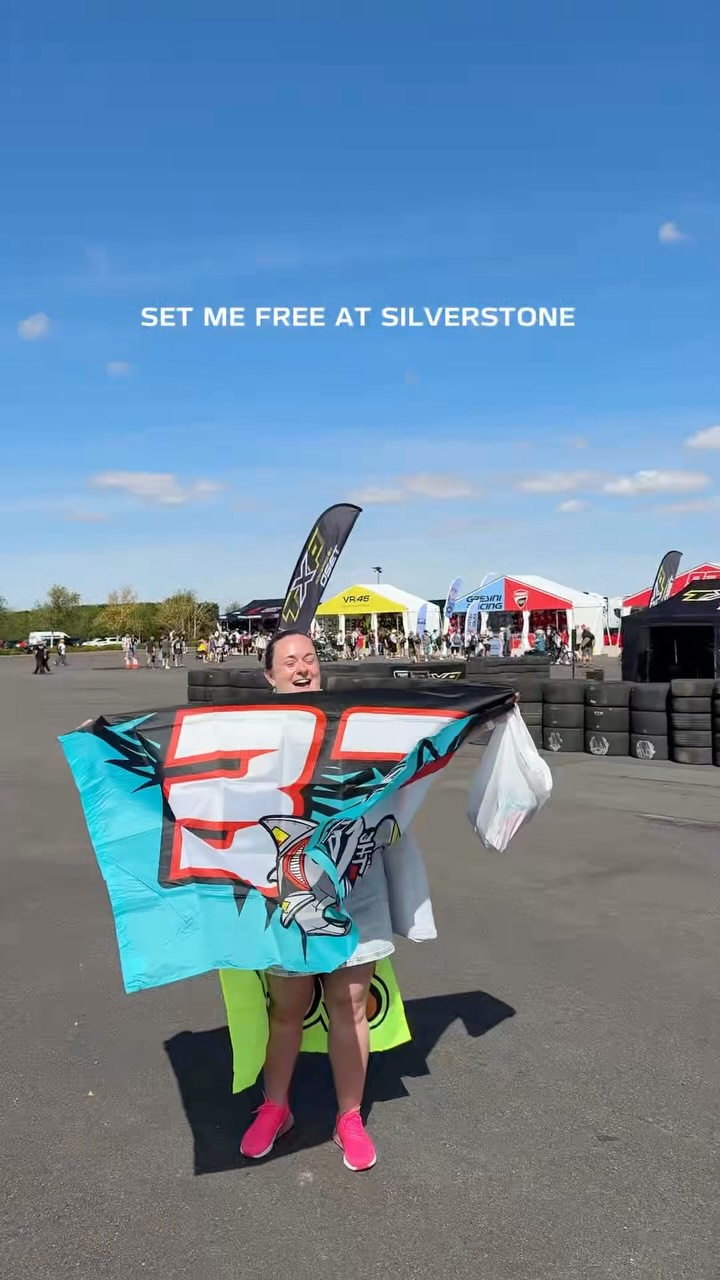
Brooklands marked 100 years since hosting Britain’s first grand prix with a centenary celebration on Saturday 8 August 2026, the day after the anniversary of the 7 August 1926 race, bringing 120 grand prix cars spanning a century of motorsport back to the banked circuit where it all began.
Key Takeaways
The centenary event on 8 August 2026 marked 100 years since Brooklands hosted Britain’s first grand prix on 7 August 1926, the birthplace of the world’s first purpose-built racetrack.
120 grand prix cars attended, ranging from 100-year-old Sunbeams and Bugattis to Ayrton Senna’s 1991 championship-winning McLaren and the Brawn GP car.
Three demonstrations structured the day: laps up the disused Finishing Straight, a hill climb test, and high-speed runs on the neighboring Mercedes-Benz World circuit.
F1 icons on display included the six-wheeled Tyrrell, Michael Schumacher’s 1992 Benetton, and the 1998 Benson & Hedges Jordan, alongside period-correct riding mechanics.
A Century Since Britain’s First Grand Prix
7 August 2026 marked exactly 100 years since Brooklands hosted the first grand prix ever held in Britain. The anniversary fell on a Friday, and it was marked the following day not with a plaque or a museum display alone but with a full day of running historic machinery over the ground where British grand prix racing was born. Brooklands, built in Surrey, was the world’s first purpose-built racetrack, predating almost every circuit now familiar to modern Formula 1 fans by decades.
The 1926 race that started it all set in motion a century of British motorsport that runs in an unbroken line to the current Formula 1 calendar. Marking that with cars from every era, rather than a static commemoration, gave the day its weight. Engines that had not turned over on that tarmac in generations were fired up again on the same banking, the same straight, the same ground.
Brooklands: The World’s First Purpose-Built Circuit
Brooklands was the first circuit ever built specifically for motor racing, opening years before any other purpose-built track existed anywhere in the world. Its steep banking and long finishing straight became the template that later circuits, and eventually grand prix racing itself, would build on. By the time Formula 1 arrived as a world championship in the following decades, the sport’s roots were already anchored in what Brooklands had proven: that motor racing needed dedicated infrastructure, not public roads closed for an afternoon.
Much of the original circuit is now disused, its banking preserved rather than raced on in anger. That made the centenary event unusual. Cars ran over bumps and surfaces that have not carried competitive racing for years, giving spectators a sense of what drivers a century ago actually contended with, at speeds their machinery, tyres and brakes were never designed to sustain for long.
Inside the Centenary Celebration: 120 Grand Prix Cars
120 grand prix cars gathered at Brooklands for the centenary, spanning a full century of motorsport in one place. At one end of the timeline sat 100-year-old Sunbeams and Bugattis, machines contemporary with the original 1926 race. At the other end sat modern-era Formula 1 cars, closing a loop that connected the sport’s earliest days to its recent past.
Among the field was Ayrton Senna’s 1991 championship-winning McLaren, one of the most significant single cars in the sport’s history, alongside the Brawn GP car that carried a team from near-collapse to a title inside one season. Fans could walk the length of a century of grand prix engineering in a single afternoon, something no static museum collection typically allows.
Three Demonstrations That Brought Brooklands Back to Life
Three separate demonstrations structured the centenary day, each testing the cars in a different way. The first sent 100-year-old grand prix cars up Brooklands’ Finishing Straight two or three at a time, threading a hay bale chicane before turning around on the banking and looping back toward the start for further laps. Many ran with both a driver and a riding mechanic on board, matching the regulations of the period when a mechanic’s presence alongside the driver was required rather than optional.
The second was a hill climb test on Brooklands’ test hill, an uphill run that pushed vintage machinery to its limits while crowds gathered along the incline and on the bridge crossing the banked circuit to watch. The third took place away from Brooklands itself, on the neighboring Mercedes-Benz World test circuit, accessible on foot thanks to a partnership between the two venues for the event. There, grand prix and Formula 1 machinery accelerated out of the circuit’s ‘wet circle’ and down the back straight, opening up fully in a way the tighter Brooklands demonstrations did not allow.
From Senna’s McLaren to Schumacher’s Benetton: F1 Icons on Show
The Formula 1 side of the field included some of the most recognisable cars the sport has produced. The six-wheeled Tyrrell stood out as one of the more unusual engineering solutions in grand prix history, while Michael Schumacher’s 1992 Benetton and the 1998 Benson & Hedges Jordan represented two very different eras of the sport’s aesthetic and technical development. The Brawn GP car, built from the remains of a folded team into a title-winning entry, closed out the modern end of the display.
Running alongside vintage machinery from a century earlier, these cars showed how much and how little has changed in grand prix racing. The engineering problems being solved in 1926, keeping a car stable at speed on a banked surface, are recognisably related to the aerodynamic and mechanical problems Formula 1 teams still work on today, even if the tools available have changed completely.
Why Brooklands Still Matters to Formula 1 Today
Brooklands still matters to Formula 1 because it is the physical starting point of British grand prix racing, a lineage that runs directly to the current championship. The sounds heard during the centenary, the Cosworth DFV, the McLaren-Honda V12, the BRM V16, are not abstract history. They are the direct predecessors of the power units currently competing on the 2026 Formula 1 grid, built by the same national motorsport industry that grew up around circuits like Brooklands.
For fans who follow that lineage from Sunbeams and Bugattis through to today’s grid, a centenary weekend like this one is a rare chance to see the whole story laid out on one piece of ground. Anyone who wants that history closer to home can browse the F1 helmet collection at 123Helmets.com for full-size 1:1 display pieces tied to the drivers and eras that built the sport.
FAQ
Q: What is Brooklands and why is it significant to Formula 1 history?
Brooklands is the world’s first purpose-built motor racing circuit, located in Surrey, England. It hosted the first grand prix ever held in Britain in 1926, making it the physical starting point of British grand prix racing, a lineage that runs directly to the modern Formula 1 championship.
Q: When did the Brooklands centenary event take place?
The centenary event took place on Saturday 8 August 2026, the day after the 100th anniversary of the first British grand prix (7 August 1926). It drew 120 grand prix cars spanning a full century of racing.
Q: What cars appeared at the Brooklands 100th anniversary celebration?
120 grand prix cars appeared, ranging from 100-year-old Sunbeams and Bugattis to Ayrton Senna’s 1991 championship-winning McLaren, the six-wheeled Tyrrell, Michael Schumacher’s 1992 Benetton, the 1998 Benson & Hedges Jordan, and the Brawn GP car.
Q: What demonstrations were held during the centenary weekend?
Three demonstrations were held: vintage grand prix cars running up Brooklands’ Finishing Straight through a hay bale chicane, a hill climb test on Brooklands’ test hill, and high-speed demonstration runs on the neighboring Mercedes-Benz World test circuit.
Q: Is Brooklands still an active racing circuit today?
Much of the original Brooklands circuit is now disused rather than actively raced, with its banking preserved for historic and demonstration events. The centenary celebration used the surviving Finishing Straight and test hill alongside the adjacent Mercedes-Benz World circuit.
Browse F1 Helmet Collection
Display and collector replicas only. Not certified for protective use. Full-size 1:1 scale.
This article was written with the help of AI tools. Editorial policy