
Blog
Toto Wolff Cools Antonelli Hype After Miami: Mercedes Stays Patient Despite Third Straight Standout
 123Helmets Editorial Team
Toto Wolff Cools Antonelli Hype After Miami: Mercedes Stays Patient Despite Third Straight Standout
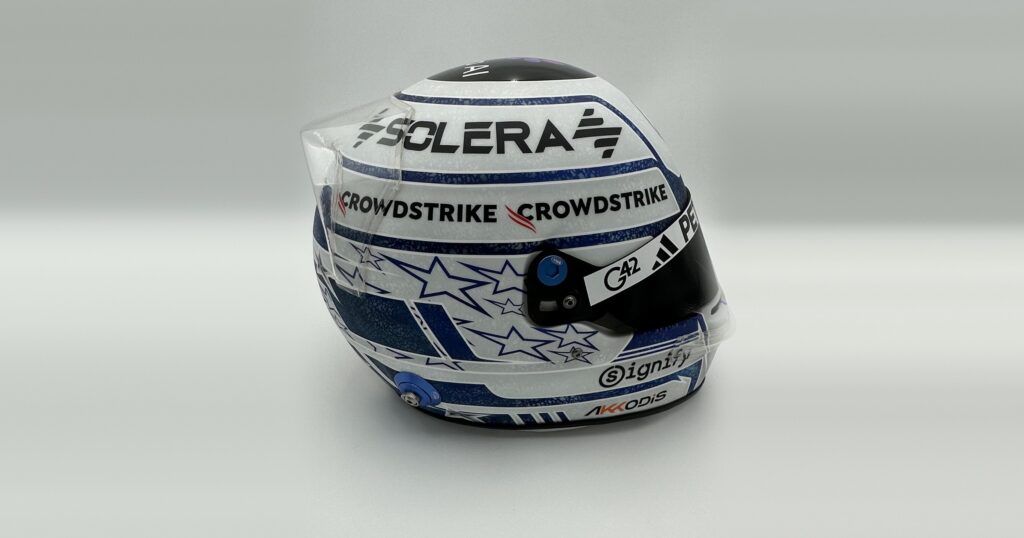
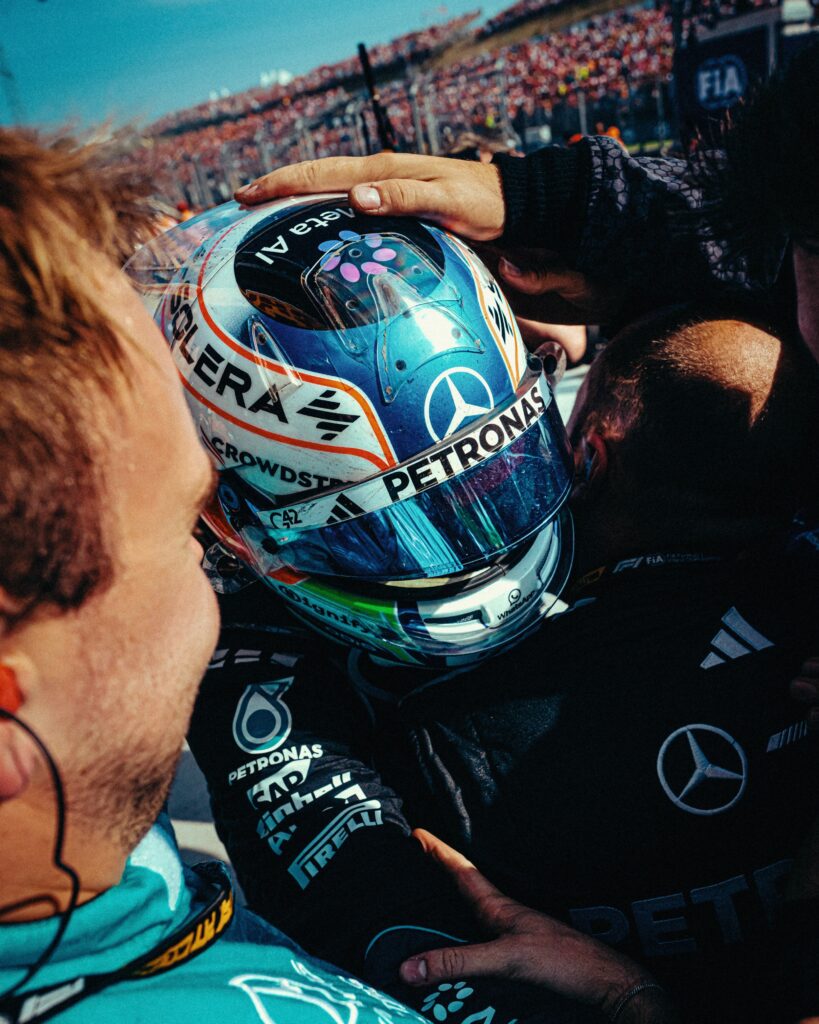
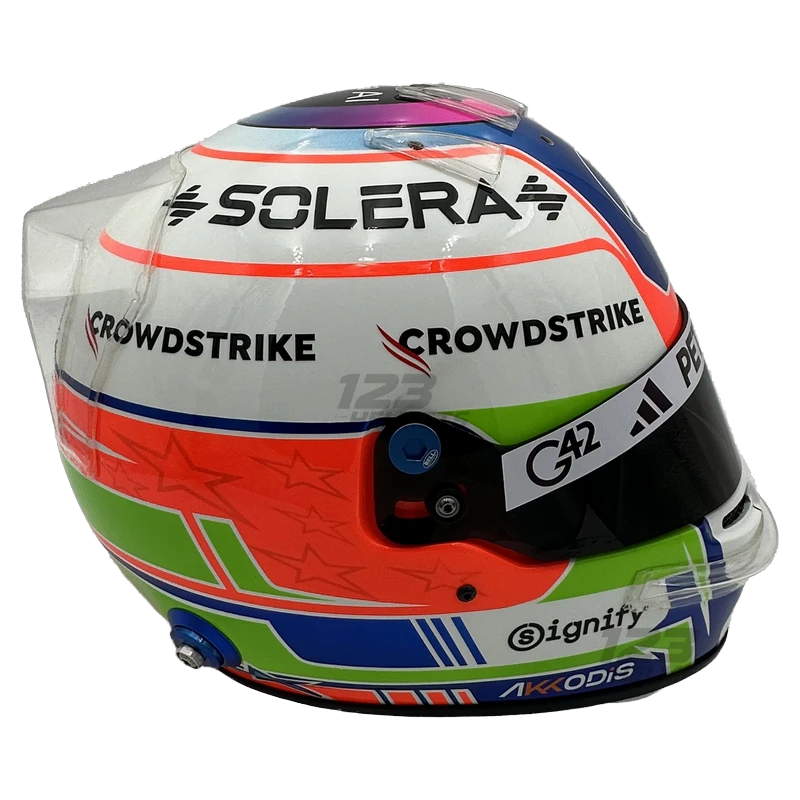
After Kimi Antonelli’s third consecutive standout weekend in Miami, Toto Wolff urged the F1 paddock to slow down the hype train. But while the team principal manages expectations, the helmet the young Italian wore tells its own story — a design language built around restraint, heritage and a quietly confident graphic identity that collectors are already chasing.
Key Takeaways
Toto Wolff publicly tempered expectations around Kimi Antonelli following a third strong consecutive weekend, framing patience as the team’s official line.
Antonelli’s Miami helmet leans on a restrained black-and-petronas-green palette, marking a deliberate shift away from rookie-flashy graphics.
The crown geometry, visor band and rear signature panel form a coherent identity already recognisable from Imola onward — a key marker for collectors.
For 1:1 display replica buyers, the Miami specification stands out as a ‘milestone moment’ helmet, ideal for shelf storytelling within a Mercedes collection.
Disclaimer: All helmets referenced are full-size 1:1 collector and display replicas. Not intended for protective or on-track use.
Wolff’s warning and why the helmet still matters
Three weekends, three statement performances. Kimi Antonelli’s trajectory through the early phase of his Mercedes adventure has triggered a wave of enthusiasm that Toto Wolff, ever the experienced operator, is determined to keep in check. Speaking after Miami, the team principal reiterated a familiar message: a teenager learning Formula 1 at the highest level needs space to make mistakes, not a coronation after every encouraging Sunday.
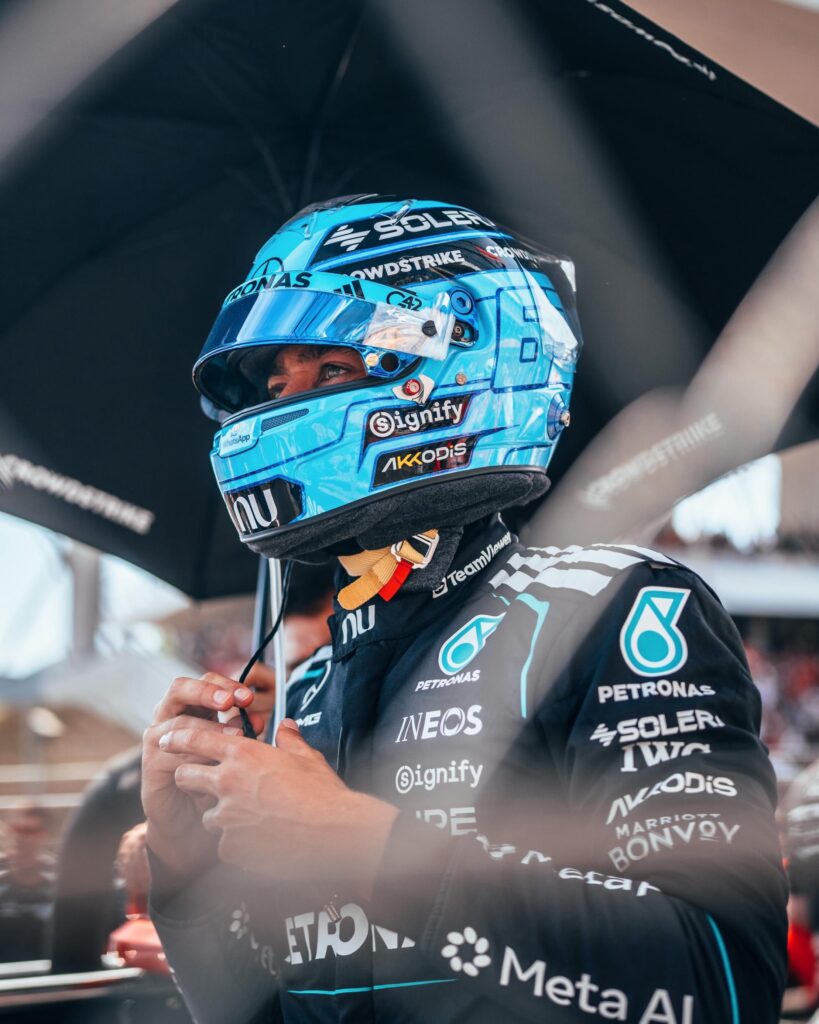
And yet, while Wolff manages narrative, the visual identity Antonelli carries on track is doing exactly the opposite — it is building, weekend after weekend, into something instantly recognisable. The Miami helmet, worn during a third consecutive headline-grabbing weekend, is not a flashy rookie statement. It is, in many ways, the helmet of a driver who has already decided who he wants to be.
For collectors, that distinction matters. A helmet that signals continuity rather than experimentation tends to anchor a long-term display narrative far more effectively than a one-off livery. The Miami specification, in that sense, is not just a souvenir of a strong weekend — it is the visual bookmark of a driver settling into his identity.
The context behind the design
Antonelli arrived in F1 carrying enormous Italian expectation, often compared to figures whose helmets are now museum pieces. Choosing restraint over spectacle for these opening rounds was, in design terms, a bold move. The Miami helmet underlines that choice: there is no themed one-off, no city-specific flourish. The graphic stays disciplined, almost stubbornly so.

Visual breakdown: palette, geometry and proportion
Colour architecture
The dominant palette is built around a deep matte black base, broken by carefully placed accents in Mercedes petronas green and a clean, almost surgical white. There is no chrome, no holographic gimmick, no metallic flake competing for attention under the Florida lights. The result is a helmet that reads cleanly on television, but reveals texture and depth when examined as a 1:1 display piece on a collector’s shelf.
Petronas green is used as a structural element rather than decoration. It outlines, frames and underlines — never floods. That discipline is what gives the helmet its modern, almost architectural feel.
Crown and top-shell geometry
The top of the shell carries an asymmetric graphic that flows from the front toward the rear. Rather than a centred stripe or a symmetrical motif, the lines pull diagonally, a contemporary touch that echoes current Mercedes design DNA without imitating Lewis Hamilton’s signature graphic from previous seasons. This is critical for collectors: Antonelli’s helmet refuses to live in the shadow of his predecessor.
Visor band and side pods
The visor surround is treated as a graphic frame, with thin green piping pulling the eye toward the aperture. The side pods — historically the most personal real estate on any F1 helmet — carry a compact KA monogram and number identification, restrained in scale. Where many rookies maximise their initials, Antonelli minimises them. The confidence of that choice is, arguably, the most telling design decision of the entire helmet.
Rear signature panel
The rear is where the helmet earns its display value. A signature block, layered typography and subtle Italian tricolore detailing reward close inspection. On a rotating display stand, this is the angle that consistently steals attention. For collectors photographing their pieces, the rear three-quarter view is the money shot of this specification.
Designer logic: why restraint reads as confidence
From a pure design standpoint, Antonelli’s helmet operates on a principle that senior F1 designers often describe as ‘earned silence’. A rookie helmet shouting for attention can feel insecure; a rookie helmet that whispers, while still being unmistakable from a hundred metres away, projects authority. Miami’s specification belongs squarely in the second category.
Typography as identity
The typeface chosen for the KA monogram is geometric, slightly condensed, and avoids the aggressive italics common to junior-category helmets. It feels more like a luxury watchmaker’s wordmark than a karting graphic — a deliberate signal that this driver intends to be a long-term fixture.
Negative space as a design tool
The most underrated element of the helmet is what is missing. Large areas of matte black are left untouched, allowing the green accents to breathe. In design terms, that negative space is what makes the piece photograph beautifully under display lighting, and what gives it longevity as a collector item. Helmets crammed with detail age quickly; helmets that respect negative space tend to remain timeless.
Continuity from Imola to Miami
Comparing the Miami helmet to the previous two weekends reveals a pattern of micro-evolution rather than revolution. Small refinements — a slightly adjusted accent line here, a subtly repositioned monogram there — suggest a designer working in close dialogue with the driver. For collectors, this means that early-season Antonelli specifications form a coherent set, and the Miami iteration is arguably the most polished of the three.

The collector angle: why Miami is the one to watch
Within the secondary market for full-size 1:1 display replicas, certain weekends acquire a status that goes far beyond their sporting result. A driver’s debut helmet, a championship-clinching helmet and a ‘breakthrough run’ helmet all command particular attention. Antonelli’s Miami specification, sitting at the end of a three-weekend hot streak, fits that breakthrough category cleanly.
What collectors should look for
When evaluating a 1:1 replica of this specification for display purposes, four elements deserve particular attention: the crispness of the green pinstriping, the alignment of the diagonal crown graphic, the clarity of the rear signature block, and the finish quality of the matte black base coat. A well-executed replica honours all four; a rushed one tends to compromise on the matte finish, which can appear uneven under direct light.
Display recommendations
Because the helmet relies so heavily on negative space and matte texture, lighting is everything. A warm, diffused spotlight from a 45-degree angle brings out the depth of the black base without creating harsh reflections on the visor. Collectors mounting the piece inside a glass case should consider an interior LED strip with adjustable colour temperature — neutral white tends to flatter the petronas green most accurately.
Pairing within a Mercedes collection
For collectors already holding Mercedes display pieces from previous eras, the Antonelli Miami helmet creates a fascinating bridge. Placed alongside earlier Mercedes specifications, it visually narrates the team’s stylistic evolution — from chrome-era spectacle to current-era restraint. That storytelling function is precisely what elevates a shelf of helmets into a genuine collection.
Reading between the lines of Wolff’s caution
Wolff’s public scepticism about premature praise should not be misread as a lack of belief. It is, instead, the voice of a team principal who has watched gifted teenagers be crushed by expectation in the past. The helmet design supports that careful approach: it is not a victory-lap graphic, not a ‘look at me’ statement. It is a working tool that happens to be beautifully resolved.
A long-game identity
By avoiding gimmicks now, Antonelli leaves himself enormous creative room for milestone helmets later — a first podium specification, a first win specification, a home race tribute. Each of those future moments will land harder precisely because the baseline helmet is so disciplined. From a collector’s standpoint, that is exceptional news: the early helmets become foundational pieces, and any future special editions will feel genuinely special by contrast.
The Mercedes aesthetic in 2025
Across the team’s current driver line-up, a shared design language is emerging — confident, modern, tonal rather than loud. Antonelli’s Miami helmet sits perfectly within that framework, while still carrying unmistakably Italian fingerprints in its detailing. It is, in short, a helmet that belongs to its team without being absorbed by it. For collectors, that balance is the holy grail.
“We have to protect him. Three good weekends do not make a season, and the worst thing we could do is put the weight of an entire country on his shoulders right now.”
— Toto Wolff, Team Principal, Mercedes-AMG Petronas F1 Team
“The helmet is not trying to be loud. It is trying to be his — and that is a much harder design brief to get right.”
— Editorial analysis, 123Helmets.com design desk
FAQ
Q: Why did Toto Wolff publicly warn against Antonelli hype after Miami?
Wolff wanted to manage external expectations around a teenage rookie following three strong consecutive weekends. His message focused on long-term development rather than dismissing the performances themselves, protecting Antonelli from the pressure that has historically destabilised young Italian talents in F1.
Q: What makes the Miami helmet visually different from Antonelli’s earlier specifications?
The Miami iteration is the most refined of the three opening weekends. The diagonal crown graphic is more polished, the green pinstriping is cleaner, and the rear signature panel reads more confidently. It feels like the moment the design language fully clicked into place.
Q: Is this Miami helmet considered a key collector specification?
Yes. As the helmet worn during a third consecutive standout weekend, it functions as a ‘breakthrough run’ specification. Within full-size 1:1 display replica collecting, breakthrough specifications historically hold strong long-term appeal alongside debut and milestone helmets.
Q: How should a 1:1 display replica of this helmet be lit and presented?
A warm, diffused 45-degree spotlight brings out the matte black depth without creating glare. Inside a glass display case, a neutral-white LED strip flatters the petronas green accents most accurately. Avoid cool blue lighting, which can dull the green tones.
Q: Are these replicas suitable for any kind of on-track or protective use?
No. All helmets referenced on 123Helmets.com are full-size 1:1 collector and display replicas, designed exclusively for exhibition and display purposes. They are not intended, tested or suitable for any protective, road or track use.
Shop Mercedes Helmets
Display and collector replicas only. Not certified for protective use. Full-size 1:1 scale.
This article was written with the help of AI tools. Editorial policy