
Blog
Aston Martin’s Special Monaco GP 2026 Livery, Up Close: A Collector’s Visual Study
 123Helmets Editorial Team
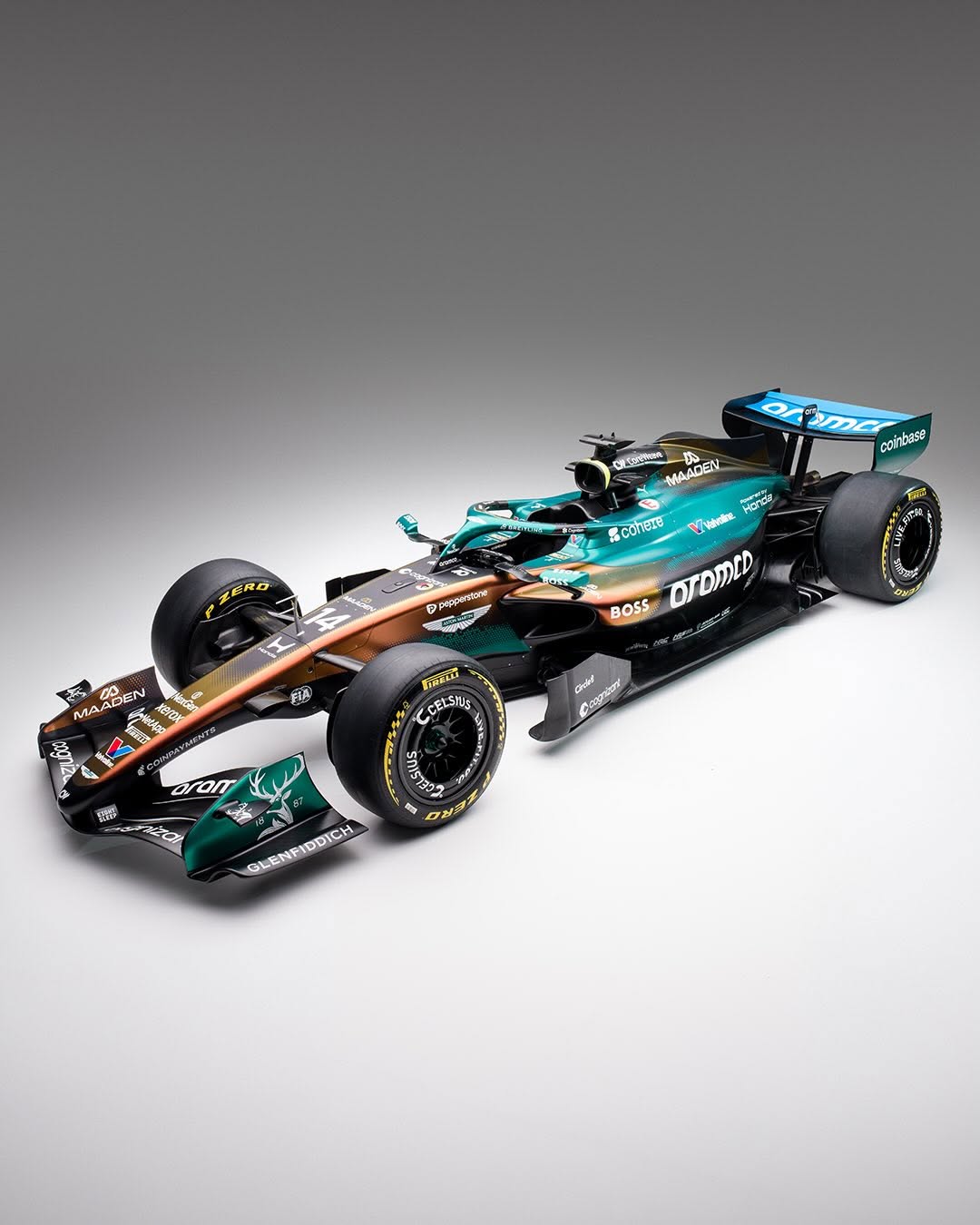
Aston Martin’s Monaco GP 2026 livery, developed with title partner Ma’aden, shifts character with every viewing angle. For collectors building display pieces around the AMR26 chassis and matching full-size 1:1 replica helmets, this Monte Carlo specification is one of the most photogenic one-off schemes of the 2026 calendar.
Key Takeaways
The Aston Martin Monaco 2026 livery is a one-race scheme created with title partner Ma’aden, designed to read differently from every viewing angle.
Collector display value sits in the angular finish shifts — paint behaviour under directional light is the defining trait of this exhibition-quality piece.
The livery joins a short list of Monaco-specific Aston Martin schemes, making 1:1 replica helmet pairings particularly desirable for themed display cabinets.
Full-size 1:1 collector helmets matched to this livery work best when arranged with directional lighting that mirrors the Monaco pit lane reveal.
A Monaco-Only Scheme Built Around Light
The Monaco Grand Prix has always rewarded teams that treat the weekend as a showcase, and Aston Martin’s 2026 entry is no exception. The British squad arrived in Monte Carlo with a dedicated one-race livery developed alongside title partner Ma’aden, the Saudi mining group whose branding sits across the AMR26’s sidepods, engine cover, and front wing endplates.
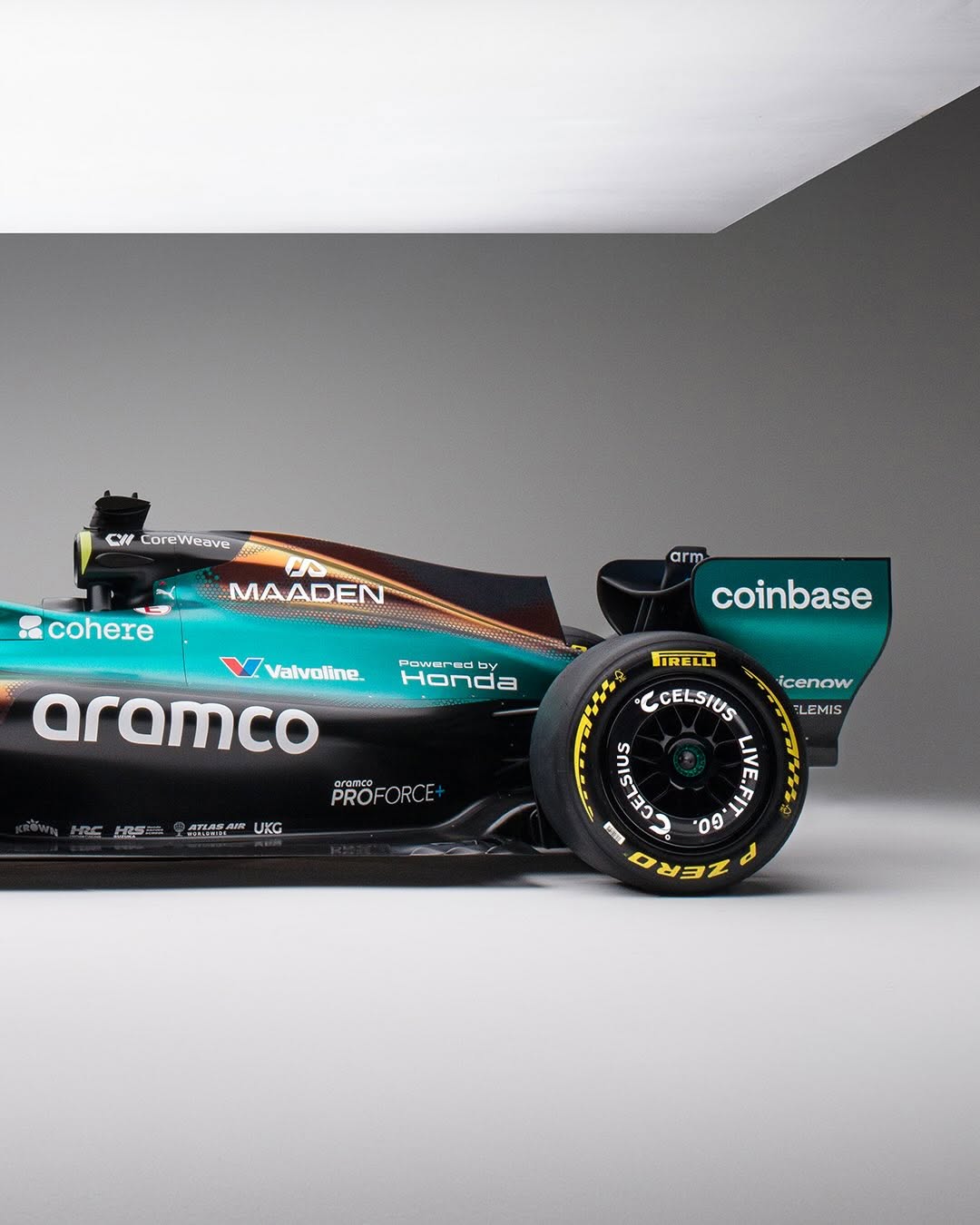
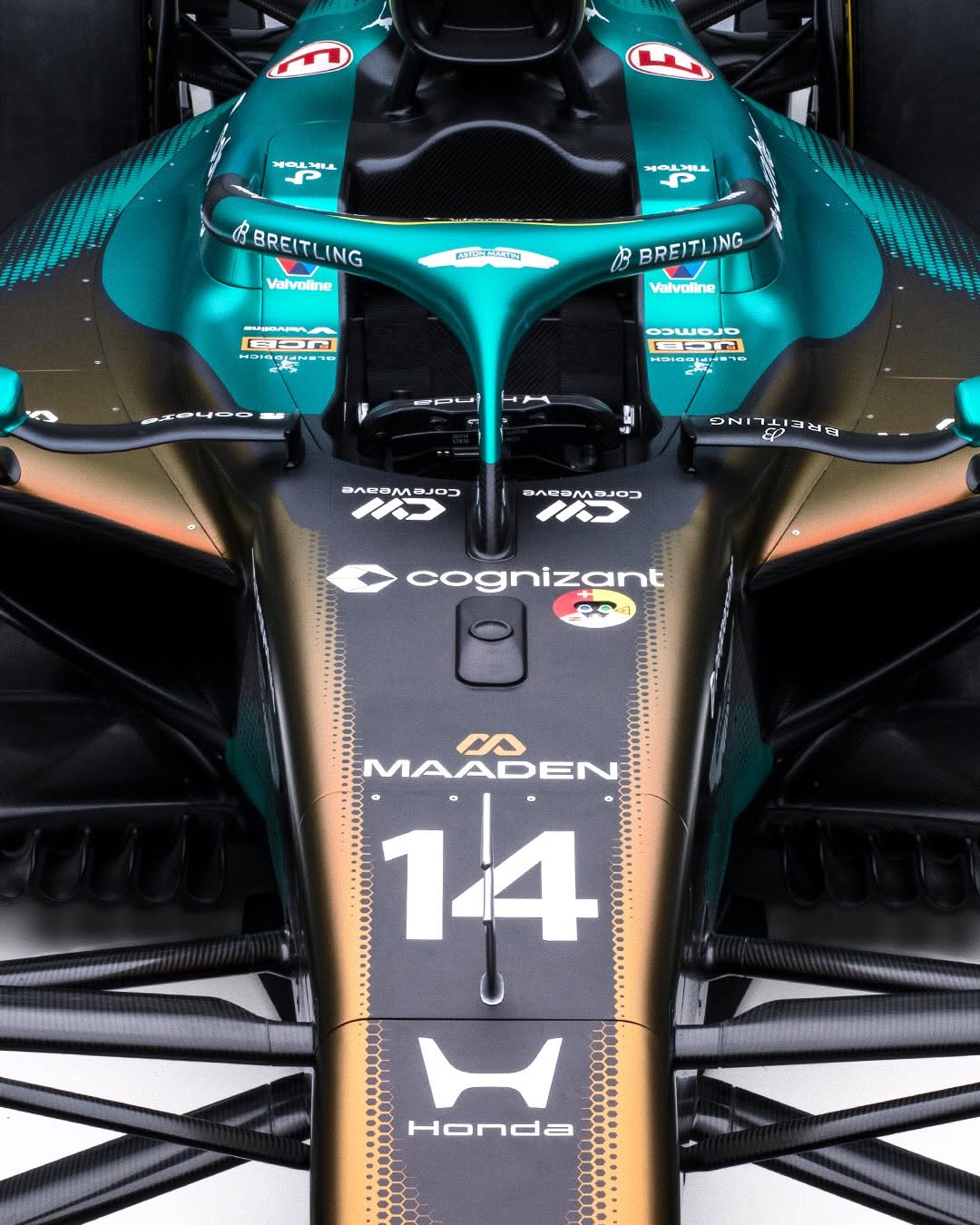
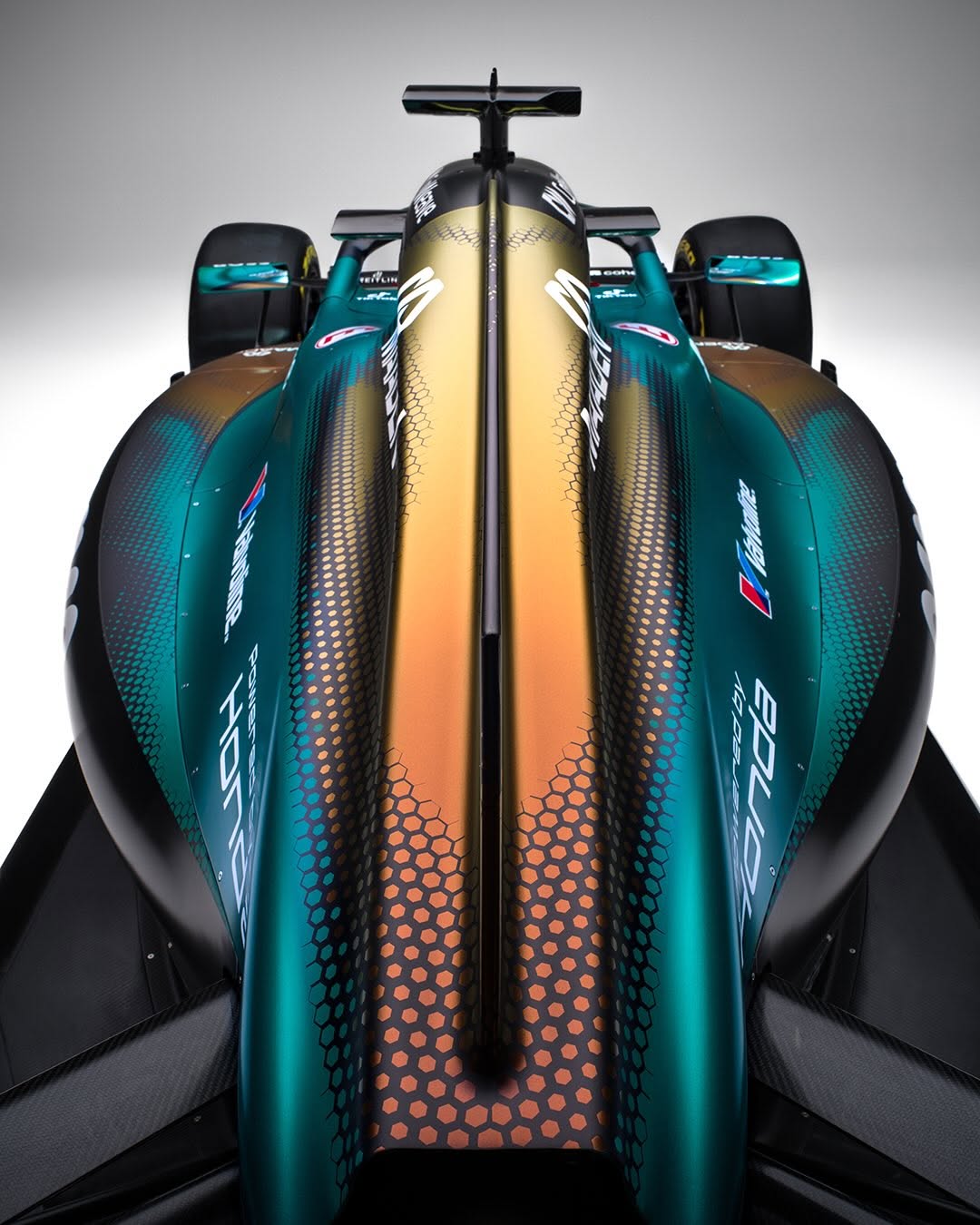
The team’s own description — “from every angle, a different dimension” — is not marketing filler. The paintwork genuinely behaves differently depending on viewing position, with the deep British Racing Green base appearing to shift toward a metallic bronze-gold under direct light and returning to a near-black tone in shadow. For collectors used to evaluating finish quality on full-size 1:1 replica helmets, this is the kind of multi-tone behaviour that separates an exhibition-grade display piece from a flat reproduction.
Why Monaco specials matter to collectors
Monaco one-offs occupy a specific corner of the F1 collecting market. Because they appear for a single race weekend — typically three days of running across Thursday practice, Saturday qualifying, and the Sunday grand prix — the visual record is compressed. That scarcity drives display-cabinet demand for matched helmet replicas in the same scheme, particularly when the livery itself carries a partner-specific design language as the Ma’aden Monaco scheme does.
Reading the Livery, Panel by Panel
Walking around the car in the Monaco pit lane, the livery breaks down into several distinct zones, each engineered to catch light differently.
Nose and front wing
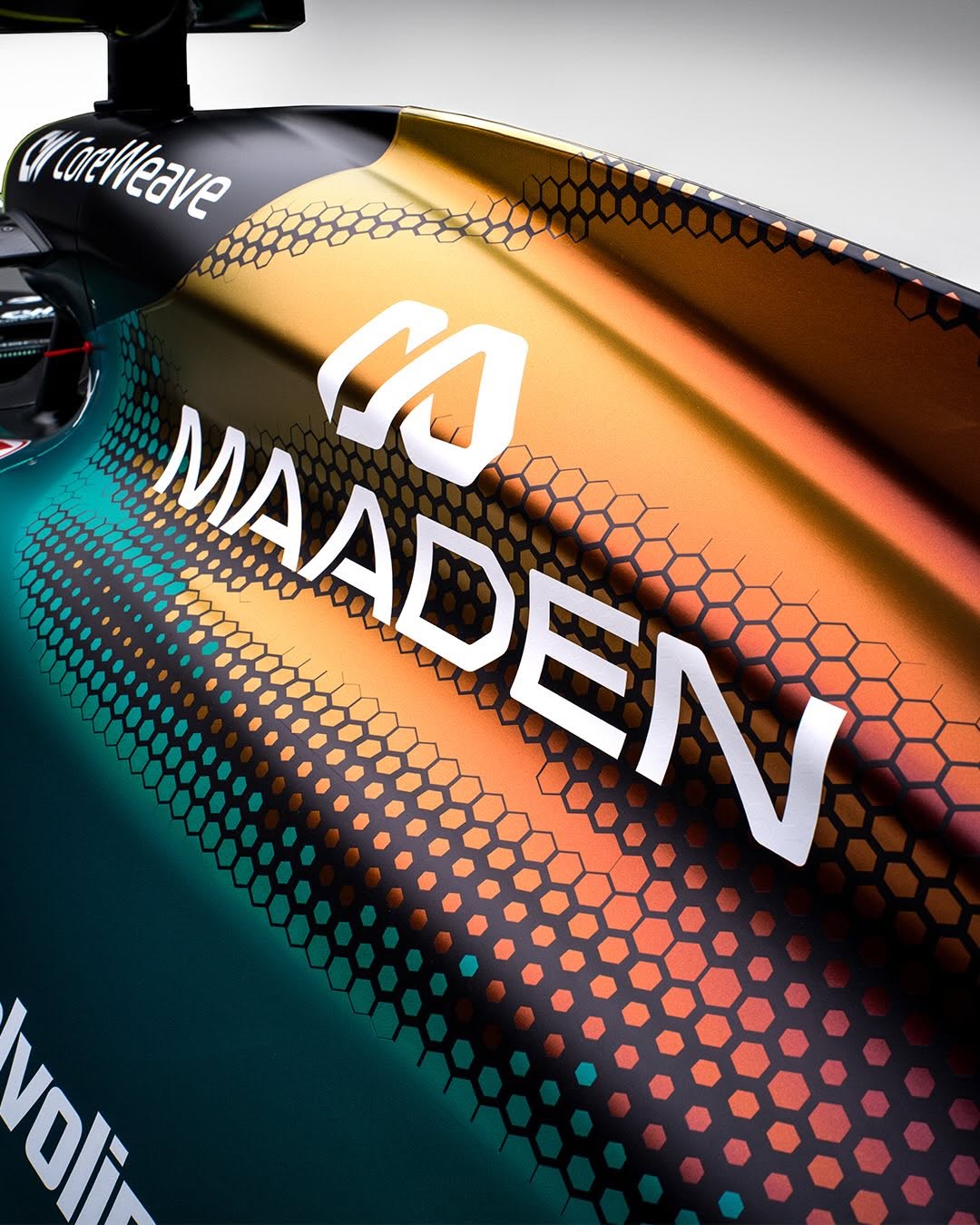
The nose carries the highest concentration of Ma’aden branding, with the partner logo placed prominently on the upper surface. The transition from nose tip to chassis uses a graduated finish that, in close inspection photographs, shows the layered paint application typical of one-off schemes — multiple coats laid over the standard team base.
Sidepods and engine cover
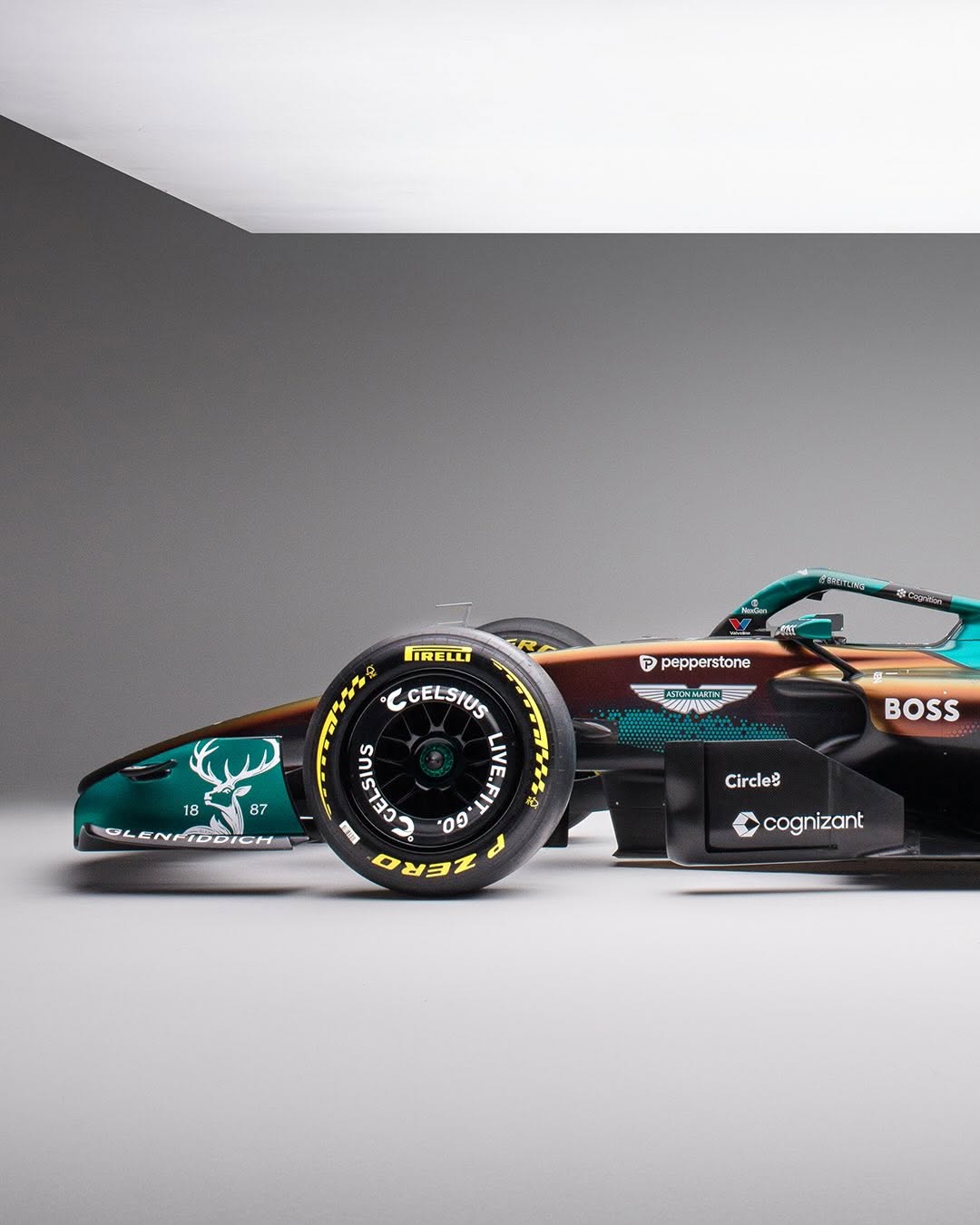
This is where the “different dimension” claim earns its keep. The sidepod flanks carry the most aggressive angular treatment, with finish that reads green from the front three-quarter angle and shifts toward a warmer metallic tone when viewed from directly side-on. The engine cover continues this treatment up to the airbox.
Rear wing and endplates
The rear wing endplates carry the cleanest graphic execution, with Ma’aden’s logotype rendered in a contrasting finish that holds its tone regardless of angle — a deliberate choice that gives photographers a stable focal point amid the shifting bodywork colours.
For collectors planning a Monaco 2026 display, these zonal differences matter. A full-size 1:1 replica helmet sitting alongside a die-cast or showroom display model needs lighting that flatters both the helmet’s painted shell and the livery’s angle-dependent finish.
The Ma’aden Partnership Context
Ma’aden became Aston Martin’s title partner ahead of the 2025 season, and the Monaco 2026 livery is among the most visible activations of that commercial relationship to date. The Saudi mining company’s brand identity — built around minerals, metals, and material transformation — lends itself naturally to a paint finish that emphasises shifting metallic character.
Design language and collector appeal
The livery’s emphasis on dimensional finish ties directly to Ma’aden’s commercial identity. For display-piece collectors, this thematic coherence raises the appeal — the Monaco scheme is not a random one-off but a designed statement that fits into a wider visual programme. That coherence is exactly what serious display builders look for when curating a themed cabinet around a single race weekend or partnership era.
Helmet replicas matched to this livery follow the same logic. A 1:1 collector helmet in the corresponding Monaco specification, finished to exhibition standard, becomes the natural companion piece — particularly when the helmet itself carries any Monaco-specific graphics that mirror the bodywork treatment.
Display Considerations for the Monaco 2026 Scheme
If you are building a display around the Aston Martin Monaco 2026 livery, the dominant variable is lighting. The entire visual identity of the scheme depends on how light moves across the finish, which means flat overhead lighting will flatten the effect and lose what makes the livery distinctive.
Recommended lighting setup
Directional spot lighting at roughly 45 degrees from two sides produces the closest result to the Monaco pit lane reveal photography. A warm-temperature key light (around 3000K) on one side with a cooler fill (around 4500K) on the other will reproduce the green-to-metallic shift that defines the scheme. Avoid single-source overhead lighting, which collapses the dimensional effect into a single tone.
Helmet placement
A full-size 1:1 replica helmet sits best at roughly eye level for the average standing viewer — typically 140 to 160 cm from the floor. Place the helmet slightly forward of any car model or framed print so that the helmet’s own paint finish reads as the primary object, with the livery imagery as supporting context behind it.
Cabinet considerations
Glass cabinets with internal LED strips work well for Monaco scheme displays, but make sure the LED colour temperature is selectable. Fixed cool-white LEDs will push the livery green into a flat, slightly artificial tone. Adjustable warm-white or RGB systems give you the latitude to tune the display to match different photographic references.
Display and collector replicas only. Not certified for protective use. Full-size 1:1 scale.
Where the Monaco 2026 Livery Sits in Aston Martin History
Aston Martin’s Formula 1 programme — counting the rebranded Racing Point era and the original Aston Martin entries from the 1950s — has produced relatively few true one-race liveries. The Monaco 2026 Ma’aden scheme joins this short list, which makes it immediately relevant to collectors building a historical Aston Martin display.
Comparison points
The 2026 Monaco scheme leans heavily on finish dimensionality rather than graphic complexity. There are no commemorative dates, no driver-specific dedications, no anniversary marks. The statement is made entirely through paint behaviour and partner placement, which is a more restrained approach than some recent one-off liveries from other teams.
For collectors, this restraint is an advantage. The livery photographs cleanly from any angle, which means display photography and reference imagery for matching helmet replicas remains usable across the full range of lighting conditions. There is no single “correct” angle to view the scheme — the design assumes the viewer will move around the car, and the display piece logic follows the same principle.
Building a Themed Monaco 2026 Display
A coherent Monaco 2026 Aston Martin display rests on three elements: the livery imagery itself, a matched full-size 1:1 collector helmet, and the lighting environment around both. Each element supports the others, and weakness in any one undermines the whole.
Reference imagery
Source high-resolution photographs from the Monaco weekend itself rather than studio renders. The pit lane and paddock images capture the livery under the specific light conditions the scheme was designed for, which is the visual reference point any display should aim to reproduce.
Helmet pairing
Match the helmet to the same race weekend. A Monaco 2026 driver helmet replica — rendered as a full-size 1:1 display piece to exhibition standard — completes the visual story. Mixed-weekend pairings (a Monaco livery with a non-Monaco helmet, for example) break the thematic coherence that makes one-off displays compelling.
Environment
Keep the surrounding cabinet neutral. The Monaco livery does the visual work on its own, and competing colour or pattern in the background will reduce the impact of the angular finish shifts. A matte dark grey or off-black background reads cleanly without pulling attention from the scheme.
“From every angle, a different dimension.”
— Aston Martin F1, Monaco GP 2026
FAQ
Q: Is the Aston Martin Monaco 2026 livery a one-race scheme?
Yes. The Ma’aden Monaco livery was developed for the Monaco Grand Prix weekend only, making it a single-event scheme of particular interest to collectors building themed displays around the 2026 Monte Carlo round.
Q: What makes this livery distinctive for display purposes?
The finish is angle-dependent — the paint reads as British Racing Green from some viewpoints and shifts toward a metallic bronze-gold under direct light. This dimensional behaviour is the defining visual trait and benefits from directional lighting in any display cabinet.
Q: Who is Ma’aden and why does the partnership matter?
Ma’aden is a Saudi mining group and Aston Martin’s title partner. The Monaco 2026 livery is one of the most visible activations of that commercial relationship, and the dimensional paint finish ties thematically to Ma’aden’s identity as a minerals and metals company.
Q: How should I light a Monaco 2026 display piece?
Use directional lighting at roughly 45 degrees from two sides, with a warmer key light around 3000K and a cooler fill around 4500K. Avoid flat overhead lighting, which collapses the angle-dependent finish into a single tone.
Q: Are 123Helmets pieces wearable or certified?
No. All pieces are display and collector replicas only, finished to full-size 1:1 scale for exhibition use. They are not certified for protective use and are intended for cabinet, shelf, or wall display.
Browse F1 Helmet Collection
Display and collector replicas only. Not certified for protective use. Full-size 1:1 scale.