Blog
How to Stream the 2026 Monaco Grand Prix on F1 TV Premium: Helmet & Livery Display Guide
 123Helmets Editorial Team
The 2026 Monaco Grand Prix returns to the 3.337 km Circuit de Monaco for 78 laps of the most photographed asphalt in motorsport. For collectors who study every visor stripe and chrome detail at the Casino Square hairpin, F1 TV Premium remains the closest seat to the action. Here is how to set up your stream, what to watch for in the helmet and livery department, and which podium frames belong on a display shelf.
Key Takeaways
F1 TV Premium streams all 78 laps of Monaco in up to 4K with multi-camera angles ideal for studying helmet liveries.
The 3.337 km Monaco layout produces the slowest average speeds of the calendar, giving onboards extended visor-level footage.
Driver-specific Monaco helmet editions are typically revealed during Thursday media day, 48 hours before lights out.
Podium shots from the Royal Box are the reference images most collectors use when sourcing 1:1 replica helmets.
Setting up F1 TV Premium for Monaco race weekend
The 2026 Monaco Grand Prix weekend runs across three days, with practice on Friday, qualifying on Saturday, and the 78-lap race on Sunday afternoon local time. F1 TV Premium is the only subscription service that combines the world feed with every driver onboard, every team radio channel, and the full timing data overlay in a single window.
To stream the event cleanly, sign in to your F1 TV Premium account on the official app at least 30 minutes before the session. The Monaco broadcast typically opens with a 20-minute pre-show focused on grid walks and helmet reveals. A wired 25 Mbps connection or stable 5 GHz Wi-Fi handles the 4K feed without buffering during the high-bitrate tunnel sequences, which are notoriously difficult to encode because of the rapid light shifts between sunlight and shadow.
Device choice matters for livery detail
For collectors evaluating helmet artwork, a 55-inch or larger 4K panel reveals paint detail invisible on a tablet. The Monaco feed uses 28 trackside cameras plus 20 onboard channels, and the driver-eye camera mounted above the visor is the single best source for studying crown graphics, sponsor placement, and the matte-versus-gloss finish that distinguishes Monaco one-off helmets from standard season liveries.
Multi-view recommendation
Open the world feed on your main screen and a driver onboard on a second device. The picture-in-picture function on F1 TV Premium also lets you keep one onboard pinned at 480p in the corner while the main feed runs at full resolution.
What to watch for in the 2026 Monaco helmet reveals
Monaco is the one round of the calendar where almost every driver on the grid commissions a special-edition helmet. These designs are typically revealed on Thursday media day, roughly 48 hours before the race start. F1 TV Premium covers these reveals through paddock segments and team social integrations folded into the broadcast.
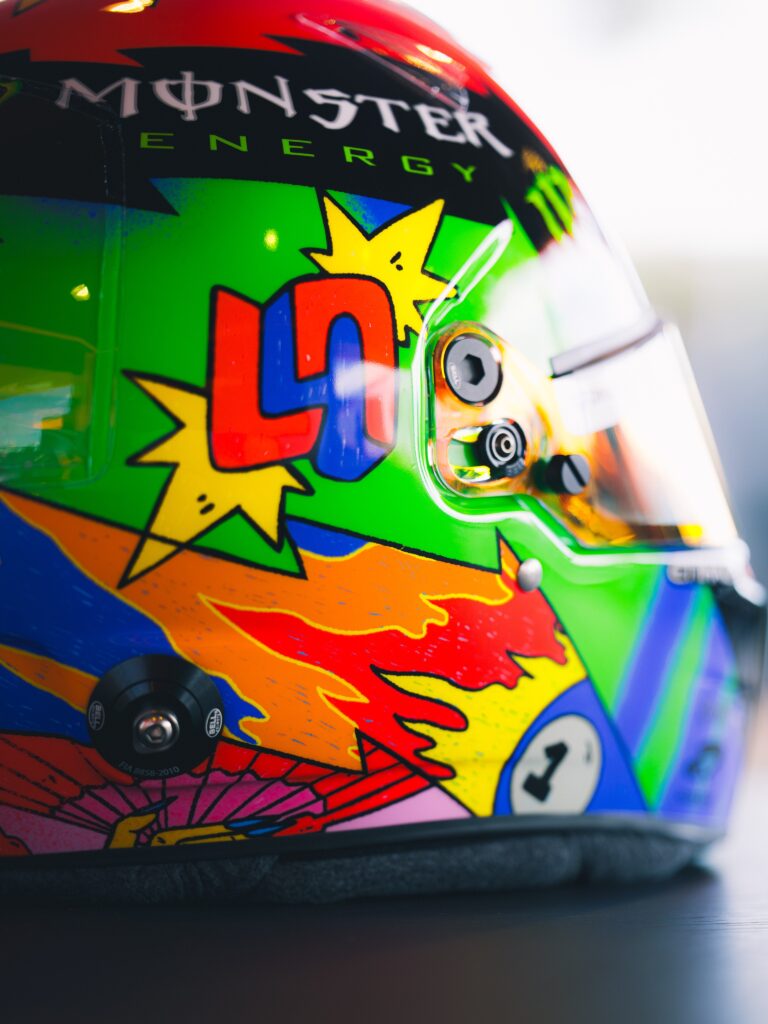
Historical patterns suggest the Monaco helmets carry heavier metallic flake content than standard season helmets, often with chrome bases that catch the Mediterranean light along the harbour section. The painted shells generally weigh between 1.25 kg and 1.45 kg before any camera mount or HANS hardware is fitted, and the visor strip artwork on Monaco editions frequently extends 35 mm further down each side than a standard helmet to maximise visibility from the grandstands at Sainte-Devote.
Camera angles that expose paint detail
Three specific camera positions are worth bookmarking on the F1 TV Premium feed. The Casino Square overhead, the Nouvelle Chicane low-mount, and the Rascasse trackside camera all frame the helmet in slow corners where the painted surface is held in shot for 2 to 3 seconds at a time. Compare this to a fast corner at Silverstone or Spa, where the helmet typically clears frame in under 0.4 seconds.
Following the 78-lap race with livery focus
The Monaco race covers 260.286 km across 78 laps of the 3.337 km circuit. Average lap times under modern regulations sit around 1:14 to 1:16 in race trim, which means the field returns past the start-finish line every 75 seconds or so. For viewers tracking specific helmets, this rhythm makes it easy to anticipate the next pass at the apex of Sainte-Devote.
Strategic windows for helmet visuals
The opening lap and the first 10 laps offer the densest helmet visuals as cars run nose-to-tail through the tunnel and harbour chicane. The middle stint, typically laps 25 to 55, is where onboard cameras settle into clean air and produce the cleanest helmet footage of the day. The final 5 laps usually include radio traffic and visor-tearoff close-ups as drivers manage tyre wear into the closing sequence.
Picking the right driver onboard
If you are tracking a specific helmet design for reference photography, lock the F1 TV Premium feed to that driver’s onboard for the entire race. The 20 onboard channels each broadcast at 1080p, and the helmet crown is visible in roughly 70 percent of the frame on most modern camera mounts.
Podium frames worth capturing for display reference
Monaco’s podium is unlike any other on the calendar. The Royal Box presentation on the start-finish straight is broadcast in wide and tight cuts, with the three drivers framed against the principality skyline. F1 TV Premium runs the podium sequence for approximately 12 to 14 minutes, including the national anthems, trophy presentation, and the champagne spray sequence on the steps below the Royal Box.
The frames collectors actually use
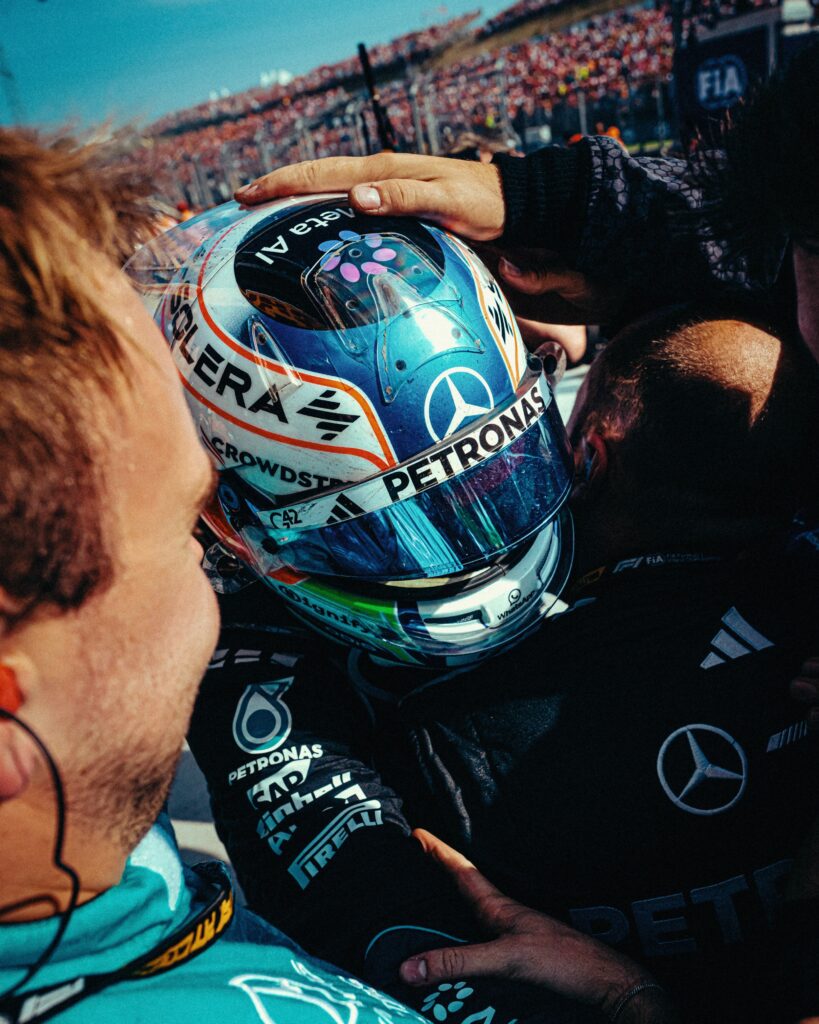
The single most useful frame for replica helmet reference is the trophy lift shot, which holds the helmet at chest height with the visor flipped up. This is the only podium moment of the year where the inside of the visor and the chin bar artwork are clearly visible in 4K resolution. The second-best frame is the wide overhead drone shot of all three drivers, which establishes scale and confirms the relative size of crown graphics and sponsor decals.
Capturing for your own reference library
F1 TV Premium permits personal session rewind for the full duration of your subscription, so you can return to the podium sequence repeatedly. Pause at the 4K freeze frames and screenshot the helmet from at least three angles: profile, three-quarter, and crown overhead. These three views map directly to the reference images used by paint shops producing 1:1 collector replicas at the 27 cm x 35 cm shell footprint of a full-size helmet.
Translating the broadcast into your display shelf
A full-size 1:1 collector replica helmet typically measures around 27 cm wide by 35 cm deep by 27 cm tall, and weighs between 1.2 kg and 1.6 kg depending on the shell construction used for display pieces. These dimensions matter when you are planning where a Monaco edition will sit on a shelf, and the F1 TV Premium broadcast gives you the proportional reference to plan that placement.
From frame grab to display brief
Use your saved podium screenshots to build a single reference sheet for each driver helmet you want to add to your display. Include the date of the Grand Prix, the lap number when the most useful onboard footage occurred, and the camera angle. This level of detail is exactly what separates a casual collector’s shelf from a properly catalogued display.
Lighting your display to match the broadcast
The Monaco podium is lit by direct afternoon sun supplemented by reflected light off the harbour. To recreate that finish on a display shelf, use a 3000K warm LED bar mounted 40 cm above the helmet at a 30-degree forward angle. This reproduces the same metallic flake activation you see in the F1 TV Premium podium frames.
Subscription notes and replay access
F1 TV Premium operates on a monthly or annual subscription. The 2026 Monaco round is included in both tiers, and the full session replay archive remains accessible for the duration of your active subscription. Practice, qualifying, and the race itself can each be rewatched in their entirety, which is particularly useful for the 1-hour qualifying session where helmet close-ups during pit lane interviews often outnumber those during the race itself.
The replay archive also includes onboard-only versions of each session, which strip the world feed entirely and present 60 minutes or more of continuous driver-eye footage. For helmet reference work, this is the most valuable single feature on the platform.
“Monaco is the slowest race on the calendar, which is exactly why it produces the best helmet footage. The cameras hold on the driver longer than anywhere else.”
— Broadcast production note, F1 TV
FAQ
Q: What is the start time of the 2026 Monaco Grand Prix?
The race traditionally starts at 15:00 local Monaco time on Sunday. Confirm the exact slot through the F1 TV Premium schedule in the days before the event, as the global broadcast window is built around that local start.
Q: Can I stream the 2026 Monaco GP in 4K on F1 TV Premium?
Yes, F1 TV Premium supports up to 4K streaming on compatible devices. A wired 25 Mbps connection or stable 5 GHz Wi-Fi handles the feed without dropouts during the tunnel sequence.
Q: How long does the Monaco race typically last?
The race covers 78 laps of the 3.337 km circuit, totalling 260.286 km. Most modern Monaco races run between 1 hour 40 minutes and 2 hours including safety car periods.
Q: Which onboard camera shows the helmet best?
The driver-eye camera mounted above the visor is the single best angle for studying crown graphics and visor strip artwork. It is available on all 20 driver onboard channels on F1 TV Premium.
Q: Are Monaco special-edition helmets the same as the regular season helmets?
No. Monaco editions typically feature heavier metallic flake, chrome bases, and visor strip artwork extending around 35 mm further down each side compared with standard season helmets. They are usually revealed on Thursday media day.
Browse F1 Helmet Collection
Display and collector replicas only. Not certified for protective use. Full-size 1:1 scale.