Blog
Haas Boss: 2026 F1 Rules Blur True Driver Performance
 123Helmets Editorial Team
Haas team principal Ayao Komatsu says Formula 1’s 2026 technical package is making it harder for fans to judge who is actually driving well, and he believes the sport can fix it without tearing up the rulebook.
Key Takeaways
Haas team principal Ayao Komatsu told media in Hungary that F1’s 2026 rules are ‘too complicated’ and need simplifying so fans and drivers alike can follow what is happening on track.
Technical tweaks introduced before the Miami Grand Prix eased some complaints, but concerns resurfaced after the British and Belgian Grand Prix weekends exposed speed gaps tied to energy deployment rather than raw pace.
The 2026 formula runs on a near-50:50 split between electrical deployment and internal combustion power, meaning small throttle differences can cost multiple tenths of a second on longer straights like Silverstone and Spa-Francorchamps.
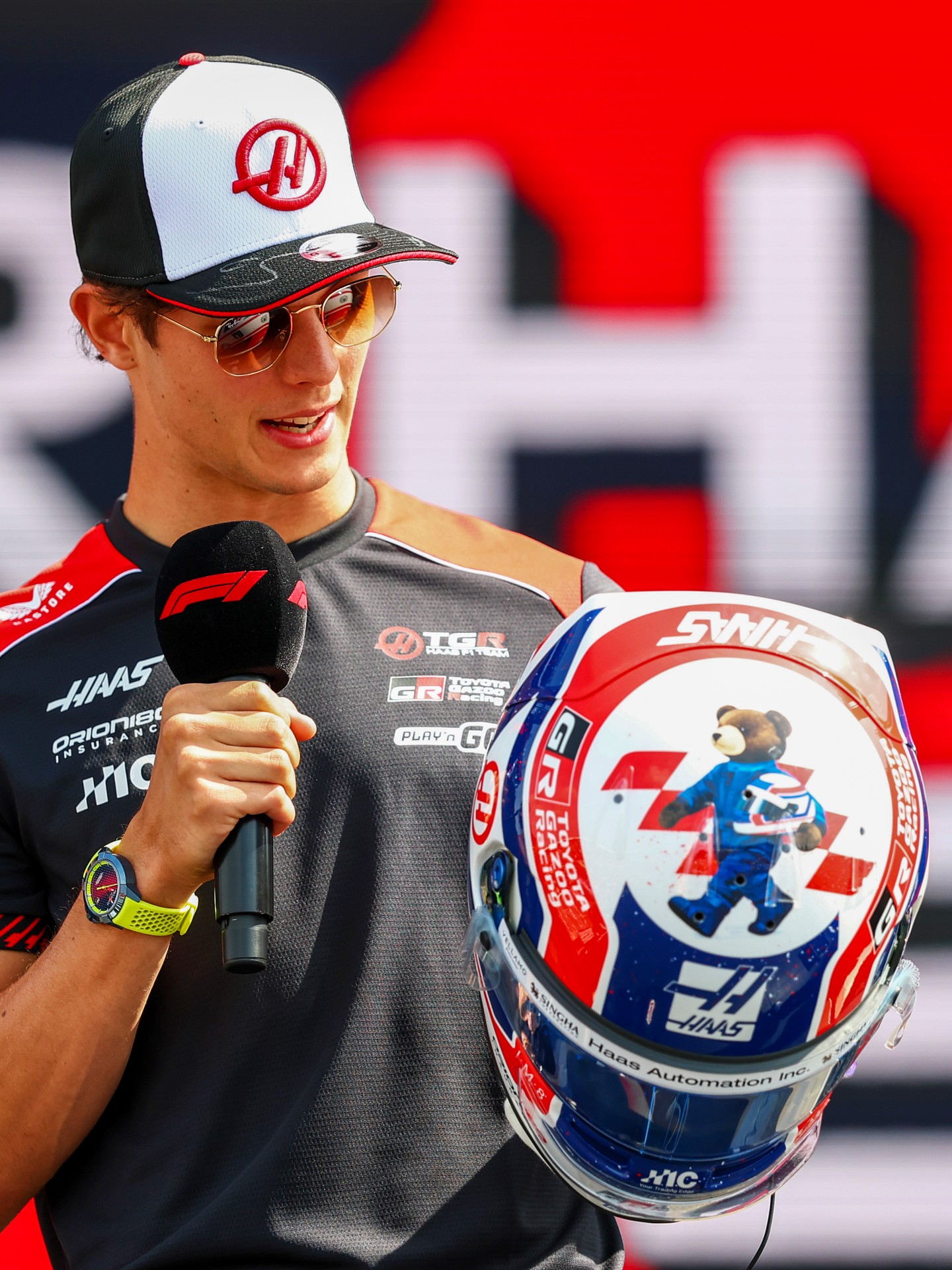
Collectors can mark the ongoing rules debate with a full-size 1:1 Haas display helmet, a static reminder of a season defined as much by software as by driving.
What Ayao Komatsu Actually Said
Ayao Komatsu says Formula 1 needs to simplify its current technical rules so the sport is easier to understand for everyone watching. Speaking to media including Autosport during the Hungarian Grand Prix weekend, the Haas team principal did not mince his words: “Honestly, I think we’re trying to simplify the sport. I think currently it’s just too complicated.” He went further, pointing to specific behavior inside the cockpit that fans rarely see. “Like a tiny detail of the driver operation difference that have either unintended or secondary consequences is, I think, something we all identified the need to avoid and improve as a sport. To bring the control back to the driver.” His closing point was the simplest of all: “I think it’s very important everyone understands the sport, regardless” of technical background. Komatsu’s comments landed at a moment when the paddock was already split over how transparent the 2026 rules truly are to the people paying to watch.
What makes his intervention notable is that it comes from a team principal, not a broadcaster or a fan account. Haas sits mid-grid, competing on pure execution rather than budget-driven development, so Komatsu’s frustration reflects a working reality: small energy-management choices inside the car are now producing lap-time swings that have nothing to do with a driver’s raw speed.
Why the 2026 Rules Blur the Picture for Fans
Fans struggle to read true driver performance in 2026 because the new power unit rules split output almost evenly between electrical deployment and the internal combustion engine, and that balance is managed by onboard software rather than driver instinct alone. The near-50:50 energy split means a driver’s throttle position by a handful of percentage points can determine how much electrical power is available for the next straight, independent of how well that driver is actually driving the corner beforehand. On a broadcast feed, none of that is visible. Viewers see two cars in identical machinery, one pulling away, and no obvious explanation why.
The problem became impossible to ignore after two consecutive events at what officials have described as ‘energy-starved’ venues. The British Grand Prix at Silverstone and the Belgian Grand Prix at Spa-Francorchamps both feature long straights and high-speed sections that magnify tiny differences in deployment strategy. A driver who conserves energy slightly differently through one sector can gain or lose several tenths of a second by the time they cross the line, a gap that looks like raw pace on paper but is really a software and energy-management outcome. Technical adjustments made ahead of the Miami Grand Prix had briefly quieted the complaints, proving the sport already knows how to intervene. But those changes represented close to the limit of what current hardware allows, meaning any further correction will need to be more gradual rather than a single quick fix.
The Case for Bringing Control Back to the Driver
Komatsu’s proposed fix is to return more direct control to the driver rather than to software-managed energy deployment. His phrase, “to bring the control back to the driver,” is a direct response to the idea that fractional throttle differences are now producing outsized effects the driver did not necessarily choose. If control sits more visibly with the person behind the wheel, both fans and rivals can attribute a fast lap to driving skill rather than a hidden deployment map.
This isn’t a call to abandon the hybrid-heavy 2026 formula. Komatsu frames it as simplification, not reversal. The distinction matters: F1’s power units remain built around the same near-50:50 split between electric and combustion power for the foreseeable future, so any changes to reduce the technical noise will happen inside that framework rather than replacing it. That is consistent with how the Miami-era tweaks were handled, adjusting how much energy could be harvested and deployed around a lap without touching the underlying architecture.
Podium Visuals and Display-Worthy Moments From a Complicated Season
The 2026 season’s technical debate has not slowed the visual appeal of race weekends, and Haas remains part of that story on the grid. Regardless of how energy deployment shapes lap times, the cars, liveries, and driver helmets on track are still the entry point for most fans and collectors following the sport. Every Silverstone and Spa-Francorchamps weekend produces its own gallery of paddock and podium imagery, and Haas’s presence in the midfield keeps its helmet designs in the frame at nearly every round.
For collectors, this is exactly the kind of season worth marking permanently. A full-size 1:1 replica helmet captures a specific era of the sport, one where the technical rulebook itself became part of the conversation. Display pieces built to exhibition quality preserve the details of a livery down to the finish and graphics applied for a given season, giving fans something tangible from a year defined by invisible software battles as much as visible on-track racing. Haas gear from the Haas team collection reflects that 2026 identity, offering a static counterpoint to a sport currently arguing about how much of its action is genuinely visible to the audience.
What Could Change Before the Rules Settle
Further adjustments to F1’s 2026 energy rules are likely to be incremental rather than a single sweeping change, based on Komatsu’s own framing of the situation. He noted that the pre-Miami revisions to harvesting and deployment limits already represented close to what could be achieved with the current hardware package, meaning the sport is now working at the edges of what this generation of power units can adjust without a deeper redesign. That puts pressure on governance bodies and teams to agree on smaller, targeted tweaks rather than a wholesale rewrite mid-season.
The stakes are shared across the grid. Komatsu’s comments in Hungary reflect a wider paddock conversation about whether hidden software variables are undermining the credibility of on-track results. For a team like Haas, competing on tight margins without the developmental depth of the largest constructors, transparency in how power is measured and understood matters as much competitively as it does for fan trust. Any future clarification would need to preserve the near-50:50 energy split that defines 2026 machinery while making its effects legible in real time, both to drivers making split-second decisions and to fans trying to follow the race.
“Honestly, I think we’re trying to simplify the sport. I think currently it’s just too complicated.”
— Ayao Komatsu, Haas Team Principal
“To bring the control back to the driver. And also just to simplify for everyone.”
— Ayao Komatsu, Haas Team Principal
FAQ
Q: What did Ayao Komatsu say about 2026 F1 rules?
Ayao Komatsu said F1’s current technical rules are too complicated and need simplifying so both drivers and fans can better understand what determines lap time, speaking to media including Autosport in Hungary.
Q: Why do identical F1 cars show different speeds under the 2026 rules?
Small differences in throttle position and energy deployment can produce multiple tenths of a second in lap time because the 2026 power units run on a near-50:50 split between electrical and internal combustion power, amplified on long-straight tracks like Silverstone and Spa-Francorchamps.
Q: Did the Miami Grand Prix changes fix the complaints?
The pre-Miami technical changes reduced some complaints about the 2026 format, but concerns resurfaced after the British and Belgian Grand Prix weekends exposed further speed differences tied to energy management.
Q: Will F1 fully rewrite the 2026 rules to fix this?
No, Komatsu described the fix as simplification within the current formula rather than a rewrite, noting the Miami-era adjustments already represented close to the limit of what current hardware allows without deeper redesign.
Q: Are Haas 2026 display helmets available as collector items?
Yes, full-size 1:1 replica Haas helmets are available as exhibition-quality display pieces that reproduce the team’s current livery and graphics for collectors following the 2026 season.
Shop Haas Helmets
Display and collector replicas only. Not certified for protective use. Full-size 1:1 scale.