
Blog
Aston Martin Unveils Special Monaco GP Livery: A Display Piece Worth Collecting
 123Helmets Editorial Team
Aston Martin Aramco Formula One Team has pulled the covers off a one-off livery for the 2024 Monaco Grand Prix, marking the team’s home race weekend on the Côte d’Azur with deeper racing greens, refined gold accents and updated partner branding. The visual refresh affects the AMR24 chassis, driver overalls and the helmets worn by Fernando Alonso and Lance Stroll — and that combination makes the Monaco package one of the most talked-about display targets of the season for full-size 1:1 replica collectors.
Key Takeaways
Aston Martin’s Monaco livery uses a deeper British Racing Green base with gold and lime green accents across the AMR24 and driver kit.
The one-off design ran across the full Monaco GP weekend, May 24–26, 2024, on the 3.337 km Circuit de Monaco.
Helmet finishes for Alonso and Stroll were tuned to match the chassis palette — a reference point for full-size 1:1 display replicas.
Single-event liveries historically become high-demand collector items because of limited on-track appearances of 3 sessions plus the race.
What Changed Visually on the AMR24
The Monaco GP one-off keeps Aston Martin’s recognisable identity but pushes the colour story into richer territory. The standard 2024 livery uses a satin British Racing Green with lime green flashes near the airbox and rear wing endplates. For Monaco, the team shifted the base toward a deeper, more saturated green, added gold pinstriping along the engine cover and sidepod edges, and re-tuned the partner logo placements so they read cleanly against the darker tone.
The number plates on the nose — 14 for Alonso and 18 for Stroll — were reworked in a brushed gold treatment rather than the usual white. The halo received a matte black finish with a thin gold outline, and the rear wing carried a Monaco-specific graphic referencing the principality. On the front wing endplates, the lime accent was reduced to a 12 mm strip, replaced by a gold band roughly 18 mm wide.
Driver overalls and helmet alignment
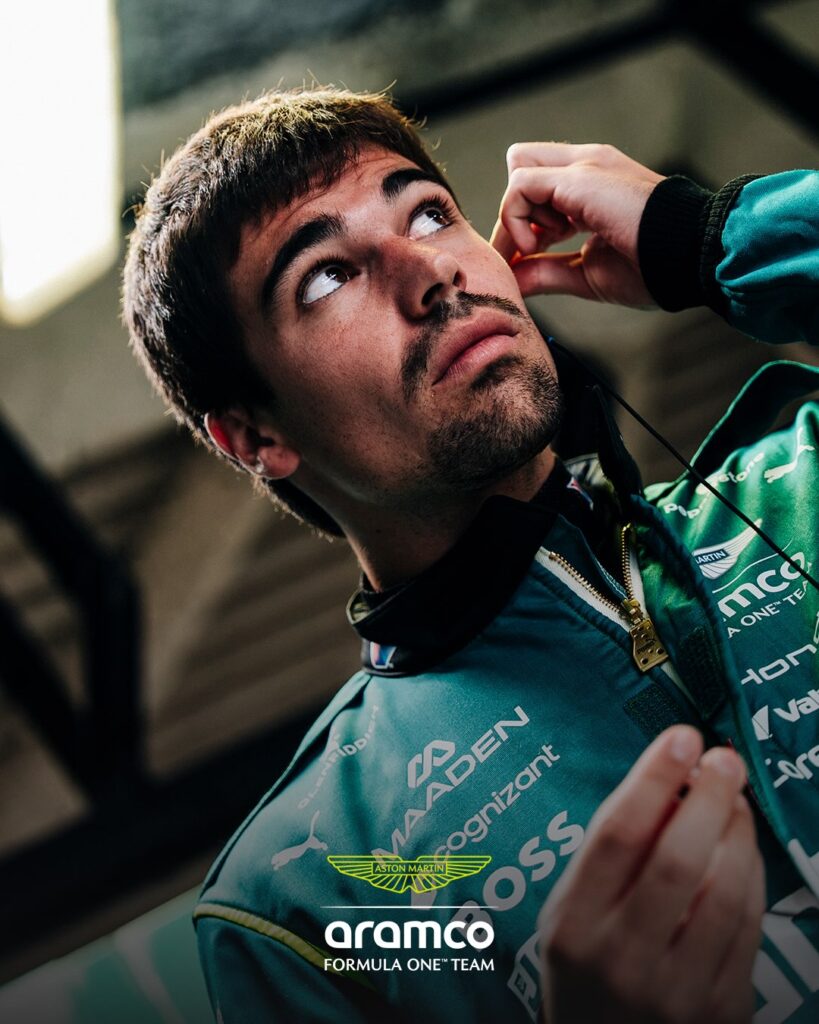
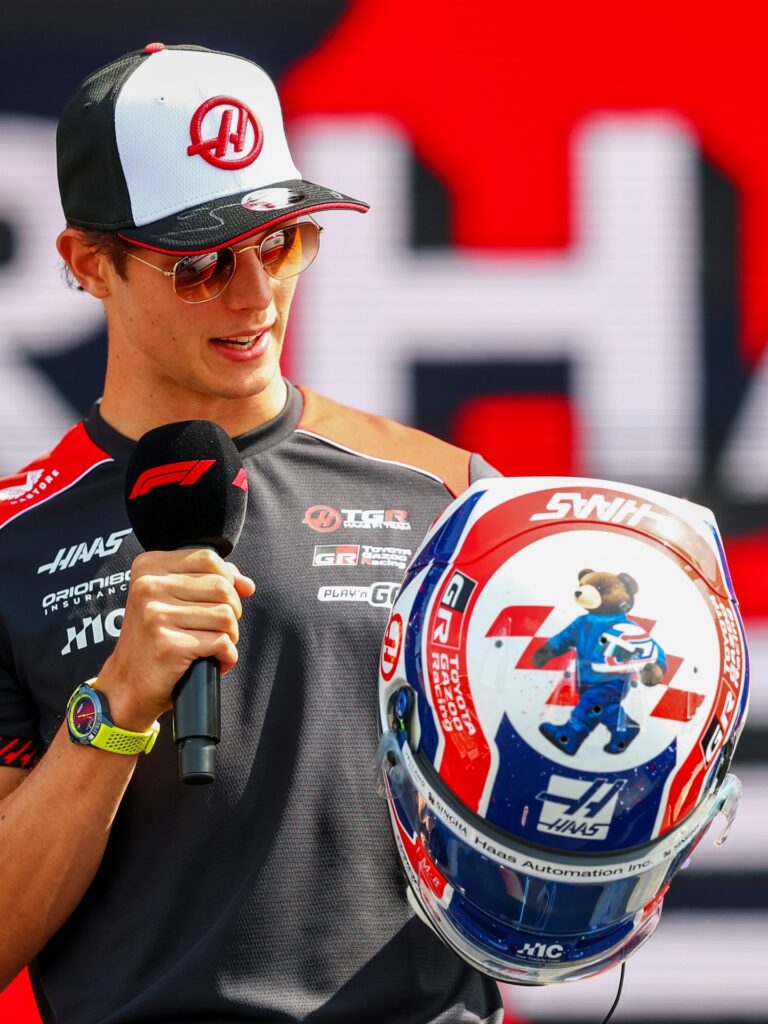
Race suits matched the chassis with gold cuffs, a darker green torso panel and updated sponsor blocks. Both drivers’ helmets — Alonso’s signature blue, red and yellow Asturias-inspired design and Stroll’s red, white and black Canadian-flag layout — kept their personal identities but added gold trim rings around the visor aperture and rear spoiler to tie into the team package. For collectors building a display shelf around Monaco 2024, that helmet-to-chassis colour link is the detail that matters.
Why Monaco Gets Special Treatment
Monaco is the most photographed race of the year. The 3.337 km street circuit, with its 19 corners and roughly 78 racing laps, produces more close-up television shots per minute than any other event on the 24-race 2024 calendar. Teams know this. A one-off livery in Monaco is seen by an estimated global audience in the hundreds of millions across qualifying on May 25 and the race on May 26, 2024.
For Aston Martin, Monaco also carries brand weight beyond racing. The road-car side of Aston Martin has long associations with the principality, and the team uses the weekend to host clients, partners and ambassadors. The livery is a marketing asset as much as a racing one — every photograph of the AMR24 threading through Sainte Dévote becomes a long-tail image used across the team’s channels for the following 12 months.
The on-track exposure window
Practical reality for collectors: a one-off livery typically appears across only 3 practice sessions, 1 qualifying hour and 1 race. That is roughly 6 hours of total track time. After Monaco, the AMR24 returns to its standard livery for the Canadian Grand Prix on June 9, 2024. That short exposure window is exactly why Monaco-spec items become reference pieces in collector circles.
Collector Implications for Full-Size 1:1 Display Replicas
For anyone building a display collection of full-size 1:1 replica helmets, single-event liveries occupy a distinct category. They are visual snapshots of a specific weekend — in this case May 24–26, 2024 — and they document a moment that cannot be repeated. The Monaco package, with its deeper green and gold trim, gives display builders a clearly differentiated piece compared with the season-long 2024 base livery.
What makes a Monaco-spec replica visually distinct
Three details separate the Monaco display reference from the standard 2024 helmet finishes:
- Gold visor-aperture trim ring, approximately 8 mm wide, replacing the standard lime green outline.
- Updated rear spoiler graphic with a Monaco event marker rather than the generic team logo.
- Deeper green base coat — visibly darker under direct light compared with the season-long satin green.
For exhibition-quality display pieces, paint depth matters. A premium full-size 1:1 replica typically carries 5 to 7 paint layers including primer, base, graphic, candy coat and clear lacquer. The Monaco palette, with its darker base and metallic gold elements, rewards that layered approach — the gold reads as proper metallic flake rather than flat yellow under gallery lighting.
Display dimensions and shelf planning
A full-size 1:1 collector helmet measures roughly 27 × 35 cm and weighs around 1.45 kg unmounted. On a display plinth with a name plate, total footprint is closer to 30 × 38 cm. If you are planning a Monaco 2024 shelf with both Alonso and Stroll helmets side by side, allow at least 70 cm of linear shelf width and 40 cm depth for visual breathing room.
How the Livery Reads Under Display Lighting
One detail worth flagging for anyone planning a cabinet build: the deeper British Racing Green in the Monaco livery behaves differently under different lighting temperatures. Under warm light around 2700K, the green pulls slightly toward black and the gold elements dominate. Under cooler light around 4000K to 5000K, the green opens up and the gold reads as more refined. Most gallery-style display cabinets sit between 3000K and 3500K, which is the sweet spot for this palette.
Visor and reflection considerations
The visor on a full-size 1:1 replica is typically 3 mm to 4 mm thick polycarbonate with a smoked or iridium-style finish. Under cabinet lighting, that visor becomes the focal point of the helmet’s silhouette. The Monaco gold trim ring around the visor aperture is designed to frame that reflection. Position your lighting at roughly a 45-degree angle from above to get the cleanest read on both the green base and the gold detail.
Branding and Partner Updates
The Monaco one-off also carried subtle partner logo refreshes. Aramco branding on the engine cover was rendered in a slightly larger format, and the Cognizant placement on the airbox was reworked. The TIB Insurance logo near the cockpit was given a gold outline to match the overall treatment. None of these are dramatic changes individually, but together they create a unified package that reads as a single Monaco statement rather than a stickered-over season livery.
For display purposes, those branding details are what give a Monaco-spec replica its date stamp. A collector looking at the helmet on a shelf five years from now should be able to identify the weekend from the logo treatment alone. That is the test a genuine event-specific display piece needs to pass.
“Monaco is unlike any other weekend on the calendar — every detail on the car, the suits and the helmets gets seen, photographed and remembered.”
— Aston Martin team statement, May 2024
“A one-off livery is a small canvas with a big audience. You only get one weekend to make it count.”
— Formula 1 design observer
FAQ
Q: When did Aston Martin run the Monaco GP special livery?
The livery was used across the Monaco Grand Prix weekend on May 24–26, 2024, at the 3.337 km Circuit de Monaco. After the race, the AMR24 reverted to its standard 2024 livery for the Canadian Grand Prix on June 9.
Q: What are the main visual differences from the standard 2024 livery?
A deeper British Racing Green base, gold pinstriping along the engine cover, brushed gold race numbers, a matte black halo with gold outline, and a Monaco-specific rear wing graphic. Driver helmets received an 8 mm gold visor-aperture trim ring.
Q: Why are one-off liveries significant for collectors?
Single-event liveries appear for roughly 6 hours of total track time across 3 practice sessions, qualifying and the race. That limited on-track window makes them distinct reference points for full-size 1:1 display replicas compared with season-long designs.
Q: How much display space does a full-size 1:1 replica helmet need?
A full-size 1:1 collector helmet measures around 27 × 35 cm and weighs about 1.45 kg unmounted. With a plinth and name plate, plan for roughly 30 × 38 cm of footprint per helmet.
Q: What lighting works best for the Monaco green and gold palette?
Cabinet lighting between 3000K and 3500K, positioned at roughly a 45-degree angle from above, gives the cleanest read on both the deeper green base and the metallic gold trim elements.
Browse F1 Helmet Collection
Display and collector replicas only. Not certified for protective use. Full-size 1:1 scale.