
Blog
Aston Martin’s Next Steps After a Promising Miami: Reading the Signs Through Alonso’s Visor
 123Helmets Editorial Team

Aston Martin’s Next Steps After a Promising Miami: Reading the Signs Through Alonso’s Visor
Miami delivered Aston Martin’s clearest signal of progress in months, and Fernando Alonso’s emerald-green helmet was right at the heart of the story. From the Friday graphics on the AMR24 to the Sunday body language in the cockpit, this was a weekend rich in display-worthy moments — the kind collectors freeze in time on a shelf.
Key Takeaways
Miami marked a tangible upturn for Aston Martin’s competitive form, with Alonso visibly more comfortable in the AMR24’s balance window.
The British Racing Green livery and Alonso’s emerald-and-blue helmet created some of the season’s most photogenic on-track combinations.
Strategic calls and tyre management — not raw pace — defined Aston Martin’s points haul in Miami.
For collectors, this race produced several iconic visual frames worth commemorating with a full-size 1:1 replica display helmet.
A weekend that felt like a turning point
Miami has a way of amplifying everything: the colours look brighter under the Florida sun, the grandstands shimmer, and every helmet visor catches a different angle of light as the cars sweep through the stadium section. For Aston Martin, that amplification worked in their favour. After a difficult opening to the campaign in which the AMR24 looked nervous on entry and lazy on exit, the team arrived in Miami with a small package of refinements and, more importantly, a clearer understanding of where their car wanted to live on the setup map.
Fernando Alonso was the first to translate that understanding into laps that mattered. From the opening practice runs, the Spaniard’s inputs looked sharper, the steering corrections fewer, the throttle traces cleaner. It is the kind of subtle change that does not always show up on a timing screen but which photographers and on-board cameras pick up immediately. By Saturday, with the helmet visor tear-offs piling up in the garage, Aston Martin had reasons to believe.
Reading the body language in the cockpit
One of the most telling signs of a driver finding confidence is the stillness of the helmet inside the cockpit. In the early rounds of 2024, Alonso’s helmet had been visibly busy — small reactive movements as the rear stepped out or the front washed wide. In Miami, those movements quieted. The emerald green sat steadier in the frame, the blue accents tracing smoother arcs through the long radius corners around Turns 13 to 16. That calm is, in many ways, the visual fingerprint of a driver and team back in dialogue.
The livery and helmet: a study in green
Few colour combinations in modern Formula 1 photograph as well as Aston Martin’s British Racing Green paired with Alonso’s personal palette. The team’s livery has matured since the 2021 rebrand, with the matte and gloss contrasts on the engine cover and sidepods now drawing real attention from the trackside lenses. Add the lime-green accents on the halo and front wing endplates, and you get a car that is unmistakable from any distance.
Alonso’s helmet builds on that base in a way few driver designs manage. The dominant emerald shell echoes the team identity without being a copy of it; the deeper, almost navy blue band along the centreline references his Asturian heritage; and the yellow detailing — a signature he has carried for two decades — provides the contrast that stops the design from disappearing into the bodywork behind it. On a static photograph, taken in the pit lane at golden hour, the whole package reads like a coordinated art installation.
Why Miami amplified the visuals
The Miami International Autodrome has a distinct visual grammar. The turquoise run-off areas, the white kerbs, the palm trees in the background — they all push the car forward in the frame. Against that backdrop, Aston Martin’s green pops with a depth you simply do not see on more neutral circuits. The combination of Alonso’s helmet sweeping past the marina-side billboards is exactly the kind of imagery that ages well. It is the sort of frame collectors want to hang next to a 1:1 replica helmet on a lit shelf.
How the race unfolded for Alonso
The race itself rewarded patience over aggression. Alonso’s start was tidy rather than spectacular, holding position into Turn 1 and avoiding the small skirmishes that always seem to break out in the early sequence at Miami. From there, the strategy became a study in tyre nursing — extending the first stint, taking advantage of a well-timed neutralisation, and emerging in clean air to attack a quieter middle stint.
The most photogenic phase came in the closing third of the race, when Alonso strung together a series of laps that looked, to the trained eye, like a driver entirely on top of his machinery. The AMR24’s rotation through the slow chicane improved noticeably, and the green helmet flicked through the apexes with a precision that had been missing earlier in the year.
Strategy over heroics
Aston Martin’s pit wall played this one calmly. There was no high-risk undercut, no late gamble on a different compound. Just a measured race that prioritised finishing well over chasing a result that was not really on the table. In a season where the midfield is unusually compressed, that discipline is what turns a tenth place into a sixth, and a sixth into something the team can build narrative momentum from.
The next steps: what Aston Martin must do now
Progress in one race is encouragement. Progress sustained over three or four is a trend. Aston Martin’s challenge from here is to prove that Miami was not an outlier — that the lessons learned about the AMR24’s setup window can be transferred to circuits with very different characteristics. Imola, Monaco and Barcelona will each ask different questions, and the team’s answers will define whether this is a genuine inflection point or a happy weekend.
Development priorities
The most-discussed item is the upgrade package expected in the European leg of the calendar. Aston Martin has been candid about the fact that the AMR24’s early-season behaviour was not what the simulations promised, and that a more comprehensive aerodynamic revision is in preparation. Whether that revision arrives at Imola or a few rounds later, it will be scrutinised intensely.
Driver feedback as the compass
Throughout this period, Alonso’s feedback has been the team’s most reliable compass. His ability to articulate what the car is doing — and what he wants it to do — is one of the reasons Aston Martin invested in him in the first place. Miami suggested that dialogue is healthier than it has been all year. The next steps depend on keeping it open, honest and granular.
Display-worthy moments from the weekend
For collectors and display enthusiasts, certain weekends produce more memorable visual artefacts than others. Miami 2024 belongs in that category for Aston Martin fans. A short list of the frames most likely to define the race in retrospect:
- Alonso’s helmet against the marina backdrop during Saturday running, with the green of the shell and the green of the water creating an almost monochromatic composition.
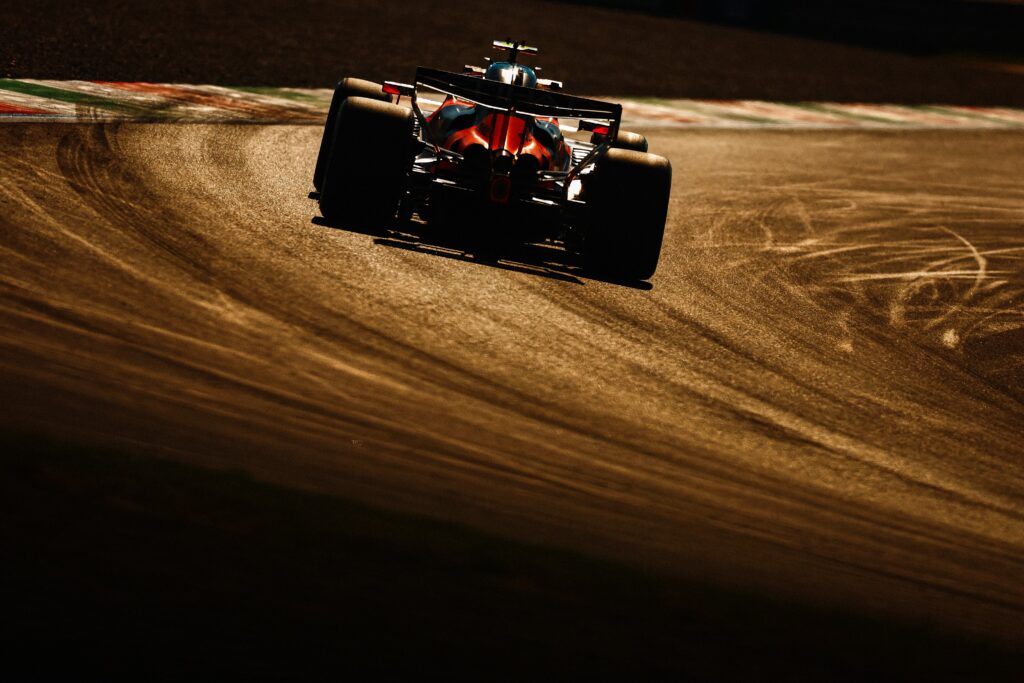
- The AMR24 silhouetted on the long back straight under the late-afternoon sun, livery contrast at its absolute peak.
- The on-board shot through the stadium section, where the helmet sits perfectly framed by the halo and the green of the chassis.
- The post-race pit-lane walk, helmet under arm, team in conversation — the kind of unposed image that becomes iconic only with hindsight.
Why these matter for collectors
A full-size 1:1 replica helmet is not just an object; it is a frozen reference to specific moments in a driver’s career. The Miami weekend gave Alonso fans several such moments. Displayed on a lit plinth, with a printed photograph of the corresponding race weekend alongside, an Alonso replica helmet from this era becomes a small museum exhibit — a tangible piece of the story this team is still writing. These pieces are display and collector items, exhibition-quality replicas intended for showcases and shelves, not for any form of protective use.
The bigger picture for Aston Martin
Stepping back from a single weekend, Miami matters because it reframes the conversation around Aston Martin. Instead of asking what has gone wrong, paddock observers can now ask what has started to go right — and that is a much more productive question. The team’s long-term project, with the new factory complete and the wind tunnel coming online, was always built around a multi-year arc. Miami is a small but useful waypoint on that arc.
For Alonso specifically, the weekend reaffirmed something his fans have known for a long time: when the car gives him even a fraction of what it should, he extracts every last point available. The emerald helmet flashing through Miami’s neon-soaked corners was a reminder that the Spaniard remains one of the most complete operators on the grid, and that any team building around him has a centrepiece worth designing the rest of the project around.
“When the balance comes to you, the helmet stays still and the lap times come on their own.”
— Paddock observation, Miami weekend
FAQ
Q: Why is Alonso’s helmet design considered so iconic among collectors?
The combination of the emerald green shell, the blue centre band referencing his Asturian roots and the yellow signature accents has remained recognisable across two decades and multiple teams. That continuity makes it a particularly compelling subject for a full-size 1:1 display replica.
Q: What did Miami specifically prove about the AMR24?
It showed that when the car is operated inside its preferred setup window, it is competitive in the upper midfield. The remaining work is widening that window so the same performance is repeatable on circuits with very different characteristics.
Q: Are the helmets you offer suitable for track or road use?
No. Every piece in our catalogue is a display and collector replica, exhibition-quality and full-size 1:1 scale. They are intended for shelves, plinths and display cases, not for any form of protective or wearable use.
Q: What makes a Miami-era Alonso replica especially attractive for a collection?
The visual contrast between the Aston Martin livery, the Miami circuit backdrop and Alonso’s personal helmet palette produced unusually photogenic imagery. A replica from this era pairs naturally with prints, scale models and other memorabilia from the weekend.
Q: How should I display a 1:1 replica helmet to do it justice?
A dedicated display case with neutral lighting from above and slightly behind the helmet works best. A matte black or dark wood plinth lets the green tones of the shell come forward, and a small printed reference photograph of the relevant race weekend completes the exhibition feel.
Shop Fernando Alonso Collection
Display and collector replicas only. Not certified for protective use. Full-size 1:1 scale.
This article was written with the help of AI tools. Editorial policy