
Blog
McNish Reflects on His First Weekend as Audi Racing Director: A Debut Defined by Livery, Vision and Display-Worthy Drama
 123Helmets Editorial Team
McNish Reflects on His First Weekend as Audi Racing Director: A Debut Defined by Livery, Vision and Display-Worthy Drama
Allan McNish stepped into his new role as Audi Racing Director with the eyes of the paddock fixed firmly on him. From the first installation lap to the chequered flag, the weekend offered a fascinating preview of how the German marque intends to present itself when it formally enters Formula 1 — and for collectors, the helmet and livery cues on display already hint at one of the most anticipated visual identities in modern motorsport history.
Key Takeaways
Allan McNish’s debut weekend as Audi Racing Director set the tone for the brand’s F1 visual identity.
Helmet liveries and team colours offered early clues for collectors tracking the Audi project.
Podium visuals and paddock imagery delivered several display-worthy moments worth archiving.
The weekend confirmed Audi’s intent to build a coherent design language across cars, suits and helmets.
A Debut Weekend Loaded With Symbolism
When Allan McNish walked through the paddock for the first time wearing the title of Audi Racing Director, the weekend immediately took on a different texture. The three-time Le Mans winner is no stranger to high-pressure environments, but stepping into a leadership role for one of the most ambitious manufacturer entries of the decade is a chapter unlike any in his career. His presence on the pit wall, headset on, clipboard in hand, was the kind of image that instantly becomes part of the historical record of a team’s formation years.
For collectors and observers focused on the visual storytelling of Formula 1, McNish’s debut was more than a personnel update. It was the first chance to read the room — to see how Audi’s body language, branding cues, hospitality presentation and trackside imagery would translate into the moving theatre of a Grand Prix weekend. Every detail mattered, from the tone of grey on the engineering shirts to the subtle nods toward the four-rings heritage that has shaped Audi’s motorsport pedigree across rallying, Le Mans and DTM.
Why this weekend matters for the wider Audi narrative
McNish himself acknowledged that the role is as much about culture as it is about competition. A racing director in the modern era must align engineering ambition with brand storytelling, and few manufacturers understand that interplay better than Audi. The weekend served as a soft launch of sorts — not of a car, but of an attitude.
Helmet Details That Caught the Collector’s Eye
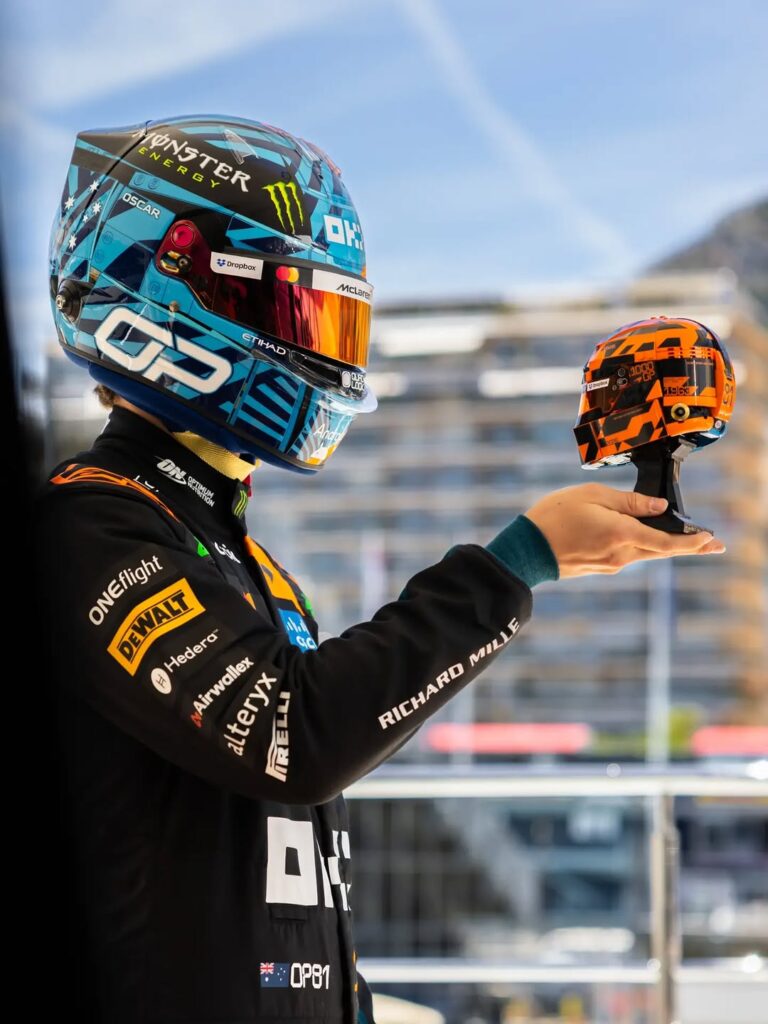
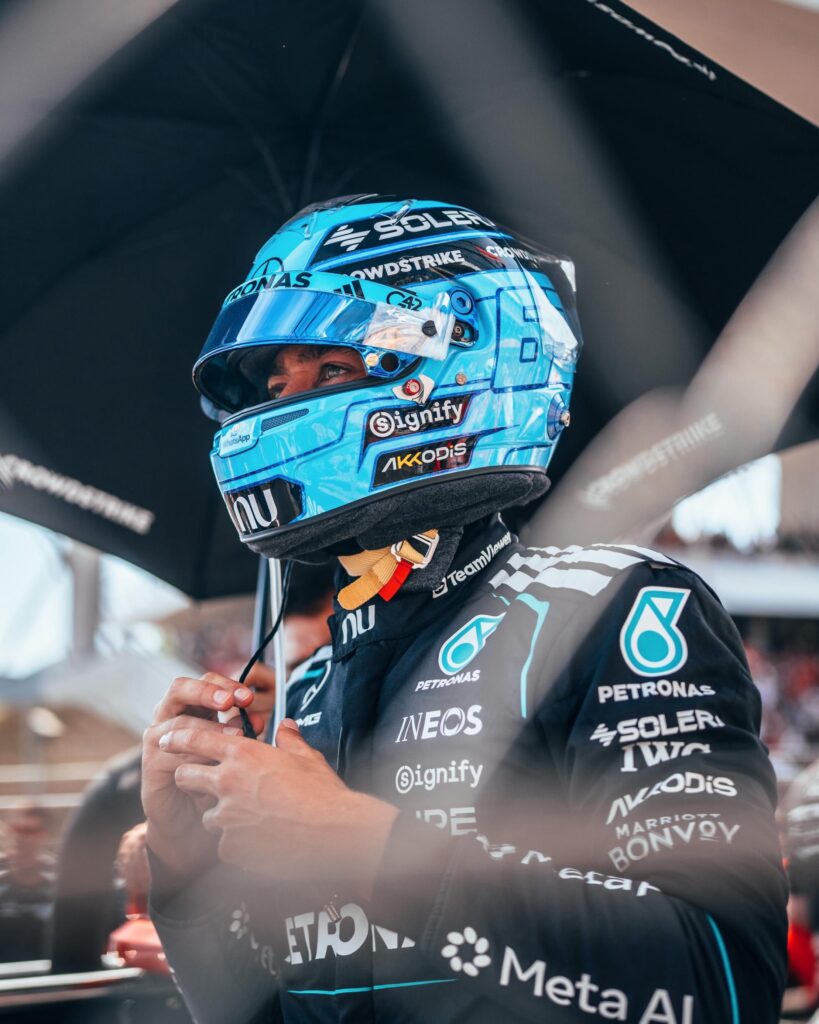
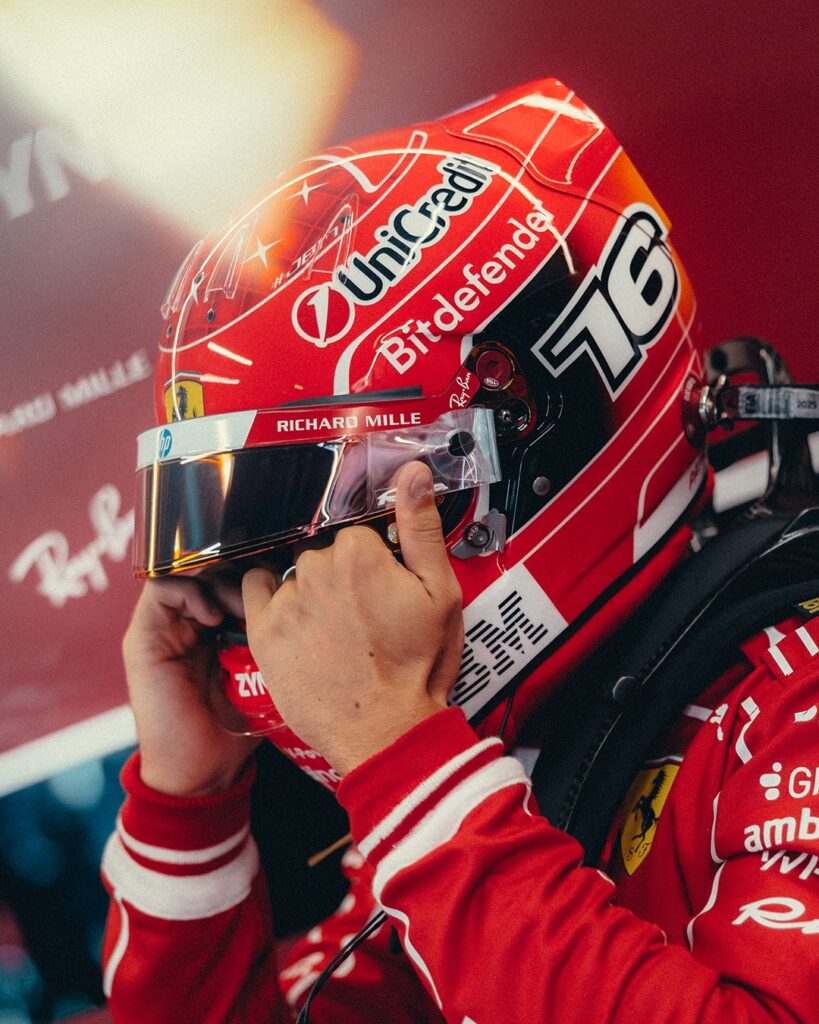
For those of us who study Formula 1 through the prism of helmet design, a weekend like this is a treasure trove. Helmets are the most personal canvas in motorsport, and the way drivers and key personnel choose to present themselves during transitional periods often produces the most memorable display pieces in any private collection.
Subtle nods and evolving identities
Across the paddock, several helmets carried understated tweaks — refined chrome accents, deeper matte finishes, and carefully placed sponsor relocations that hinted at upcoming livery shifts. These are precisely the kinds of details that make a full-size 1:1 collector replica come alive on a shelf. A helmet from a transitional weekend tells a richer story than one from a stable, mid-season race; it captures a brand and a driver in motion, mid-evolution.
What collectors should be watching
Look for the introduction of new typography on visor strips, the reappearance of heritage-inspired stripe patterns, and the way light interacts with metallic flake paints under the floodlights of the pit lane. Each of these elements becomes a fingerprint that distinguishes one season’s display replica from another. Serious collectors often build their shelves chronologically, and weekends like McNish’s debut create natural anchor points in that timeline.
Audi has not yet revealed its full driver line-up branding, but the visual cues circulating in the paddock suggest a design language built around precision, restraint and a deliberately Germanic minimalism — qualities that translate beautifully into exhibition-quality helmet replicas.
Livery Clues and the Visual Language of a New Era
The livery conversation surrounding Audi has been one of the most discussed topics in Formula 1 design circles. While the full competition livery remains under wraps, the weekend offered a steady drip of clues: hospitality wraps, garage signage, pit-crew apparel and the subtle colour palette chosen for the team’s media backdrops. McNish, when asked about the visual identity, was characteristically measured, emphasising that the brand wants its presence to feel inevitable rather than loud.
From silver arrows to a new chapter
Audi sits within a lineage of German motorsport aesthetics that includes the legendary silver arrows of the pre-war era and the dominant Le Mans prototypes of the 2000s. The challenge — and opportunity — for the F1 project is to honour that heritage without appearing derivative. Early indications suggest a palette built on deep anthracite, brushed silver, and accents of red that recall the Audi Sport tradition.
Why this matters for display collectors
Liveries are the connective tissue between a team’s cars, suits and helmets. When a manufacturer commits to a coherent design language, it elevates every collectible associated with the era. A full-size 1:1 replica helmet that visually harmonises with team imagery becomes far more than an object — it becomes a piece of curated design history. The McNish weekend was, in essence, the first public draft of that harmony.
Podium Visuals and Display-Worthy Moments
Even though Audi is not yet competing, the weekend produced a wealth of imagery that collectors and historians will revisit. McNish on the pit wall during qualifying, the team principals exchanging glances after a strategic call, the engineers framed against the muted lighting of the garage — these are the moments that become poster prints, archival photographs and the visual references for future replica releases.
The choreography of a modern paddock
Modern Formula 1 is a meticulously choreographed visual product. From the angle of the podium cameras to the placement of brand logos on the cool-down room walls, every frame is engineered for impact. McNish’s first weekend benefited from this choreography, with Audi’s understated presence cutting through the noise precisely because it refused to compete with it.
Moments that will endure
Several images from the weekend already feel destined for the long memory of the sport: McNish in conversation with senior engineers near the timing screens; the quiet handshake on the grid before lights out; the team’s hospitality area glowing softly against the evening sky. These are the vignettes that, in time, will inspire the kind of detailed dioramas and display setups that collectors build around their full-size 1:1 helmet replicas.
McNish’s Voice: Calm, Considered, Strategic
What stood out across McNish’s media appearances was the tone. There was no overpromising, no theatrical gestures, no manufactured rivalry. Instead, the Scotsman spoke with the calm cadence of someone who has won at the highest level and understands that championships are built across years, not weekends. He emphasised process, people and patience — three words that may end up defining Audi’s early F1 chapter.
Leadership translated into visual identity
Leadership style often bleeds into a team’s aesthetic. Calm, methodical leaders tend to produce calm, methodical liveries: clean lines, restrained palettes, confident typography. If McNish’s tone is any indication, collectors can expect Audi’s eventual on-track presentation to lean into clarity rather than flamboyance — a quality that ages exceptionally well on a display shelf.
Echoes of his Le Mans years
Anyone who followed McNish’s Le Mans triumphs will recognise the throughline. Those Audi prototypes were beautiful precisely because they were unfussy. Their helmets, their suits, their cars all spoke the same visual dialect. If that philosophy carries into the F1 era, the resulting collectibles will sit comfortably alongside the great display pieces of the modern era.
What This Means for the Collector Community
For those building or refining a collection of full-size 1:1 collector replica helmets, McNish’s debut weekend is a useful waypoint. It signals that we are entering a period of meaningful visual evolution in Formula 1 — a time when new identities are forming, established identities are responding, and the helmet, as always, sits at the centre of the storytelling.
Building a collection around eras
Smart collectors think in eras, not just seasons. The arrival of Audi, marked symbolically by McNish stepping into his new role, is the kind of inflection point that defines an era. Display pieces acquired now — whether they reference the current grid, recent champions, or heritage liveries — will gain narrative weight as the Audi chapter unfolds and reshapes the visual context around them.
Curating with intention
The best private displays are curated, not accumulated. They tell a story across decades, capturing rivalries, transitions and aesthetic revolutions. McNish’s weekend reminds us that Formula 1’s visual history is still being written, and that every full-size 1:1 exhibition-quality replica on a collector’s shelf is a chapter in a much larger book.
“You don’t define a project like this in one weekend. You start to feel its shape, its rhythm, and then you build everything else around that.”
— Allan McNish, Audi Racing Director
FAQ
Q: What makes McNish’s debut weekend significant for collectors?
It marks a visible inflection point in Formula 1’s visual identity, with early Audi branding cues offering hints at future livery and helmet design directions worth tracking for display collections.
Q: Are there any official Audi F1 helmets available yet?
No official competition helmet livery has been revealed. Collectors should focus on current full-size 1:1 collector replicas while watching for the design language Audi establishes in the lead-up to its full F1 entry.
Q: Why are transitional weekends important in helmet collecting?
Transitional weekends often produce subtle design tweaks — typography, finishes, sponsor placements — that make replicas from those moments uniquely identifiable and historically rich on a display shelf.
Q: How should I display a full-size 1:1 replica helmet?
Use a stable display stand, keep the helmet out of direct sunlight to preserve paint vibrancy, and consider grouping replicas by era or team to build a coherent visual narrative.
Q: Is McNish’s leadership style likely to influence Audi’s visual identity?
Leadership tone often shapes brand aesthetics. McNish’s calm, methodical approach suggests Audi may favour a restrained, precision-led visual identity that translates beautifully into exhibition-quality replicas.
Explore full-size 1:1 collector replica helmets inspired by Formula 1’s most iconic eras and start curating a display worthy of the sport’s next great chapter. Browse F1 Helmet Collection.
Display and collector replicas only. Not certified for protective use. Full-size 1:1 scale.
This article was written with the help of AI tools. Editorial policy