
Blog
Newey Quality That Keeps Aston Martin Believing
 123Helmets Editorial Team
One point from seven rounds. Second from last in the constructors’ championship. By any measure, Aston Martin’s 2026 season has been a painful shock. Yet inside the team, faith in Adrian Newey remains steady — and the reasons why tell a story worth owning on your display shelf.
Key Takeaways
Aston Martin has scored just 1 constructor point through the first 7 rounds of the 2026 F1 season, placing them second from last above only Cadillac.
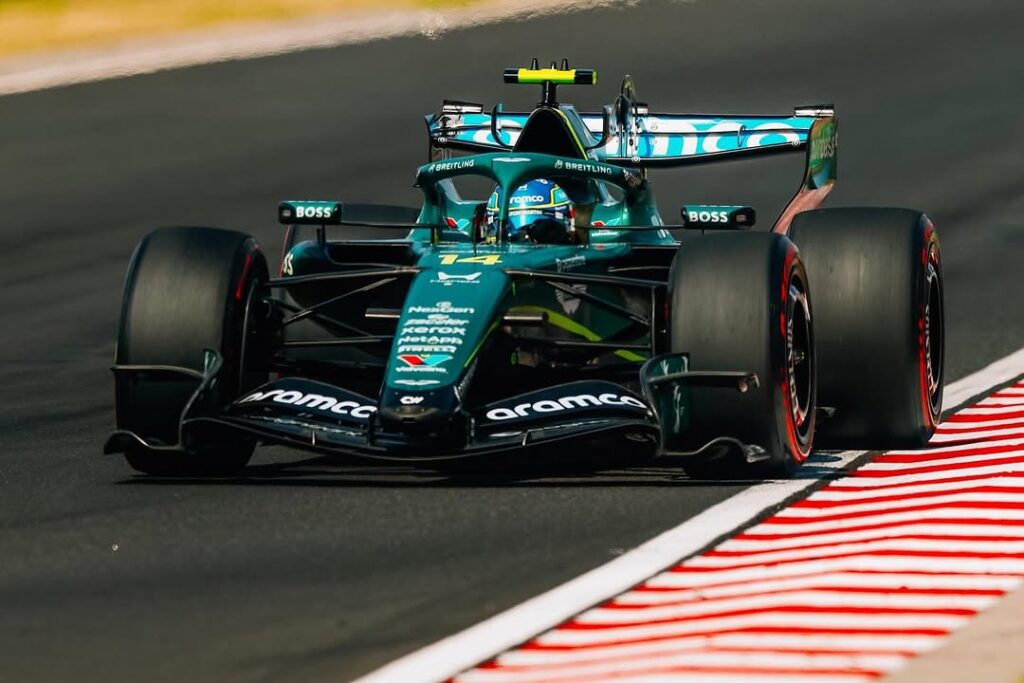
Fernando Alonso described the AMR26 as having ‘the worst car and the worst engine’ in F1 after qualifying last at the 2026 Barcelona Grand Prix.
Pedro de la Rosa, Aston Martin’s ambassador, raced Newey-designed McLarens in the mid-2000s and says the core qualities that made Newey legendary are unchanged.
The AMR26 era is already a defining chapter in Aston Martin’s modern F1 history — one that collectors and heritage fans will want documented on their shelves.
One Point, Seven Rounds, Zero Excuses
After 7 rounds of the 2026 Formula 1 season, Aston Martin holds a single constructors’ championship point — a number that makes the team’s pre-season ambitions look like a different sport entirely. The only team behind them in the standings is Cadillac, a brand-new entry racing its very first F1 season and expected from day one to occupy the back of the grid.
That comparison alone signals how far the AMR26’s performance has fallen short. Cadillac arrived as a complete newcomer with no inherited infrastructure, no institutional F1 memory, and a development programme counted in months rather than years. Aston Martin, by contrast, came into 2026 with a rebuilt Silverstone campus, a new technical leadership structure, and one of the most celebrated aerodynamicists in the sport’s history sitting at the top of that structure.
The gap between expectation and reality is not a small one to explain away. When a team invests on the scale Aston Martin has invested, one constructors’ point from 7 rounds is not a blip — it is a structural problem that demands honest diagnosis before it can be corrected.
What remains to be separated is cause. The AMR26’s weaknesses appear to stem from at least two distinct sources: a Honda power unit that multiple paddock observers have described as non-competitive in 2026’s new engine formula, and a car concept that may itself carry aerodynamic or mechanical limitations. Disentangling engine penalty from chassis penalty is notoriously difficult mid-season, and Aston Martin has not yet been able to draw that line cleanly in public.
What Alonso Said in Barcelona
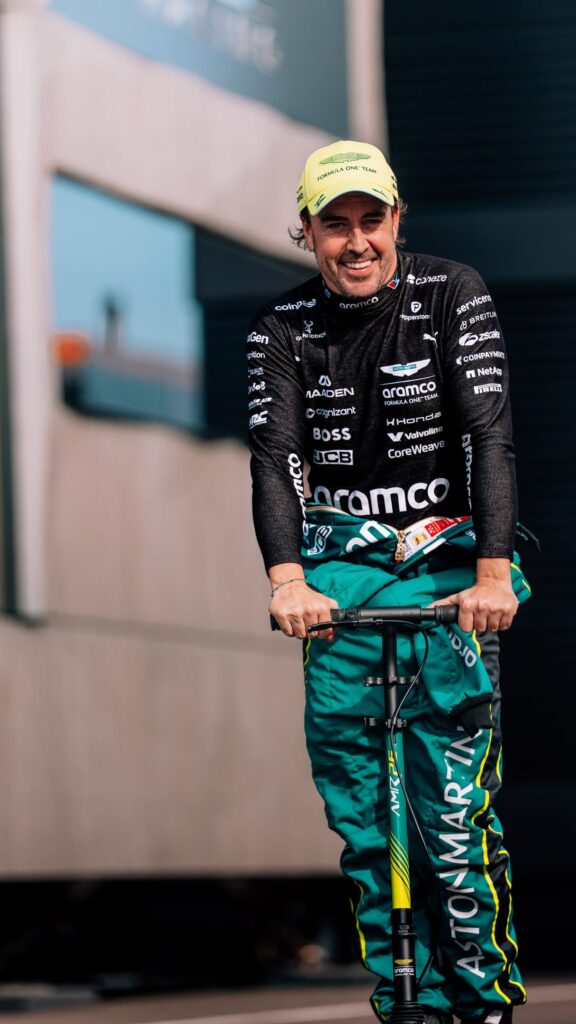
Fernando Alonso stated flatly after qualifying last at the 2026 Barcelona Grand Prix that Aston Martin has ‘the worst car and the worst engine’ in Formula 1. That is not an offhand comment from a frustrated driver venting after a bad session — it is a precise, two-part diagnosis from a driver with 350-plus grand prix starts and two world championships, someone who has raced at the front of the grid and knows exactly what a competitive package feels like from the inside.
Alonso’s willingness to say it publicly matters for a specific reason: it shifts accountability onto the whole system rather than onto a single session, a single track, or a single weekend’s misfortune. Barcelona is not a power-sensitive circuit by the standards of Monza or Baku. Its 4.657 km layout combines technical corners with medium-speed sections where aerodynamic balance and mechanical grip are the primary differentiators. Qualifying last there is a message about the entire car, not just the straight-line numbers.
For collectors and students of F1 history, Alonso’s bluntness in 2026 carries an echo of other difficult seasons that later became defining turning points. His own 2007 departure from McLaren, his years at Ferrari when the F10 and F150 were genuinely competitive but never quite enough — those chapters are now considered essential parts of the sport’s modern story. The 2026 AMR26 season is writing a chapter of its own, one that the passage of time will place in context.
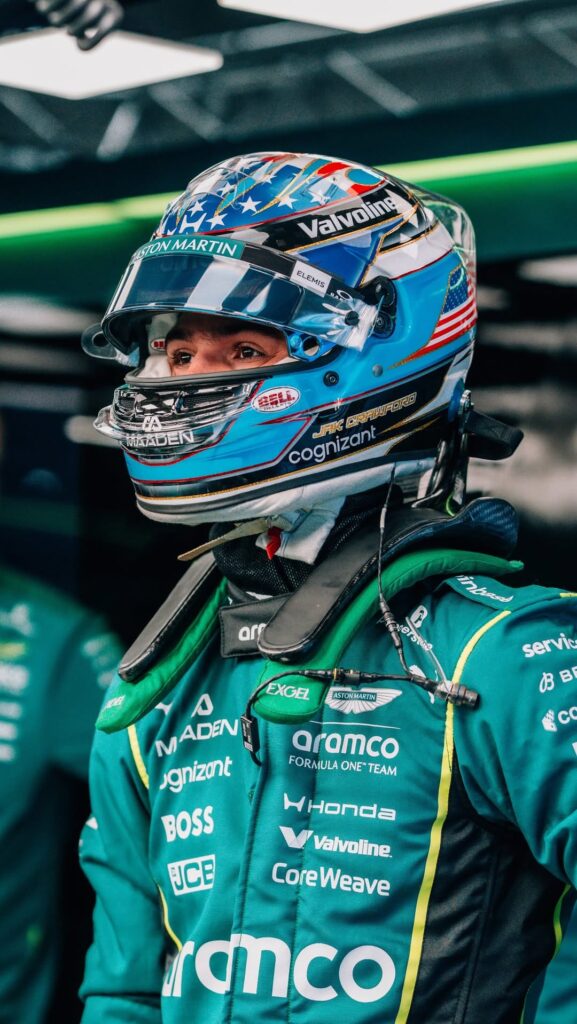
The display replica of an AMR26-era helmet is not a trophy for a championship won. It is a document of a moment in the sport’s history when one of F1’s great designers took on the hardest possible brief — rebuilding a team from the bottom up under a brand-new technical regulation — and the paddock watched to see what would come of it.
Pedro de la Rosa and the Newey Standard
Pedro de la Rosa’s assessment of Adrian Newey carries weight that goes beyond team loyalty: he raced Newey-designed McLarens in the mid-2000s as a test driver and occasional race stand-in, logging competitive laps in cars that were fighting at the absolute front of the grid. His read on Newey is based on direct mechanical experience, not press release language.
De la Rosa’s position as Aston Martin’s ambassador in 2026 means he operates inside the team’s culture while also serving as a communicator to the outside world. When he says Newey’s core qualities remain unchanged, he is drawing on a reference point that most people in the paddock do not have: the feel of a Newey car from the cockpit, across multiple seasons and multiple regulation changes.
What those qualities are is worth stating precisely. Newey’s reputation across his tenures at Williams, McLaren, and Red Bull is built on three things: an instinctive grasp of aerodynamic packaging that allows him to find performance where others see constraint, a willingness to pursue unconventional solutions rather than iterating on the consensus approach, and a long time horizon — his best cars tended to improve sharply across a season and then dominate the following year once the underlying concept was fully understood.
That third quality is the one Aston Martin is banking on in 2026. The AMR26 in its current form is not competitive. But a car shaped by Newey’s instincts, running on a regulation set that is itself still very new, may look different by round 15 or round 20 than it does after round 7. That is not a guarantee — but it is a historically grounded reason not to write off the project yet.
For the collector market, the Newey dimension adds a specific layer of significance to any AMR26-era piece. Newey has been associated with championship-winning cars at three different constructors across four decades. A full-size 1:1 display replica helmet from the season he began rebuilding Aston Martin is, by definition, part of that long record — whether the 2026 car wins races or not.
The AMR26 in the Context of Aston Martin’s F1 History
Aston Martin’s return to Formula 1 as a constructor — under the Aston Martin name — is itself a recent chapter: the team raced as Racing Point until the end of 2020 before relaunching with the green livery and full Aston Martin branding from 2021 onwards. That relaunch was driven by Lawrence Stroll’s investment and a clear ambition to turn a midfield team into a regular front-runner within a defined number of seasons.
The infrastructure investment at Silverstone has been documented publicly and is not small. A new wind tunnel, expanded factory space, and an engineering headcount that has grown substantially since 2021 represent a long-term commitment to the project. Adding Newey to that structure in the spring of 2025 — ahead of the 2026 regulation change — was timed deliberately: new aerodynamic regulations reset the competitive order to some degree, and having Newey shaping the first-generation car under those rules was seen as a structural advantage.
The 2026 regulations are genuinely new. The power unit formula changed significantly, with a new hybrid architecture that shifted the balance between internal combustion and electrical output. Aerodynamic rules were revised in parallel. Teams that misjudged either element — or, as appears to be Aston Martin’s situation, found their engine partner underdelivering — entered 2026 at a serious disadvantage that is difficult to recover from in-season.
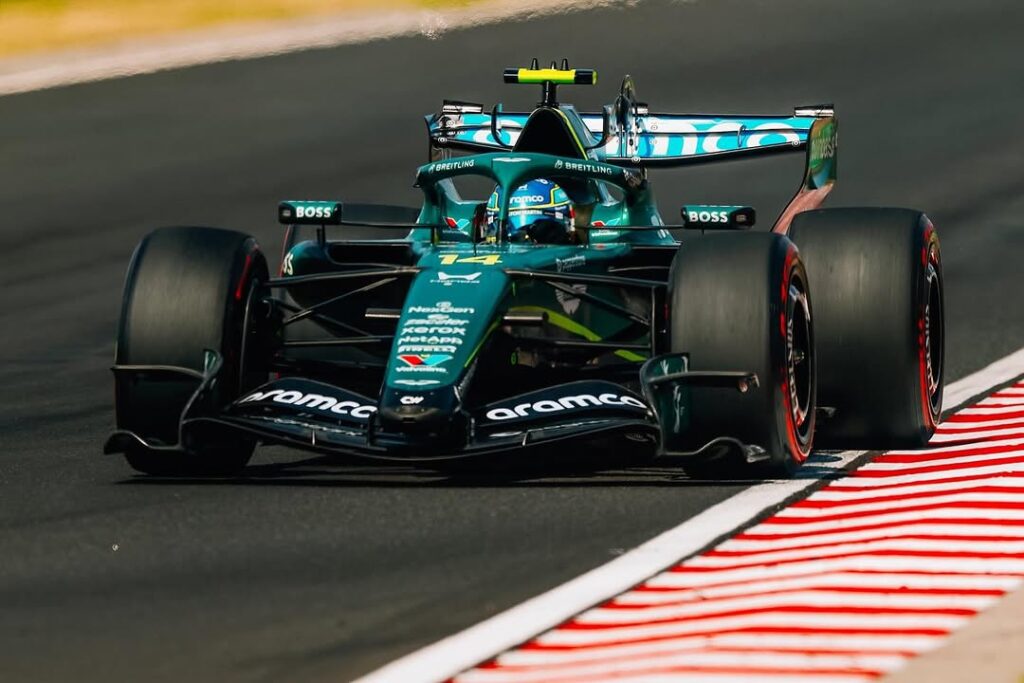
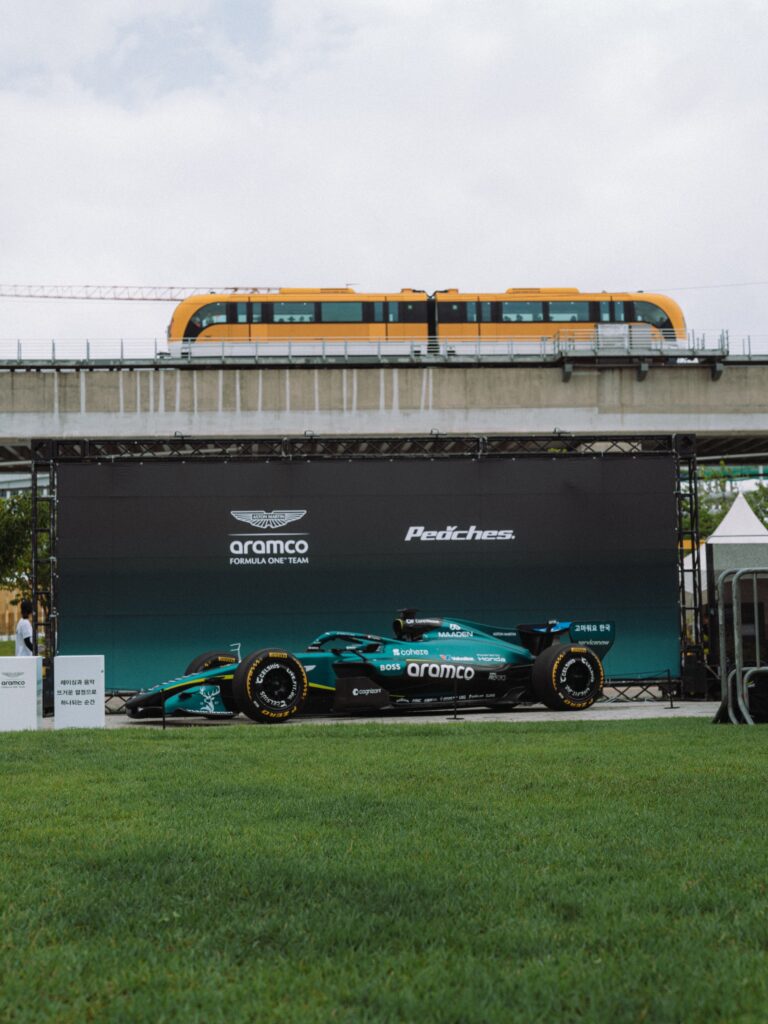
The green livery of the AMR26, whatever its on-track results, is already a collector’s reference point. Display replicas produced at 1:1 full-size scale from this season capture a specific moment: the first Newey-era Aston Martin, running under rules that will shape the sport for years, fighting through a difficult opening chapter that the team believes is temporary. Helmets worn by Alonso and his teammate during this season carry the weight of that context on every visible surface.
Why Difficult Seasons Produce the Most Collectible Pieces
The most compelling display replicas in F1 helmet collecting are rarely from clean, dominant championship seasons — they come from seasons defined by struggle, transition, or historical significance. A driver fighting at the back of the grid in a car they publicly called the worst in the paddock, in the first season shaped by a designer with Newey’s record, is a combination that produces pieces with long-term narrative value.
Consider the parallel with other challenging seasons in F1 history. McLaren’s 2017 partnership with Honda produced some of the most documented and discussed helmets of that era — not because the cars won, but because the story around them was so charged. Alonso’s own frustration in those years became part of F1’s popular memory in a way that a routine midfield season never would.
The 2026 AMR26 season already has that quality. The gap between the team’s stated ambition — built on real investment, real talent, and a historically significant hire — and the actual results creates exactly the kind of narrative tension that makes a season worth owning a piece of. Full-size 1:1 display replicas of helmets from this season are exhibition-quality collector items, not protective equipment, but their value as historical documents is built in from the moment the season began.
De la Rosa’s confidence in Newey, Alonso’s blunt assessment of where the car stands, the single constructors’ point after 7 rounds — these are not embarrassing footnotes. They are the detail that gives a display piece its story. Collectors who understand F1 history know that the difficult chapters are the ones people return to, study, and want represented on their shelves.
Where This Season Sits in the Long Record
Adrian Newey’s first championship as a lead designer came with Williams in 1992. His Red Bull years produced four consecutive titles from 2010 to 2013. A first season at a new team, under a new regulation set, with an underpowered engine, sitting second from last after 7 rounds — that is not the end of the story. It is, by any reading of Newey’s career, closer to the beginning of one.
Aston Martin’s belief in that reading is what keeps the team’s internal confidence stable while the external results remain poor. Whether that belief is vindicated in 2026 or requires another season to materialise, the AMR26 era is already a chapter in the sport’s history that will be referenced for years. A full-size display replica helmet from this season belongs on any serious F1 collection shelf precisely because of what it represents: the opening move in a project that everyone in the paddock is watching.
“The worst car and the worst engine in F1.”
— Fernando Alonso, after qualifying last at the 2026 Barcelona Grand Prix
“Aston Martin’s confidence in Newey remains unshaken.”
— Pedro de la Rosa, Aston Martin ambassador, 2026
FAQ
Q: How many points has Aston Martin scored in the 2026 F1 season?
Aston Martin has scored 1 constructors’ championship point through the first 7 rounds of the 2026 F1 season, placing them second from last above only Cadillac.
Q: What did Fernando Alonso say about the AMR26 after Barcelona qualifying?
Alonso stated that Aston Martin has ‘the worst car and the worst engine’ in F1 after qualifying last at the 2026 Barcelona Grand Prix — a two-part diagnosis covering both the chassis and the Honda power unit.
Q: When did Adrian Newey join Aston Martin?
Adrian Newey joined Aston Martin in the spring of 2025, ahead of the 2026 regulation change, timing his arrival to lead the team’s technical programme into the new era.
Q: Are Aston Martin AMR26 display helmets certified for use on track?
No. Full-size 1:1 scale replicas of AMR26-era helmets from 123Helmets.com are collector and display pieces only. They are exhibition-quality items, not certified for protective use of any kind.
Q: Why do difficult F1 seasons produce collectible display helmets?
Seasons defined by struggle, historical significance, or a major narrative — like Aston Martin’s 2026 campaign under Adrian Newey’s first year — tend to produce display pieces with long-term collector value because the story around them is more charged than a routine midfield season.
Browse F1 Helmet Collection
Display and collector replicas only. Not certified for protective use. Full-size 1:1 scale.
This article was written with the help of AI tools. Editorial policy