
Blog
Inside the F1 Driver Bubble: Aston Martin’s Race Engineer
 123Helmets Editorial Team
A race engineer is the single voice in a driver’s helmet during a Grand Prix weekend, translating a mountain of data into the split-second calls that decide 2026 championship points. At Aston Martin, Head of Performance Optimisation Ben Michell has spent the season building that trust from the inside of the team’s own driver bubble.
Key Takeaways
A race engineer is the primary link between an Aston Martin driver and the wider strategy and performance group during every session of a Grand Prix weekend.
The 2026 calendar runs to roughly 24 Grand Prix weekends, each built around three practice sessions, qualifying and the race itself.
Trust between driver and engineer is built over repeated race weekends, not a single lap, according to Aston Martin’s Ben Michell.
Podium and grid moments captured in helmet and livery detail are among the most collected images from any Aston Martin race weekend.
What Is an F1 Race Engineer?
A race engineer is the team member who sits on the pit wall and speaks directly to the driver over team radio throughout every practice, qualifying and race session. The role sits at the centre of what modern Formula 1 teams describe as the driver’s “bubble” — a small group built around one driver inside an organisation that can run to several hundred staff. Aston Martin, like every team on the 2026 grid, fields two cars across a season built around roughly 24 Grand Prix weekends, and each car has its own race engineer working alongside strategists, performance engineers and mechanics.
Every one of those weekends follows the same basic shape: three practice sessions, a qualifying hour and the Grand Prix itself, usually spread across three days at the circuit. The race engineer is the constant across all of it, the person who reads live timing, tyre data and fuel numbers back to the driver in real time and who is trusted to make the final call on strategy questions that can only be answered in seconds.
Ben Michell on Building the Aston Martin Bond
Trust between a driver and race engineer is built race weekend by race weekend, not manufactured overnight. As Aston Martin’s Head of Performance Optimisation, Ben Michell works inside that inner circle and describes the relationship as one that has to survive pressure, mistakes and disagreement over a full season before it becomes reliable under race conditions.
That means the engineer has to understand not just lap time data but how a driver reacts under stress — whether they want more information on a restart lap or less, whether they prefer a blunt strategy call or a fuller explanation. None of that is written in a manual; it is learned across dozens of sessions, debriefs and long evenings going through data after a Grand Prix has finished.
Radio Calls and Data: The Weekend Workflow
The race engineer’s weekend workflow runs from the first lap of Friday practice to the final radio message after the chequered flag. In practice sessions the engineer is comparing sector times, tyre degradation and setup changes lap by lap; in qualifying the conversation tightens to fuel loads, track evolution and the exact out-lap needed to hit a flying lap at the right moment; in the race itself, calls on pit windows, undercuts and tyre compounds are relayed in seconds, often while the driver is still on a flying lap themselves.
Behind every one of those radio calls sits a strategy group processing timing screens, weather data and rival team behaviour in real time. The race engineer is the filter between all of that information and the driver, deciding what needs to be said immediately and what can wait until the car is back in the garage.
Helmets, Livery and the Aston Martin Look on Track
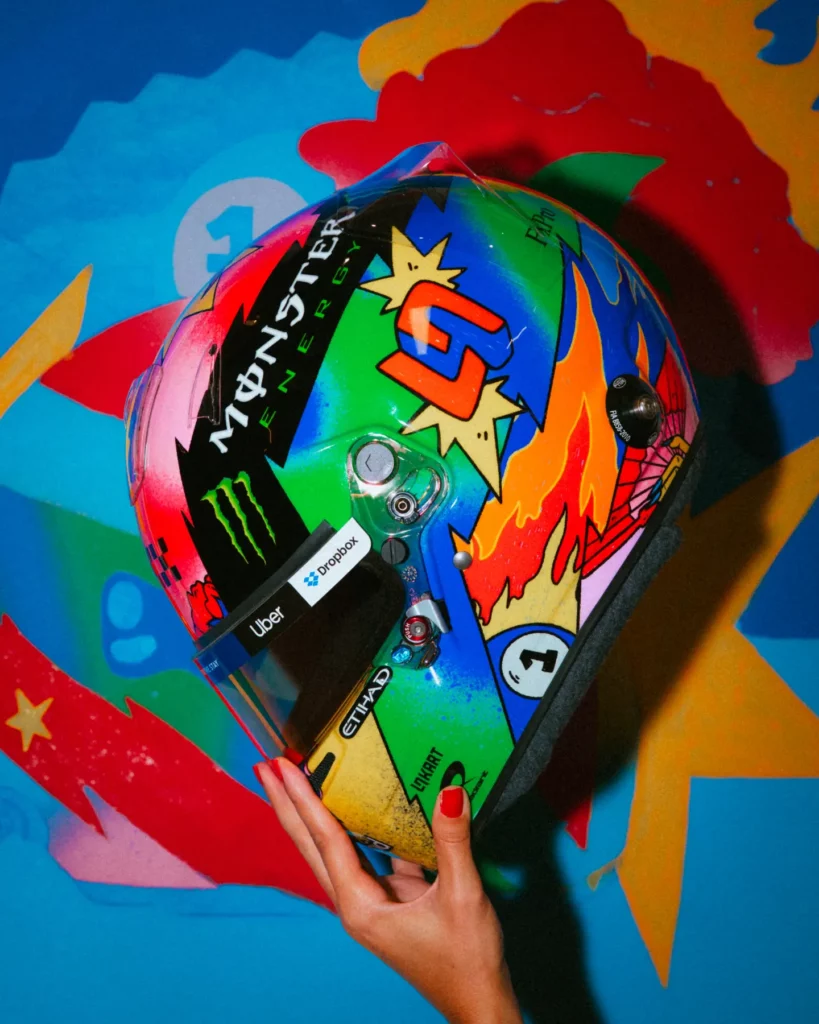
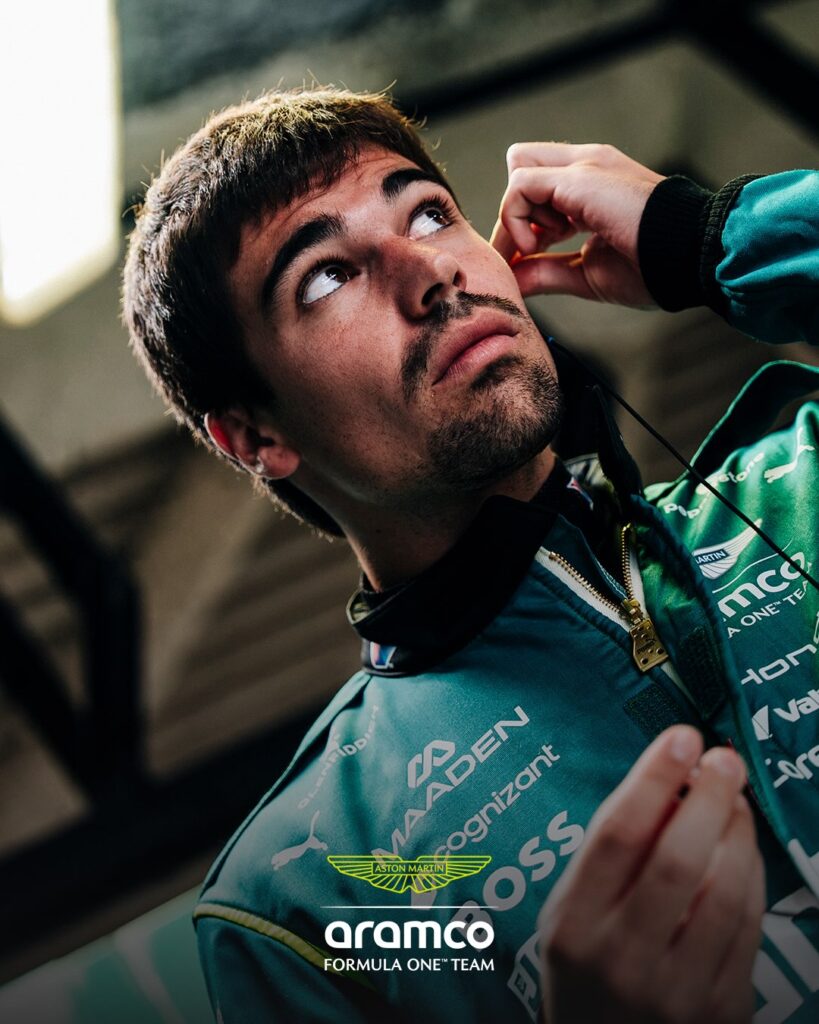
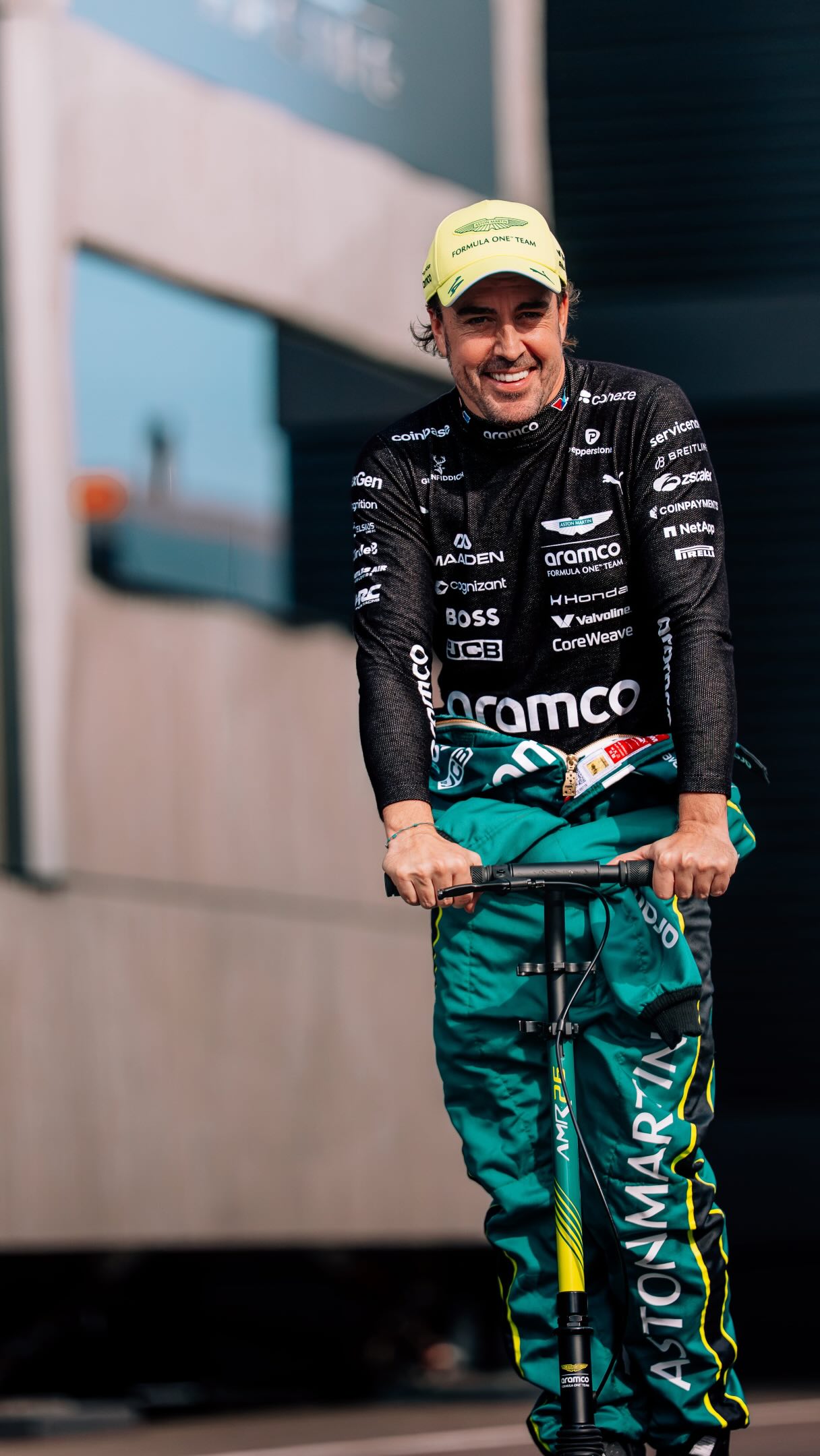
The visual identity built around an Aston Martin driver on a Grand Prix weekend extends from the car’s livery to the helmet design each driver runs that season. Fernando Alonso and Lance Stroll have carried variations on Aston Martin’s green identity through recent seasons, with helmet graphics that echo the car’s colourway from the pit lane to the podium.
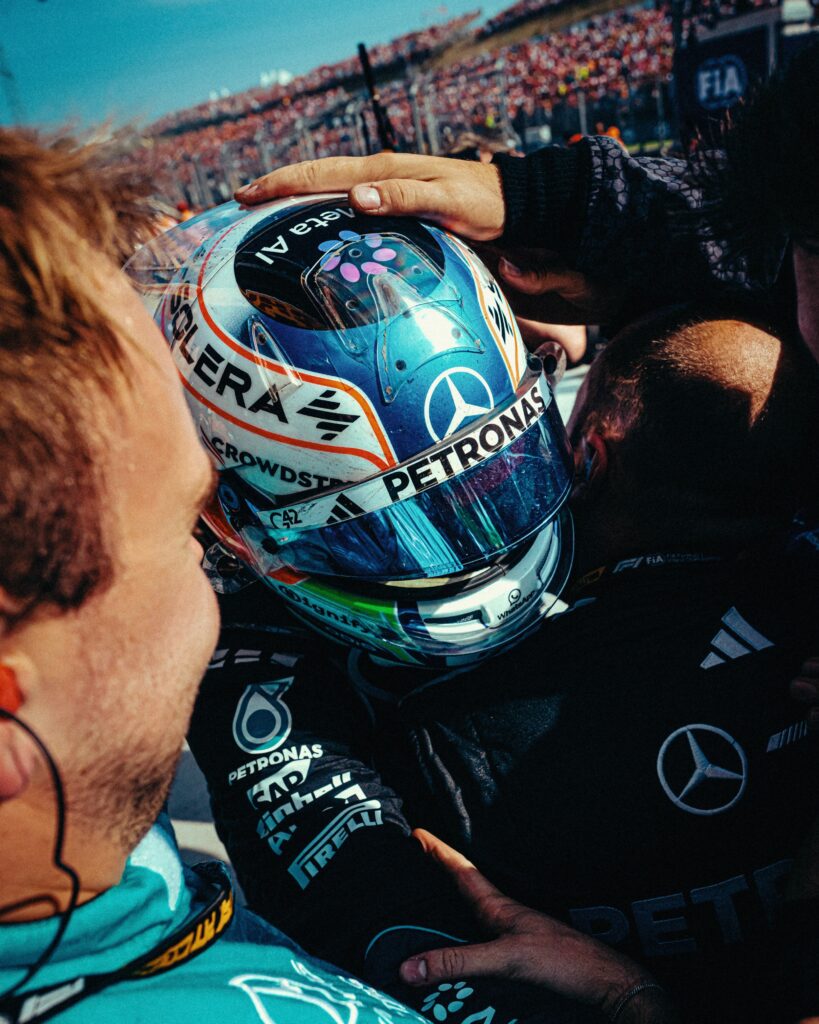
Those helmet and livery details become some of the most recognisable images from any Aston Martin weekend — the moment a driver climbs from the cockpit after a strong result, visor up, the green and helmet graphics catching the light for photographers. It is exactly the kind of frame that gets collected and displayed long after the race weekend itself is over.
Why This Relationship Shapes the 2026 Title Fight
The driver-engineer relationship matters most when a season is close, because the margin between points positions is often decided by calls made in seconds rather than car performance built over months. With ten teams and twenty drivers competing across the 2026 calendar, small errors in strategy communication can cost positions that are difficult to recover once track position is lost.
Aston Martin’s approach, as described by Ben Michell, treats the engineer-driver bond as a performance factor in its own right — something the team works on deliberately rather than leaving to chance. A driver who trusts the voice in their helmet is more likely to commit to a call under pressure, whether that is an aggressive undercut or holding position to protect tyres to the flag.
Preserving the Moments That Matter
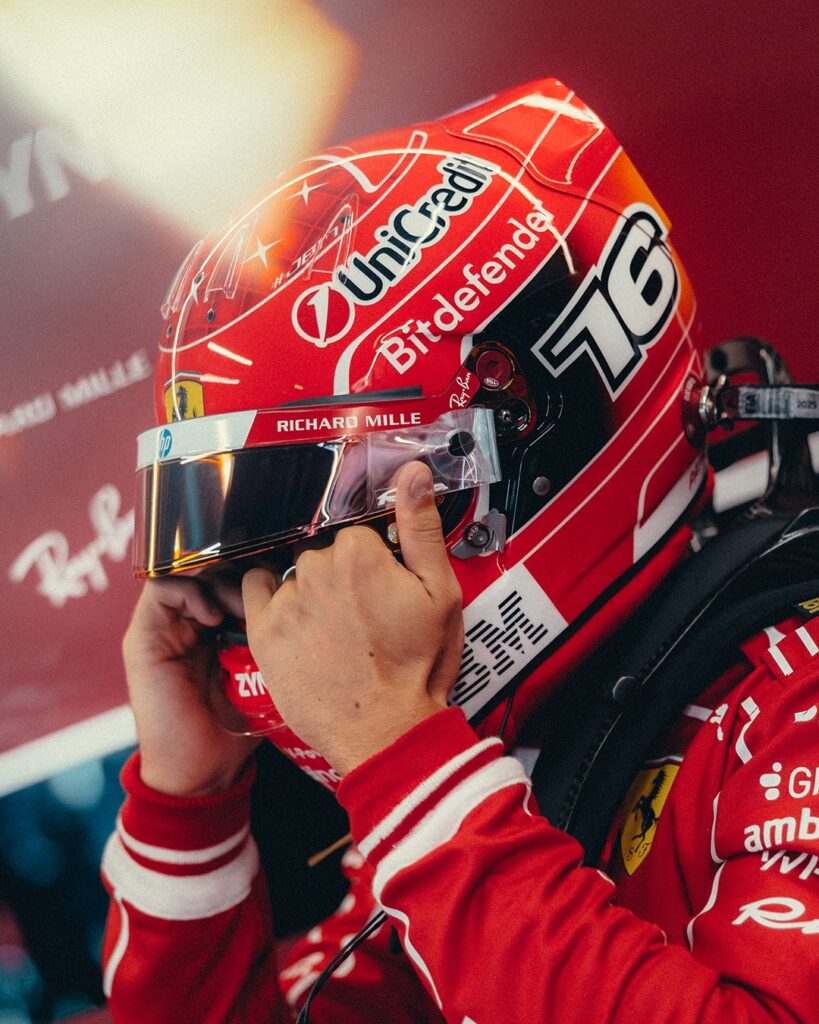
The images that last from a Grand Prix weekend are usually the ones built around the driver and their helmet — the grid walk, the podium, the cool-down room. Those moments are the product of everything happening inside the bubble described above: the race engineer’s calls, the strategy group’s data and the driver’s own execution on track.
For fans following Aston Martin through the 2026 season, those same visual moments are what make a driver’s helmet design worth tracking across a year, from livery reveal through to the final race of the calendar.
“It’s not something you build in one race weekend. You build it across a season, through the good calls and the ones that don’t work out, until the driver trusts what they hear on the radio without needing to ask why.”
— Ben Michell, Aston Martin Head of Performance Optimisation
FAQ
Q: What does a race engineer actually do in F1?
A race engineer is the pit-wall team member who talks directly to the driver over team radio and manages strategy, tyre and fuel calls across every practice, qualifying and race session of a Grand Prix weekend.
Q: Who is Aston Martin’s Head of Performance Optimisation?
Ben Michell holds that role at Aston Martin, working inside the team’s driver-focused performance group alongside race engineers on both cars.
Q: How many Grand Prix weekends are in the 2026 F1 season?
The 2026 calendar runs to roughly 24 Grand Prix weekends, each built around three practice sessions, a qualifying hour and the race itself.
Q: Why is the driver-engineer relationship important for race results?
Because strategy calls on pit stops, tyre compounds and track position are made in seconds during a session, and a driver who trusts their engineer is more likely to commit to a call immediately rather than hesitate under pressure.
Q: Do Aston Martin drivers change helmet designs during the season?
Aston Martin drivers, including Fernando Alonso and Lance Stroll, typically run variations on a core helmet design through the season that echoes the team’s green livery, with special versions for particular Grand Prix weekends.
Browse F1 Helmet Collection
Display and collector replicas only. Not certified for protective use. Full-size 1:1 scale.
This article was written with the help of AI tools. Editorial policy