Blog
Hamilton Belgian GP 2026: ‘Full Responsibility’ for P4
 123Helmets Editorial Team

Lewis Hamilton says he takes “full responsibility” for finishing fourth at the 2026 Belgian Grand Prix, tracing his below-podium result to a Friday practice crash that left his Ferrari SF-26 compromised through qualifying and the race.
Key Takeaways
Hamilton says he takes full responsibility for a fourth-place finish at the 2026 Belgian Grand Prix, tracing it to his own FP3 error.
A late-session crash at Turn 13 in final practice damaged the rear end of his SF-26 and altered its suspension balance for qualifying.
Hamilton estimates the post-repair car was ‘a couple of tenths, maybe three tenths’ slower in qualifying because of the damage.
A 5-second penalty for contact with George Russell at the start compounded the deficit in what he called a ‘domino effect’ from Saturday.
The number 44 Ferrari helmet and SF-26 livery remain sought-after 1:1 display pieces regardless of the on-track result.
What happened to Hamilton in FP3 at Spa
Lewis Hamilton crashed in the closing minutes of final practice at Spa-Francorchamps, carrying too much speed through Turn 13 and sliding across the gravel trap. His Ferrari SF-26 clipped the barrier with the rear-right wheel, leaving the mechanics with a rear-end repair job against the clock before qualifying. The car was rebuilt in time to run, but Hamilton says the team missed a suspension setting during the rebuild, which changed the balance he had been working with all weekend. That single technical detail, rather than raw pace, is what he points to as the root cause of everything that followed on Saturday and Sunday.
For a display collector, the moment is a reminder of how physical these machines are before they ever reach a showroom shelf. A full-size 1:1 SF-26 replica or a Hamilton helmet reproduction is built to the same proportions and finish as the car and lid that took that gravel-trap impact, without the actual battle scars — a static tribute to a weekend that was decided by tenths of a second and a barrel roll through the gravel.
How the FP3 damage cost Hamilton in qualifying
Hamilton estimates the qualifying deficit from the FP3 damage was roughly two to three tenths of a second per lap. “The balance was completely different,” he told Sky Sports after the session. “So that meant I was probably a good couple of tenths, maybe three tenths slower than I should have been in qualifying.” At a circuit like Spa, where the gap between the front three rows can be measured in fractions of a tenth, a three-tenth swing is enough to drop a driver several grid slots and change an entire race strategy.
That qualifying shortfall pushed Hamilton further back on the grid than he and Ferrari had planned, setting up the contact that would define his Sunday. It is exactly the kind of small technical margin that separates a podium helmet from a fourth-place one — and why collectors often want both the winning livery and the near-miss version for a complete season set.
The start incident and the 5-second penalty
Hamilton received a 5-second time penalty for contact with George Russell at the start of the Belgian Grand Prix. Running from a lower grid slot than his raw pace warranted, Hamilton was racing to recover positions in the opening laps when the clash occurred. He described the penalty as harsh but accepted it as part of the chain reaction from his own Friday mistake rather than bad luck. “I don’t count myself unlucky,” Hamilton said. “I think about my mistake that I made yesterday.”
He called the sequence — the FP3 crash, the suspension miss, the qualifying deficit, the grid position, the contact, the penalty — a “domino effect.” It is a rare piece of driver honesty that turns what could have been a frustrating result into a straightforward account of cause and consequence, the sort of narrative that gives a race weekend’s memorabilia its context.
Ferrari’s strategy work behind the P4 finish
Ferrari’s strategy and pit-stop execution helped limit the damage from Hamilton’s grid deficit, according to the driver himself. “The team have been doing a great job with strategy, pit stops,” Hamilton said. “We are continuing to improve the car.” He added that without the FP3 damage, Ferrari’s pace on Sunday looked capable of challenging for the podium, a claim that reflects confidence in the SF-26’s underlying speed rather than any excuse for the fourth-place result.
For fans building a 2026 season display, that distinction matters: the SF-26’s race pace at Spa-Francorchamps is remembered as genuinely competitive, even though the finishing position understates it. A collector replica of the car or helmet from this round captures a weekend where the machinery was quick — even if one driver error on Friday defined the outcome.
Why the Spa helmet and livery still belong on a display shelf
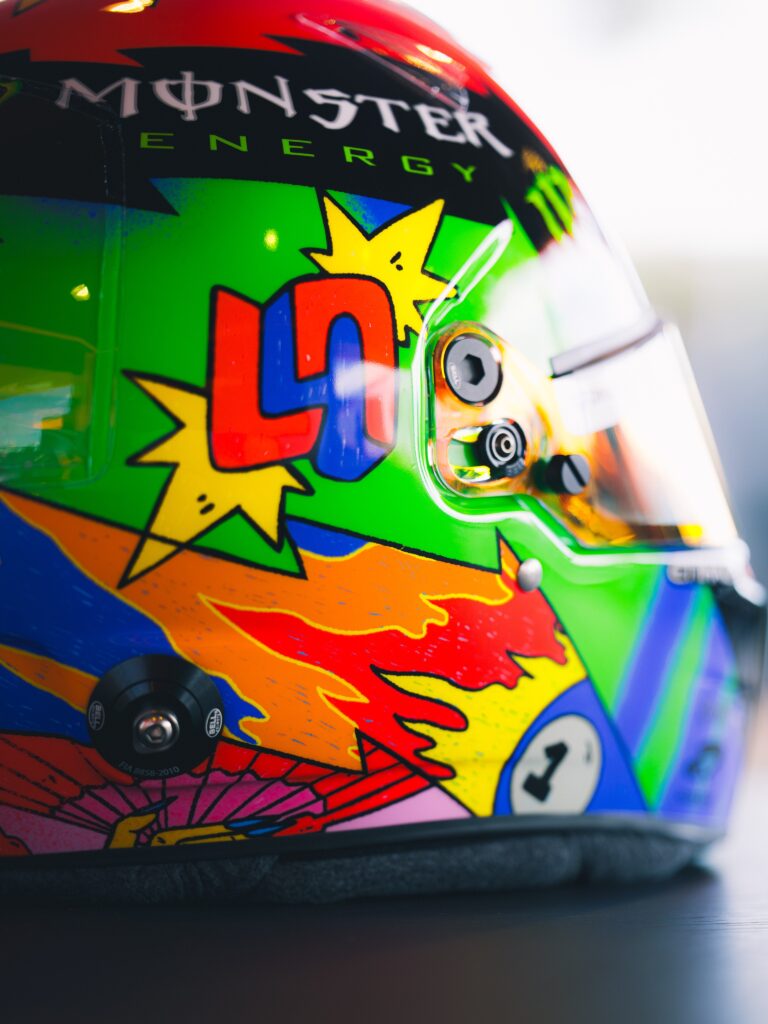
A full-size 1:1 replica of Hamilton’s Belgian Grand Prix helmet is a collector item regardless of where he finished on Sunday. Display pieces built to exhibition quality reproduce the exact shell shape, visor geometry and paint scheme carried into that FP3 session and the race that followed, giving fans a way to own the visual story of the weekend — the SF-26’s red and yellow livery, the number 44 branding, the Spa-specific details — without needing the result to be a win.
Ferrari’s 2026 livery and Hamilton’s helmet design have remained consistent talking points across the season, and a weekend built around a driver publicly owning his mistakes often becomes more memorable, not less, to collectors who value the full narrative arc of a season over a single result.
“I take full responsibility really for the fourth place I ended up getting because I damaged the car.”
— Lewis Hamilton, Ferrari
“So just like a domino effect from a mistake from myself. But the team have been doing a great job with strategy, pit stops.”
— Lewis Hamilton, Ferrari
FAQ
Q: Why did Lewis Hamilton finish fourth at the Belgian Grand Prix?
Hamilton finished fourth after a Friday FP3 crash at Turn 13 damaged his Ferrari SF-26’s rear end, a suspension repair issue then cost him roughly two to three tenths per lap in qualifying, and he was handed a 5-second penalty for contact with George Russell at the race start.
Q: What caused Hamilton’s FP3 crash at Spa?
Hamilton carried too much speed through Turn 13 during final practice, sliding across the gravel trap and clipping the barrier with his rear-right wheel, which damaged the rear end of his SF-26.
Q: How much time did the crash damage cost Hamilton in qualifying?
Hamilton estimates the damage and a suspension setting missed during the repair cost him a couple of tenths, maybe up to three tenths of a second per lap in qualifying.
Q: Did Hamilton think the 5-second penalty was fair?
He called it harsh but said he did not consider himself unlucky, framing the penalty as the final step in a domino effect that started with his own FP3 mistake rather than blaming the stewards’ decision.
Q: Is a display replica of Hamilton’s Belgian GP helmet available?
Yes, full-size 1:1 collector replicas of Hamilton’s 2026 Ferrari helmet and livery are available as exhibition-quality display pieces built to the same proportions and finish as the race-weekend original.
Shop Lewis Hamilton Collection
Display and collector replicas only. Not certified for protective use. Full-size 1:1 scale.