Blog
Top 10 Magic Magyar Moments: 40 Years of Hungarian GP
 123Helmets Editorial Team
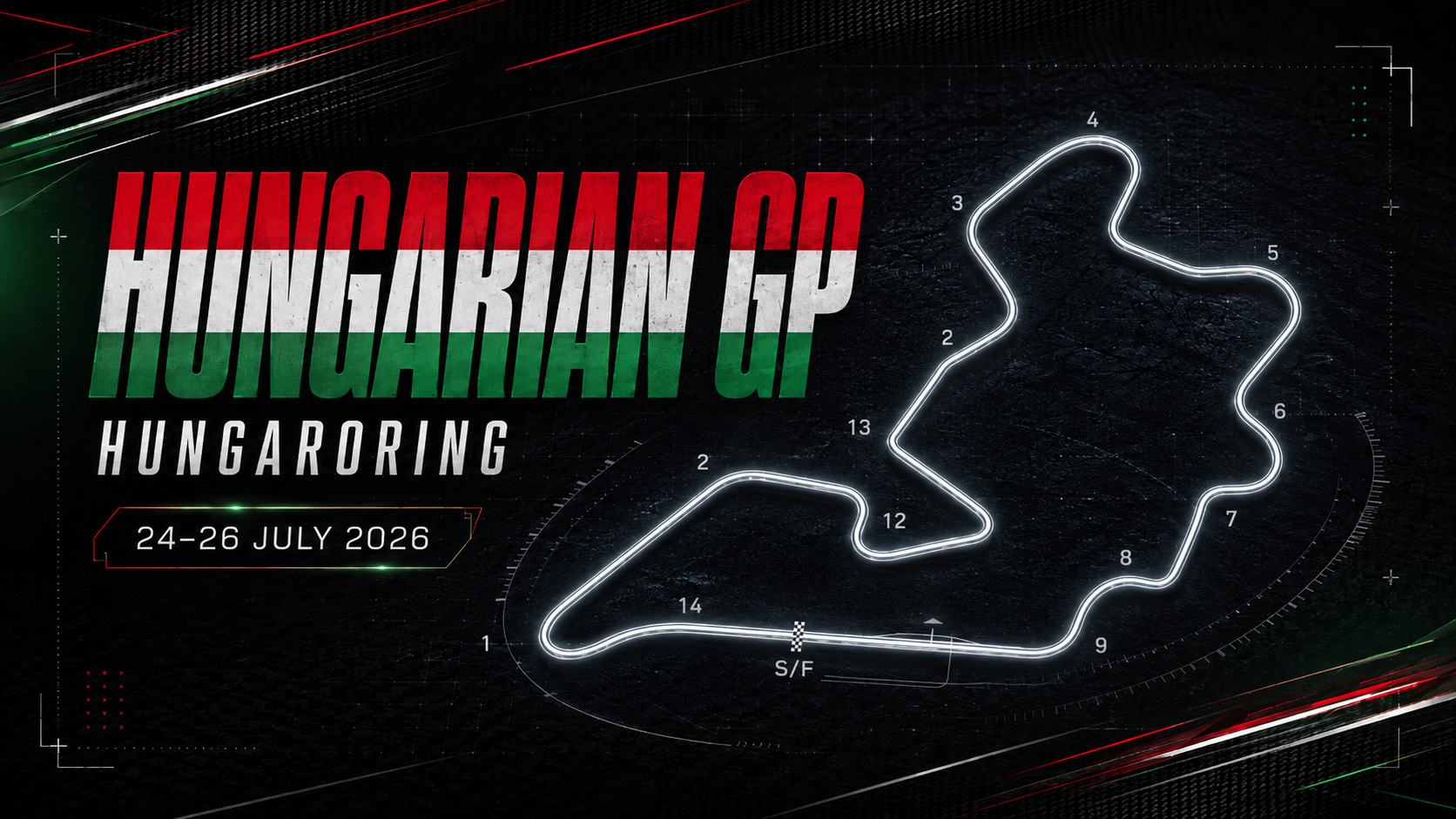
Formula 1 first crossed the Iron Curtain in 1986 when it arrived at the newly built Hungaroring outside Budapest, and four decades on the circuit remains one of the sport’s great theatres for late-race drama. From Nigel Mansell’s audacious pass on Ayrton Senna to Damon Hill’s Arrows heartbreak and Michael Schumacher’s tactical masterclass, the Hungarian Grand Prix has produced moments collectors still chase in helmet and memorabilia form.
Key Takeaways
The Hungaroring opened in 1986, giving Formula 1 its first race behind the former Iron Curtain and starting a 40-year run of dramatic Hungarian Grands Prix
Nigel Mansell qualified 12th in 1989 but passed both Ayrton Senna and Stefan Johansson in one move at Turn 3 to win, three years before clinching his 1992 title at the same track with Williams
Damon Hill led by 34 seconds in a 1997 Arrows before a late hydraulics failure let Jacques Villeneuve pass on the final lap, denying Arrows its only Grand Prix win
Lewis Hamilton is the most successful driver in Hungarian Grand Prix history, and helmets tied to Hungaroring victories remain among the most requested full-size display replicas at 123Helmets.com
Why the Hungaroring matters after 40 years
The Hungaroring became Formula 1’s first venue behind the former Iron Curtain when it hosted its debut Grand Prix in 1986. Built on rolling farmland outside Budapest, the circuit stretches roughly 4.381 km per lap and typically hosts a 70-lap race distance of around 306.6 km, figures that have barely changed across four decades of racing.
Its tight, twisting layout with limited overtaking zones has forced drivers to manufacture opportunity rather than wait for it, which is exactly why the venue has produced some of the sport’s most replayed passes and most painful late-race collapses. Forty years on, the Hungaroring’s anniversary gives collectors a reason to revisit the helmets and liveries tied to its defining afternoons.
For teams such as Ferrari, Williams and McLaren, Hungary has delivered some of their most quoted results, good and bad, and that history is a large part of why Hungarian GP-linked helmet designs remain popular as full-size 1:1 display pieces.
1989: Mansell’s one-move masterclass on Senna
Nigel Mansell won the 1989 Hungarian Grand Prix from a lowly 12th on the grid, executing one of the most celebrated overtakes in the sport’s history. Il Leone had made a strong start to his Ferrari career, winning on his debut for the team at Brazil’s Jacarepagua Circuit that season, but the following rounds had been difficult, and qualifying 12th in Hungary looked to confirm the slump.
Race day told a different story. Mansell sliced through the field and by mid-distance was pressing Ayrton Senna’s leading McLaren. When Senna hesitated while lapping Stefan Johansson’s Onyx through Turn 3, Mansell stayed committed, ducked inside and passed both cars in a single move to take the lead he would not relinquish.
The win was doubly significant because three years later, in 1992, Mansell returned to the Hungaroring to clinch the World Championship, this time in a Williams. The pairing of a career-defining overtake and a title-clinching afternoon at the same circuit is part of why Hungary-themed Mansell replica helmets remain sought after among collectors of Ferrari and Williams-era memorabilia.
1997: Damon Hill’s Arrows heartbreak
Damon Hill lost a near-certain Arrows victory in the 1997 Hungarian Grand Prix when a hydraulics failure struck with three laps remaining. Hill had ended the previous season as reigning World Champion with Williams, yet for 1997 found himself at Arrows, a team that was at best a midfield outfit and had scored him just one point across the opening 10 Grands Prix, including four successive retirements and a failure to start.
Hungary flipped the script entirely. The Bridgestone-equipped Arrows A18 proved surprisingly competitive on the Hungaroring’s twists, and Hill qualified a season-best third before overhauling both Jacques Villeneuve and Michael Schumacher to take the lead. He built an advantage of 34 seconds and looked set to hand Arrows its first and only Grand Prix win.
With three laps to go the hydraulics failed. Hill fought to hold on but was powerless to prevent Villeneuve from passing on the final lap, settling for second in what remains one of the cruelest near-misses in Hungarian Grand Prix history, and one that still fuels demand for A18-liveried Hill display helmets among collectors drawn to underdog stories.
1998: Schumacher and Brawn’s tactical masterclass
The 1998 Hungarian Grand Prix showcased Michael Schumacher and Ross Brawn’s Ferrari operation at its most calculating. McLaren locked out the front row in qualifying, with Mika Hakkinen taking pole and leading away at the start while Schumacher settled into third on the opening lap.
What followed became one of the most studied strategic drives of the era, as Brawn’s pit-wall planning combined with Schumacher’s pace on a fuel-light Ferrari to overturn McLaren’s straight-line advantage. The race is still cited in engineering and strategy discussions as an example of how track position can be manufactured rather than simply defended, and it cemented the Schumacher-Brawn partnership as one of the most feared combinations on the grid heading into the following seasons.
Hamilton’s Hungaroring dominance
Lewis Hamilton holds the record for the most Hungarian Grand Prix victories of any driver in the race’s history. His run of results at the Hungaroring, stretching across more than a decade of visits, has made the circuit one of his most productive venues on the calendar and a fixture in conversations about the greatest tracks of his career.
Because of that record, Hamilton-linked helmet designs from his Hungarian Grand Prix weekends are consistently among the most requested full-size 1:1 display replicas for collectors building a Hungaroring-themed wall or cabinet, sitting alongside pieces tied to Mansell, Hill and Schumacher’s own Hungaroring afternoons.
Collecting 40 years of Hungaroring history
A Hungarian Grand Prix collection works best when it follows the story rather than just the trophy. Because the Hungaroring has rewarded bold overtakes, punished mechanical failures at the worst possible moment and showcased pure strategic skill, its 40-year history offers collectors a wider range of emotional moments than almost any other round on the calendar.
Display-only, full-size 1:1 replica helmets tied to specific Hungaroring weekends let a collection tell that story on a shelf: Mansell’s 1989 charge through the order, Hill’s near-miss with Arrows, Schumacher’s tactical 1998 win and Hamilton’s record-setting run can all sit side by side as exhibition-quality pieces, each one a marker of a different chapter in the circuit’s four decades of racing.
“Forty years in, the Hungaroring still produces the kind of afternoon that decides careers, not just races. That is exactly the kind of history collectors want sitting on a shelf.”
— 123Helmets Editorial
FAQ
Q: When did the Hungaroring host its first Formula 1 race?
The Hungaroring hosted its first Formula 1 race in 1986, becoming the sport’s first venue behind the former Iron Curtain. The circuit measures roughly 4.381 km per lap and a Grand Prix distance there typically runs to around 70 laps.
Q: Why is the 1989 Hungarian Grand Prix considered one of the greatest?
It is remembered for Nigel Mansell’s overtake on Ayrton Senna and Stefan Johansson in a single move at Turn 3 after qualifying only 12th. Mansell went on to win the race and, three years later in 1992, clinched his World Championship at the same circuit with Williams.
Q: What happened to Damon Hill’s Arrows in the 1997 Hungarian Grand Prix?
Hill led by 34 seconds before a hydraulics failure struck with three laps remaining. He held on as long as he could but was passed by Jacques Villeneuve on the final lap, finishing second instead of giving Arrows its only Grand Prix win.
Q: Which driver holds the record for most Hungarian Grand Prix wins?
Lewis Hamilton holds the record for the most Hungarian Grand Prix victories of any driver, making the Hungaroring one of the most productive circuits of his career and a popular theme for collector helmet displays.
Q: Are 123Helmets Hungarian GP replicas safety-certified for use?
No, these are display and collector items only. Every helmet is a full-size 1:1 scale exhibition-quality replica intended for display, not for protective or on-track use.
Browse F1 Helmet Collection
Display and collector replicas only. Not certified for protective use. Full-size 1:1 scale.