
Blog
Steiner: Hamilton ‘Didn’t Help Himself’ With Ferrari Radio Rants
 123Helmets Editorial Team

Guenther Steiner says Lewis Hamilton made his own situation worse with pointed team radio messages during the 2026 Dutch Grand Prix, even as the former Haas boss admitted Ferrari’s strategy communication with its drivers fell short of Mercedes’ standard.
Key Takeaways
Guenther Steiner says Lewis Hamilton’s critical team radio tone at the Dutch Grand Prix worked against him with his own pitwall
Steiner contrasts Ferrari’s in-race strategy communication unfavorably with what he calls Mercedes’ better-organized approach
Hamilton publicly admitted on Instagram that his radio and TV comments were ‘not the best version’ of himself
Hamilton and Charles Leclerc were on different tyre strategies at Zandvoort, with Hamilton kept out on old hard tyres before asking if he was a ‘guinea pig’
What Steiner Said About Hamilton’s Radio Messages
Guenther Steiner says Lewis Hamilton did not help his own cause by being so critical over team radio during the Dutch Grand Prix. Speaking on The Red Flags Podcast, the former Haas team principal argued that Hamilton’s tone on the pit wall read as self-interested rather than team-first.
“I don’t think Lewis helped himself being so critical because when you’re sitting on the pitwall and you hear that, it’s like, ‘Oh this guy’s actually trying to vouch too much for himself. He doesn’t see the team anymore here.'”
Steiner suggested a calmer framing, such as asking to be let past because he was faster, would have landed better with the team than complaining about lost time. The comments followed a tense stretch of radio traffic in which Hamilton, racing for Ferrari, pushed to be allowed past teammate Charles Leclerc, who was running a different strategy in the same session.
The Strategy Split With Charles Leclerc
Hamilton and Charles Leclerc were split onto different strategies during the Dutch Grand Prix, and that divergence is what triggered the radio exchanges Steiner later criticized. Hamilton wanted Ferrari to move Leclerc aside so he could capitalize on his pace, and when the team eventually called Leclerc into the pits, Hamilton felt the delay had already cost him time on track. He was also kept out on aging hard tyres for a stretch of the race, prompting his sarcastic question over the radio about whether he was being used as a “guinea pig.” Steiner’s read is that the underlying problem was preparation rather than any single message: Ferrari, in his view, had not briefed its drivers in enough detail before the race for how a strategy split between two title-capable drivers should be handled once the gap opened up in the field.
Ferrari vs Mercedes: Steiner’s Comparison
Steiner says Ferrari’s in-race communication was less organized than what he sees from Mercedes in comparable situations. “Obviously, it was not as well organised as the silver people. They were well organised,” he said, drawing a direct line between the two teams’ approaches to driver briefings. His argument is procedural: Mercedes, in his assessment, holds detailed conversations with its drivers before a race so that when a strategy question comes up mid-session, there is already an agreed framework rather than a live negotiation over the radio. “I think that one was not done in the detail Mercedes stated, and that caused what happened,” Steiner said, pointing to the pre-race meeting — or lack of a sufficiently detailed one — as the root of the heated exchange that followed once Leclerc’s pit call arrived.
Hamilton’s Response and the Podium Visuals at Zandvoort
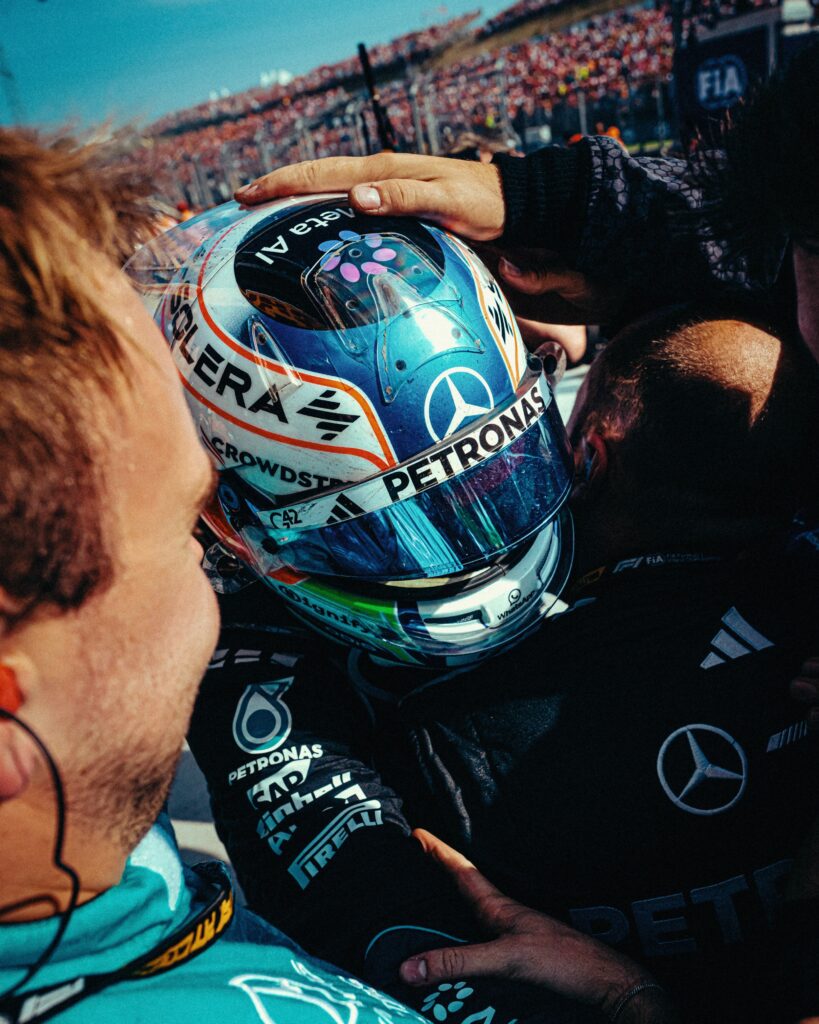
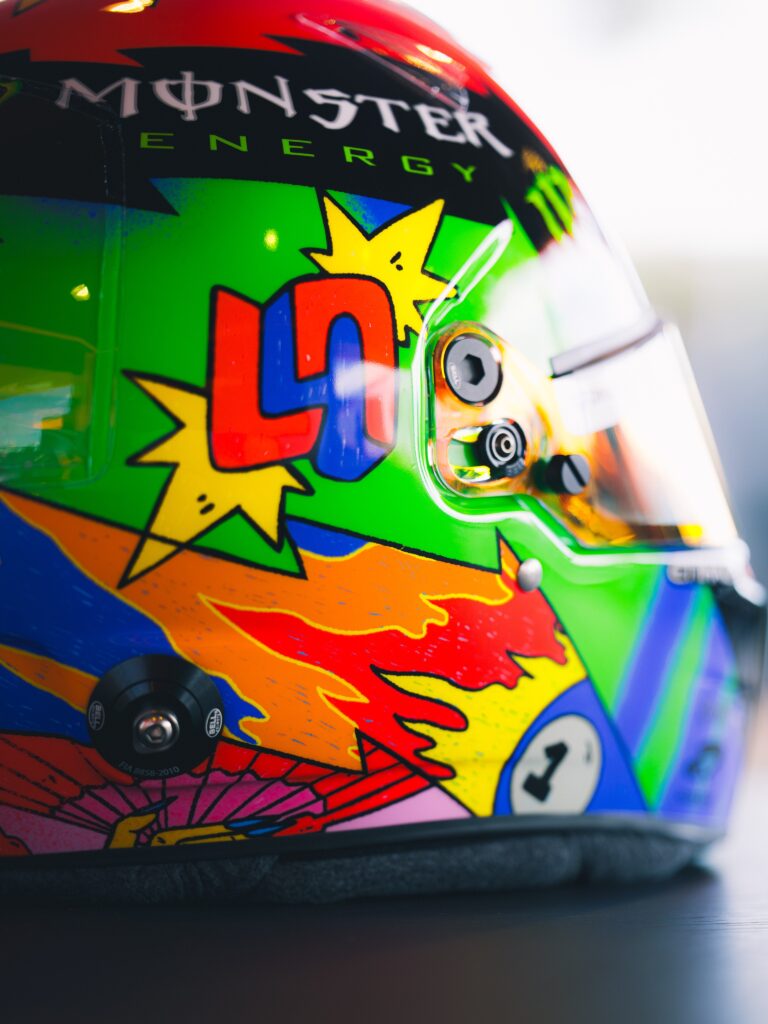
Hamilton has publicly acknowledged that his radio and TV comments were not his best moment, posting on Instagram that he takes responsibility for how the frustration came across. “I’ve listened back to some of my radio and TV comments. In the heat of the moment, frustration can come out, especially when you care as deeply as I do,” he wrote, adding that “that wasn’t the best version of me.” Zandvoort itself remains one of the most visually distinct stops on the 2026 calendar, its 4.259 km layout and banked final corner producing some of the sharpest podium and pit-lane photography of the season. Whatever the strategy tension inside the garage, race weekends like this one are exactly where a driver’s helmet design gets its widest audience — cameras track every angle through the banking, the pit box, and the podium steps, and Hamilton’s seven world titles keep his design choices under permanent scrutiny from fans and collectors alike.
Why This Weekend Still Matters for Collectors
Race weekends built around visible tension, like this one, tend to be the ones fans remember and want on display years later. The Dutch Grand Prix radio exchange, Steiner’s comparison of Ferrari and Mercedes communication, and Hamilton’s own public reckoning with his tone all became part of the story of Hamilton’s 2026 season with Ferrari, a season already tracked closely by collectors following his move from Mercedes. For those building a shelf or wall display around this era of Hamilton’s career, the helmet worn across a season defined by moments like Zandvoort carries that context with it — a full-size 1:1 display piece tied to a specific stretch of races rather than a generic souvenir.
“I don’t think Lewis helped himself being so critical because when you’re sitting on the pitwall and you hear that, it’s like, ‘Oh this guy’s actually trying to vouch too much for himself.'”
— Guenther Steiner, The Red Flags Podcast
“I’ve listened back to some of my radio and TV comments… that wasn’t the best version of me. I take responsibility for that, and I’ll be better.”
— Lewis Hamilton, Instagram
FAQ
Q: What did Guenther Steiner say about Lewis Hamilton’s radio messages?
Guenther Steiner said Hamilton ‘didn’t help himself’ by being so critical over team radio during the Dutch Grand Prix, arguing the tone made it sound like Hamilton was advocating for himself rather than the team.
Q: Why was Hamilton frustrated with Ferrari at the Dutch Grand Prix?
Hamilton was frustrated because he and teammate Charles Leclerc were on different strategies, and he felt Ferrari waited too long to pit Leclerc, costing him time; he was also kept out on old hard tyres and sarcastically asked if he was a ‘guinea pig.’
Q: How did Hamilton respond to the criticism afterward?
Hamilton posted on Instagram that he had listened back to his radio and TV comments, admitted the frustration got the better of him, and said ‘that wasn’t the best version of me,’ taking responsibility for his tone.
Q: Did Steiner blame Ferrari or Hamilton for the incident?
Steiner placed blame on both sides: he said Ferrari’s strategy communication was less organized than Mercedes’ approach, but also said Hamilton’s critical radio tone did not help his own position with the team.
Q: Is a Lewis Hamilton helmet from this era available as a display piece?
Yes, 123Helmets.com offers full-size 1:1 replica helmets tied to Hamilton’s career with Ferrari, sold as display and collector items rather than for protective use.
Shop Lewis Hamilton Collection
Display and collector replicas only. Not certified for protective use. Full-size 1:1 scale.