
Blog
Audi Honours Nuvolari with Part-Yellow Monaco Livery for 2026 Debut
 123Helmets Editorial Team
Audi has confirmed a special part-yellow livery for the 2026 Monaco Grand Prix, paying direct tribute to Tazio Nuvolari and the yellow-jersey heritage that defined his racing identity. The colour scheme breaks from the standard carbon-and-red Audi F1 identity planned for the team’s first championship season, and it gives collectors an early target for replica display pieces tied to the Monte Carlo round.
Key Takeaways
Audi’s 2026 Monaco livery introduces yellow panels referencing Tazio Nuvolari’s racing colours from the 1930s
The Monte Carlo round is the only confirmed race carrying the heritage scheme, raising scarcity value for collectors
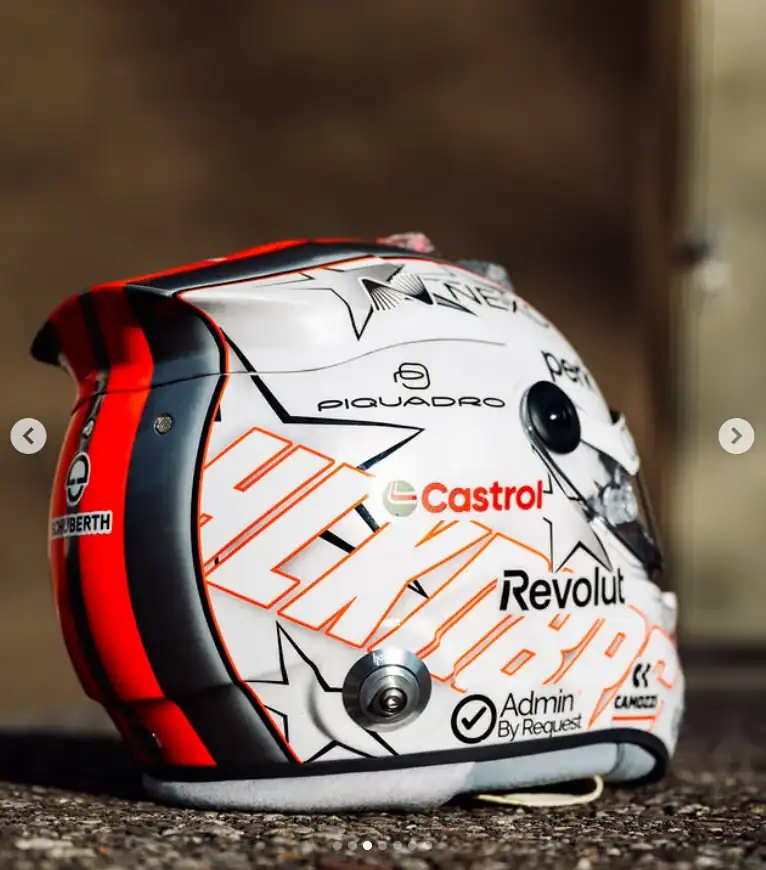
Display replica helmets matching the Monaco livery are expected to follow the one-off paint scheme
The livery marks Audi’s first F1 heritage tribute since acquiring the Sauber operation
A Monaco One-Off Tied to Nuvolari’s Legacy
Audi’s entry into Formula 1 in 2026 already carries weight as one of the most anticipated manufacturer arrivals in over a decade. The decision to break from a single uniform livery across the 24-race calendar and dedicate a special scheme to the Monaco Grand Prix signals that the brand wants its first season to register beyond pure on-track results. The yellow accents reference Tazio Nuvolari, the Mantuan driver who wore a yellow jersey as his signature racing colour and who claimed the 1932 Monaco Grand Prix in an Alfa Romeo.
The Monte Carlo round is the obvious stage for a tribute of this kind. Monaco’s street circuit has hosted Formula 1 since 1950, and the principality remains the most photographed race on the calendar. A livery change here guarantees coverage that a mid-season European round simply cannot match. For Audi, which spent years preparing its Hinwil-based operation for the 2026 power unit regulations, Monaco is the showcase moment.
Why Nuvolari, Why Now
Nuvolari’s connection to Audi runs through Auto Union, the four-ringed predecessor brand that fielded him in Grand Prix racing during the late 1930s. He won the 1938 Italian Grand Prix and the 1939 Yugoslav Grand Prix in Auto Union machinery, and his driving style — aggressive, sliding, theatrical — defined an era. The yellow jersey he wore became a personal trademark, separate from the silver of the German racing teams of the period.
Audi has not previously raced in Formula 1 under its own name, so the brand is building its visual identity from a blank sheet. Tying the first season to a documented historical figure rather than a generic colour palette gives the launch narrative weight. The Monaco scheme functions as a single, deliberate reference point.
What the Livery Actually Changes
The base Audi F1 livery for 2026 keeps the carbon black and titanium grey foundation announced at the team’s identity reveal, with red accents referencing the four-ring badge tradition. The Monaco-specific scheme overlays yellow panels onto this base. Rather than repainting the chassis end-to-end, Audi has chosen a part-yellow execution — yellow sections on the engine cover, sidepods and front wing endplates, while retaining the darker bodywork elsewhere.
Surface Treatment and Finish
F1 liveries in the current era rely on a mix of paint and printed vinyl wrap to manage weight. A full repaint can add between 0.5 kg and 1.5 kg to a car, which teams treat as a meaningful penalty over a 78-lap race distance. Audi’s part-yellow approach keeps the additional mass low while delivering the visual impact required for a tribute scheme. The yellow used is expected to match the historical jersey tone rather than a modern fluorescent equivalent.
Driver Helmets and Crew Kit
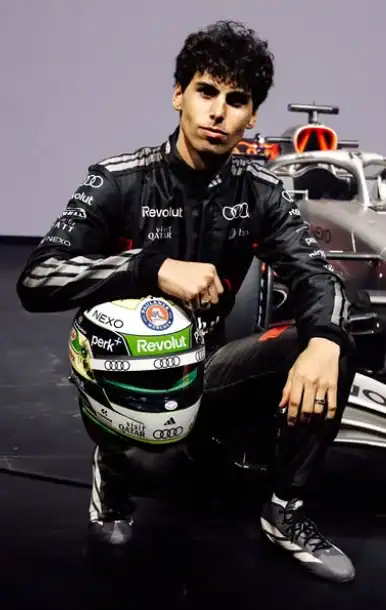
Heritage liveries typically extend to driver helmet designs, pit crew suits and team garage signage. Past examples — Ferrari’s 2022 Imola scheme, McLaren’s 2021 Monaco Gulf livery, Williams’ 2020 throwback — all included matching helmet treatments for at least one race. Audi has not yet confirmed whether Nico Hülkenberg and Gabriel Bortoleto will run special helmet designs alongside the chassis, but the precedent across the grid suggests at least one driver will adapt his lid for the weekend.
Collector Implications for Display Replicas
One-off liveries create a defined collecting window. Once the Monaco weekend ends, the scheme does not return, and any display replica produced for that race becomes a fixed historical artefact rather than an ongoing catalogue item. Collectors who track helmet replicas understand this dynamic from previous one-race designs.
What Drives Value in Single-Race Replicas
Three factors typically separate a standard catalogue replica from a one-off display piece. First, the production window — single-race helmets are usually painted in batches of 50 to 250 units for collector release, against multi-thousand runs for season-long designs. Second, the documentation — a clear race-weekend association makes the replica easier to catalogue and display. Third, the visual distinction — a part-yellow scheme on an otherwise dark Audi shell reads instantly from across a room, which matters for shelf and wall displays.
Full-size 1:1 replica helmets measure approximately 27 × 35 cm and weigh between 1.3 kg and 1.6 kg depending on shell construction. A display piece in the Monaco Audi scheme would carry the yellow panels across the crown and around the visor aperture, with the team logos applied as decals over a clear coat. Paint builds on collector helmets typically run 6 to 9 layers including primer, base, livery colours, sponsor decals and two clear coats.
Timing and Availability
The 2026 Monaco Grand Prix is scheduled for the late-May window that has hosted the race for decades. Replica production for one-off liveries usually begins after the race weekend, once reference photography from multiple angles is available to the paint studios. Collectors should expect a 4 to 8 month lead time between the race and the first available display pieces.
How This Fits Audi’s Broader F1 Strategy
Audi confirmed its F1 entry programme in August 2022, with the manufacturer taking over the Sauber operation through a phased acquisition. The 2026 season aligns with the introduction of new power unit regulations that mandate a 50/50 split between internal combustion and electrical energy deployment, and Audi committed to the project specifically because the regulation change opened a window for a new manufacturer to enter on level terms.
Heritage as a Marketing Anchor
BMW, Mercedes, Ford and Honda have all leaned on historical racing colours when re-entering or expanding F1 programmes. Mercedes ran a silver-and-black scheme in 2020 referencing pre-war Silver Arrows. Ford’s return as Red Bull’s power unit partner from 2026 has been promoted with references to the Cosworth DFV era. Audi’s Nuvolari tribute fits the same pattern: a manufacturer with limited modern F1 history reaching back to a documented period of motorsport success to establish credibility.
The Hinwil Operation
The Audi F1 base remains at Hinwil in Switzerland, the long-standing Sauber facility, with power unit work conducted at Neuburg an der Donau in Germany. The split operation mirrors arrangements used by other manufacturer teams and was confirmed in the original transition timeline. The Monaco livery will be applied at the Hinwil chassis facility before transport to Monte Carlo.
What to Watch on the Monaco Weekend
Monaco’s qualifying session typically decides the race, with overtaking on the 3.337 km circuit limited by narrow corners and short straights. The 2026 cars are expected to be slightly smaller than the current generation following regulation changes, which may improve overtaking marginally but will not transform the Monte Carlo formula. Audi’s competitive position in its debut season is uncertain — manufacturer debuts have historically required two to three seasons to reach front-running pace.
Visual Reference Points
Photographers and broadcasters will frame the yellow panels against three signature Monaco backdrops: the harbour at Tabac, the tunnel exit, and the Casino Square pit straight. The livery has been designed with these camera angles in mind, which is standard practice for one-off schemes. Expect the yellow to appear most prominently in tunnel-exit shots where artificial light brings out warm tones.
Documentation for Collectors
Collectors building reference archives for a future replica purchase should save high-resolution images from the Thursday pit lane walk, the Saturday qualifying parc fermé, and the Sunday grid formation. These three windows produce the cleanest reference photography before track grime and tyre marbles accumulate on the bodywork.
“Nuvolari’s yellow is one of the most recognisable personal colours in racing history. Bringing it back at Monaco connects Audi’s first F1 season to a driver who already won here.”
— Motorsport historian commentary
FAQ
Q: When will Audi run the Nuvolari tribute livery?
The part-yellow scheme is confirmed for the 2026 Monaco Grand Prix only. Audi has not announced any additional races carrying the heritage colours.
Q: Why is Audi referencing Tazio Nuvolari specifically?
Nuvolari raced for Auto Union, Audi’s four-ringed predecessor brand, in the late 1930s and won the 1932 Monaco Grand Prix in an Alfa Romeo. His yellow jersey was his personal racing trademark.
Q: Will the drivers run matching helmet designs?
Audi has not confirmed driver helmet changes for the Monaco weekend, but heritage liveries on other teams have typically included matching helmet treatments for at least one driver.
Q: How does a one-off livery affect collector replica value?
Single-race liveries create fixed production windows. Display replicas tied to one race weekend are usually produced in smaller batches than season-long designs, which can make them harder to find later.
Q: Are these replica helmets suitable for any protective use?
No. The replicas we cover are full-size 1:1 display and collector items only. They are not certified for protective use and are intended for exhibition, shelf and wall display.
Browse F1 Helmet Collection
Display and collector replicas only. Not certified for protective use. Full-size 1:1 scale.