Cadillac’s Stars and Stripes Miami GP Livery Leaves F1 Fans Calling for More
Cadillac’s striking stars and stripes Miami GP livery concept has ignited fan enthusiasm across the F1 community, with collectors and enthusiasts already imagining how this bold American identity could translate onto display helmets and exhibition pieces. The reveal hints at a fresh aesthetic chapter for the incoming team.
Key Takeaways
Cadillac’s Miami-themed livery embraces a bold stars and stripes American identity
The reveal has generated significant fan engagement and calls for permanent design elements
Display helmet collectors are anticipating how the livery aesthetic could shape future replica releases
The Miami GP setting reinforces Cadillac’s positioning as a distinctly American F1 entry
An American Statement on the Miami Stage
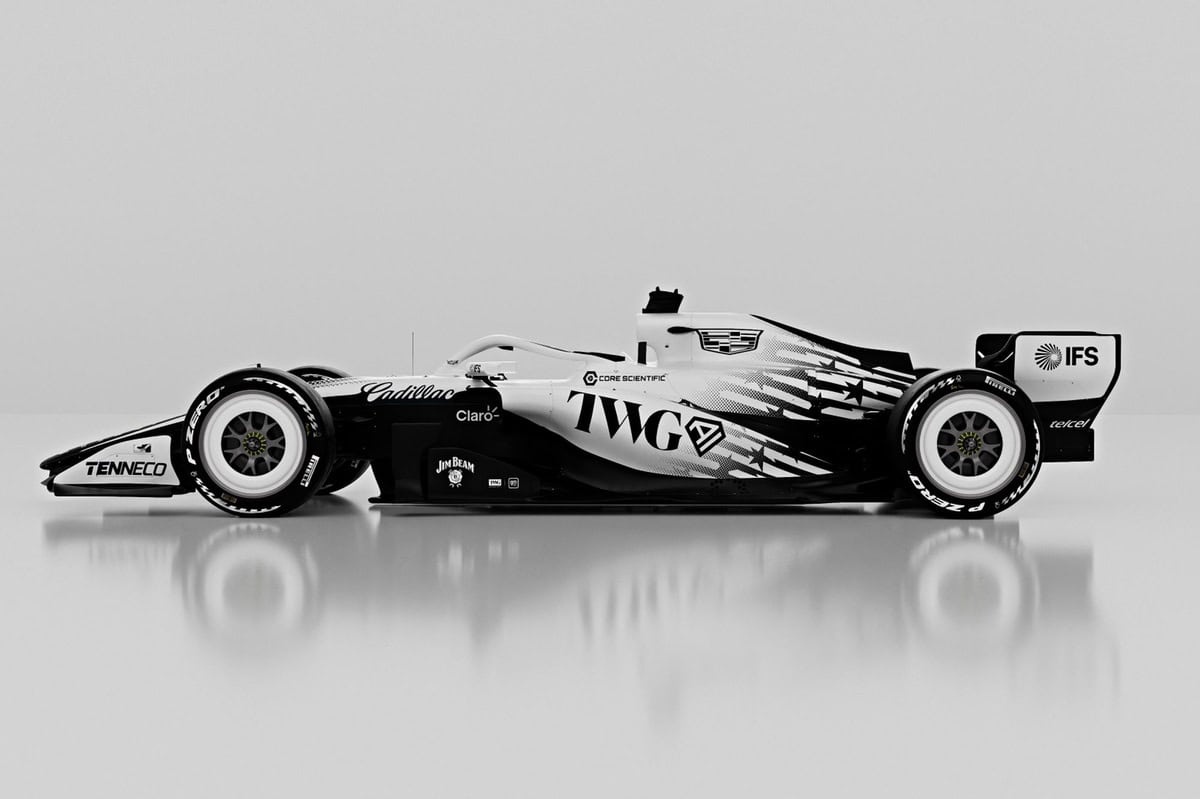
When Cadillac unveiled its stars and stripes Miami Grand Prix livery concept, the response from the Formula 1 community was immediate and overwhelmingly positive. The design, draped in patriotic red, white, and blue tones with star motifs and dynamic stripe patterns, offered fans their clearest glimpse yet of how the incoming American manufacturer intends to present itself on the global motorsport stage.
Miami, with its glamorous backdrop and growing reputation as the spiritual home of American Formula 1, was the perfect canvas for such a statement. The livery felt purpose-built for the occasion — a celebration of national identity wrapped around the silhouette of a modern F1 car. For collectors who follow the visual evolution of teams as closely as their on-track performance, this was a moment worth bookmarking.
A Design That Sparked Conversation
Social media lit up within hours of the concept appearing. Fans praised the boldness of the approach, noting how Cadillac had resisted the temptation to play it safe with a generic corporate livery. Instead, the team leaned fully into its American heritage, producing a visual language that felt confident, contemporary, and instantly recognisable.
What stood out most was the cohesion. The stars and stripes motif was not slapped onto the car as an afterthought; it was woven into the geometry of the bodywork, flowing across the sidepods, engine cover, and front wing in a way that suggested a great deal of thought had gone into proportion and balance. That attention to detail is exactly what serious display piece enthusiasts look for when assessing whether a livery will translate beautifully onto a full-size 1:1 replica helmet.
Visual Identity: Breaking Down the Key Elements
The Colour Palette
The Miami concept centred on a deep navy base, accented with vivid red highlights and crisp white detailing. This trio of colours — instantly evocative of the American flag — gave the livery a sense of occasion without descending into kitsch. The navy provided depth and sophistication, the red injected energy and aggression, and the white added the contrast needed to make graphic elements pop under the Florida sun.
The Star Motif
Stars appeared in clusters across the bodywork, varying in size to create a sense of movement. Larger stars anchored key visual zones, while smaller star formations trailed across the surfaces like a constellation. This treatment avoided the static, flag-on-a-car aesthetic that has plagued some patriotic liveries in the past, instead giving the design a kinetic quality that suited the speed of the sport.
The Stripe Treatment
Rather than wrapping horizontal stripes around the car in literal flag fashion, Cadillac’s design team used diagonal and curved stripe elements that followed the aerodynamic lines of the chassis. The result was a livery that felt sculpted to the car rather than applied to it — a distinction that separates good liveries from great ones in the eyes of collectors and exhibition curators.
Why Fans Are Calling for More
The phrase trending across F1 fan forums in the wake of the reveal was simple: ‘we need more of this’. Supporters were not merely complimenting the Miami livery — they were lobbying for similar treatments at other marquee venues, and even suggesting that elements of the design should carry over into Cadillac’s permanent visual identity.
The Demand for Race-Specific Liveries
Special-edition liveries have become increasingly common in modern Formula 1, and the appetite among fans appears insatiable. The Miami concept tapped into this trend perfectly, offering something distinct enough to feel like an event in itself. Fans are now openly speculating about what Cadillac might produce for other significant races on the calendar — Las Vegas, Austin, and beyond.
The Collector Angle
For those who curate display rooms and exhibition spaces dedicated to Formula 1, race-specific liveries represent a particularly enticing collecting niche. A full-size 1:1 replica helmet wearing the colours of a specific Grand Prix becomes a frozen moment in time — a tangible artefact of a particular weekend, a specific story. The stronger the visual identity, the more powerful that artefact becomes as a centrepiece.
Cadillac’s Miami concept, with its instantly readable American theme, is precisely the kind of livery that translates exceptionally well onto helmet shells. The clean colour blocking, distinctive motifs, and confident graphic language give replica artisans plenty of material to work with when crafting exhibition-quality collector pieces.
Cadillac’s Broader Branding Strategy
The Miami livery does not exist in isolation. It is part of a larger conversation about how Cadillac, as a new entrant into Formula 1, will establish its identity in a paddock crowded with long-established teams. The challenge for any new arrival is significant: stand out without alienating, project confidence without arrogance, and build a visual language that can sustain decades of evolution.
Leaning Into Heritage
By embracing American iconography so openly, Cadillac is making clear that it does not intend to blend in. This is a team that wants to be recognised as American first and foremost, and the Miami livery served as a thesis statement for that approach. Heritage-led branding is a powerful tool, particularly in a sport where many teams cultivate strong national associations — Ferrari with Italy, Williams with Britain, and now Cadillac with the United States.
Building a Visual Vocabulary
The most successful F1 teams build visual vocabularies that fans can recognise from a single frame of footage. Ferrari’s red, McLaren’s papaya, Williams’ navy and white — these are not just colours, they are shorthand for entire histories. Cadillac’s Miami concept suggests the team understands this, and is laying the groundwork for a vocabulary built around stars, stripes, and a distinctly American confidence.
For the display piece community, this matters enormously. A team with a strong, consistent visual identity produces collectible memorabilia that holds its appeal across decades. Liveries that age well become anchors for entire collections.
Implications for the Display Helmet Community
Whenever a new livery captures public imagination, the ripple effects reach the collector market. Display helmet enthusiasts, in particular, watch livery reveals with keen interest, knowing that strong team aesthetics often translate into desirable exhibition pieces.
Translating Livery to Helmet
Helmet design and car livery design are related but distinct disciplines. A livery covers a large, complex three-dimensional surface with multiple flat planes; a helmet must communicate identity on a much smaller, curved canvas. The most successful collector helmets borrow signature elements from a team’s livery — key colours, hero motifs, distinctive graphic flourishes — and reinterpret them at helmet scale.
Cadillac’s Miami concept offers exactly the kind of visual elements that translate well. Stars can be scaled up or down without losing impact. The navy-red-white palette is bold enough to read clearly even on a small surface. The diagonal stripe treatments could wrap beautifully around a helmet shell.
Curating an American-Themed Display
For collectors building displays around national themes or specific eras of American motorsport, a Cadillac-inspired piece could become a cornerstone. Paired with full-size 1:1 replicas representing other American moments in F1 history, such an exhibition would tell a compelling visual story — one that the Miami livery has just made considerably more vivid.
The exhibition quality of a display piece is judged not only on craftsmanship but on the strength of the underlying design. By producing a livery that fans genuinely want to see commemorated, Cadillac has indirectly elevated the appeal of any future replica that draws inspiration from this aesthetic direction.
What Comes Next
The Miami concept may be just the beginning. Fan reception has been so strong that there is now genuine pressure on Cadillac to produce additional special-edition liveries, and to ensure that the strongest elements of the Miami design carry forward into the team’s standard visual identity.
Watching for Future Reveals
For collectors and enthusiasts, the months ahead will be a period of careful observation. Each new livery announcement, each piece of branding, each visual evolution will offer clues about how Cadillac intends to position itself long-term. The Miami concept has set a high bar; the question now is whether the team can sustain that level of visual ambition across an entire competitive programme.
The Long Game for Collectors
Smart display piece collectors think in decades, not seasons. The teams whose memorabilia retains the strongest appeal over time are those that build coherent, evolving visual identities — identities that feel rooted in something authentic. Cadillac’s embrace of American iconography, executed with the sophistication seen in the Miami reveal, suggests the foundations are being laid for exactly that kind of enduring identity.
For now, the message from the F1 community is clear: more, please. And for the collector market, that demand translates into anticipation for the exhibition-quality replica pieces that will inevitably follow.
“The Miami livery felt like a thesis statement — bold, unapologetic, and unmistakably American.”
— F1 design commentary
FAQ
Q: What makes Cadillac’s Miami livery stand out? The livery’s confident embrace of American iconography — stars, stripes, and a navy-red-white palette — combined with sophisticated graphic execution that follows the car’s aerodynamic lines rather than fighting against them.
Q: Will this livery influence future Cadillac collector helmet replicas? Strong team liveries typically inspire display piece designs, and the Miami concept offers exactly the kind of bold visual elements — clear motifs, distinctive colours, scalable graphics — that translate exceptionally well onto full-size 1:1 helmet replicas.
Q: Is the Miami livery Cadillac’s permanent design? The Miami stars and stripes treatment is positioned as a race-specific concept tied to the Miami Grand Prix, though fan response has been strong enough that elements of the design may influence the team’s broader visual identity.
Q: Why are special-edition liveries valuable to collectors? Race-specific liveries capture a particular moment in F1 history, making any associated exhibition-quality replica a tangible artefact of that event — a frozen point in time that anchors collections and tells a specific story.
Q: How does livery design translate to display helmets? Skilled replica artisans extract signature elements — key colours, hero motifs, distinctive graphic flourishes — and reinterpret them at helmet scale, creating display pieces that capture the spirit of the original livery within the constraints of a smaller, curved surface.
Explore exhibition-quality American-inspired display helmets and full-size 1:1 collector replicas in our curated collection. Browse F1 Helmet Collection.
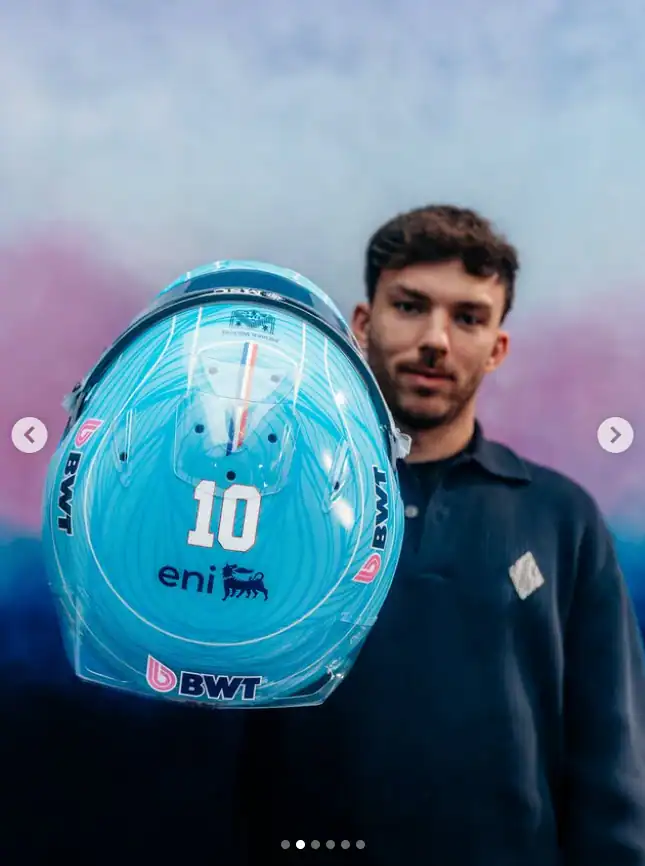
Pierre Gasly reveals his favourite 2026 Alpine helmet design in a dedicated Instagram carousel. Design breakdown, collector significance and display guide.
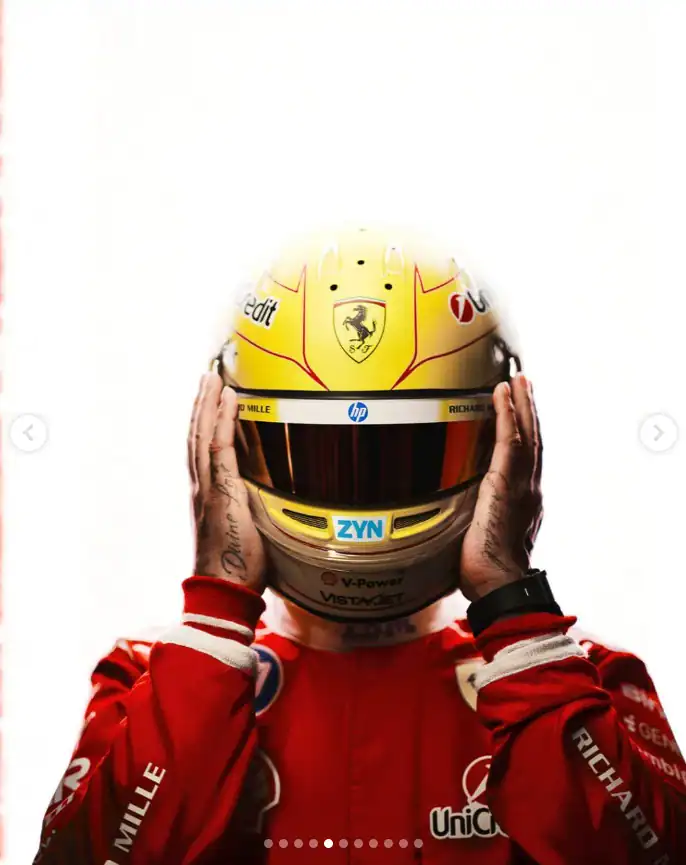
Lewis Hamilton’s first Ferrari-era helmet revealed in the official 2026 Instagram lookbook. Full collector context, design significance and display guide.
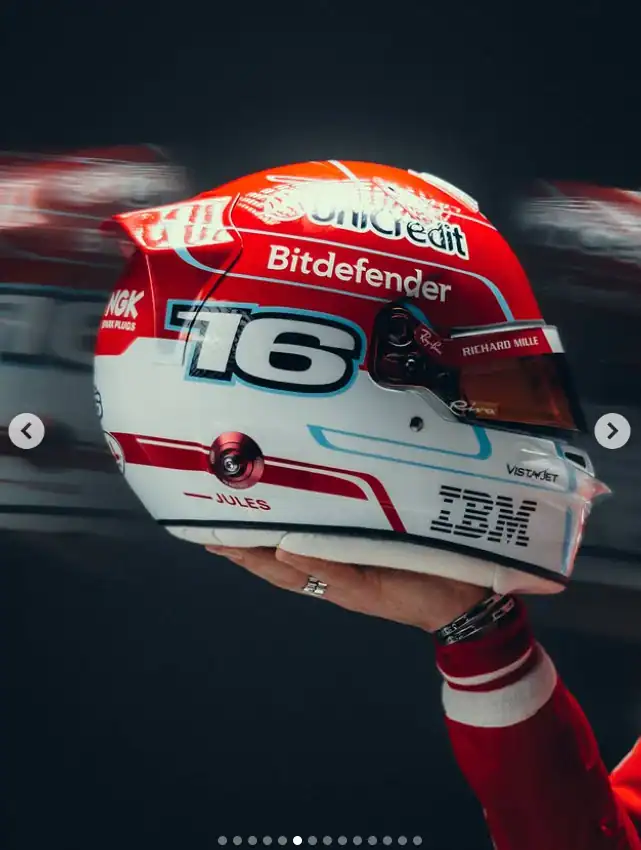
Charles Leclerc reveals his 2026 Ferrari helmet in an official Instagram carousel. Design features, collector significance and display reference guide.
Gabriel Bortoleto shares his debut F1 helmet in an Instagram reel. Design features, collector significance and display reference for the 2024 F2 champion’s first season.
Nico Hülkenberg reveals his 2026 helmet at Sauber in Audi’s debut F1 season. Design features, collector significance and display reference for this transition.
To provide the best experiences, we use technologies like cookies to store and/or access device information. Consenting to these technologies will allow us to process data such as browsing behavior or unique IDs on this site. Not consenting or withdrawing consent, may adversely affect certain features and functions.
Functional
Always active
The technical storage or access is strictly necessary for the legitimate purpose of enabling the use of a specific service explicitly requested by the subscriber or user, or for the sole purpose of carrying out the transmission of a communication over an electronic communications network.
Preferences
The technical storage or access is necessary for the legitimate purpose of storing preferences that are not requested by the subscriber or user.
Statistics
The technical storage or access that is used exclusively for statistical purposes.The technical storage or access that is used exclusively for anonymous statistical purposes. Without a subpoena, voluntary compliance on the part of your Internet Service Provider, or additional records from a third party, information stored or retrieved for this purpose alone cannot usually be used to identify you.
Marketing
The technical storage or access is required to create user profiles to send advertising, or to track the user on a website or across several websites for similar marketing purposes.


 123Helmets Editorial Team