
Blog
The Art of the Visor: How F1 Helmet Design Became the Most Collectible Canvas in Motorsport
 123Helmets Editorial Team
The Art of the Visor: How F1 Helmet Design Became the Most Collectible Canvas in Motorsport
From plain white shells to masterpieces of graphic design, the Formula 1 helmet has evolved over six decades into motorsport’s most iconic collectible artefact. Here’s why every serious collector needs to understand that evolution — and what makes a full-size 1:1 replica display piece truly worth owning.
Key Takeaways
F1 helmet design evolved from plain monochrome shells in the 1960s to hyper-detailed graphic artworks by the 1990s, making each era immediately recognisable to collectors.
A driver’s personal helmet livery is one of the most powerful identity markers in all of sport — more personal than a race suit, more visible than a car number.
Full-size 1:1 replica display helmets allow collectors to own exhibition-quality representations of iconic lids without the rarity barriers of race-used originals.
Special one-off helmet designs — created for home GPs, milestone races, or championship-clinching rounds — command the greatest collector interest and emotional resonance.
The Blank Canvas Era: F1 Helmets Before Personal Identity
The Blank Canvas Era: F1 Helmets Before Personal Identity
Wind the clock back to the early 1960s and the Formula 1 helmet was, by today’s standards, almost aggressively anonymous. Open-face fibreglass shells finished in basic white, cream, or occasionally a flat team colour — these were functional objects, nothing more. Drivers of that era wore helmets that bore little to no personal identification. If you lined up a grid photograph from 1963, you would struggle to distinguish one pilot from another by helmet alone.
When Safety Came Before Identity
The primary concern in that era was survival — and even then, helmets were relatively rudimentary compared to what would follow. The transformation began gradually through the late 1960s and into the early 1970s, as drivers began to assert personal identity through colour. Jackie Stewart’s blue and yellow tartan band — inspired by his Scottish heritage — was a genuine landmark moment. It was arguably the first time a Grand Prix driver’s helmet became an unmistakable personal signature rather than a piece of generic equipment.
Graham Hill’s classic design — a rowing-club inspired dark blue shell with white-and-red horizontal bands — carried a similar weight of personal storytelling. These helmets were not designed by agencies or brand consultants. They were expressions of personality, background, and belonging. That authenticity is exactly what makes replicas of these early iconic designs so compelling for today’s collector. A full-size 1:1 replica of a 1970s-era livery isn’t merely decorative — it is a piece of motorsport cultural history rendered in display-quality form.
The Transition to Full-Face and the Rise of the Graphic
The move to full-face helmets in the mid-1970s opened up an entirely new surface area for design. Where the open-face shell offered a limited canvas, the full-face helmet presented a continuous, three-dimensional graphic space. Designers and drivers alike began to recognise the potential. By the late 1970s and into the 1980s, helmet liveries were becoming more complex, more colourful, and more deliberately crafted.
Gilles Villeneuve’s bright red and white design, Niki Lauda’s striking red lid, and the bold geometric patterns emerging across the grid signalled a new era. The helmet was becoming an icon in its own right — something fans could recognise from the grandstand, something television cameras would seek out in the cockpit. The collector market, though not yet formalised, was already beginning to form its future passions.
The Golden Age of Helmet Design: The 1980s and 1990s
The Golden Age of Helmet Design: The 1980s and 1990s
If there is a single golden era for F1 helmet design as a visual art form, most collectors and historians would point to the period stretching from roughly 1985 to 2000. This fifteen-year window produced some of the most enduring, most instantly recognisable helmet liveries in the sport’s history — designs that remain the benchmark against which all subsequent work is measured.
Ayrton Senna and the Helmet as Cultural Artefact
No discussion of F1 helmet iconography is complete without Ayrton Senna. His distinctive yellow, green, and blue design — drawing on the colours of the Brazilian national flag — transcended motorsport entirely. The Senna helmet became a cultural symbol, recognised far beyond the paddock, far beyond the grandstand, and long after his final race. It appeared on merchandise, in art installations, and in museum collections worldwide.
What made the Senna design so enduring? Simplicity combined with cultural depth. The bold blocks of Brazilian national colours were clean enough to read at speed, yet loaded with meaning. It required no explanation to a Brazilian audience and needed no words for an international fan. That combination of visual clarity and emotional resonance is the hallmark of truly great helmet design — and it is precisely why collector-quality full-size replicas of that livery remain among the most sought-after display pieces in motorsport collecting.
Schumacher, Hill, and the Power of Consistency
Michael Schumacher’s red and white helmet — clean, aggressive, and immediately associated with dominance — became the visual shorthand for an era of unprecedented success. Damon Hill’s white-and-blue design carried the lineage of his father Graham’s classic colours into a new generation. Mika Häkkinen’s silver and red lid perfectly mirrored the McLaren-Mercedes aesthetic of the late 1990s championship years.
What is significant about many of these designs is their consistency across seasons. A driver who maintained the same core livery for years created an incredibly powerful associative link between colour, identity, and achievement. When a collector displays a full-size 1:1 replica of a Schumacher or Hill helmet from their championship seasons, they are not simply displaying an attractive object — they are displaying a concentrated visual symbol of a specific moment in sporting history.
Special Edition Helmets: The One-Off Designs That Define Collecting
Special Edition Helmets: The One-Off Designs That Define Collecting
If consistent liveries represent the backbone of helmet collecting, then special edition one-off designs represent its beating heart. From the moment drivers began commissioning unique helmet art for specific races — home Grands Prix, milestone starts, tribute liveries, championship-clinching rounds — the collector market gained a new and compelling dimension.
Home Race Helmets and the Patriotic Statement
The tradition of a driver wearing a specially designed helmet for their home Grand Prix has produced some of the most visually spectacular lids in the sport’s history. Brazilian drivers wearing deeply patriotic designs at Interlagos, British drivers marking Silverstone with Union Flag-inspired artwork, German drivers bringing elaborate cultural tributes to Hockenheim or the Nürburgring — these designs carry an emotional weight that standard-season liveries simply cannot match.
For the collector, a home-race special edition represents the intersection of sporting identity, national pride, and artistic ambition. A full-size 1:1 replica of such a design does not merely fill a shelf — it tells a story. It places the viewer at a specific track, in a specific atmosphere, at a moment charged with meaning for driver and nation alike.
Tribute Helmets and the Language of Respect
Another category that commands enormous collector interest is the tribute helmet — designs worn to honour a predecessor, commemorate an anniversary, or pay respect to a fallen colleague. The F1 paddock has a long tradition of visual tributes, and the helmet is the most personal canvas on which such respect can be expressed.
These designs often achieve a level of artistic ambition that surpasses regular season liveries precisely because the emotional stakes are higher. When a driver invests that level of personal meaning into a helmet design, the resulting object carries a resonance that purely aesthetic designs cannot replicate. For collectors, these pieces occupy a category of their own — display items that function simultaneously as sporting memorabilia, artistic objects, and historical documents.
Championship-Clinching Lids: When History Is Worn on the Head
Perhaps the most emotionally charged category of all is the helmet worn at the race where a World Championship is decided. Whether a driver clinched the title in their regular season livery or commissioned a special design for the occasion, the helmet present at that moment becomes irrevocably linked to one of sport’s supreme achievements.
Full-size 1:1 replica display helmets from championship-winning seasons allow collectors to bring a piece of that history into their homes, offices, or exhibition spaces. The exhibition quality of a properly produced replica means that the visual experience — the graphic detail, the paint depth, the finish — honours the significance of the original without compromise.
The Modern Era: Digital Design, Bold Graphics, and the New Collector Landscape
The Modern Era: Digital Design, Bold Graphics, and the New Collector Landscape
The arrival of digital design tools transformed F1 helmet liveries profoundly from the mid-2000s onwards. Where earlier generations had relied on hand-painted designs and physical templates, modern helmet artists could work with photorealistic rendering software, intricate layered graphics, and custom colour-matching technology that opened entirely new possibilities.
The Rise of the Helmet as Brand Statement
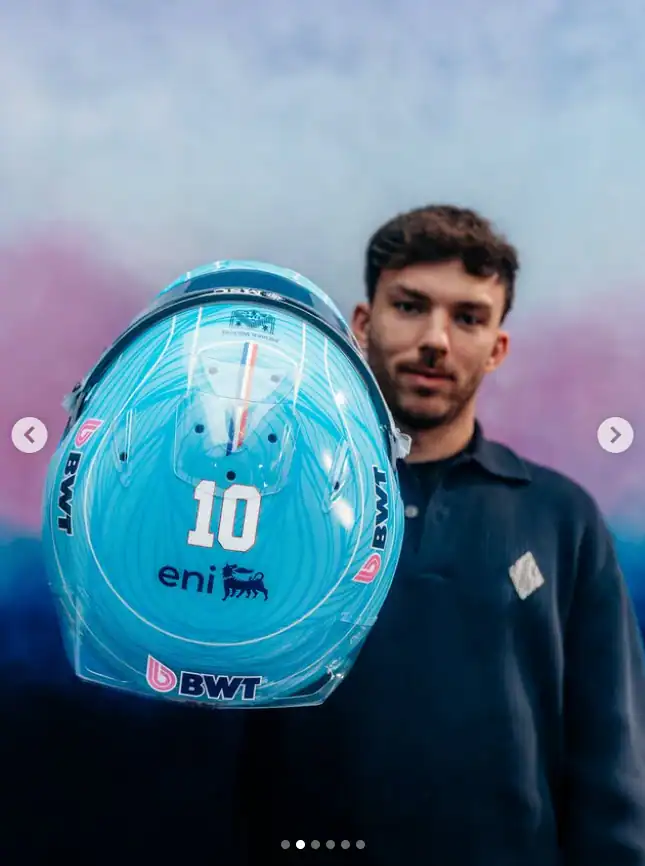
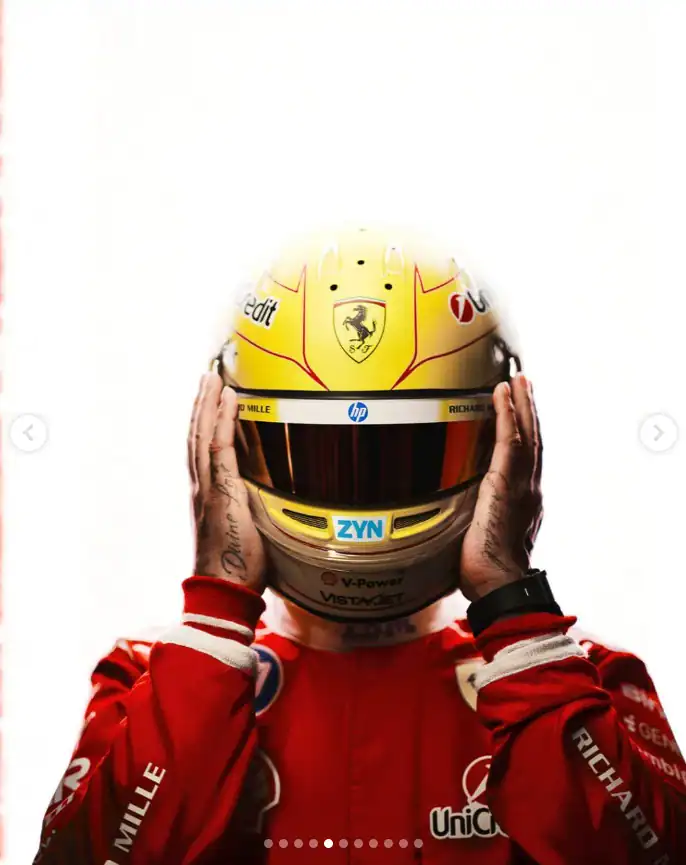
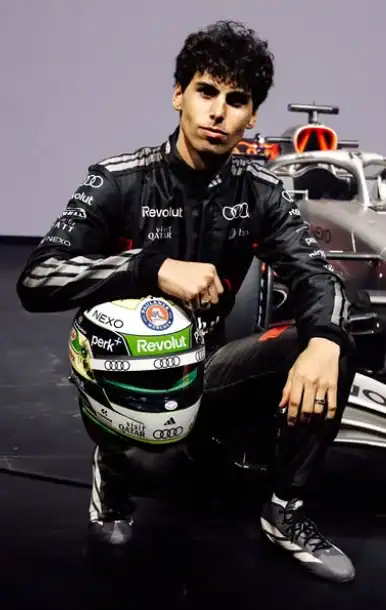
For current-generation drivers, the helmet is as much a branding exercise as a personal statement. Sponsorship integration, social media visibility, and merchandise potential all play into the design calculus. The most successful modern helmet liveries manage to balance commercial requirements with authentic personal identity — no easy feat when a single design must function as both a racing livery and a marketable visual asset.
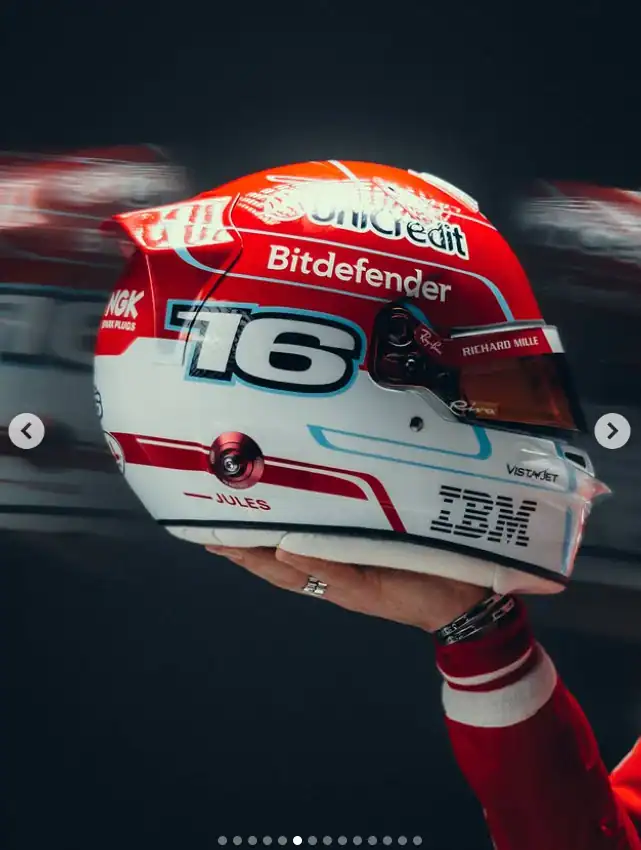
Lewis Hamilton’s evolution from his early career helmet — a tribute to his childhood hero Ayrton Senna — to the bold, high-visibility designs of his championship years charts a fascinating visual journey. Max Verstappen’s distinctive blue, yellow, and red colour palette became so associated with Red Bull Racing’s dominant period that separating driver identity from team identity became genuinely complex. Charles Leclerc’s sharp, elegant designs reflect both his Monégasque identity and his aspirational positioning within the sport.
Why Modern Designs Make Compelling Display Pieces
The complexity of modern helmet graphics means that a contemporary full-size 1:1 replica display piece offers extraordinary visual detail. Gradient transitions, metallic paint effects, intricate sponsor logo placement, and multi-layered artwork combine to create display objects of genuine visual sophistication. In an exhibition or collection context, a well-produced replica of a modern F1 helmet holds its own as a piece of applied art — not merely as a sporting relic.
The collector landscape has expanded significantly as a result. Where collecting once skewed heavily towards older, classic designs, today’s market encompasses passionate fans of current drivers who want to display exhibition-quality representations of the helmets they see on screen every race weekend. The full-size 1:1 replica bridges that gap between fan engagement and serious collecting in a way that no smaller scale product can match.
What Makes a Full-Size 1:1 Replica Worth Collecting?
What Makes a Full-Size 1:1 Replica Worth Collecting?
For anyone new to the world of F1 helmet collecting, the distinction between display replica quality levels is crucial. Not all replicas are created equal, and understanding what separates an exhibition-quality full-size 1:1 collector piece from a generic souvenir is the first step toward building a collection of lasting value.
Scale Authenticity: Why 1:1 Is Non-Negotiable
The full-size 1:1 scale is fundamental to the collector experience. A miniature or scaled-down replica, regardless of graphic quality, cannot convey the physical presence of an actual F1 helmet. The size, the three-dimensional form, the way light falls across a curved visor — these are qualities that only a true 1:1 scale piece can deliver. When displayed on a dedicated stand or within a case, a full-size replica commands the space around it in a way that smaller items simply cannot.
This physical presence is not merely aesthetic. It is historically authentic. The helmet you are displaying is, in terms of its physical dimensions, the same object that would have sat on a driver’s head at the start-finish straight of Monaco or the main straight at Spa. That correspondence of scale between the display piece and the original object is the foundation of serious collecting.
Graphic and Finish Quality: The Difference That Defines Value
Exhibition-quality full-size replicas are distinguished by the fidelity of their graphic reproduction. Authentic livery details — the exact colour values, the precise positioning of design elements, the quality of edge definition between colour fields, the finish level of visor tinting — separate a genuine collector piece from a decorative novelty.
The best replica manufacturers invest in precise colour research, working from reference material to ensure that the specific shades associated with a driver’s livery are reproduced accurately rather than approximated. For collectors, this accuracy is not pedantry — it is the difference between displaying something that genuinely represents the original and displaying something that merely gestures toward it.
The Display Context: Where and How You Show Your Collection
A full-size 1:1 collector replica deserves a display context that honours its exhibition quality. Purpose-built helmet stands, acrylic display cases, and considered lighting all contribute to the impact of a displayed piece. Many serious collectors treat their helmet displays with the same curatorial attention they would bring to any art collection — considering sightlines, lighting angles, and contextual framing.
A well-displayed F1 helmet replica transforms any space — a home study, a business reception, a dedicated collector room — into something that communicates passion, knowledge, and discernment. It is an object that invites questions, prompts conversations, and connects its display space to the wider drama and history of the world’s most watched motorsport.
Building Your F1 Helmet Collection: A Strategic Approach
Building Your F1 Helmet Collection: A Strategic Approach
The most satisfying collections are built with intention. Whether you are drawn to a specific era of the sport, a particular driver’s career arc, or the graphic evolution of F1 helmet design across decades, having a curatorial perspective transforms a group of individual display pieces into a coherent, meaningful collection.
Collecting by Era: Building a Visual History
One of the most intellectually rewarding approaches to F1 helmet collecting is to assemble pieces that chart the design evolution of the sport across different decades. A collection that moves from the relatively simple liveries of the 1970s through the graphic complexity of the 1990s to the digital sophistication of the modern era tells a visual story about how Formula 1 itself has changed — in its aesthetics, its commercial relationships, its cultural ambitions.
Such a collection also functions as a genuine historical archive. Each display piece represents not only a driver and a season but a set of design values, technological capabilities, and cultural contexts that are specific to their moment in time. Displayed together, these pieces create a timeline that is both beautiful and informative.
Collecting by Driver: Celebrating an Individual Legacy
For many collectors, the emotional connection to a specific driver is the primary motivation. Building a collection around a single driver — tracking the evolution of their helmet design across different seasons, teams, and milestones — creates a deeply personal narrative thread. A collection of Senna-era replicas, or a display dedicated to a particular champion’s career, communicates fandom elevated to genuine connoisseurship.
The strength of a driver-focused collection lies in its coherence. Visitors and fellow enthusiasts immediately understand the curatorial intention. The display speaks not just to the objects themselves but to the collector’s knowledge, passion, and relationship to the sport’s human stories.
Collecting Special Moments: The Trophy Approach
A third approach focuses specifically on historically significant moments — the helmet design associated with a championship-winning race, a famous victory at a legendary circuit, a landmark season opener, or a career-defining drive in difficult conditions. This trophy approach prioritises historical resonance over comprehensive coverage.
A collection built on this principle may be smaller in number but enormous in significance. Every piece earns its place by representing a specific, documentable moment of sporting history. For collectors who value depth over breadth, this is often the most personally satisfying approach of all — and the one most likely to generate genuine conversation and admiration from fellow enthusiasts.
“A helmet is the most personal thing a driver has. It goes everywhere with him. It represents who he is before a word is spoken.”
— Common sentiment among motorsport collectors and historians
“The visor is the one place in Formula 1 where pure individual expression survives the commercial machine entirely intact.”
— Motorsport design community observation
FAQ
Q: What is a full-size 1:1 F1 helmet replica?
A full-size 1:1 F1 helmet replica is a collector and display piece produced at the exact same dimensions as an actual Formula 1 helmet. It faithfully reproduces the livery, colours, and graphic design of a specific driver’s helmet for exhibition and display purposes. These pieces are collector items only and are not certified or intended for any form of protective or wearable use.
Q: Why are F1 helmet replicas popular as collector display pieces?
F1 helmets are among the most visually distinctive and personally meaningful objects in motorsport. Each driver’s livery is a unique graphic identity, and collecting full-size replica display pieces allows enthusiasts to own exhibition-quality representations of iconic designs associated with legendary drivers and historic racing moments — without the extreme rarity and cost barriers of genuine race-used originals.
Q: Which F1 helmet designs are considered the most iconic for collectors?
Collectors consistently rate designs from the late 1980s and 1990s as the most historically significant, with liveries associated with championship-winning seasons and legendary drivers commanding the greatest interest. Special one-off designs produced for home Grands Prix, tribute races, and milestone events are also highly prized for their unique visual character and emotional resonance.
Q: How should I display a full-size F1 helmet replica at home?
Exhibition-quality full-size replica helmets are best displayed on dedicated helmet stands or within purpose-built acrylic display cases that protect the finish while maximising visual impact. Careful lighting — avoiding direct harsh sunlight that can affect paint and finish over time — and a clear sightline from the primary viewing angle will ensure your collector piece makes the strongest possible display impression.
Q: What is the difference between a collector replica helmet and a race-used helmet?
A race-used helmet is the actual piece of equipment worn by a driver during competition — extremely rare, subject to strict provenance requirements, and typically beyond the reach of most collectors in terms of cost and availability. A full-size 1:1 collector replica is an exhibition-quality display piece produced to honour and represent a specific helmet design, making iconic liveries accessible to serious collectors and passionate fans alike. Collector replicas from 123Helmets.com are display pieces only and carry no safety certification.
Browse F1 Helmet Collection
Display and collector replicas only. Not certified for protective use. Full-size 1:1 scale.
This article was written with the help of AI tools. Editorial policy