
Blog
F1 Meets Monopoly: Inside the Hasbro Partnership Reshaping Grand Prix Collectibles
 123Helmets Editorial Team
F1 Meets Monopoly: Inside the Hasbro Partnership Reshaping Grand Prix Collectibles
Formula 1 has rolled the dice on a new brand crossover, teaming up with Hasbro to launch an official F1 edition of Monopoly. The collaboration brings paddock liveries, team branding and circuit iconography to one of the world’s most recognizable board games — and it opens a fascinating new chapter for collectors who already display full-size 1:1 replica helmets, scale cars and team memorabilia. Here’s how the visual identity is changing, what it means for team branding, and why this release matters for serious F1 collectors.
Key Takeaways
Hasbro and Formula 1 have launched an officially licensed F1 Monopoly edition featuring all ten current teams and their livery identities.
The board reimagines classic Monopoly spaces using iconic Grand Prix circuits, paddock branding and team color palettes.
The release strengthens F1’s lifestyle ecosystem, sitting alongside scale models, apparel and full-size 1:1 replica helmets as core collector categories.
For collectors, the game offers a rare crossover piece that blends pop culture nostalgia with current-era F1 visual identity.
A New Chapter in F1’s Lifestyle Expansion
Formula 1’s commercial transformation over the last few years has been impossible to ignore. What was once a closed motorsport club has become a global lifestyle brand, stretching from luxury fashion houses to streetwear collaborations, from Las Vegas residency-style race weekends to Hollywood feature films. The latest move — a fully licensed Monopoly edition produced with Hasbro — slots neatly into that strategy, but it also signals something more specific: F1’s growing comfort with crossover collectibles that live on shelves, in display cabinets and on coffee tables rather than just on race weekends.
For collectors, this matters. The Monopoly partnership is not a one-off novelty. It is part of a broader visual ecosystem where team branding, livery palettes and circuit iconography are being curated for display contexts. That is precisely the same logic that drives demand for full-size 1:1 replica helmets, framed nose-cone artwork, scale chassis models and pit-board reproductions. Each item is designed to communicate a piece of the sport’s identity in a controlled, exhibition-ready format.
Why Hasbro Chose This Moment
Hasbro has steadily expanded its themed Monopoly catalogue, releasing editions tied to football clubs, fictional universes and pop culture franchises. F1, however, brings something rarer: a sport with ten distinct team identities, more than twenty circuits, and a calendar that touches almost every major market on the planet. The visual material — liveries, logos, helmet designs, paddock signage — is unusually rich. For a board game built on instantly recognizable color blocks and brand cues, F1 is an ideal canvas.
Livery and Visual Identity: What Changes on the Board
The most interesting aspect of any F1 crossover product is how it handles team livery. With ten constructors all fielding distinct color schemes, the design team behind the Monopoly edition had to balance brand accuracy with the game’s traditional visual language. Early visuals suggest that each team is allocated its own zone of the board, with property cards rendered in current-season livery palettes rather than generic Monopoly pastels.
Team Color Blocks Replace Traditional Districts
Where classic Monopoly uses arbitrary color groups — brown, light blue, pink — the F1 edition appears to lean into team-specific palettes. Expect papaya orange tied to McLaren-themed spaces, the deep red associated with Ferrari heritage, the dark blue and yellow now linked to Williams, and the racing green that defines Aston Martin’s modern era. For collectors who track livery evolution year to year, the choice of which season’s palette is locked into the board becomes an artifact in itself.
Circuits as Property Spaces
Instead of fictional streets, the board uses Grand Prix venues. Monaco, Silverstone, Suzuka, Spa-Francorchamps, Monza, Interlagos and Las Vegas all feature prominently, with each circuit treated as a premium property tier based on prestige and historical significance. The corner spaces — traditionally Go, Jail, Free Parking and Go To Jail — have been reimagined with paddock-themed equivalents involving pit lanes, garages, stewards’ rooms and the start-finish straight.
Tokens, Cards and Paddock Branding
The playing tokens themselves take inspiration from F1’s visual world: a steering wheel, a helmet silhouette, a championship trophy, a pit-stop wheel gun and similar motifs. Chance and Community Chest equivalents have been rebranded around team radio messages, stewards’ decisions and strategy calls. Every micro-element — from the dice to the money — carries Formula 1 typography and the official F1 wordmark, reinforcing the licensed nature of the product.
Team Branding in a Crossover Context
For team marketing departments, a product like this is both an opportunity and a constraint. Each team must approve how its trademarks, livery and identity are used. That is why these crossover products tend to feel more conservative than fan-made tributes — every logo placement, color value and font weight has passed through multiple licensing reviews.
Heritage Teams Get Premium Placement
In a Monopoly framework, the most valuable properties have historically sat in the dark blue corner of the board. Industry observers expect heritage constructors with deep historical equity — Ferrari and McLaren in particular — to occupy the most prestigious tiers, while newer or rebranded identities like Kick Sauber, RB and Haas are distributed across mid-range tiers. This is not a competitive statement; it is a reflection of brand age and recognition.
Driver Likenesses Stay Largely Absent
One notable convention in officially licensed F1 merchandise is the careful handling of driver image rights. Because individual drivers hold separate commercial agreements, products at the team or championship level typically avoid using specific driver portraits. Expect the Monopoly edition to celebrate teams, circuits and the championship itself rather than personalities — a design choice that also gives the product a longer shelf life across driver transfers.
Why This Matters for F1 Collectors
Serious F1 collectors tend to organize their displays around three pillars: helmets, scale cars and printed or graphic memorabilia. A licensed Monopoly edition slots into that third category, but it carries an unusual weight because of its scale and visibility. A board game sits open on a table, takes up significant surface area and invites interaction. That makes it a strong companion piece to static display items like a full-size 1:1 replica helmet on a stand or a framed livery print on the wall.
A Snapshot of a Specific Era
Every officially licensed F1 product is, in effect, a time capsule. The teams represented, the liveries used, the circuits included and the championship branding all reflect a specific moment in the sport. Collectors who already own helmets and scale cars from the same season can build coherent display vignettes — a 1:1 replica helmet in current livery, a 1:18 chassis on a plinth, and a sealed or open Monopoly board referencing the same calendar year. Together, those objects tell a richer story than any of them does alone.
Display Considerations
Unlike a helmet on a stand, a board game is designed to be opened. Many collectors choose to keep one sealed copy for long-term display and a second copy for actual play. The packaging itself, with its full livery artwork and F1 branding, is often the most display-friendly element and can be shelved alongside model boxes, programme covers and other paddock-era ephemera.
Provenance and Authenticity
As with any licensed F1 collectible, authenticity markers matter. Official F1 and Hasbro branding, holographic stickers where present, and verified retail channels are the baseline checks. Collectors who already understand how to authenticate full-size 1:1 replica helmets — checking shell finish, decal alignment, visor strip detail and certificate documentation — will be applying the same instincts here, in a different medium.
Building a Coherent F1 Display Around the Release
If you already display F1 memorabilia at home or in an office, this kind of release is an opportunity to revisit how the collection is curated. A new licensed object with strong graphic identity can either anchor a display or clash with it, depending on placement.
Anchor With a Helmet, Layer With Graphics
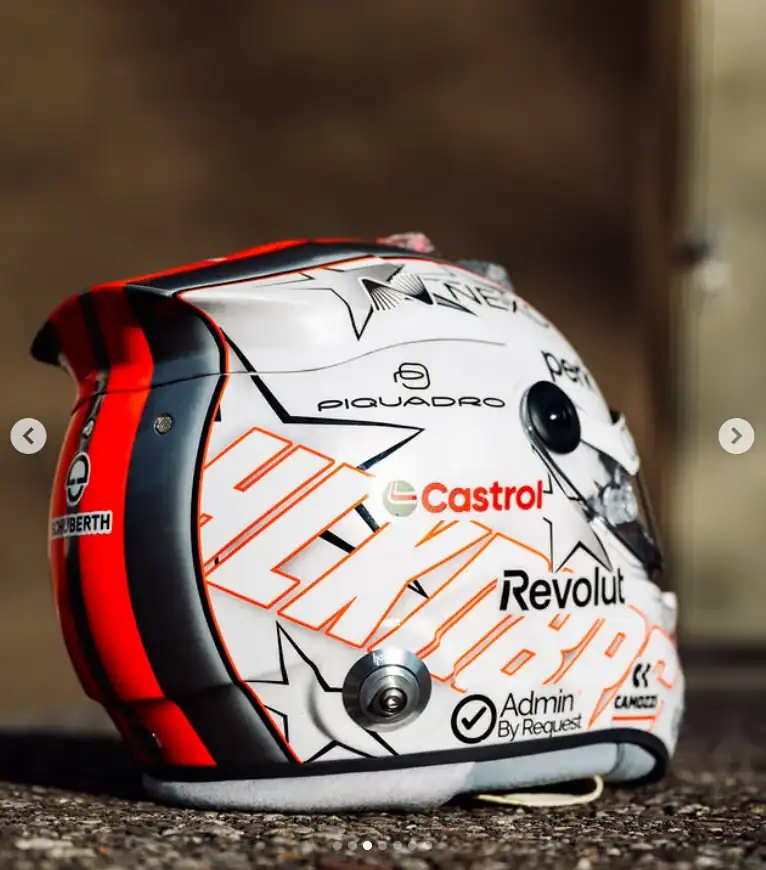
A full-size 1:1 replica helmet remains the single most visually powerful object in most F1 displays. It is sculptural, instantly recognizable and tied to a specific driver-team-season combination. Around that anchor, flatter graphic items — board game packaging, framed prints, programme covers, scale car boxes — work as supporting layers. The Monopoly edition fits naturally into this supporting tier.
Match Eras and Liveries
The strongest displays are coherent rather than comprehensive. Rather than mixing helmets, cars and graphics from a dozen different seasons, consider building micro-collections around a specific era — for example, the current ground-effect era, or a heritage season tied to a championship campaign. If the Monopoly edition reflects the present-day grid, pair it with helmets and models from the same season for maximum visual consistency.
Lighting and Surface
Replica helmets benefit from focused lighting on a matte surface that does not reflect into the visor. Board game packaging, by contrast, photographs and displays best under softer, broader light that flattens the gloss of the box art. A two-tier display — helmets on an upper shelf with directed lighting, graphic items on a lower shelf under ambient light — handles both needs without compromise.
The Bigger Picture: F1 as a Design Universe
The Hasbro partnership is one more confirmation that Formula 1 is now operating as a full design universe, not just a sporting championship. Liveries are treated as fashion seasons. Helmets are treated as wearable art and, increasingly, as collectible sculpture in 1:1 replica form. Circuits are treated as global destinations. Team identities are licensed across watches, fragrances, sneakers, video games and now board games.
For collectors, this is unambiguously good news. The volume and variety of officially licensed material has never been higher, and the visual quality has risen alongside it. A decade ago, an F1 Monopoly edition would likely have used generic motorsport imagery. Today, it can carry accurate team palettes, current circuit branding and proper championship typography — making it a legitimate piece of the wider F1 collecting landscape rather than a novelty.
Whether the board ends up on a shelf, a coffee table or sealed inside a display case, it is now part of the same visual conversation that runs through every full-size 1:1 replica helmet, every scale chassis and every framed livery print in serious F1 collections around the world.
“Formula 1’s strongest collectibles are the ones that lock a specific season’s visual identity in place — liveries, helmets, circuits, branding all aligned to one moment in time.”
— 123Helmets Editorial
FAQ
Q: Is the F1 Monopoly edition officially licensed by Formula 1?
Yes. The product is a collaboration between Hasbro and Formula 1, meaning team logos, liveries, circuit names and the F1 wordmark are all used under official licensing agreements.
Q: Does the game feature all ten current F1 teams?
Based on the announcement framing, the edition reflects the current grid and incorporates all ten constructors through team-themed spaces, color palettes and branding elements on the board.
Q: Are individual drivers featured on the board?
Officially licensed F1 products at the championship and team level typically avoid using specific driver likenesses, since driver image rights are negotiated separately. The Monopoly edition focuses on teams, circuits and the championship itself.
Q: How does this fit alongside other F1 collectibles like replica helmets?
It works as a graphic, packaging-led collectible that complements sculptural pieces such as full-size 1:1 replica helmets and scale cars. Many collectors group items by season or era to build coherent displays.
Q: Should I keep my copy sealed for display or open it to play?
That depends on your collecting priorities. Some collectors buy two copies — one sealed for long-term display, one opened for use. Sealed packaging tends to preserve graphic and branding detail best for display purposes.
Browse F1 Helmet Collection
Display and collector replicas only. Not certified for protective use. Full-size 1:1 scale.