
Blog
Canadian Grand Prix Build-Up: Helmets, Liveries and Display-Worthy Moments from Montreal
 123Helmets Editorial Team
Canadian Grand Prix Build-Up: Helmets, Liveries and Display-Worthy Moments from Montreal
The Île Notre-Dame is alive again. As paddock crews roll their flight cases through the Circuit Gilles Villeneuve gates, the Canadian Grand Prix build-up offers collectors and design enthusiasts something far rarer than championship points: a parade of fresh helmet liveries, special-edition lid designs and podium visuals built to live on a shelf long after the chequered flag. This live coverage gathers every display-worthy moment from Montreal — the colours, the chrome, the maple-leaf tributes and the full-size 1:1 replica details that define a weekend the collector community has circled in red.
Key Takeaways
Montreal traditionally inspires bespoke helmet liveries, making it one of the strongest weekends for collector-grade 1:1 replicas.
Maple-leaf motifs, chrome finishes and tribute designs dominate the paddock’s display-worthy lid lineup.
Podium framing at Circuit Gilles Villeneuve favours head-and-shoulders shots — ideal reference for helmet display angles.
Special-edition helmets unveiled in Canada often become the most sought-after exhibition pieces of the season.
Paddock Arrival: The First Look at Montreal’s Helmet Lineup
The build-up to the Canadian Grand Prix always begins long before the engines fire. Transport trucks unload, garage walls go up, and somewhere between the catering area and the team motorhomes, the first helmet bags are unzipped. For collectors, this is the most electric moment of the weekend — the unveiling. Montreal has a long tradition of hosting bespoke lid designs, and 2024’s edition is no exception. From the moment drivers walked the paddock on Thursday, photographers were chasing glimpses of fresh paintwork, hidden under hoods and tucked inside helmet bags branded with sponsor logos.
What makes Canada particularly special for the display-replica community is the cultural backdrop. The bilingual signage, the maple-leaf iconography, the city skyline framed across the Saint Lawrence — designers lean into all of it. Even teams without a Canadian connection often green-light a one-off livery here, knowing the visual payoff translates beautifully onto a 1:1 collector helmet sitting on an acrylic plinth.
The Unboxing Ritual
There is something almost ceremonial about the way a fresh lid is revealed in the garage. Painters from Italy, the UK and Germany fly their work in personally, handing it to the driver with the same care a jeweller delivers a commission. For the collector watching from home, these moments are reference gold. The angles, the light catching the candy coats, the matte sections against the gloss — every detail informs how an exhibition-quality replica should be positioned on display.
Special Liveries: Maple Leaves, Chrome and Tribute Designs
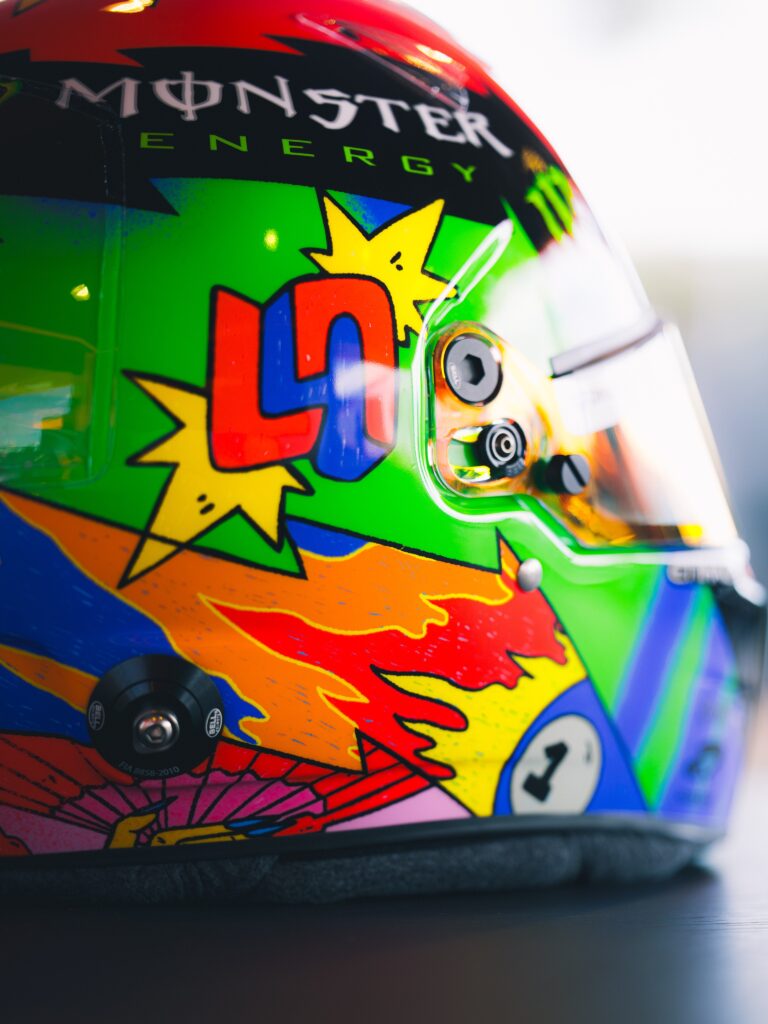
Montreal is a designer’s playground. The maple leaf is an obvious starting point, but the most memorable Canadian Grand Prix helmets tend to use it sparingly — a single embossed leaf on the crown, a faded gradient across the chin bar, or a subtle holographic flake that only catches the eye under direct sunlight. Restraint is what separates a souvenir lid from a true collector piece.
Chrome and Mirror Finishes
Chrome remains the king of Montreal liveries. The Circuit Gilles Villeneuve sits beside open water, and the way mirrored paintwork reflects the surrounding marina, the trees of Parc Jean-Drapeau and the grandstand banners is something no studio shot can replicate. For 1:1 display replicas, chrome poses unique challenges — fingerprints, dust, lighting — but when mounted correctly inside a sealed case with directional LED lighting, the effect is breathtaking. This is the kind of helmet that becomes the centrepiece of a collection room.
Tribute Liveries
Canada has also become the unofficial home of tribute designs. Drivers honour past champions, lost icons, or family members through carefully chosen colour palettes and hidden symbols. These helmets carry narrative weight, and that storytelling is precisely what elevates a full-size replica from decoration to heirloom. Collectors who acquire tribute editions often display them with a small descriptive card explaining the homage — a museum-style approach that adds gravitas to any private exhibition.
Track Walk and Free Practice: Reading the Visual Language
Thursday’s track walk and Friday’s free practice sessions are where helmet designs first meet the circuit. The way a livery reads at speed — through onboard cameras, through long-lens trackside photography, through the helicopter shot down the back straight — informs how collectors should ultimately stage their replicas. A helmet that looks busy in the garage may resolve into clean, powerful blocks of colour at 300 km/h. Conversely, a minimalist design can disappear visually on track but command attention on a shelf.
The Onboard Perspective
Onboard cameras frame the helmet from above and behind, which is why so many designers reserve their boldest graphics for the crown. When you position a 1:1 display replica, consider this angle. A slightly elevated plinth with the helmet tilted forward by five to ten degrees reveals the crown design the way television cameras do during a flying lap. This staging trick transforms an ordinary shelf into something resembling a curated gallery installation.
Chicane Photography
The final chicane before the start-finish straight — the so-called Wall of Champions — produces some of the most dramatic helmet photography of the season. Drivers brake hard, the head shifts inside the cockpit, and the visor catches the late afternoon light. These images circulate widely after the weekend and become the visual template collectors reference when arranging their own displays.
Qualifying Theatre: When Helmet Visors Tell the Story
Qualifying at Montreal is a study in concentration. The cameras linger on visors, on the small tear-off tabs being peeled away, on the way light dances across the iridium coating. For collector replicas, the visor is often the most underestimated component. A correctly tinted visor — whether dark smoke, iridium blue, gold mirror or clear — completely changes the character of a display piece.
Visor Choice as Personality
Some drivers stick with one visor configuration all season; others rotate based on track conditions and personal mood. Montreal, with its mixed lighting and frequent late-afternoon shadows under the trees, often sees drivers opt for medium tints rather than the deep blacks favoured at sun-soaked venues. When curating a 1:1 replica collection, mirroring these visor choices adds authenticity. A Canadian-spec display helmet with the correct medium-tint visor speaks to a deeper level of fandom than a generic dark setup.
The Parc Fermé Reveal
After qualifying, helmets sit on the cockpit edge in parc fermé, lined up for the world’s cameras. This is one of the most photographed moments of any Grand Prix weekend, and Montreal’s setting — with the lake and the city behind — makes it especially cinematic. Collectors often replicate this exact arrangement at home, lining their replicas in qualifying order on a long display ledge.
Race Day Podium: Display-Worthy Moments in Real Time
The Canadian Grand Prix podium is one of the most distinctive in the calendar. Framed by the pit building and overlooked by packed grandstands, it produces head-and-shoulders shots that put the helmet front and centre — even moments after the driver has stepped out of the car and the lid is held aloft or rested on the podium edge.
The Helmet-Off Moment
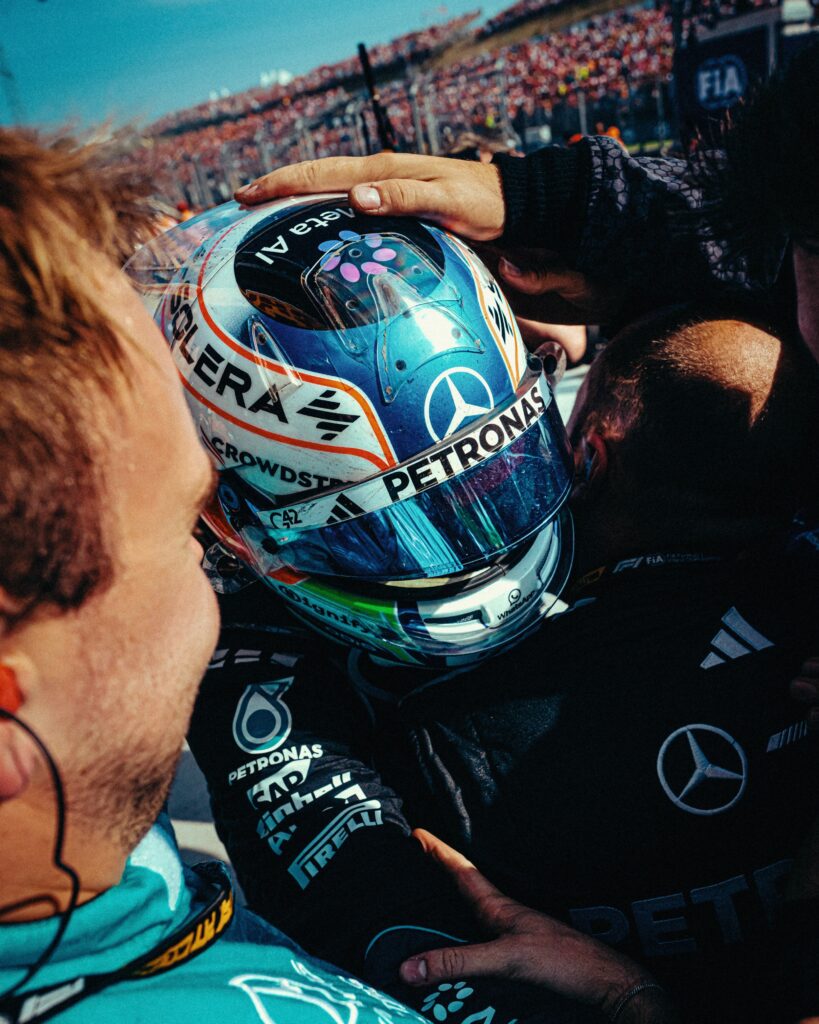
That instant when a driver pulls the helmet off after a podium finish is pure gold for collectors. Hair matted, eyes wide, helmet cradled under one arm — the helmet itself becomes a trophy in that moment. Photographers capture it from a dozen angles, and those images form the visual library that defines how a 1:1 replica should be presented. Cradled in display gloves, mounted at chest height on a dedicated stand, lit from above with a warm key light — the podium aesthetic translates directly into a serious collector’s home setup.
Champagne and Chrome
The champagne spray is the final visual flourish. Droplets catch on visors, sponsor logos glisten, and for a few seconds the helmet looks exactly as it will look in a sealed display case under museum lighting. These are the reference images collectors save, study, and use to inform their own exhibition staging long after the Montreal weekend has ended.
Building a Canadian Grand Prix Display at Home
For collectors who want to commemorate the weekend, the build-up coverage offers a roadmap. Start with the helmet itself — a full-size 1:1 replica of a Canadian Grand Prix special-edition lid, presented as a display piece. Add a contextual base: a small section of acrylic engraved with the date, the circuit name and perhaps a stylised maple leaf. Lighting matters enormously. Cool white LEDs flatter chrome and silver finishes; warm whites suit matte blacks and deep candy colours.
Rotation and Storytelling
The most compelling private collections are not static. Rotating display helmets to match the current Grand Prix weekend keeps the room alive. During the Canadian round, bring the Montreal-themed replicas forward. Add a small printed card explaining the livery’s symbolism. Curate the experience the way a museum curator would, and the collection transforms from a hobby into a genuine exhibition.
Protection and Longevity
Display replicas deserve the same care as any fine collectible. Sealed cases prevent dust accumulation on intricate paintwork, UV-filtering acrylic prevents colour fade, and microfibre handling cloths protect chrome finishes from oils. Treated correctly, a 1:1 collector helmet acquired today will look exhibition-fresh decades from now — long after the live coverage of this Canadian weekend has been archived.
“Montreal is the weekend where helmet designers earn their reputations. A great Canadian livery becomes a permanent fixture in the collector world.”
— Paddock helmet painter, speaking to 123Helmets editorial
FAQ
Q: Why is the Canadian Grand Prix significant for helmet collectors?
Montreal traditionally inspires bespoke and special-edition liveries from drivers and teams, making it one of the strongest weekends of the year for unique full-size 1:1 display replicas. The cultural iconography, the chrome-friendly lighting and the tradition of tribute designs combine to produce lids that become cornerstone pieces in serious collections.
Q: What makes a Canadian Grand Prix helmet livery display-worthy?
Restraint, narrative and finish quality. The best Montreal liveries use maple-leaf motifs sparingly, incorporate chrome or holographic elements that respond to light, and often carry tribute meaning. These qualities translate exceptionally well to exhibition-quality replicas displayed under museum-style lighting.
Q: How should I display a Canadian Grand Prix replica helmet at home?
Use a dedicated plinth with the helmet tilted forward five to ten degrees to reveal the crown design, light it with directional LEDs matched to the finish (cool white for chrome, warm white for matte), and house it in a sealed UV-filtering case. A small descriptive card adds museum-quality context.
Q: Are these helmets suitable for any on-track or protective use?
No. Every helmet discussed is a display and collector replica only. They are full-size 1:1 scale exhibition pieces designed for shelves, cases and curated collection rooms — not for any form of protective, wearable or track application.
Q: What visor configuration is most authentic for a Canadian Grand Prix display replica?
Montreal’s mixed lighting often sees drivers choose medium tints rather than the deep blacks favoured at sun-soaked venues. Mirroring the visor choice the driver actually used in Canada — whether iridium blue, light smoke or gold mirror — adds a layer of authenticity that serious collectors appreciate.
Browse F1 Helmet Collection
Display and collector replicas only. Not certified for protective use. Full-size 1:1 scale.