Blog
Verstappen and the 2027 Engine Revolution: Why New Rules Could Anchor Max in F1
 123Helmets Editorial Team
Verstappen and the 2027 Engine Revolution: Why New Rules Could Anchor Max in F1
Max Verstappen has confirmed that the upcoming 2027 engine regulations “definitely” play a role in his decision to remain in Formula 1, opening a new chapter in the story of the four-time World Champion. For collectors of full-size 1:1 replica helmets and display-quality memorabilia, his words carry weight far beyond the cockpit: every season Max stays is another season of iconic livery evolutions, podium imagery and exhibition-worthy designs to chase.
Key Takeaways
Verstappen openly links his long-term F1 future to the 2027 engine regulation reset.
His current helmet design remains one of the most coveted display pieces in modern motorsport.
Each podium appearance continues to refine the visual identity collectors chase for exhibition shelves.
Full-size 1:1 replica helmets capture the precise livery details featured during this transitional era.
A Statement That Reshapes the Driver Market
When Max Verstappen speaks about his future in Formula 1, the entire paddock listens. His recent comments — confirming that the 2027 engine regulation changes “definitely” help him stay in the sport — reframe what many assumed was an open question about his long-term commitment. After dominating multiple seasons and lifting four World Championships, Verstappen has earned the right to be selective about the conditions under which he continues racing. His statement, delivered with the calm directness that defines his media persona, signals that the technical reset coming in 2027 is more than a regulatory footnote: it is a genuine motivator.
For followers of the sport — and especially for collectors who curate display-grade memorabilia — this declaration matters. Each additional season in which Verstappen competes brings new helmet iterations, new podium ceremonies, and new visual moments that eventually translate into exhibition-quality replicas. The 2027 horizon is no longer a question mark; it is a milestone toward which Max is openly aiming.
Why 2027 Matters Beyond the Numbers
The 2027 power unit framework introduces a substantially different technical philosophy, with a greater emphasis on electrification balance, sustainable fuels and revised combustion architecture. For a driver of Verstappen’s caliber, who thrives on adaptation and mastery of new challenges, this represents a fresh competitive canvas — and an opportunity to build a new chapter of his legacy on terms he finds intellectually engaging.
The Helmet as a Mirror of the Driver’s Mindset
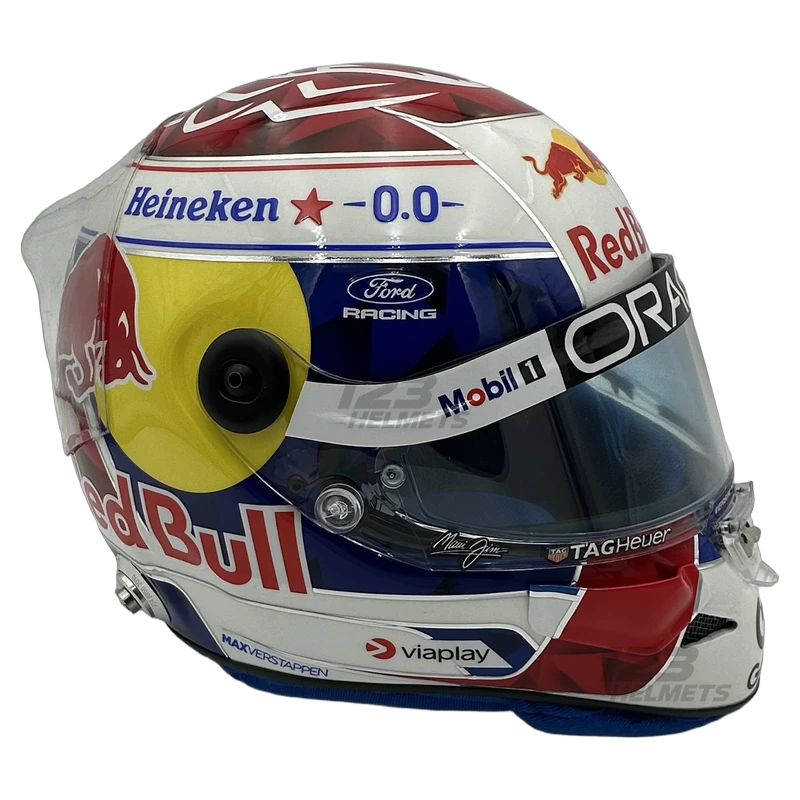
Verstappen’s helmet has evolved into one of the most recognizable visual identities in contemporary Formula 1. The bold lion motif, the layered blue-and-red gradients, the metallic accents that catch trackside lighting — every element has been refined over years to reflect both his Dutch heritage and his personal narrative. As a full-size 1:1 collector replica, his helmet stands as a centerpiece in any serious display, capturing the precise proportions and finish details that define the original design language.
Design Cues Collectors Look For
Discerning collectors examine multiple layers when evaluating a Verstappen replica intended for exhibition: the curvature of the lion graphic across the crown, the placement of sponsor zones, the matte-to-gloss transitions on the side panels, and the way the rear of the shell integrates the championship references that have accumulated season after season. A truly display-worthy 1:1 replica reproduces these elements with exhibition fidelity, allowing the piece to be appreciated under museum-style lighting in a personal collection.
Why Scale Matters
Reduced-scale items can be charming, but they cannot communicate the visual presence of a full-size collector replica. The 1:1 format reproduces the helmet’s authentic silhouette — the same proportions seen on podiums and in pre-race grid walks — making it the format of choice for serious enthusiasts building a curated F1 display.
Recent Race Imagery and Podium Visuals
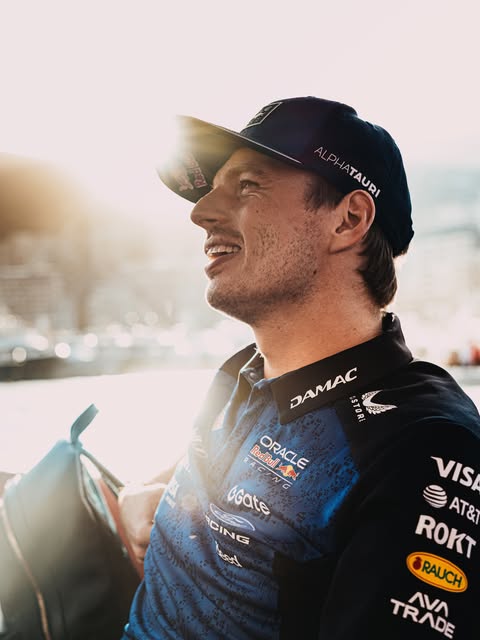
Across the recent stretch of the season, Verstappen has continued to deliver performances that generate the kind of imagery collectors love. Whether it is the moment he steps onto the podium, removes his helmet, and reveals the trademark composed expression, or the grid-walk frames where the helmet’s livery catches the late-afternoon sun, each weekend adds to the visual archive that informs future replica releases.
Podium Moments Worth Framing
The podium ceremony has become one of the most photographed environments in modern sport, and Verstappen’s helmet plays a starring role. The way the light wraps around the visor surround, the highlight that runs along the top spine, and the depth of color that emerges in slow-motion broadcast replays — these are the cues that translate beautifully into a full-size 1:1 display replica. For a collector, owning a replica that reproduces these visual signatures means being able to recreate that podium presence on a shelf, in a glass case, or under a dedicated spotlight at home.
Livery Evolution as a Storytelling Tool
Verstappen’s helmet livery has shifted in subtle but meaningful ways throughout his career — from earlier, more graphic-heavy iterations to the more refined, cinematic finishes seen today. A collection that includes multiple full-size replicas across different seasons becomes a visual narrative of his journey: the early breakthrough years, the championship runs, and now the era leading into the 2027 reset.
The 2027 Reset as a Collector Inflection Point
Major regulation changes tend to redefine how teams and drivers present themselves visually. New power units often coincide with refreshed livery directions, updated typography, evolved sponsor architectures and — frequently — reimagined helmet designs to mark the start of a new technical era. With Verstappen openly stating that the 2027 changes contribute to his decision to stay, collectors should anticipate that the coming seasons will produce a particularly rich visual catalogue.
What This Means for Display Collections
Anyone curating a Verstappen-focused collection should view this period strategically. The helmets representing the current era — before the 2027 reset — will eventually become historical markers of the closing chapter of one regulatory cycle. The full-size 1:1 replicas produced for display now will, in time, sit alongside future designs as bookends of a transitional period in modern Formula 1.
Building a Coherent Exhibition
A well-composed display benefits from chronological logic. Pairing replicas from championship-winning seasons with pieces from the immediate pre-2027 era creates a narrative arc that any visitor can follow at a glance. Lighting, plinth height and background color all contribute, but the focal anchor is always the helmet itself — the most personal, most recognizable element of any driver’s identity.
Why Verstappen’s Continued Presence Matters to the Replica Market
The replica and memorabilia ecosystem is driven by relevance. Drivers who continue to compete generate fresh imagery, fresh podium moments and fresh design iterations, which in turn fuel collector demand. Verstappen’s confirmation that he intends to remain engaged with the sport through the 2027 transition is therefore a significant signal: the catalogue of full-size 1:1 display helmets associated with his career will continue to grow, with each new season offering potential additions to a curated collection.
The Long-Term View
Serious collectors think in decades, not seasons. A driver of Verstappen’s stature, who remains active through a major regulatory reset, ensures that his visual legacy continues to expand. For those building a display collection today, this is welcome reassurance that the pieces being acquired now are part of a living, growing story rather than a closed chapter.
Curating a Verstappen Display: Practical Considerations
A full-size 1:1 collector replica deserves a presentation that matches its quality. Acrylic display cases protect against dust while preserving visibility; LED spotlights with adjustable color temperature can highlight the helmet’s metallic and gradient finishes; and a stable, level surface ensures the piece sits exactly as intended. For collectors who own multiple replicas, rotating which piece occupies the central display position keeps the exhibition feeling fresh.
Documentation and Context
Adding a small printed card or plaque noting the season, the design reference and a notable moment from that period transforms a display from a simple object into a curated experience. As Verstappen’s career extends through the 2027 transition, this kind of contextual framing will only grow in value to anyone exploring the collection.
“The 2027 engine changes definitely help me stay in Formula 1.”
— Max Verstappen, on his long-term commitment to the sport
FAQ
Q: Why is Verstappen’s 2027 statement significant for collectors?
Because it signals continued career longevity, meaning more seasons of podium imagery, livery iterations and helmet designs that eventually inspire full-size 1:1 display replicas for serious collections.
Q: What makes a Verstappen 1:1 replica helmet display-worthy?
Exhibition-grade replicas faithfully reproduce the lion motif, color gradients, finish transitions and proportional accuracy of the design, allowing the piece to function as a true visual centerpiece in a collector display.
Q: Are these helmets intended for use on track or for riding?
No. These are display and collector replicas only. They are produced exclusively as full-size 1:1 exhibition pieces and are not intended for protective, road or track use.
Q: How should I display a full-size 1:1 Verstappen replica at home?
An acrylic case on a stable, level surface with directional LED lighting at a neutral color temperature works exceptionally well. A contextual card noting the season adds narrative depth to the exhibition.
Q: Will the 2027 regulation era change helmet designs?
Major regulatory resets often coincide with refreshed visual identities across teams and drivers, so collectors can reasonably expect new design directions to emerge as the 2027 cycle approaches.
Shop Max Verstappen Collection
Display and collector replicas only. Not certified for protective use. Full-size 1:1 scale.