
Blog
Canada GP Upgrade Showdown: Mercedes and McLaren Push Forward While Ferrari Holds Steady
 123Helmets Editorial Team
Canada GP Upgrade Showdown: Mercedes and McLaren Push Forward While Ferrari Holds Steady
The Canadian Grand Prix delivered a fascinating chapter in the 2024 development war, with Mercedes and McLaren confirming significant technical upgrades while Ferrari arrived in Montreal without new parts. For collectors and visual enthusiasts of Formula 1, the Île Notre-Dame circuit also delivered an unmistakable parade of striking helmet liveries and team colors that have already become iconic display references.
Key Takeaways
Mercedes and McLaren officially confirmed technical upgrades for the Canadian Grand Prix, while Ferrari opted to maintain its current package without new components.
The Montreal weekend offered exceptional visual contrasts between team liveries, ideal references for collectors of full-size 1:1 replica helmets.
Charles Leclerc and Carlos Sainz showcased their distinctive helmet designs, each one already a benchmark for exhibition-quality collector pieces.
The Canadian GP confirmed that the development war between top teams is intensifying, making this season particularly rich for memorabilia enthusiasts.
Montreal: Stage for the Mid-Season Upgrade War
The Canadian Grand Prix has historically served as a key checkpoint in the Formula 1 calendar, a moment when teams arrive with their first major development packages of the season. The 2024 edition was no exception, and Montreal once again confirmed its status as a technical battleground where every team measures its progress against direct rivals.
Mercedes arrived at the Circuit Gilles Villeneuve with a confirmed upgrade package, the result of weeks of work at Brackley aimed at correcting the chronic balance issues that have hampered the W15 in the early stages of the season. The Anglo-German team introduced modifications to the floor and front wing area, components that the engineering staff hopes will allow the car to better exploit the technical characteristics of subsequent circuits.
McLaren, for its part, did not stand idly by. The Woking team, currently one of the most competitive forces on the grid, confirmed it had brought its own evolutionary parts to Montreal. The MCL38 already represents one of the most balanced projects of the season, and the upgrades introduced in Canada were designed to consolidate that competitive advantage.
Ferrari’s Strategic Decision
In stark contrast to its direct rivals, Ferrari chose not to introduce new parts in Montreal. The Maranello team confirmed it would race with the same technical package used in previous events, a decision that sparked discussion among insiders and fans. The Scuderia’s strategy appears focused on consolidating data with the current configuration before introducing substantial evolutions at later events.
This choice, while it may seem conservative, has its own internal logic. Ferrari is concentrating its development efforts on a more full package planned for upcoming European rounds, where the technical characteristics of the circuits will allow for a more accurate assessment of the modifications’ real value.
Ferrari Liveries and Helmets: A Visual Show in Montreal
Beyond the pure technical aspects, the Canadian Grand Prix once again offered an extraordinary visual spectacle. The unmistakable Ferrari red stood out among the most photographed liveries of the weekend, and the helmets of Charles Leclerc and Carlos Sainz confirmed why these collector pieces are so coveted by enthusiasts around the world.
Charles Leclerc: Monegasque Elegance
Charles Leclerc’s helmet maintained its now distinctive aesthetic identity: a dominant white base combined with the bright red typical of the Scuderia, with carefully integrated graphic details that nod to the colors of the Principality of Monaco. The design, in its display version, represents one of the most sought-after pieces by collectors of full-size 1:1 replicas.
The visual lines of the helmet, captured by photographers along the pit lane and during track sessions, confirm the exhibition quality that characterizes Leclerc’s design. Every angle reveals carefully studied details, from the graphic elements on the visor area to the colored bands that wrap around the back of the helmet.
Carlos Sainz: Spanish Style
Carlos Sainz, in his final season with the Scuderia, continued to display his characteristic helmet with the dominant Spanish yellow combined with red, an unmistakable tribute to the colors of his country. The design is one of those that best lends itself to display as a collector item, thanks to the vivid color contrast and clean graphic lines.
For enthusiasts seeking exhibition pieces capable of capturing the imagination, Sainz’s helmet represents a perfect example of how a personal design can become a true emblem of an era. The full-size 1:1 replicas of this helmet are already among the most requested by Ferrari collectors.
Mercedes Upgrades: Brackley’s Technical Response
The technical package brought by Mercedes to Montreal represents one of the most significant attempts to redirect the season. The Brackley team, after a start to the year characterized by structural difficulties of the W15, introduced modifications that focus mainly on aerodynamic flow management.
The new floor, in particular, was the result of weeks of work in the wind tunnel and CFD simulations. The objective is to reduce the so-called “bouncing” phenomenon that has plagued the team since the introduction of the current technical regulations, and to allow Lewis Hamilton and George Russell to find a more consistent setup window.
The Mercedes Visual Heritage
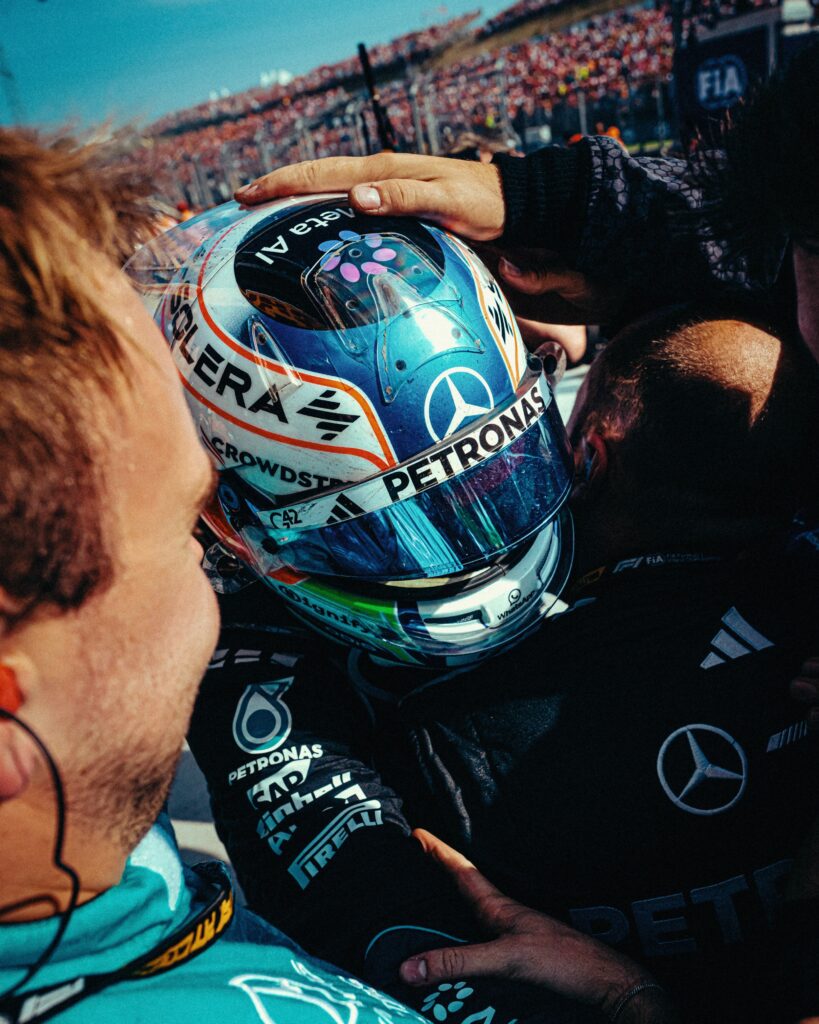
From an aesthetic standpoint, the silver and black livery of the W15 continues to be one of the most recognizable on the grid. Hamilton’s and Russell’s helmets, with their distinctive design solutions, offer rich visual references for those who collect exhibition pieces and full-size 1:1 replicas. Lewis Hamilton, in particular, continues to wear his iconic yellow helmet, an unmistakable signature that has accompanied him throughout his career.
McLaren: Consolidating Competitiveness
McLaren arrived in Montreal as one of the season’s most positive surprises. The MCL38 has progressively transformed into a car capable of fighting for the top positions, and the upgrades introduced in Canada are designed to consolidate this competitive position.
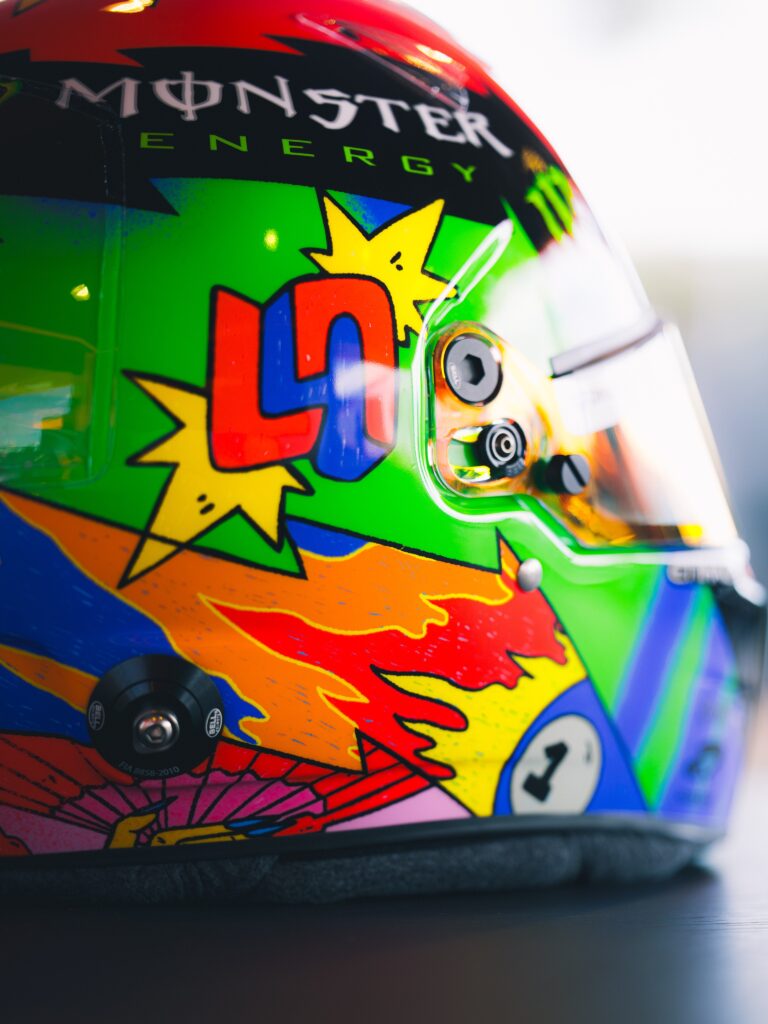
Lando Norris and Oscar Piastri, the two protagonists of the Woking team, have shown they can put pressure on the historic top teams. Norris’s helmet, with its characteristic graphic patterns, has become one of the most appreciated pieces by collectors of modern Formula 1, while Piastri’s design, more sober but equally distinctive, represents the new generation of drivers entering the international scene.
The McLaren Papaya Livery
The MCL38’s papaya orange livery remains one of the most photogenic on the grid. The vivid color contrasts with the more conservative tones of other teams, creating an unmistakable visual signature. For collectors, the combination of helmets and McLaren liveries offers extraordinary display opportunities, especially when paired with full-size 1:1 replicas of Ferrari helmets in collections dedicated to the great rivalries of contemporary Formula 1.
Montreal Track: Visual References for Collectors
The Circuit Gilles Villeneuve, named after the legendary Canadian driver, offers a unique scenic context. The pit straight, the famous “Wall of Champions,” and the views of downtown Montreal create a visual setting that contributes to making every Canadian GP a particularly photogenic event.
For enthusiasts who collect memorabilia and replica helmets, the photos and footage from the Montreal weekend represent an inexhaustible resource. Every shot of helmets in the pit lane, every panoramic image of the cars on track, every moment captured during the podium ceremony offers detailed visual references that inform the choice of pieces for one’s collection.
The Canadian Podium: An Aesthetic Moment
The Canadian GP podium, with its distinctive structure and the Quebec flag prominently displayed, represents one of the most recognizable celebration moments of the season. The helmets of the top three finishers, held by the drivers during the ceremony, become true visual icons that fuel the imagination of collectors of full-size 1:1 replicas.
Looking Ahead: Ferrari’s Strategy for the Coming Months
The decision not to introduce upgrades in Montreal does not mean Ferrari is standing still. On the contrary, Maranello’s strategy appears clearly oriented toward concentrating development efforts on a more full package planned for upcoming European events. This approach allows the team to optimize the use of available resources and maximize the impact of new components.
For Ferrari enthusiasts, this means the next races could represent particularly significant moments, both on a technical and visual level. Any new technical package will likely be accompanied by special helmet versions or livery variations that traditionally make their appearance at home events such as Imola and Monza.
The Value of Special Editions
For collectors, the periods when teams introduce significant updates often coincide with the launch of helmet special editions and themed designs. The full-size 1:1 replicas of these special versions represent some of the most prized pieces of any Formula 1 collection, capable of capturing the historical and emotional value of a specific moment in the season.
“Every Ferrari helmet tells a story: that of the driver who wears it, of the era it represents, and of the deep emotion that the Scuderia continues to evoke in fans around the world.”
— 123Helmets Editorial Team
FAQ
Q: What upgrades did Mercedes bring to the Canadian Grand Prix?
Mercedes confirmed a technical package focused mainly on floor and front wing area modifications, designed to improve the aerodynamic balance of the W15 and reduce the bouncing phenomenon that has hampered the team in the early stages of the season.
Q: Why did Ferrari decide not to introduce upgrades in Montreal?
Ferrari chose to concentrate its development efforts on a more full package planned for upcoming European events, where the technical characteristics of the circuits will allow for a more accurate assessment of the modifications’ real value.
Q: What are the most iconic Ferrari helmets to collect today?
Charles Leclerc’s helmet, with its distinctive white-red combination and references to Monaco, and Carlos Sainz’s helmet with its Spanish yellow, represent two of the most sought-after pieces by collectors of full-size 1:1 replicas. Both are display and collector items only, designed exclusively for exhibition purposes.
Q: What does a full-size 1:1 replica F1 helmet mean?
A full-size 1:1 replica reproduces the exact size and aesthetic details of the original Formula 1 helmet. These pieces are intended exclusively as display and collector items, designed to be exhibited as exhibition-quality memorabilia and not for any protective or wearable use.
Q: What will be the next opportunities to see Ferrari upgrades?
Maranello’s strategy suggests that the upcoming European events, especially the home races at Imola and Monza, could represent the moments when Ferrari will introduce its most significant development package, with potentially special accompanying helmet liveries.
Discover our collection of full-size 1:1 replica Ferrari helmets: exhibition-quality collector pieces, perfect for celebrating the passion for the Scuderia in your personal display. Shop Ferrari Helmets now and bring home a piece of Formula 1 history.
Display and collector replicas only. Not certified for protective use. Full-size 1:1 scale.