
Blog
10 Iconic Ferrari F1 Wins From 250 Career Victories
 123Helmets Editorial Team

Charles Leclerc’s win at the 2026 British Grand Prix pushed Ferrari’s Formula 1 victory count to 250, a number built by 41 drivers across 75 years. Here is a look back at some of the races that defined that record — and what they mean for collectors chasing the helmets worn on those days.
Key Takeaways
Charles Leclerc’s 2026 British Grand Prix win was Ferrari’s 250th world championship Grand Prix victory in Formula 1.
José Froilán González gave Ferrari its first-ever win at the 1951 British Grand Prix, finishing almost a minute clear of the field.
Niki Lauda’s 1974 Spanish Grand Prix win at Jarama was Ferrari’s 50th victory and ended a two-year winless run for the team.
41 different drivers have won a Grand Prix for Ferrari across 75 years, making it the longest continuous winning record in Formula 1.
Ferrari’s 250th F1 Win Arrives at Silverstone
Ferrari’s 250th world championship Grand Prix victory came courtesy of Charles Leclerc at the 2026 British Grand Prix. The win landed almost exactly 75 years after the team’s first world championship success, also at Silverstone, giving the milestone an unusually neat symmetry.
Since Ferrari’s founder Enzo Ferrari entered the team in the inaugural 1950 championship, 41 different drivers have taken at least one victory in red across those 75 seasons. That spread of names, from front-line world champions to one-off race winners, is part of why the 250-win tally carries so much weight in Formula 1 history — no other constructor has combined that longevity with that volume of results.
Picking just ten victories out of 250 forces some hard choices. The selection below leans on races that changed the direction of the team, closed out long droughts, or produced performances still discussed decades later.
1951 British Grand Prix: Gonzalez Opens the Account
José Froilán González delivered Ferrari’s first world championship Grand Prix win at the 1951 British Grand Prix at Silverstone. Alfa Romeo had dominated the 1950 season, but Ferrari’s 375 was a genuinely competitive machine by 1951, and González took pole position before out-fighting the Alfa Romeos through the race.
The Argentine needed only a single refuelling stop, and that strategic advantage opened a gap that grew as the race went on. González crossed the line almost a minute clear of the field, a margin that underlined just how strong the Ferrari package had become in barely two seasons of competition.
That result got Enzo Ferrari’s team on the board in the world championship and set the template for everything that followed — 250 wins, 75 years, and a driver list that now runs to 41 names.
1974 Spanish Grand Prix: Lauda Ends a Two-Year Drought
Niki Lauda’s win at the 1974 Spanish Grand Prix at Jarama was Ferrari’s 50th world championship victory, and its first in two years. Lauda had joined a team coming off a winless 1973 season, taking pole at Jarama in a race run across changing wet and dry conditions.
He lost track position mid-race but recovered it after switching to slick tyres as the circuit dried, then held the lead until the race reached its time limit. That result reopened Ferrari’s win column after a barren stretch and marked the start of one of the team’s most productive driver partnerships.
Lauda went on to score 15 wins for Ferrari between 1974 and 1977, a tally that still leaves him second on the team’s all-time win list. His 1974 Jarama result remains one of the clearest turning points in the team’s 75-year history.
1981 Spanish Grand Prix: Villeneuve’s Farewell to Jarama
Gilles Villeneuve’s 1981 Spanish Grand Prix win at Jarama is remembered as one of the great defensive drives in Ferrari history. Formula 1 had outgrown the tight Spanish circuit by the start of the 1980s, and 1981 turned out to be Jarama’s final world championship race.
Villeneuve was driving a Ferrari 126 that was, by his own team’s admission, difficult to handle through the corners on that circuit’s twisting layout. Despite the car’s shortcomings, he held off a pack of quicker-cornering rivals for the entire race distance, converting a straight-line speed advantage into a win through sheer positioning and control lap after lap.
It stands alongside the Gonzalez and Lauda results as one of the wins Ferrari fans point to first — not because of the margin at the flag, but because of what the driver had to do to get there.
Why These Wins Matter for Collectors
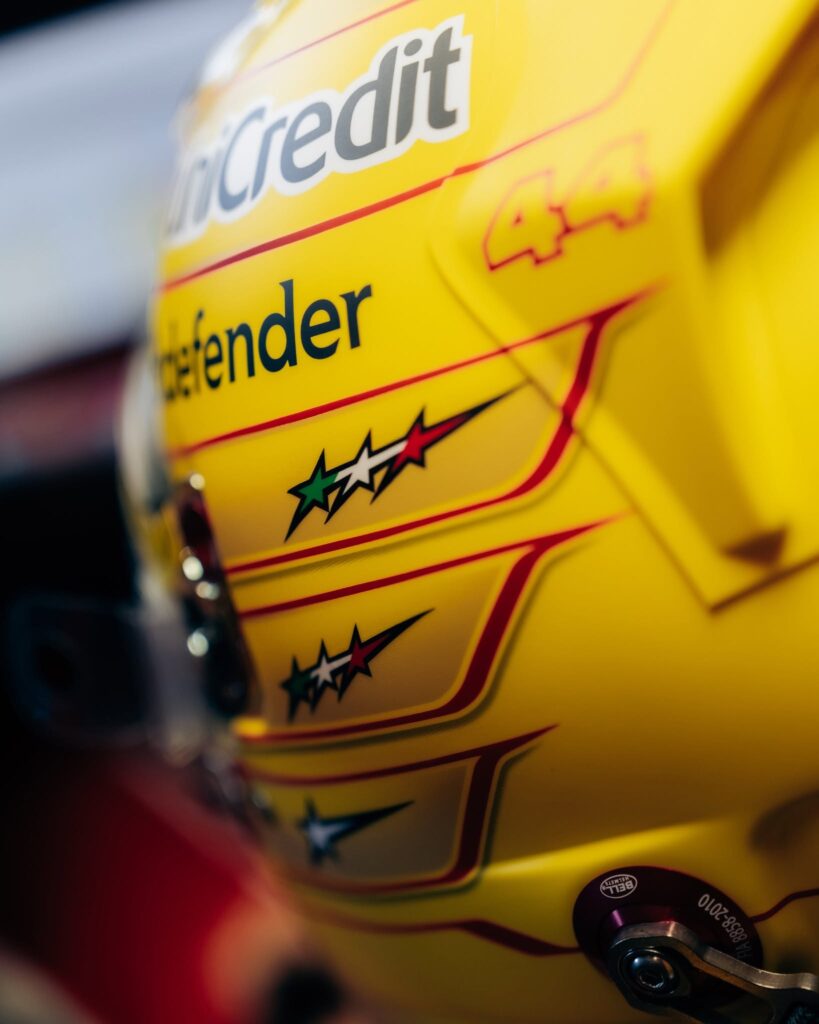
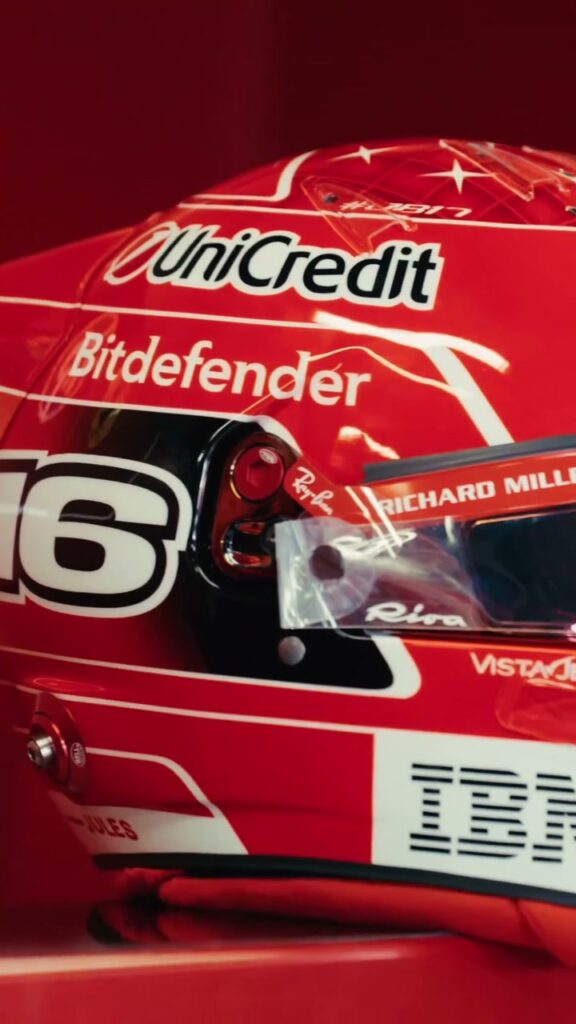
Each of these victories corresponds to a helmet design that collectors still request today, from Lauda’s plain-shell 1970s lids to the modern liveries worn by Leclerc’s generation of Ferrari drivers. A full-size 1:1 collector helmet tied to a specific race — the 250th win at Silverstone, the 50th win at Jarama, or the maiden 1951 victory — gives a display piece a fixed point in team history rather than just a driver name.
123Helmets builds its display and collector replicas to full 1:1 scale, matched to the shell shape, paint layers and livery details associated with a given season or race. These are exhibition-quality pieces made for a stand or cabinet, not for wear on track or road.
- Full-size 1:1 scale shells matched to the driver and season
- Display and collector use only — not intended for protective wear
- Liveries tied to specific eras across Ferrari’s 75-year win record
For anyone building a Ferrari wall or cabinet around this 250-win milestone, the appeal is in anchoring the collection to races that actually moved the team’s history forward.
Ferrari’s Win Record in Numbers
Ferrari has scored 250 world championship Grand Prix victories across 75 seasons of Formula 1 competition, from the 1950 championship’s founding through the 2026 British Grand Prix. That total has been built by 41 different race-winning drivers, a spread unmatched by any other constructor on the current grid.
Key markers along the way include the maiden 1951 British Grand Prix win, the 50th victory at the 1974 Spanish Grand Prix, and now the 250th at Silverstone in 2026 with Charles Leclerc behind the wheel. Between those points sit championship-defining stretches for drivers such as Niki Lauda, whose 15 wins across 1974-77 still rank second on the team’s all-time list.
The number keeps moving. With Charles Leclerc and his teammates continuing to compete for Ferrari through the rest of the 2026 season, the 250-win milestone is a marker, not a finish line.
“A number like 250 wins is really 250 separate stories. Collectors tend to gravitate toward the ones that changed the team’s direction, not just the ones with the biggest winning margin.”
— 123Helmets Editorial Team
FAQ
Q: When did Ferrari reach 250 Formula 1 wins?
Ferrari reached 250 world championship Grand Prix wins at the 2026 British Grand Prix, with Charles Leclerc taking the victory at Silverstone.
Q: When was Ferrari’s first Formula 1 win?
Ferrari’s first world championship Grand Prix win came at the 1951 British Grand Prix, where José Froilán González finished almost a minute clear of the field.
Q: How many drivers have won a Grand Prix for Ferrari?
41 different drivers have won at least one world championship Grand Prix for Ferrari across the team’s 75 years in Formula 1.
Q: Which race was Ferrari’s 50th F1 victory?
Niki Lauda’s win at the 1974 Spanish Grand Prix at Jarama was Ferrari’s 50th world championship victory, ending a two-year winless run for the team.
Q: Are 123Helmets Ferrari replicas approved for track use?
No, 123Helmets Ferrari replicas are full-size 1:1 display and collector items intended for exhibition, not for protective or track use.
Shop Ferrari Helmets
Display and collector replicas only. Not certified for protective use. Full-size 1:1 scale.