Blog
Wolff Questions Ferrari’s Upgrade Pace Under F1 Cost Cap
 123Helmets Editorial Team

Mercedes team principal Toto Wolff has openly questioned how Ferrari continues to introduce major upgrades to its SF-26 through the 2026 season while operating under the same budget cap as every other constructor, suggesting the Scuderia may soon hit a financial wall.
Key Takeaways
Toto Wolff said Mercedes is ‘surprised’ Ferrari can keep bringing major upgrades under the same cost cap rules that constrain every 2026 constructor.
Ferrari has reshaped the SF-26 with a new engine specification and revised front wing elements at the Austrian Grand Prix, following larger aero updates in Miami and Barcelona.
The Barcelona upgrade preceded Lewis Hamilton’s first grand prix victory for Ferrari, tying the car’s development story directly to his early Scuderia era.
The ‘Macarena wing’, which pivots its upper plane 180 degrees in Straight Line Mode, is one of the season’s most closely scrutinised technical talking points, alongside the FIA’s new Additional Development and Upgrade Opportunities ranking.
Wolff’s Cost Cap Challenge to Ferrari
Toto Wolff publicly questioned Ferrari’s ability to sustain its 2026 upgrade rate under the sport’s budget cap after the Austrian Grand Prix. “We’re a little bit surprised that Ferrari can throw these huge updates at the car in the way they do,” Wolff said, adding that in his view Ferrari ‘need to be running out of money soon, cost cap money, because we can’t do that.’ His comment reflects a broader tension among the grid’s leading teams, all of which operate inside the same financial ceiling introduced to level competition after decades of unrestricted spending.
Under the current regulations, teams no longer run multiple wind tunnels around the clock or field separate test squads lapping privately hired circuits without limit. Every wing element, floor revision and engine specification now competes for the same finite pool of cost cap money, which is why a team perceived to be moving faster than its rivals draws scrutiny. Wolff’s remark that Ferrari lacks ‘the buffer in the cost cap’ to keep bringing so many parts is as much a statement about Mercedes’ own constraints as it is a comment on Ferrari’s approach.
Wolff added a note of caution about his own team’s trajectory, saying he expects Mercedes to ‘come with more’ as the season progresses, while predicting Ferrari’s pace of change would slow toward the closing rounds as budget cap pressure builds. Whether that prediction plays out will become one of the more closely watched subplots of the second half of the 2026 season.
Ferrari’s SF-26 Upgrade Timeline
Ferrari has substantially remodelled the SF-26 through the 2026 season, with major aerodynamic packages introduced in Miami and Barcelona followed by further changes at the Austrian Grand Prix. The Austrian weekend brought a new engine specification alongside revised front wing elements and several test items evaluated on track, continuing a pattern of near-weekly refinement that has become one of the season’s defining storylines since the enforced April break created by the cancellation of the Bahrain and Saudi Arabian Grands Prix.
Beyond the headline aero packages, Ferrari has quietly revised smaller components across multiple rounds, including wing endplates and floor-edge geometries, the kind of incremental changes that rarely make headlines individually but accumulate into a materially different car by mid-season. Red Bull has also brought significant changes to its RB21 over the same period, but the scale and frequency of Ferrari’s revisions have made the Scuderia the most discussed case in the current cost cap debate.
For a team that has spent recent seasons chasing a return to consistent front-running form, the upgrade cadence signals intent. It also raises the practical question Wolff posed directly: how much of the remaining cost cap allowance Ferrari has left to spend before the season’s final rounds, when in-season development typically slows across the entire grid regardless of team.
Hamilton’s Breakthrough and the Barcelona Update
Lewis Hamilton claimed his first grand prix victory for Ferrari in the race following the team’s Barcelona upgrade, linking one of the car’s biggest technical steps directly to a landmark result in his early tenure with the Scuderia. The timing placed the Barcelona package at the centre of the narrative around Ferrari’s 2026 form, with the upgrade widely credited by observers as a turning point in the car’s competitiveness.
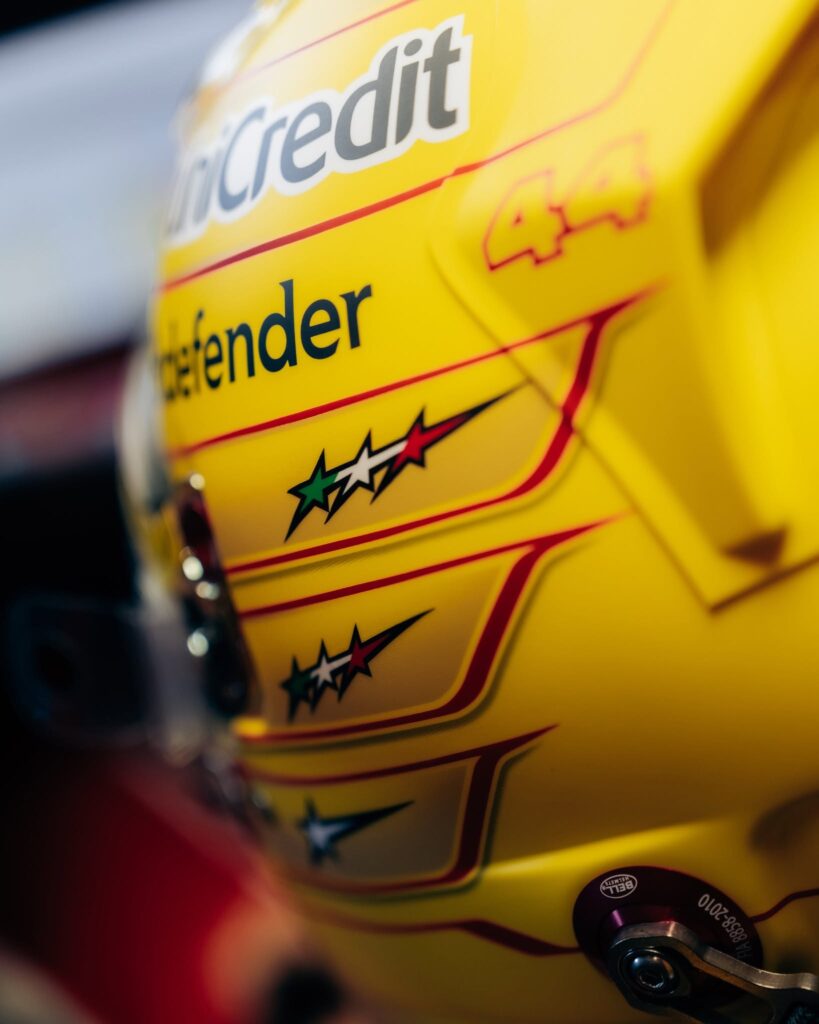
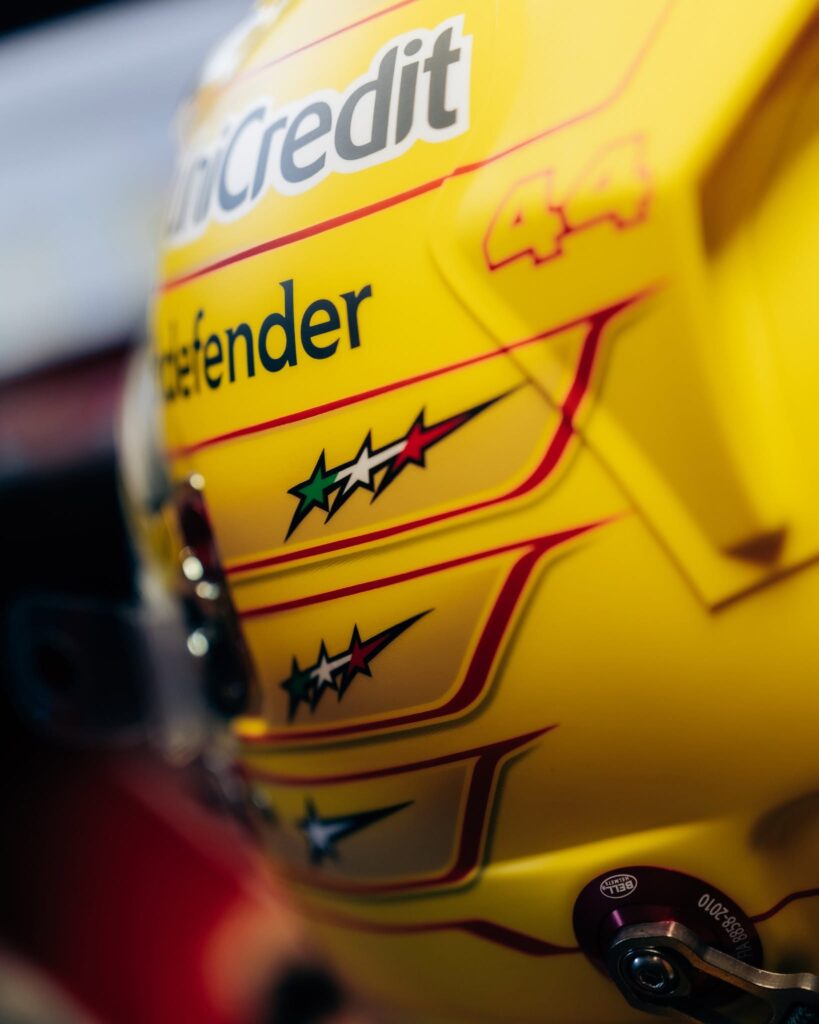
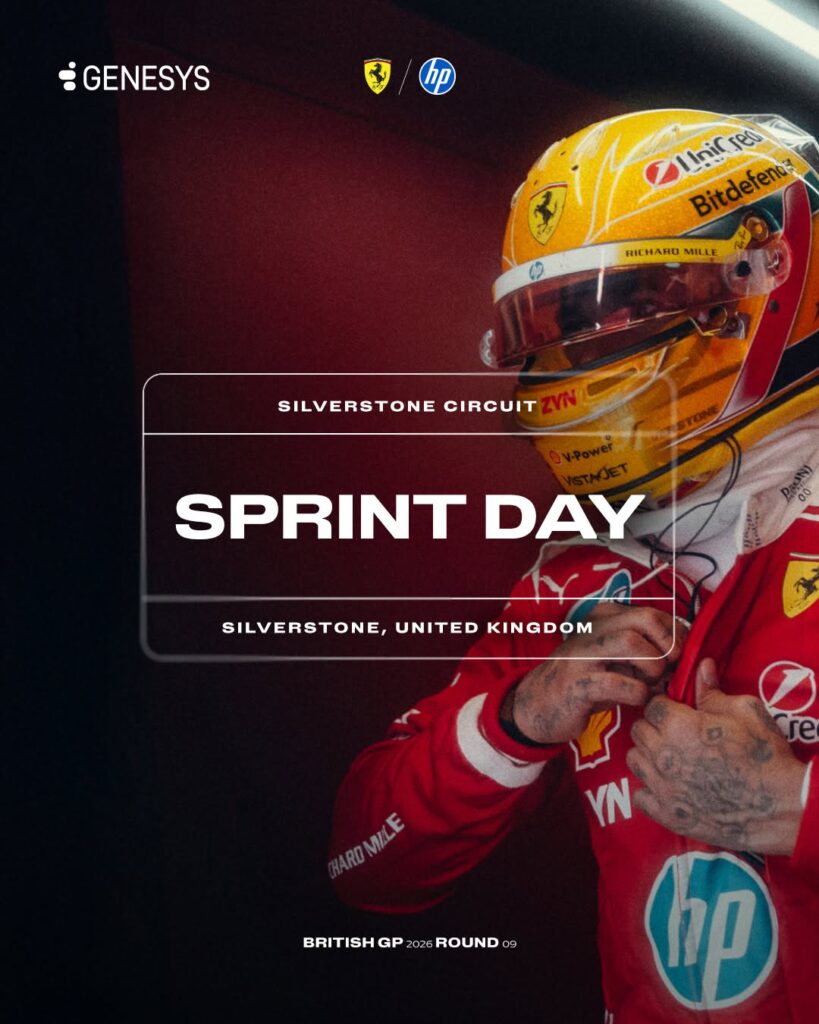
For collectors, that sequence of events gives the 2026 SF-26 story a natural focal point. A car that changes meaningfully between Miami, Barcelona and Austria, paired with a driver’s first win in Scuderia colours, creates the kind of season-defining moment that display pieces are built to commemorate. A full-size 1:1 replica helmet finished in Lewis Hamilton’s Ferrari livery captures that specific chapter of his career, independent of how the rest of the season unfolds.
The broader point for anyone following the 2026 constructors’ fight is that upgrades are not abstract technical exercises. They translate directly into on-track results, and in Ferrari’s case one specific package appears to have coincided with the team’s first win of Hamilton’s Ferrari era.
The Macarena Wing and Technical Scrutiny
Ferrari’s ‘Macarena wing’ is a rear wing design in which the upper plane pivots by 180 degrees when Straight Line Mode is activated, one of the more innovative solutions introduced by any team this season. The mechanism has drawn attention both for its engineering approach and for what it represents in the wider argument about upgrade pace: a piece of hardware complex enough to demand real design and validation resources, appearing on a car that has already received a new engine specification and multiple aero revisions in the same season.
Less visible areas of the SF-26 have also come under scrutiny. The FIA has begun applying its first Additional Development and Upgrade Opportunities ranking, a mechanism introduced to monitor how teams distribute their permitted development activity across a season under the cost cap framework. The ranking adds a layer of formal oversight to a debate that had, until now, been argued mostly through team principal press conferences rather than governing body data.
Whatever the ranking ultimately shows about Ferrari’s development allocation, the Macarena wing itself has already become one of the visual signatures of the SF-26’s 2026 identity, the kind of distinctive technical detail that tends to be referenced for years after a season closes.
Why the 2026 Development Race Matters for Collectors
A season defined by rapid, visible car development gives collectors a clear reference point for dating and contextualising display pieces from that year. The 2026 campaign, with its Miami, Barcelona and Austrian Grand Prix upgrade cycles, its budget cap controversy, and Hamilton’s first win in Ferrari colours, is shaping up as one of the more talked-about technical seasons in recent memory, regardless of how the championship standings finish.
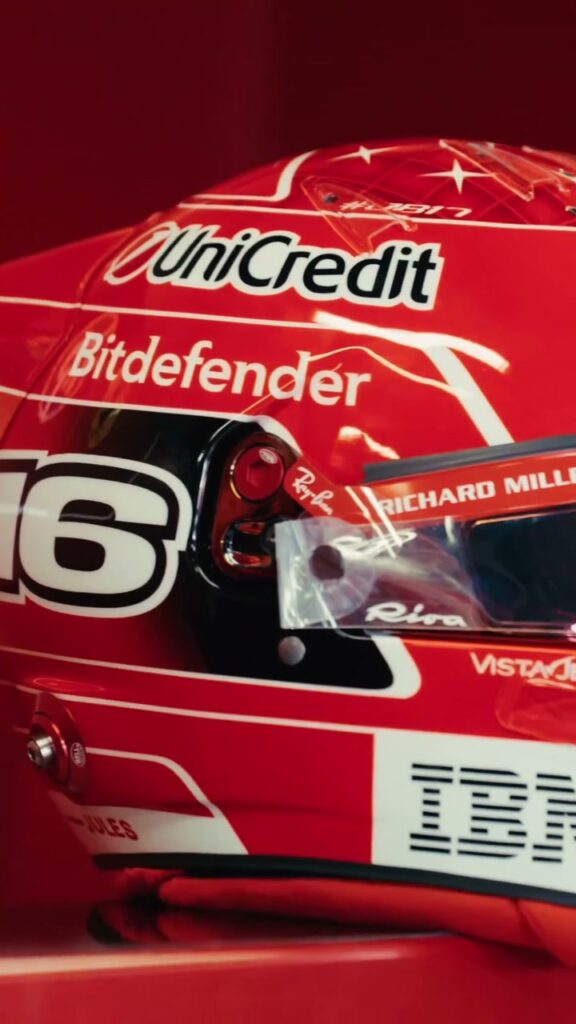
Full-size 1:1 replica helmets tied to specific drivers and specific seasons function as exhibition-quality markers of moments like these. A display piece finished in the current Ferrari livery represents not just a driver or a team, but a particular chapter of a rules era in which every upgrade has to be justified against a hard financial ceiling, making the engineering story behind the car as much a part of its history as the results themselves.
For anyone assembling a collection around the 2026 season, the Ferrari story, upgrade controversy, technical innovation and a breakthrough win, offers one of the clearer narratives to build around, whether the focus is a specific race weekend or the season as a whole.
“We’re a little bit surprised that Ferrari can throw these huge updates at the car in the way they do. In my opinion, they need to be running out of money soon, cost cap money, because we can’t do that.”
— Toto Wolff, Mercedes Team Principal
FAQ
Q: Why did Toto Wolff question Ferrari’s upgrade pace in 2026?
Toto Wolff questioned Ferrari’s upgrade pace because he believes the scale and frequency of the SF-26’s updates, including a new engine specification and revised front wing at the Austrian Grand Prix, look difficult to sustain under F1’s budget cap, which limits every team including Mercedes.
Q: What upgrades has Ferrari brought to the SF-26 in 2026?
Ferrari has introduced major aerodynamic packages in Miami and Barcelona, a new engine specification and revised front wing elements at the Austrian Grand Prix, plus smaller revisions to wing endplates and floor-edge geometries across multiple race weekends.
Q: What is Ferrari’s ‘Macarena wing’?
The Macarena wing is a rear wing design on the SF-26 in which the upper plane pivots by 180 degrees when Straight Line Mode is activated, one of the season’s more innovative technical solutions.
Q: Did an upgrade lead to Hamilton’s first Ferrari win?
Lewis Hamilton claimed his first grand prix victory for Ferrari in the race following the team’s Barcelona upgrade, with that package widely linked to the car’s improved competitiveness at that point in the 2026 season.
Q: Are these Ferrari helmet replicas certified for racing use?
No, these are full-size 1:1 collector and display replicas built as exhibition-quality pieces for showcasing team liveries and drivers, not certified protective equipment.
Shop Ferrari Helmets
Display and collector replicas only. Not certified for protective use. Full-size 1:1 scale.