Blog
FIA Document 59: Leclerc-Piastri Turn 5 Clash at Spa
 123Helmets Editorial Team
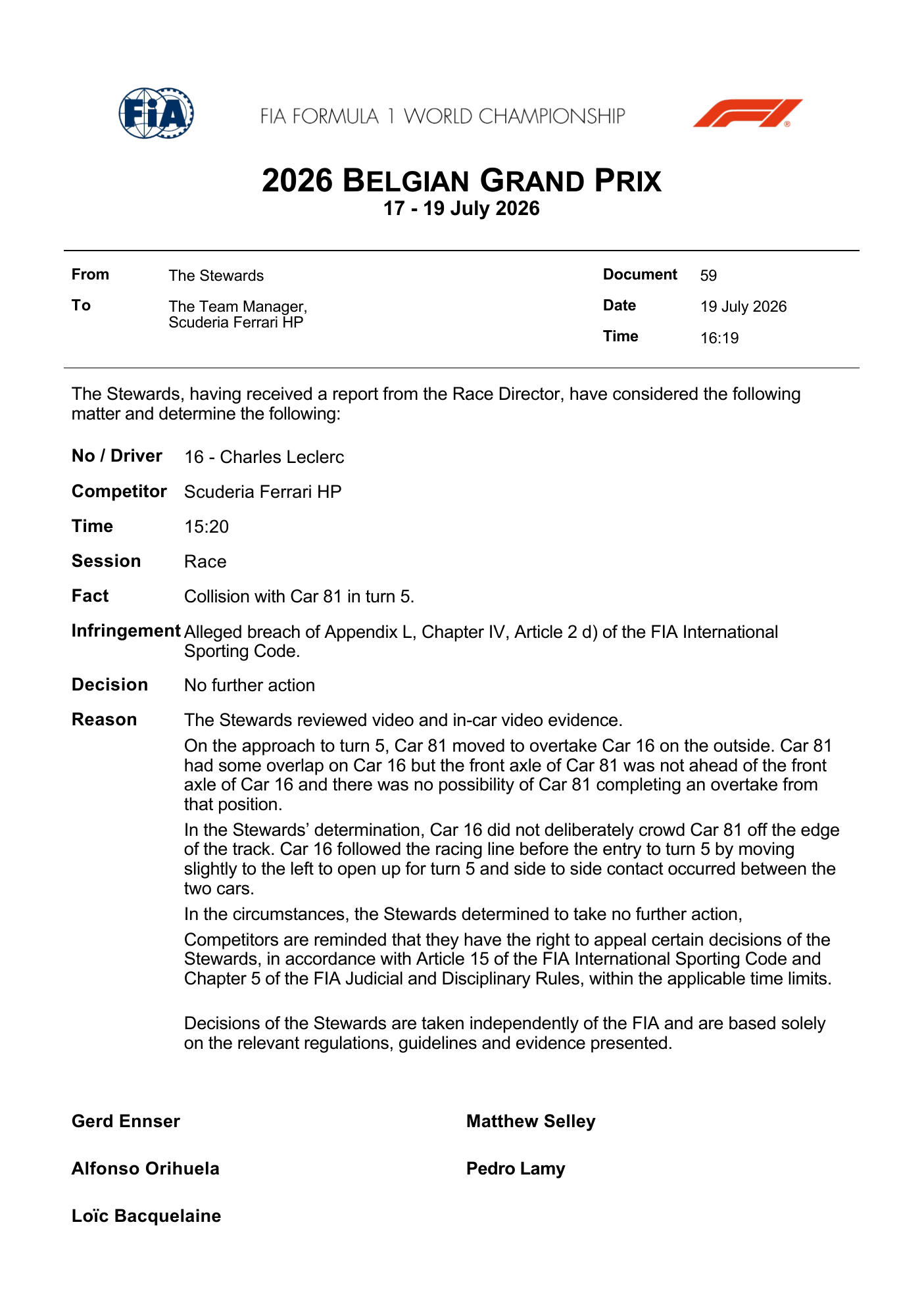
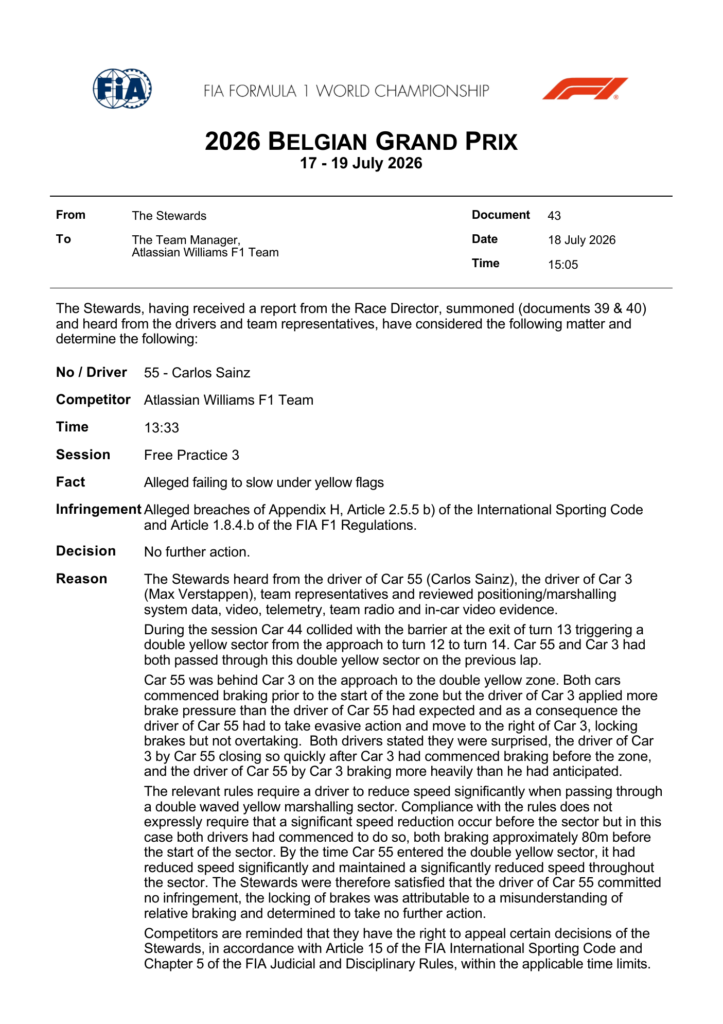
FIA stewards published Document 59 following the Belgian Grand Prix, addressing a collision between Charles Leclerc (Ferrari) and Oscar Piastri (McLaren) at Turn 5 of Circuit de Spa-Francorchamps. The document confirms the incident was reviewed after the chequered flag using onboard footage, telemetry and driver interviews.

Key Takeaways
FIA stewards issued Document 59 after the 2026 Belgian Grand Prix regarding a Turn 5 collision between Leclerc (Ferrari) and Piastri (McLaren).
Circuit de Spa-Francorchamps runs 7.004 km per lap, with the Belgian Grand Prix distance set at 44 laps (308.052 km).
Stewards documents follow a fixed review process: video evidence, GPS/telemetry data and driver interviews before a written decision is filed.
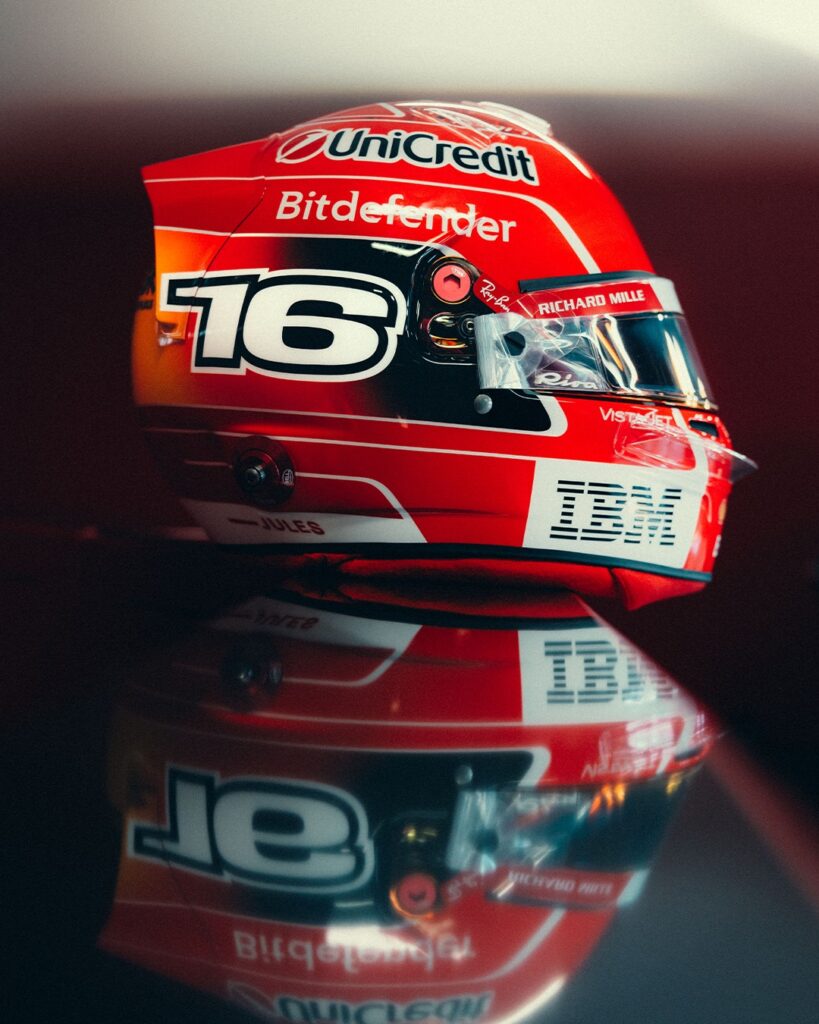
Incidents like this keep race-worn liveries relevant for collectors, with full-size 1:1 display helmets replicating the exact designs drivers wore during the event.
What Happened at Turn 5
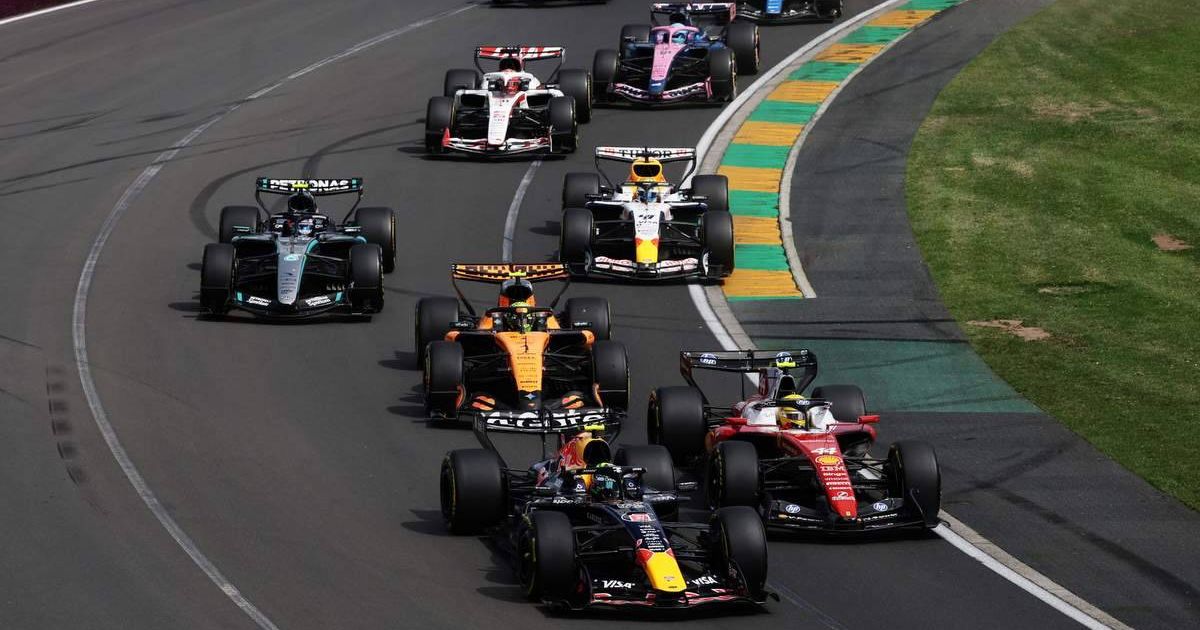
Charles Leclerc (Ferrari) and Oscar Piastri (McLaren) made contact at Turn 5 during the 2026 Belgian Grand Prix at Circuit de Spa-Francorchamps. The incident was flagged for a post-session review by the FIA stewards, resulting in the publication of Document 59. Spa-Francorchamps measures 7.004 km per lap, one of the longest circuits on the current calendar, and the Belgian Grand Prix is run over 44 laps for a total race distance of 308.052 km.
Turn 5 sits in a section of the circuit where cars carry considerable speed differential entering and exiting corners, a layout that has produced contact between competing cars in past editions of the event. The stewards’ documentation process exists specifically to examine these moments away from the pressure of live broadcast commentary, giving officials time to study every available data source before ruling on causation and any resulting stewards’ action.
Inside FIA Document 59
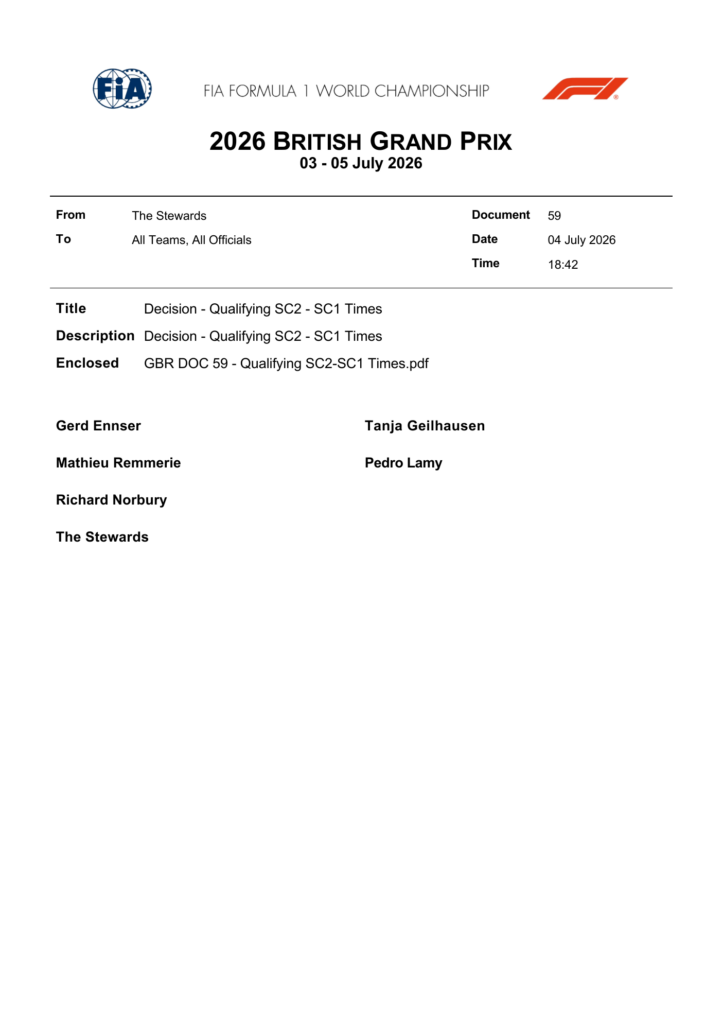
Document 59 is the official written record of the stewards’ findings on the Charles Leclerc/Oscar Piastri Turn 5 collision. FIA stewards documents follow a standard numbering sequence through a Grand Prix weekend, with each incident, investigation or administrative note assigned its own sequential document once a decision or notice is finalized. Document 59 falls late in this numbering for the Belgian Grand Prix weekend, consistent with a matter reviewed and closed after the race had concluded rather than during a practice or qualifying session.
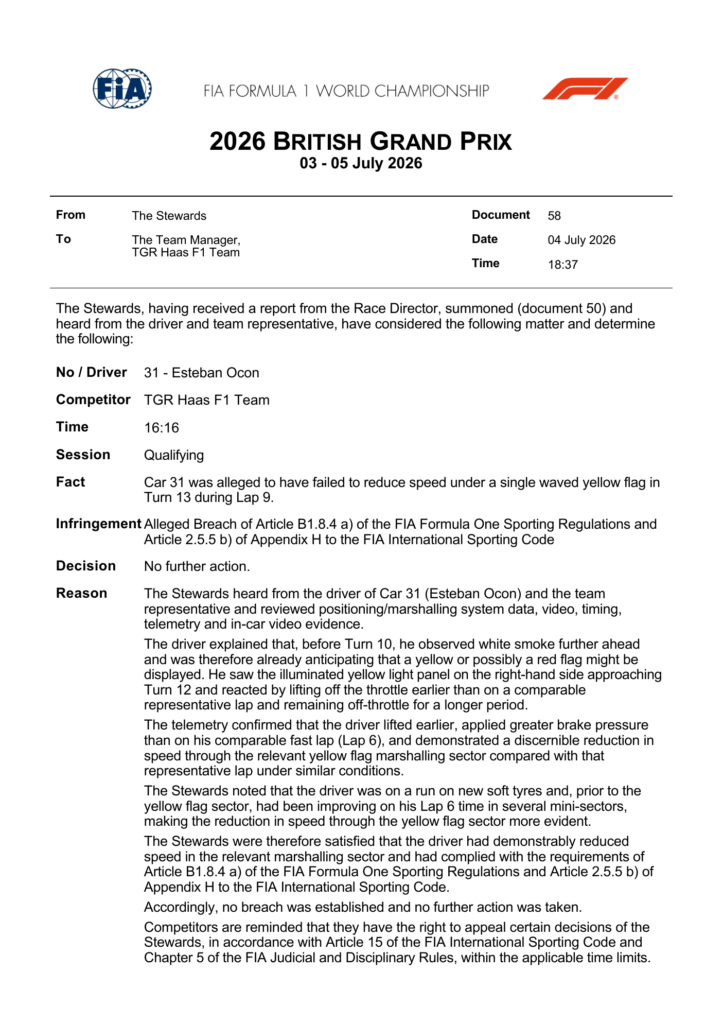
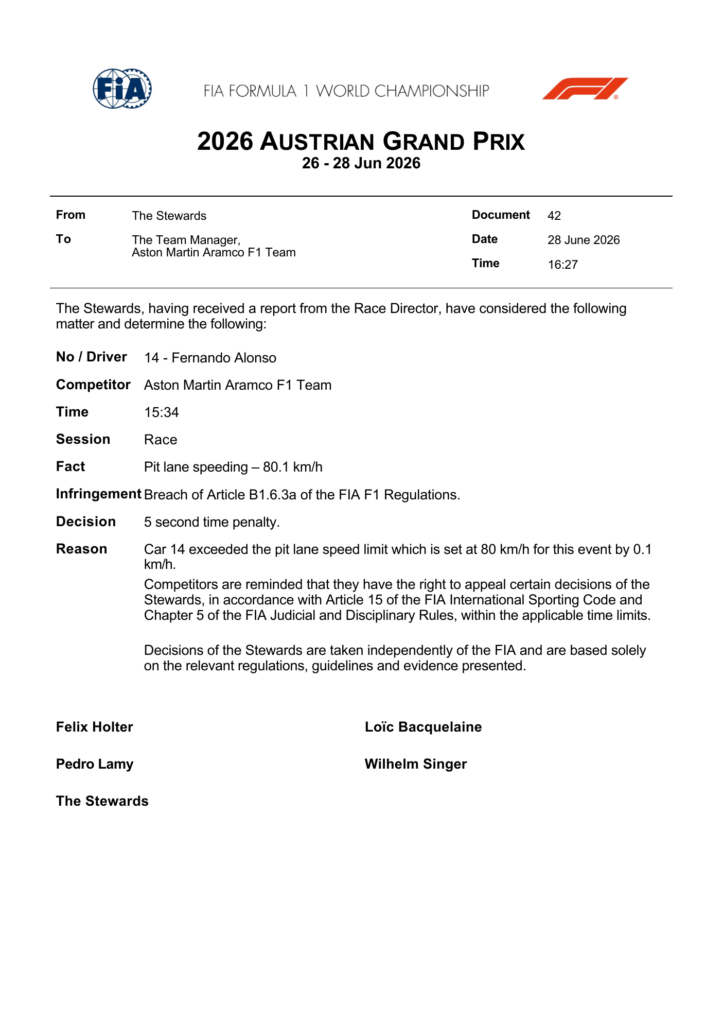
These documents typically record the car numbers involved, the session and lap reference, a summary of the stewards’ reasoning, and the outcome of their deliberation. For fans and collectors following incident reports through a season, the documents provide the clearest official account of what stewards actually reviewed, as opposed to speculation formed from broadcast replays alone.
The Stewards’ Review Process
FIA stewards review contested incidents using three main sources: onboard camera footage, GPS and car telemetry, and direct interviews with the drivers involved. For the Turn 5 collision between Charles Leclerc and Oscar Piastri, this process would have included frame-by-frame video from multiple onboard and trackside camera angles, telemetry traces showing braking points, throttle application and steering input from both cars, and separate interviews with Leclerc and Piastri once the race had finished.
Stewards then weigh this evidence against the applicable articles of the FIA International Sporting Code and the driving standards guidelines published for the season. The result is filed as a numbered document, in this case Document 59, which stands as the permanent record of the review even where the on-track consequence for either driver was limited to the incident itself.
Why Turn 5 Incidents Draw Scrutiny
Spa’s layout produces frequent overtaking opportunities alongside significant speed differences between cars, a combination that increases the likelihood of contact in specific sectors of the lap, which is why incidents in this part of the circuit are reviewed closely by race control every season.
What This Means for Ferrari and McLaren
Any stewards decision involving two front-running cars carries weight for both teams’ race weekend, since Leclerc represents Ferrari and Piastri represents McLaren in the current constructors’ fight. Beyond the immediate on-track result, incidents reviewed under documents like this one become part of each driver’s on-file history with race control, a record stewards can reference if similar contact occurs later in the season.
For Ferrari and McLaren, weekends at Spa-Francorchamps have historically produced high-stakes moments given the circuit’s mix of long straights and technical sections, and this Turn 5 review adds to that history for the 2026 season.
Collecting the Moment: Leclerc and Piastri Helmet Replicas
Race incidents documented by the FIA often become the moments collectors want represented on their shelves, and a Turn 5 clash between two title-contending teams at Spa is exactly the kind of story that gives a helmet display real context. Full-size 1:1 replica helmets built to display and collector standards recreate the exact livery a driver wore for that specific Grand Prix weekend, giving fans a way to mark a specific race by date rather than by a generic season design.
Collectors following Charles Leclerc and Oscar Piastri through the 2026 season can pair a stewards document like this one with the corresponding helmet design worn that weekend, creating a documented pairing between the on-track story and the item on display. These are exhibition-quality pieces intended for display purposes, not for on-track or protective use.
What Happens Next
Document 59 closes the formal review of the Turn 5 incident for the 2026 Belgian Grand Prix weekend, with the written record now standing as the permanent account of the stewards’ findings. Any further consequence, if applicable, would appear in a subsequent numbered document issued by the same stewards’ panel before the weekend’s paperwork is finalized. Fans tracking the incident should watch for any additional documents referencing Charles Leclerc or Oscar Piastri in the same numbering sequence, as amendments or clarifications are occasionally issued shortly after the initial ruling.
The Belgian Grand Prix now moves into the archive of the 2026 season, joining the calendar’s other 7.004 km-per-lap events as one of the longer circuits drivers navigated this year, with Document 59 remaining the official reference point for anyone reviewing the Turn 5 contact between Ferrari and McLaren.
“The stewards reviewed video evidence, positioning data and interviewed both drivers before reaching their decision.”
— FIA Stewards Document 59 summary language
FAQ
Q: What is FIA Document 59 from the Belgian Grand Prix?
Document 59 is the official stewards’ written decision covering the Turn 5 collision between Charles Leclerc (Ferrari) and Oscar Piastri (McLaren) during the 2026 Belgian Grand Prix. It records the evidence reviewed and the stewards’ final ruling on the incident.
Q: Which drivers were involved in the Turn 5 collision?
Charles Leclerc, driving for Ferrari, and Oscar Piastri, driving for McLaren, made contact at Turn 5 during the 2026 Belgian Grand Prix at Circuit de Spa-Francorchamps.
Q: How long is the Belgian Grand Prix race distance?
The Belgian Grand Prix is run over 44 laps of the 7.004 km Circuit de Spa-Francorchamps, giving a total race distance of 308.052 km.
Q: How do FIA stewards review a collision like this?
Stewards review onboard camera footage, GPS and telemetry data, and conduct separate interviews with the drivers involved before filing a numbered written decision, in this case Document 59.
Q: Are the helmet replicas mentioned in this article certified for racing use?
No, these are full-size 1:1 display and collector replicas built for exhibition purposes only, not certified for protective or on-track use.
Browse F1 Helmet Collection
Display and collector replicas only. Not certified for protective use. Full-size 1:1 scale.