Blog
Inside a Full-Size F1 Helmet Replica: What 12 Layers of Paint Actually Mean for Collectors
 123Helmets Editorial Team
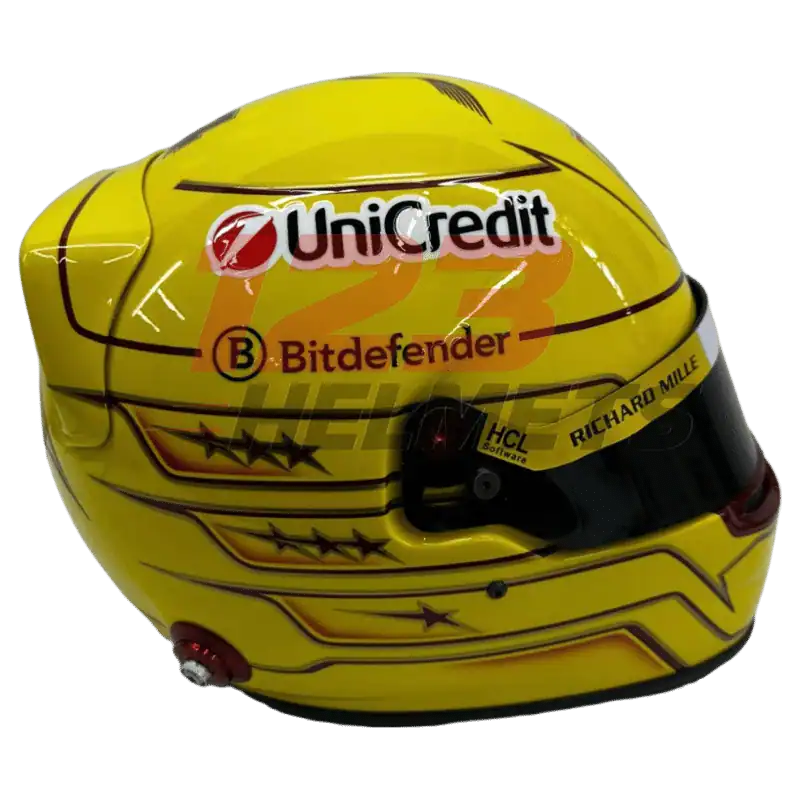
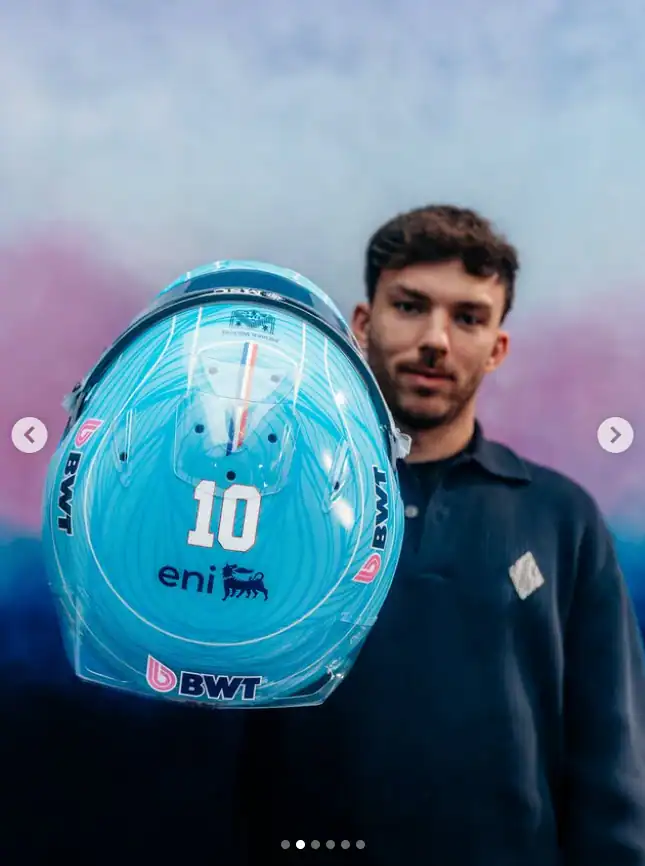
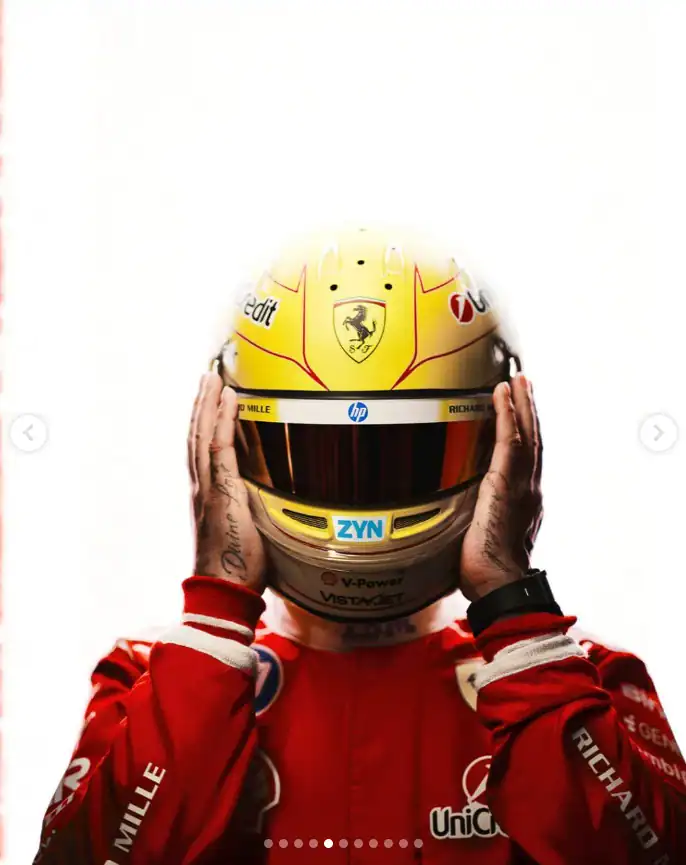
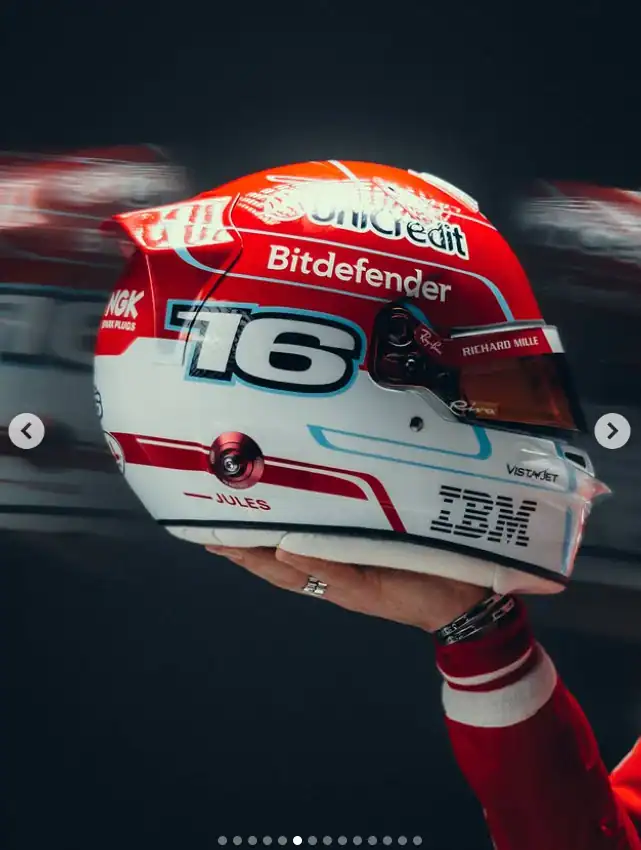
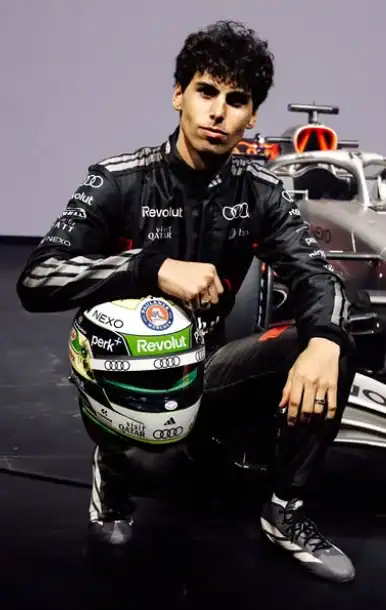
A full-size 1:1 F1 display replica is not a souvenir. It is a precisely scaled, hand-finished collector piece that replicates the exact livery worn by a driver on race day — down to the sponsor placement, visor tint, and paint depth that can reach 12 individual layers on a single shell.
Key Takeaways
A full-size 1:1 replica matches the exact dimensions of a race-used helmet shell — typically 300–310 mm in width — making scale accuracy the first test of display quality.
Up to 12 individual paint layers are applied on premium replica helmets, each requiring a separate curing cycle before the next coat is laid down.
Visor panels on display replicas replicate the 3 mm curved geometry of race visors, giving the finished piece its signature optical presence on a shelf or stand.
Collector value is tied directly to livery accuracy: a helmet linked to a specific Grand Prix — date, circuit, and driver — commands significantly more interest than a generic season design.
What ‘1:1 Full-Size’ Actually Means
A full-size 1:1 replica is a display piece built to the exact external dimensions of the helmet a driver wore in competition — no scaling up for shelf presence, no scaling down for cost savings. The ratio is literal: one centimetre on the replica equals one centimetre on the race original. For most modern F1 helmet shells, that means an external width of approximately 300–310 mm and an overall height, including the peak, of around 270–280 mm. Because that 1:1 ratio is fixed, the format you choose changes how a piece reads on a shelf — our 1:1 vs 1:2 scale guide explains which size to display.
That dimensional fidelity matters because F1 liveries are designed to work at a specific scale. Sponsor logos have minimum size requirements written into commercial contracts, and the geometry of a design — the way a sweep of colour wraps from the crown through the cheek and into the chinpiece — is composed for the exact proportions of an adult shell. A helmet scaled to 75 % would distort every angle of that composition. At 1:1 the design reads exactly as the team’s graphic department intended it.
Display replicas in this category are finished pieces, not protective equipment. They carry no FIA homologation markings, no Snell or ECE certification numbers, and no energy-absorbing liner. The shell exists purely to carry the livery accurately and to hold its shape under display conditions — on a stand, inside a case, or mounted on a wall bracket — for years without warping or fading.
Weight is a useful proxy for build quality. A well-constructed 1:1 display shell typically comes in between 1.2 and 1.5 kg depending on shell material and the number of paint layers applied. That range is meaningfully heavier than a toy or novelty item, and it telegraphs the density of finish coats and clear lacquer that separate a collector piece from a product designed for a gift shop shelf.
The 12-Layer Paint Process and Why It Changes Everything
Premium F1 display replicas reach their final appearance through up to 12 separate paint operations, each one a distinct layer with its own purpose in the finished surface. The process begins with a primer coat applied directly to the raw shell to provide adhesion and to seal any surface variation in the substrate. Without that foundation, subsequent colour coats would absorb unevenly and produce visible patching under direct light.
After primer, base colour coats are laid down — typically two to three passes to achieve full opacity and consistent tone. On a helmet with a white or silver base, those early coats are the most critical: any thin patch will show through every layer above it. A single base colour pass on a standard shell takes approximately 20 to 30 minutes of spray time, followed by a curing window before the next coat can be applied.
Graphic elements — the team livery, sponsor marks, national flag details, driver number — are either hand-painted or applied as precisely cut decals that are then overcoated rather than left as surface stickers. Overcoating locks the graphic into the paint build so that it cannot be peeled, lifted, or scratched away in normal handling. On a replica with complex geometry — a helmet featuring a gradient that shifts across three colour zones, for example — the graphic stage alone may account for four or five of the twelve total layers.
The final layers are clear lacquers. A standard finish uses two clear coats: a protective layer and a gloss top coat. High-specification replicas add a third clear — a UV-inhibiting coat that reduces colour shift caused by ambient light exposure. That UV layer is the difference between a helmet that holds its colours accurately after five years on display and one that has drifted noticeably in hue by the second year. Each clear coat adds approximately 0.03–0.05 mm to the total surface depth, which is why the final surface of a twelve-layer replica has a perceptibly different tactile quality from a four-layer piece.
Visor Construction on a Display Replica
The visor panel is the single most visually prominent component of an F1 helmet replica, and on a properly built display piece it replicates the 3 mm curved geometry of the polycarbonate visors used in competition. That curvature is not decorative — it is the correct optical shape, and it is what gives the front of the helmet its characteristic shallow dome profile when viewed from three-quarter angle.
Display replica visors are not flat panels cut to shape. They are thermoformed from sheet material over a curved mould so that the final piece holds its geometry permanently without clips or adhesive tension. A flat panel forced into a curved aperture will develop stress lines visible as faint colour banding across the surface under certain lighting conditions. A correctly formed visor has none of that — the surface reads as uniformly smooth from edge to edge.
Tint is the other variable. Race drivers select visor tints by track and conditions: a clear or very lightly tinted panel for night races and street circuits with heavy shadow, a dark iridium or mirror finish for high-altitude circuits with intense ambient light. Display replicas reproduce the specific tint associated with the driver’s most recognisable livery. A helmet associated with a driver’s Monza campaign, for instance, will typically carry a lighter tint than one linked to a Bahrain or Abu Dhabi race — and collectors who know the circuits recognise the difference immediately.
Tear-off strips, the thin removable films that drivers apply in a stack over the visor and peel away during a race, are not replicated on display pieces. Their absence is correct: the display piece represents the helmet as it appeared at the start of a race, in its complete and prepared condition, not at lap 44 with the outer strips gone. The visor surface on a display replica is therefore uniformly finished with no perforations or strip edges visible at the aperture.
Livery Accuracy and the Collector’s Hierarchy
Livery accuracy is the single factor that separates a display piece worth displaying from one worth owning. A helmet replica tied to a specific Grand Prix — a known date, a specific circuit, a documented race result — occupies a different tier in the collector’s hierarchy than a generic season design that represents no particular event. Our F1 replica helmet collector’s guide sets out the full framework.
F1 drivers regularly wear one-off or modified liveries for specific races. Championship anniversary events, home Grands Prix, tribute helmets for retired team members, and charity auctions all produce designs worn for exactly one race weekend — in some cases for a single session. A replica that accurately reproduces one of those designs has a defined historical anchor. A collector looking at it on a shelf knows precisely when and where that livery appeared on track.
The accuracy test has several components. Logo placement is measured against published reference photography from the event. Colour matching is verified against the team’s official brand palette — Formula 1 team colours are specified in Pantone or RAL references in commercial documentation, and a replica that drifts even two or three points on a colour value will read as slightly off to a trained eye. Font weights on number plates and driver name panels are checked against the team’s typeface specifications for that season.
Seasonal livery changes add another layer of complexity. Several teams have introduced mid-season design updates, switching sponsors or redesigning entire sections of their colour scheme between race weekends. A replica described as representing a race from the first half of a given season must carry the pre-update livery, not the updated version. Getting this wrong is one of the more common errors in the replica market, and experienced collectors look for it specifically.
The collector’s hierarchy runs broadly as follows: generic season designs sit at the base; event-specific one-off liveries sit above them; liveries associated with a podium finish or a championship-clinching race sit higher still. Position and result matter because they give the helmet a documented performance context — the livery was on track, at that circuit, on that date, when a specific result was achieved.
Display Conditions That Protect a Replica Long-Term
The three primary threats to a display replica over time are UV light, humidity variation, and mechanical contact — in roughly that order of severity. UV exposure causes colour shift in all pigments, with reds and yellows being the most susceptible; a helmet displayed in direct sunlight through a window without UV-filtering glass can show measurable colour change within 18 months.
A UV-inhibiting lacquer coat, as described in the paint section above, provides meaningful protection but does not eliminate the risk entirely. The correct complement to that coat is a display environment where direct sunlight does not fall on the shell for extended periods. A north-facing wall in the northern hemisphere, or an east-facing display case that receives only low-angle morning light, reduces UV load substantially compared to a south-facing shelf under a skylight.
Humidity variation causes more structural damage than most collectors anticipate. A shell that cycles repeatedly between 40 % relative humidity and 70 % relative humidity will experience micro-expansion and contraction in the paint layers at a different rate from the substrate beneath. Over several years, that differential movement produces hairline cracking in the clear coat — a phenomenon called crazing — that is visible as a fine network of lines across otherwise perfect paint. Keeping display conditions between 45 % and 60 % relative humidity eliminates most of the risk.
Mechanical contact means fingerprints, dusting cloths, and accidental knocks. Fingerprints leave oils that, if not removed promptly, begin to etch into the outer clear coat within weeks. A microfibre cloth with no abrasive content, used with minimal pressure in a straight wiping motion rather than a circular one, removes fingerprints without micro-scratching the gloss surface. Circular polishing motions on a high-gloss lacquer produce swirl marks that are visible under raking light even after a single cleaning session.
How to Evaluate a Replica Before You Buy
Evaluating a full-size 1:1 F1 display replica before purchase comes down to four verifiable checks: dimensions, paint depth, visor geometry, and livery documentation. Each one can be assessed from product information and reference photography without handling the piece in person. You can cross-check these figures against our F1 helmet facts and figures.
Dimensions: confirm the stated external width and height against known race-shell measurements. A shell described as 1:1 but measuring 265 mm in external width is underscale. Published dimensions from the seller should be specific — 305 mm × 275 mm is a meaningful specification; “life-size” is not.
Paint depth and layer count: ask directly. A seller who can state the layer count and describe the primer, colour, graphic, and clear stages is working from a defined production process. A seller who cannot answer is likely offering a piece with a simpler, faster finish.
Visor geometry: look for thermoformed construction. A product description that references a flat visor panel, or that does not address visor formation at all, suggests a less precise build. The 3 mm depth and continuous curve of a correctly formed visor is the easiest single feature to verify from a direct side-on photograph.
Livery documentation: the seller should be able to name the specific season, race, or event the livery represents and provide reference photography confirming the accuracy of logo placement, colour tone, and graphic geometry. If the documentation is absent, the livery accuracy cannot be confirmed — and livery accuracy is the core of the collector proposition.
These four checks take less than ten minutes with a tape measure, a published specification sheet, and a search of race photography archives. Running them before purchase is the difference between acquiring a display piece you will want to look at in ten years and one you will want to replace after two.
“The livery is the biography of a race weekend. Every colour, every logo placement, every font decision belongs to a specific moment in the sport’s history — and a 1:1 replica either reproduces that moment accurately or it doesn’t.”
— 123Helmets.com Editorial
“Paint depth is not vanity. Twelve layers applied and cured correctly produce a surface that holds its geometry and colour for decades. Four layers applied quickly produce a surface that tells you exactly what it is within a few years.”
— 123Helmets.com Editorial
FAQ
Q: What is a full-size 1:1 F1 helmet replica?
A full-size 1:1 F1 helmet replica is a display and collector piece built to the exact external dimensions of a race-used helmet shell, reproducing a specific driver livery at true scale with no protective function. It is not certified for any form of use in a vehicle and carries no FIA, Snell, ECE, or DOT markings.
Q: How many paint layers does a premium F1 display replica have?
Premium F1 display replicas carry up to 12 individual paint layers, including primer, base colour coats, graphic and livery layers, and multiple clear and UV-inhibiting top coats. Each layer requires a separate curing cycle before the next is applied.
Q: How thick is the visor on a display replica helmet?
The visor on a correctly constructed 1:1 display replica replicates the 3 mm curved geometry of a race visor, thermoformed over a mould to hold its shape permanently. A flat panel forced into a curved aperture is a sign of lower build quality.
Q: Where should I display an F1 helmet replica to protect it?
Display your replica away from direct sunlight and keep ambient humidity between 45 % and 60 % relative humidity to prevent colour shift and clear-coat crazing. UV exposure and repeated humidity cycling are the two most damaging long-term threats to paint quality.
Q: What makes one F1 helmet replica more collectible than another?
Livery specificity drives collector value: a replica accurately reproducing the design worn at a documented race — with a confirmed date, circuit, and result — is more collectible than a generic season design. Logo placement accuracy, colour matching to official team Pantone or RAL references, and correct seasonal livery version all factor into the assessment.
Browse F1 Helmet Collection
Display and collector replicas only. Not certified for protective use. Full-size 1:1 scale.
This article was written with the help of AI tools. Editorial policy