
Blog
Hadjar Uses Hamilton to Debunk a Stubborn F1 Myth
 123Helmets Editorial Team

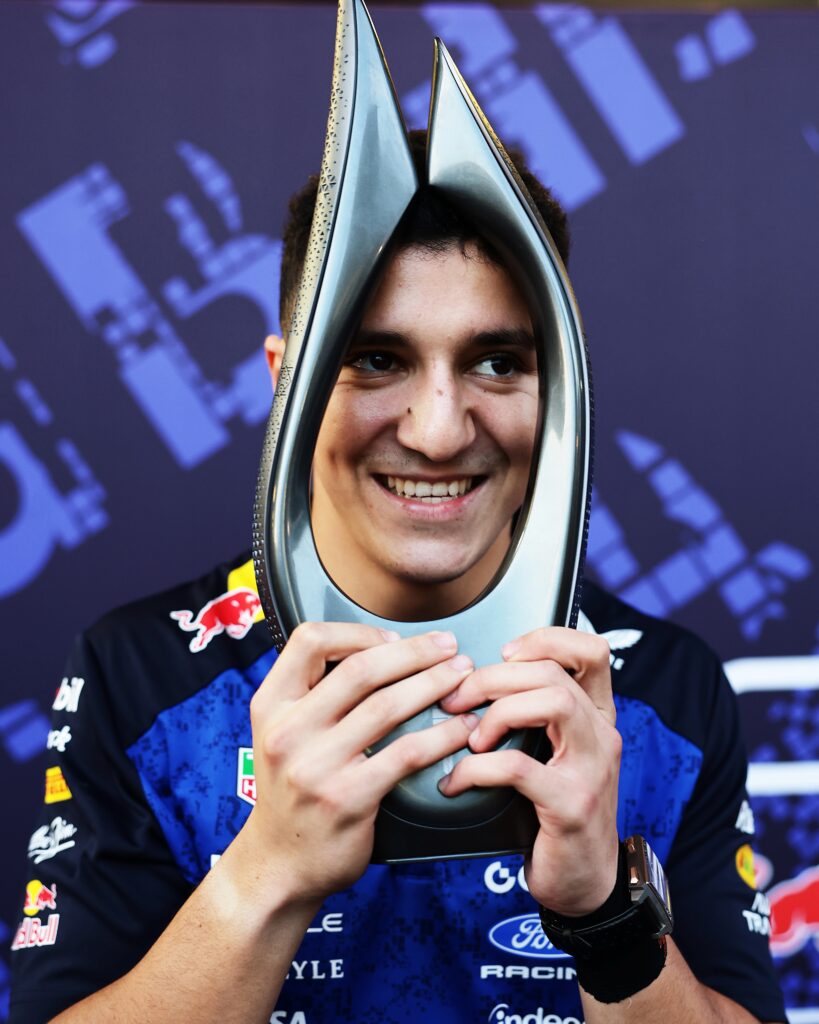
Isack Hadjar has rejected the idea that modern cars and simulators make life easier for rookies, and the Red Bull driver points to Lewis Hamilton as proof. In comments carried by RacingNews365, the Frenchman argues that real talent shows itself in any era.
Key Takeaways
Hadjar rejects the claim that simulators and modern cars make F1 easier for rookies.
He cites Fernando Alonso, Lewis Hamilton and Kimi Antonelli as drivers who adapted quickly.
Hamilton’s 2007 debut season at McLaren is his main example.
Hadjar says tougher junior categories may have raised the general level, but good drivers always stood out.
What did Hadjar say about rookies and simulators?
Hadjar said that a good driver is simply a good driver, regardless of the tools available. He was asked whether today’s generation benefits from aids that earlier drivers lacked, such as simulators, and he dismissed the idea outright.
The Red Bull driver told RacingNews365 and other outlets that talent rises to the surface in every period of the sport. His comments came in a source published on 2026-11-14.
Why does Hadjar point to Hamilton?
Hadjar points to Hamilton because of the Briton’s 2007 debut season at McLaren. Hamilton fought for the world title from his very first race, up against team-mate Fernando Alonso and Ferrari’s Kimi Räikkönen.
For Hadjar, that season shows that the car and the era matter little when the talent is there. Hamilton now drives for Ferrari in his 20th F1 season.
Which other drivers does he name as examples?
Hadjar names Fernando Alonso, Lewis Hamilton and Kimi Antonelli as drivers who adapted quickly. He also refers generally to the champions of the past, saying they all adjusted fast.
Alonso is in his 23rd season with Aston Martin, while Antonelli, in his second F1 season, leads the 2026 Drivers’ standings after round 16 with 320 points. Hadjar calls Antonelli world champion in his remarks.
What has actually changed in F1?
According to Hadjar, the main change is the number of drivers who can adapt quickly, not the ability of the best ones. He suggests that compared with twenty or thirty years ago, more drivers now show this trait.
He puts that down to the level and competition in the junior categories, which he thinks may be somewhat higher today and may have lifted the general standard. Even so, he believes that in the past a good driver showed it immediately.
What does this mean for Hadjar himself?
Hadjar is in his second F1 season with Red Bull, so his view comes from recent experience of arriving in the championship. His argument is that adapting to F1 is about the driver rather than the technology around them.
The source gives no further detail on his own results, so his comments are best read as a general opinion on how talent works in the sport.
“Ik geloof dat als je goed bent, je gewoon goed bent”
— Isack Hadjar, RacingNews365
“Ik denk dat het niet echt uitmaakt in welke auto je rijdt als je het talent ervoor hebt.”
— Isack Hadjar
Browse F1 Helmet Collection
Display and collector replicas only. Not certified for protective use. Full-size 1:1 scale.
This article was written with the help of AI tools. Editorial policy