Blog
Hamilton Smiles After P5: A Quiet Confidence in the Ferrari Garage
 123Helmets Editorial Team
Hamilton Smiles After P5: A Quiet Confidence in the Ferrari Garage
Lewis Hamilton walked away from qualifying with a smile that told its own story. Fifth on the grid, a small error on the final Q3 lap, and yet the body language inside the Ferrari garage suggested something more interesting than the timing screens revealed. For collectors and fans tracking the seven-time champion’s Ferrari chapter, moments like this are the ones that define a season’s narrative.
Key Takeaways
Hamilton qualified P5 despite a mistake on his final Q3 lap that likely cost him a front-row start
The underlying pace appeared stronger than the final grid position suggested
Body language in the Ferrari garage was notably positive after the session
Moments like these become defining chapters for collectors building a Hamilton-Ferrari display narrative
A Smile That Said More Than the Timing Sheets
There are qualifying sessions where the result tells the whole story, and then there are sessions like this one — where the number next to a driver’s name is only a fragment of what actually happened. Lewis Hamilton emerged from the Ferrari garage after qualifying fifth, and rather than the frustration you might expect from a seven-time world champion who knows he left lap time on the table, there was something different on his face. A smile. A quiet, knowing smile.
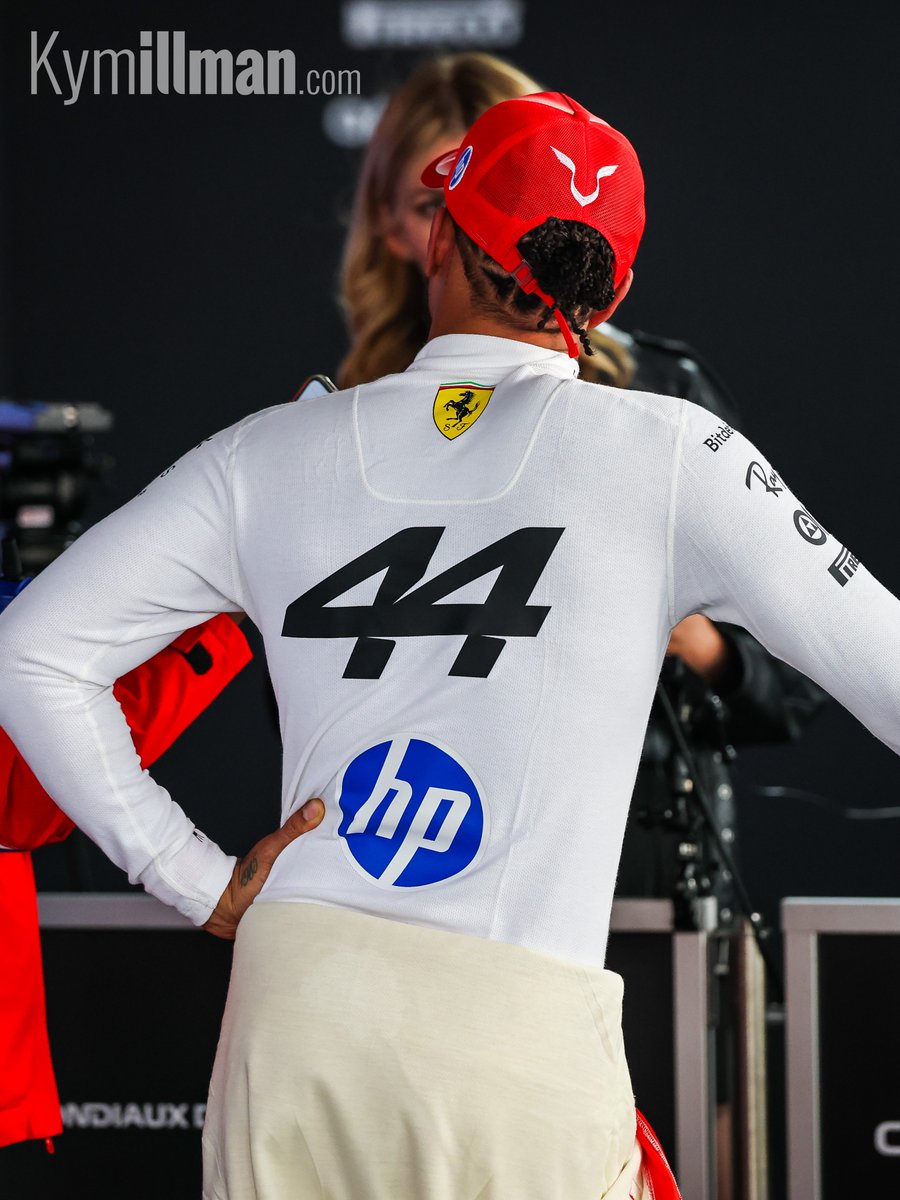
According to footage captured and shared by @KymIllman, Hamilton appeared genuinely content with how the afternoon unfolded, despite a mistake on his final Q3 lap that, by most analysts’ reckoning, likely cost him a front-row start. Fifth might not reflect the pace he had through the session, but in that moment, walking out of the garage, he didn’t seem to mind.
Reading Between the Sectors
For anyone who has followed Hamilton’s career closely — and for the collectors who have built displays chronicling his journey from McLaren to Mercedes and now to Ferrari — this kind of post-session demeanor matters. It is the small signals, the unguarded moments, that tell you whether a driver is wrestling with the car or beginning to understand it. The smile after P5 reads, to anyone paying attention, like the latter.
The Q3 Mistake and the Pace That Was There
Every qualifying session in modern Formula 1 is decided by tenths, sometimes hundredths. The margins between rows on the grid are the thinnest they have ever been, and a single error — a missed apex, a touch of understeer, a lock-up into a heavy braking zone — can be the difference between starting on the front row and starting in the middle of the top ten.
Hamilton’s final Q3 lap reportedly carried a mistake that compromised what was building into a much stronger time. The pace he had shown in earlier runs suggested a position significantly higher than fifth was on the table. And yet, here is the part that intrigues: he did not appear rattled. There was no slamming of helmets, no terse radio messages playing back through the broadcast, no body language of defeat.
Why Fifth Still Feels Like Progress
Context is everything in Formula 1. When a driver is still in the process of integrating into a new team — new engineers, new car philosophy, new tyre management approach, new steering wheel layout — every qualifying session is as much a learning exercise as it is a competitive one. Fifth on the grid, with the pace for higher, suggests that the foundations are being laid. The question is no longer whether the speed exists. The question is when everything will align on a single lap.
For collectors curating Hamilton-Ferrari memorabilia, this is the kind of session that, in retrospect, often becomes a marker. Not the headline win. Not the dramatic pole. Rather, the quieter qualifying where the pace first showed itself clearly, and the smile said the driver knew it too.
The Ferrari Chapter Through a Collector’s Lens
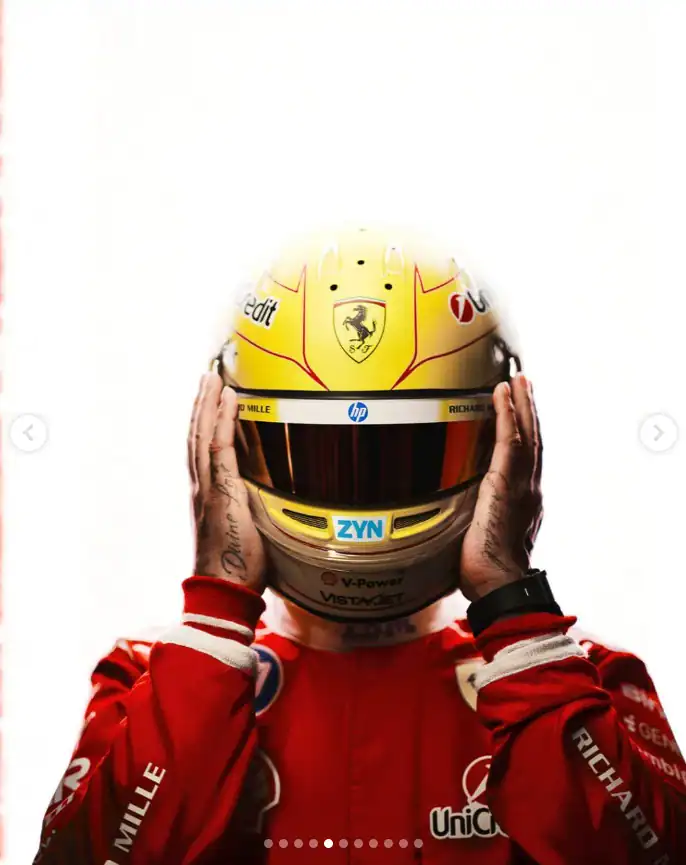
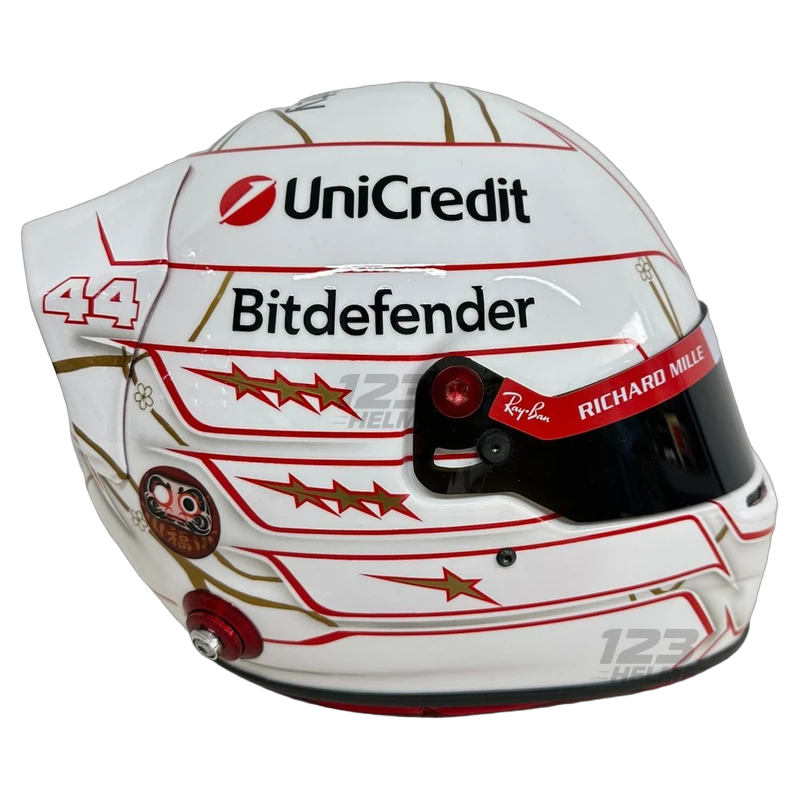
Hamilton in red is one of the most significant narrative shifts in modern Formula 1 history. The image of the most successful driver of his generation pulling on a Ferrari race suit, climbing into a Scuderia cockpit, and racing in the iconic crimson livery is something many fans never expected to witness. For those who collect full-size 1:1 replica helmets as display pieces, the visual transformation alone is reason enough to expand a collection.
Why Replica Helmets Tell the Story
A helmet, more than any other single item, captures a driver’s identity in a given era. The colours, the sponsor placements, the personal touches a driver adds to their design — all of it tells a chapter of the larger story. A Hamilton display replica from his Ferrari era sits differently next to a Mercedes-era display piece, and differently again next to a McLaren-era replica. The progression of a career, mapped out across a shelf or a wall, becomes a tangible timeline.
Full-size 1:1 collector replicas are designed exactly for this purpose: exhibition quality, faithful to the visual details, built to be admired and displayed rather than used. They are objects of remembrance, of fandom, of the long emotional investment that following a driver across a career requires.
A Race Week, A Moment, A Memory
Sessions like this qualifying, where the result is fifth but the feeling is something more, are exactly the kind of moment collectors find themselves drawn to. Not every milestone is a victory. Sometimes the milestone is a smile in a garage doorway, a quiet confidence, the suggestion that something is building.
What the Body Language Reveals
Formula 1 drivers are, by nature and by training, masters of controlled emotion. Public appearances after qualifying are calibrated, considered, often deliberately understated. Which is precisely why unguarded moments — like the one captured leaving the garage — carry such weight. A smile after a session that, on paper, was a missed opportunity, is not nothing. It is, in fact, a strong signal.
The Driver-Engineer Conversation
Behind every qualifying session sits hours of debriefs, data analysis, and conversations between driver and engineering team. The mistakes are dissected. The strong sectors are studied. The setup choices are evaluated. What a driver leaves the garage believing is the product of that internal conversation, not the headline lap time. Hamilton’s demeanor after P5 suggests the conversation inside the Ferrari garage was a productive one.
Looking Ahead to the Race
Qualifying sets the grid, but the race writes the story. Starting fifth, with the pace to suggest better, means tyre strategy, opening laps, and race management all come into play. A driver who exits qualifying with confidence — even after a flawed final lap — is often a driver who attacks the race rather than defends a position.
Curating a Display That Honours the Journey
For the dedicated collector, every season produces moments worth commemorating. The headline-grabbing victories are the obvious ones. But the truly memorable displays are built around the full arc — the building moments, the breakthrough sessions, the quiet markers along the way.
The Value of Exhibition-Quality Replicas
Full-size 1:1 replica helmets are crafted to capture every visual element of a driver’s actual design: the paint scheme, the sponsor logos, the personalised flourishes. As display pieces, they bring a tangible weight to a room — a sense that the era they represent is not just remembered, but honoured. They are conversation starters, focal points, and tributes all at once.
Building a Hamilton-Era Display
A collection that traces Hamilton’s career — from early McLaren days through the Mercedes dynasty and now into the Ferrari chapter — becomes more than a set of objects. It becomes a visual biography. And sessions like this qualifying, where the smile told a story the timing sheet could not, are exactly the moments that give such a display its emotional depth.
“Fifth might not reflect the pace he had, but he didn’t seem to mind.”
— @KymIllman, trackside observation
FAQ
Q: Where did Lewis Hamilton qualify in this session?
Hamilton qualified fifth, despite a mistake on his final Q3 lap that, according to observers, likely cost him a front-row start.
Q: Why was Hamilton smiling despite the mistake?
The underlying pace he had shown through the session suggested the car had the speed for a much higher position. The smile reflected confidence in the package rather than satisfaction with the final result.
Q: Are 123Helmets replicas full-size 1:1 helmets?
Yes. All our replicas are full-size 1:1 scale, exhibition-quality display pieces designed for collectors. They are display and collector items only, not for protective use.
Q: Why do collectors value moments like this qualifying session?
Building moments — sessions where pace first becomes visible, where a driver’s body language shifts — often become defining chapters in retrospect. Collectors curate displays around full career arcs, not just headline victories.
Q: How should I start a Hamilton-era display collection?
Many collectors begin by selecting full-size 1:1 replica helmets that represent distinct eras of a driver’s career. Browse the 123Helmets collection to explore options that suit your display vision.
Build a display that honours every chapter of the Hamilton story. Browse F1 Helmet Collection and bring the journey home as a full-size 1:1 collector replica.
Display and collector replicas only. Not certified for protective use. Full-size 1:1 scale.